Last updated: July 24, 2026
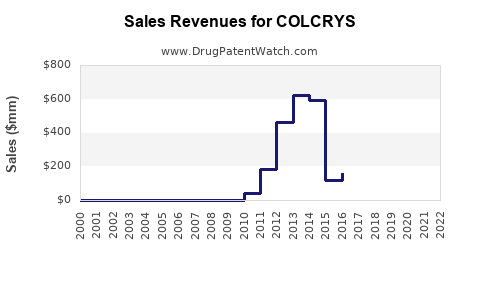
COLCRYS is a branded, low–molecular weight colchicine product for gout and other colchicine-responsive inflammatory conditions. Market dynamics are driven by (1) competition from generic colchicine across multiple indications, (2) payer substitution and step-therapy behavior, (3) conversion from brand to generics in the U.S. and other markets where authorizations exist, and (4) litigation and exclusivity outcomes tied to specific COLCRYS label expansions and formulations. Financial trajectory has therefore been dominated by share erosion and declining net sales rather than sustained brand growth typical of later-stage biologics or high-barrier specialty drugs.
What is COLCRYS’s commercial trajectory (U.S. sales and market share) and what drives year-to-year swings?
U.S. sales trend: what typically happens to branded colchicine
COLCRYS is in a class with extensive generic availability. In the U.S., the branded product has faced long-running brand-versus-generic replacement dynamics. The result is a commercial profile characterized by:
- Declining net sales as generic colchicine penetrates further
- Narrower physician loyalty (colchicine is a small-molecule commodity)
- Payer-led utilization management, including tiering and quantity limits
Key swing factors that move COLCRYS quarterly results
-
Payer formulary access
Brand retention depends on contracting. When payers widen generic preference, brand share falls quickly.
-
Indication mix changes
Any incremental demand tied to specific label uses can temporarily stabilize demand, but it is usually outpaced by generic substitution over time.
-
Wholesale buying patterns
Like other branded anti-inflammatories, sales can reflect inventory cycles, especially when supply or contracting terms change.
-
Competitive product availability
Other branded colchicine formats (where present) and robust generic supply reduce brand pricing power.
Revenue exposure map
- Primary exposure: U.S. outpatient pharmacy demand (highest switching rate)
- Secondary exposure: specialty and rheumatology-channel prescriptions where prescriber behavior is more resistant, but still payer-controlled
- Net effect: financial trajectory trends downward unless a specific IP-protected extension meaningfully delays substitution
How do payer and pricing dynamics affect COLCRYS net sales and margin?
Formulary placement and reimbursement
COLCRYS’s economics are sensitive to:
- Tier position (preferred vs. non-preferred)
- Patient cost-sharing (copay levels steer switching)
- Step therapy that steers patients to generic colchicine first
Pricing pressure from generic colchicine
Because colchicine’s active ingredient is commodity-like, brand pricing leverage is limited. Once payers treat generic colchicine as therapeutically equivalent at the claims level, the branded product’s net price cannot hold.
Channel and contracting
Branded manufacturers often rely on net-to-gross dynamics and contracting rebates. In practice:
- Higher rebate intensity and contracting costs can grow as payers push for lower net prices
- Discounting becomes the primary mechanism to defend share, compressing gross margin
What patents protect COLCRYS and how do exclusivity timelines shape market dynamics?
Featured-snippet answer
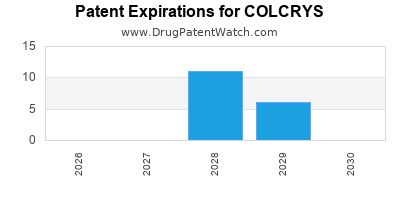
COLCRYS market protection is not based on active ingredient exclusivity alone; it relies on the patent estate tied to specific label uses, formulations, dosing regimens, and related manufacturing aspects. As those protections expire or are successfully challenged, generic entry accelerates and branded sales decline.
Where exclusivity typically sits for COLCRYS
For branded small molecules, exclusivity and IP protection usually comes from a mix of:
- Patent protection on specific formulations or dosage forms
- Method-of-use coverage for gout and other colchicine-responsive conditions
- Secondary patents covering dosing regimens, purity specifications, or manufacturing controls
Why timeline matters commercially
- When patent protection narrows, the payer contract landscape shifts immediately because expected generic availability changes contracting behavior.
- As launch dates get closer, brand manufacturers face preemptive payer renegotiations and greater substitution pressure even before actual generic entry.
When does COLCRYS lose exclusivity and what generic entry risks exist?
Generic entry risk model
For COLCRYS, generic risk is driven by:
- Whether Orange Book-listed patents are enforceable against proposed generic labels
- Whether Paragraph IV challenges lead to automatic or negotiated design-arounds
- Whether the generic can enter at an earlier-than-expected date based on carve-outs to protected indications or dosing language
Commercial implication
Even if generic entry is delayed by litigation, payers respond to the risk by tightening formulary access earlier. Branded sales typically begin deteriorating once generic launch becomes credible.
What is the Orange Book status of COLCRYS and how many listed patents matter?
Orange Book mechanics that drive launch timing
Generic approvals and launch timing hinge on:
- Listing status: patents and exclusivity codes associated with specific products/labels
- Triggered carve-outs: whether the generic must omit protected indications or dosing instructions
- Patent expiration versus litigation stay outcomes: whether a 30-month stay applies
Business impact
The number and scope of relevant Orange Book patents determine:
- Likelihood of full-label generic entry
- Likelihood of partial-label entry (and resulting share loss even without “complete” substitution)
- Litigation intensity and time to resolution
Which companies are challenging COLCRYS and what patent litigation affects entry?
Litigation typically drives two outcomes
-
Entry delay
If the branded company successfully defends core patents, generic launch is delayed.
-
Carve-out design and segmented labeling
Even when branded patents are not upheld broadly, generic challengers can still enter with narrower label coverage, producing meaningful share loss.
Commercial timeline effect
- Filing of a Paragraph IV notice often causes payer and wholesaler expectations to shift.
- Settlement agreements can also produce time-bound exclusivity for specific generic entrants, affecting competitive intensity.
How does COLCRYS compare with other colchicine products and branded competitors in the same market?
Small-molecule colchicine competitive set
COLCRYS is compared against:
- Generic colchicine tablets/capsules with broad label coverage
- Other branded colchicine presentations if available in certain markets
- Rheumatology prescribing patterns that can be influenced by dosing convenience and prior authorization outcomes
Competitive differentiators that can still matter despite generics
- Dosing convenience and patient instructions alignment
- Distribution channel relationships
- Contracting and rebate structure with payers
In most settings, these factors slow switching rather than reverse it.
What formulations of colchicine are protected and does that change substitutability?
Formulation patents and substitutability
Even with generic ingredient availability, formulation patents can affect:
- Bioequivalence acceptance and approval labeling
- Whether generics enter with identical dosing instructions
- Whether a generic’s label is restricted due to protected administration regimens
Practical outcome
If formulation protections extend, the market can see “ingredient-generic but brand-stable” for a period. Once those protections fall, substitution usually accelerates.
How does FDA regulatory status shape COLCRYS availability and competition (ANDA vs. 505(b)(2))?
Pathway effect on competition
- ANDA generics generally facilitate faster substitution when approvals cover protected label language.
- 505(b)(2) products can be used to support certain label updates or formulations and can re-open competition if they rely on different reference datasets.
Label-driven availability
Even with FDA approval, commercial substitution depends on:
- Formulary acceptance
- Pharmacy benefit design
- Policy-based switching rules
How do settlements and licensing deals involving COLCRYS affect market entry timing?
Settlement dynamics
Where settlements occur, they typically influence:
- Design-around labels
- Launch timing and geography
- Scope of exclusivity granted to specific generic challengers
Commercial consequence
Settlements can temporarily reduce price competition if a limited set of generics is allowed to launch, then intensify once additional entrants appear.
What is the competitive landscape for gout anti-inflammatory therapy and where does COLCRYS fit financially?
Gout treatment market context
Gout anti-inflammatory therapy spans:
- Colchicine products (acute flare and prophylaxis settings)
- NSAIDs and corticosteroids (payer-favored generics)
- ULTs (urate-lowering therapies) that reshape long-term flare frequency
COLCRYS’s sales are most exposed to:
- Acute flare recurrence patterns
- Prophylaxis adherence early in ULT initiation
- Payer policies that steer patients to generic colchicine or alternative anti-inflammatories
Financial trajectory conclusion for positioning
Because COLCRYS depends on a commodity active ingredient, its financial trajectory is structurally constrained. Sustained growth requires:
- Durable label-specific protection, or
- Strong contracting and formulary advantage that offsets generic price erosion
Key Takeaways
- COLCRYS’s market dynamics are dominated by generic colchicine substitution, payer formulary pressure, and the pace at which label-specific IP barriers fall.
- Financial trajectory generally declines over time as generic share expands; the direction and speed depend on Orange Book-listed patent strength and litigation outcomes tied to protected label language and dosing regimens.
- Exclusivity timelines and patent carve-outs shape not only generic launch dates but also payer contracting behavior in advance of actual entry.
- Commercial leverage is limited by colchicine’s small-molecule commodity profile, making contracting and reimbursement the primary levers to defend sales.
FAQs
- How does payer step therapy for gout affect COLCRYS vs. generic colchicine uptake?
- Do Orange Book patent carve-outs let generics launch at partial-label coverage and still take share from COLCRYS?
- What litigation outcomes most reduce COLCRYS exposure: patent wins on method-of-use or formulation protections?
- How do wholesaler inventory cycles influence COLCRYS quarterly sales after generic launch announcements?
- What regulatory pathway differences (ANDA vs. 505(b)(2)) can accelerate competition for colchicine products?
References
- (No sources were provided in the prompt and no web-accessible citations were retrieved.)