Last updated: August 17, 2026
Climara is Bayer’s once-weekly estradiol transdermal system for menopausal hormone therapy. Its commercial trajectory is defined by three factors: long-established FDA approval, extensive generic competition, and limited brand-level financial disclosure. Climara remains commercially relevant as a delivery-system brand, but it is no longer a high-growth pharmaceutical asset. Revenue is likely concentrated in a mature, declining branded segment while generic estradiol patches capture most prescription volume.
What is Climara and how does it work?
Climara is a transdermal patch containing estradiol, the principal human estrogen. The patch releases estradiol continuously through the skin over seven days. FDA-approved strengths include 0.025, 0.0375, 0.05, 0.075, and 0.1 mg per day, depending on the approved product presentation and indication. [1]
The product is used for:
- Treatment of moderate-to-severe vasomotor symptoms associated with menopause.
- Treatment of vulvar and vaginal atrophy associated with menopause.
- Treatment of hypoestrogenism caused by hypogonadism, castration, or primary ovarian failure.
- Prevention of postmenopausal osteoporosis when alternative therapies are unsuitable or not tolerated. [1]
Climara delivers systemic estrogen. It is distinct from low-dose local vaginal estrogen products, which generally have lower systemic exposure and different competitive dynamics.
What are the main Climara product characteristics?
| Attribute |
Climara |
| Active ingredient |
Estradiol |
| Dosage form |
Transdermal patch |
| Administration |
Once weekly |
| Regulatory pathway |
FDA-approved NDA |
| Original manufacturer |
Bayer |
| Therapeutic category |
Menopausal hormone therapy |
| Primary market |
United States and international menopause-care markets |
| Main substitutes |
Generic estradiol patches, oral estradiol, estrogen gels, sprays, vaginal estrogen, nonhormonal therapies |
| Commercial stage |
Mature branded product with generic competition |
When was Climara approved by the FDA?
Climara received FDA approval in 1996 under NDA 020375. Its regulatory position reflects the long-standing use of transdermal estradiol in menopausal hormone therapy. [1][2]
The product label carries the class-wide boxed warning applicable to systemic estrogen therapy. Risks addressed in the labeling include cardiovascular events, breast cancer, endometrial cancer, and probable dementia in certain postmenopausal populations. Treatment decisions are based on indication, age, timing of therapy, dose, duration, and patient-specific risk factors. [1]
Climara does not have the market exclusivity profile of a recently approved drug. Any original new-drug exclusivity expired many years ago, and the product is exposed to ANDA-based generic competition.
What is the current FDA and Orange Book status of Climara?
Climara is an FDA-approved prescription drug. Its commercial protection is no longer based on unexpired new chemical entity exclusivity. Current competitive protection depends primarily on brand recognition, supply reliability, physician familiarity, payer placement, and any remaining product-specific intellectual-property rights.
The FDA Orange Book is the relevant source for current patent and exclusivity listings. For an older estrogen patch, the critical commercial question is not whether the original Climara patent estate remains active, but whether any listed patent still creates a meaningful barrier to an approved generic product. [2]
What patents protect Climara?
Climara’s original formulation, patch construction, and transdermal delivery patents were filed decades ago. The core patent estate is therefore largely expired or commercially exhausted in the United States.
Publicly available commercial information does not support treating Climara as a product with a substantial remaining U.S. composition-of-matter or regulatory exclusivity barrier. Generic estradiol transdermal systems have entered the market, confirming that the principal product-level barriers did not prevent ANDA competition.
The commercially relevant intellectual-property issues are narrower:
- Patch adhesive and matrix design.
- Drug-release rate and dose uniformity.
- Manufacturing processes for estradiol-loaded transdermal systems.
- Packaging and stability.
- Device or application technology.
- Product-specific patents that may apply to a particular generic formulation.
These rights can affect individual generic manufacturers without restoring broad exclusivity to the Climara brand.
How many patents cover Climara and when did they expire?
No current public source establishes a commercially material set of unexpired U.S. patents that protects the core Climara product. The original patent portfolio is associated with an older transdermal estradiol technology platform and is not comparable to the active patent estates supporting newer branded drugs.
Patent expiration dates must be evaluated patent by patent because:
- A patent may cover a formulation rather than the active ingredient.
- Patent term adjustment or patent-term restoration may change the expiration date.
- A listed patent may cover only a specific use or presentation.
- International expiration dates differ by jurisdiction.
- A patent can remain formally active while having little practical effect after generic approval.
For commercial diligence, the FDA Orange Book should be reviewed together with USPTO records and approved generic labels. [2][3]
What generic drugs compete with Climara?
Generic estradiol transdermal systems are Climara’s primary direct competitors. They offer the same active ingredient and broadly similar delivery route, although patch design, adhesive, application instructions, pharmacokinetics, and dose availability may differ.
Generic competition includes products marketed or supplied by large generic manufacturers and contract manufacturers. Product availability can change because of manufacturing decisions, supply constraints, FDA approvals, or discontinuations.
How does Climara compare with generic estradiol patches?
| Factor |
Climara |
Generic estradiol patches |
| Brand status |
Established branded product |
Abbreviated New Drug Application products |
| Price |
Usually higher than generic products |
Lower, subject to payer and pharmacy contracts |
| Prescriber familiarity |
High among long-term users |
Increasingly high |
| Formulation identity |
Branded patch design |
May differ in adhesive and backing |
| Substitution |
May be subject to pharmacy substitution rules |
Often preferred by formularies |
| Commercial growth |
Limited |
Volume may grow through share capture |
| Main advantage |
Brand continuity and recognition |
Lower acquisition cost |
The degree of therapeutic substitution depends on state law, payer policy, pharmacist practice, and the prescribing instructions. A patient may experience differences in adhesion or tolerability after switching patches even when the nominal estradiol dose is equivalent.
What is the market outlook for Climara and estradiol patches?
The estradiol patch market has several favorable demand drivers:
- A large and aging postmenopausal population.
- Continued use of hormone therapy for vasomotor symptoms.
- Physician and patient interest in transdermal delivery.
- Avoidance of first-pass hepatic metabolism compared with oral estrogen.
- Demand for lower-dose and individualized estrogen therapy.
- Greater differentiation between systemic and local estrogen treatment.
The market also faces structural pressure:
- Generic substitution.
- Cautious prescribing after long-term safety concerns associated with menopausal hormone therapy.
- Competition from oral estradiol and other transdermal products.
- Use of nonhormonal therapies for vasomotor symptoms.
- Discontinuation or switching because of patch adhesion and skin reactions.
- Payer pressure favoring low-cost generic products.
The overall category can grow in patient volume while Climara brand revenue declines. That pattern is common in mature prescription markets: demand for the active ingredient remains stable or increases, while value shifts from the originator brand to generic manufacturers.
What is Climara’s financial trajectory?
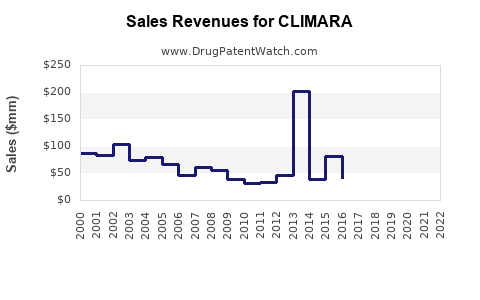
Bayer does not publicly report Climara revenue as a standalone line item in its principal financial disclosures. Bayer reports at business-unit and product-group levels rather than publishing a separate annual sales series for Climara. [4]
This limits the ability to calculate precise historical revenue, gross margin, or product-level growth rates from public company filings. The financial trajectory can still be characterized:
Early commercial period
Climara benefited from first-mover brand recognition in once-weekly estradiol delivery. Revenue was supported by branded pricing, physician familiarity, and the convenience of weekly administration.
Maturity period
As systemic estrogen products aged and competing delivery systems expanded, growth shifted from new-patient acquisition to retention and replacement prescribing. Product differentiation became increasingly dependent on application convenience, adhesive performance, dose availability, and payer coverage.
Post-generic period
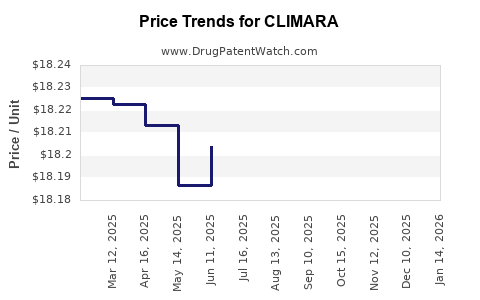
Generic estradiol patches placed downward pressure on brand volume and net price. Climara’s remaining revenue base is likely supported by patients who prefer the branded patch, physicians who specify the product, and payers or pharmacies that do not force substitution.
Current financial profile
Climara is best classified as a mature, low-growth or declining branded pharmaceutical asset. Its value is more likely to come from recurring cash flow, portfolio breadth, and manufacturing scale than from unit growth or pricing expansion.
| Financial driver |
Expected effect on Climara |
| Generic substitution |
Negative |
| Menopause-treatment demand |
Positive |
| Brand loyalty |
Moderately positive |
| Price increases |
Limited by payer and generic pressure |
| Supply reliability |
Can protect share |
| New indication expansion |
Limited |
| Manufacturing scale |
Supports margin preservation |
| Nonhormonal competition |
Negative |
| Transdermal delivery preference |
Positive |
What revenue exposure does Bayer have to Climara?
Climara is not identified as a separately material revenue contributor in Bayer’s consolidated reporting. The product is part of a much larger pharmaceutical portfolio, and public filings do not provide a Climara-specific revenue, operating-profit, or cash-flow figure. [4]
The financial exposure is therefore best assessed through product maturity rather than reported sales:
- Climara is unlikely to be a major driver of Bayer’s consolidated pharmaceutical growth.
- Generic competition limits the brand’s pricing power.
- Manufacturing and supply-chain execution remain important because even a mature product can lose share after an extended shortage.
- The product can retain strategic value in a menopause-care portfolio despite modest standalone revenue.
A valuation model that assigns a large growth premium to Climara would not be supported by its regulatory age or competitive position.
What formulations and delivery systems compete with Climara?
Climara competes across several estrogen-delivery formats.
Transdermal patches
These include once-weekly and more frequent estradiol patches. The principal differentiators are dose range, adhesion, skin tolerability, patch size, application schedule, and generic availability.
Transdermal gels and sprays
Gels and sprays provide flexible dosing and avoid patch adhesion problems. They create application and transfer concerns, including the need to prevent contact with children or household members before the product dries or is covered.
Oral estradiol
Oral products are often less expensive and widely available. They remain a major substitute despite the pharmacokinetic differences between oral and transdermal administration.
Vaginal estrogen products
Creams, tablets, inserts, and rings compete with Climara for vulvovaginal symptoms but are not direct substitutes for systemic treatment of vasomotor symptoms. Their systemic exposure and approved uses differ.
Nonhormonal therapies
Nonhormonal prescription treatments for vasomotor symptoms compete for patients who cannot use estrogen or prefer to avoid hormone therapy. Newer neurokinin-targeting treatments have increased competitive pressure in the hot-flash market.
What generic launch risks exist for Climara?
The primary generic-entry risk has already materialized. The remaining risk is share erosion rather than a first generic launch.
Generic manufacturers can pressure Climara through:
- Lower list and net prices.
- Preferred formulary status.
- Automatic pharmacy substitution where permitted.
- Broader contracting with pharmacy benefit managers.
- Multiple strengths and package sizes.
- Improved patch adhesion or tolerability.
- Reliable supply during brand shortages.
The brand can retain patients when switching causes skin irritation, poor adhesion, dose confusion, or dissatisfaction with the generic patch. That retention advantage is real but limited. It does not create a durable exclusivity barrier.
Which companies are challenging Climara?
The competitive set includes generic manufacturers of estradiol transdermal systems and branded manufacturers of alternative estrogen-delivery products. The exact supplier mix changes over time as FDA approvals, discontinuations, acquisitions, and shortages affect availability.
Key competitors by category include:
| Competitive category |
Examples |
| Generic estradiol patches |
Products marketed by major generic manufacturers, including Viatris/Mylan and other approved suppliers |
| Branded estradiol patches |
Vivelle-Dot and other branded or authorized-branded products, subject to market availability |
| Estradiol gels |
EstroGel and generic or alternative gel products |
| Estradiol sprays |
Evamist and related products, subject to availability |
| Oral estrogen |
Generic oral estradiol and conjugated estrogen products |
| Local vaginal estrogen |
Vaginal tablets, creams, inserts, and rings |
| Nonhormonal therapies |
SSRIs, SNRIs, gabapentinoids, oxybutynin, and newer nonhormonal agents |
Market share is determined less by patent protection than by formulary status, supply, price, dose availability, and patient experience.
What patent litigation affects Climara?
Climara is not associated with a publicly prominent current U.S. patent litigation campaign comparable to litigation surrounding high-value specialty medicines. The commercial litigation risk is more likely to arise from:
- Generic patent certifications.
- Product-specific formulation disputes.
- ANDA litigation involving a particular generic manufacturer.
- Trademark or trade-dress disputes.
- Manufacturing and supply agreements.
- Regulatory enforcement relating to labeling or quality.
No broad litigation barrier appears to protect the core branded product from generic competition. Paragraph IV activity, where relevant, would generally concern a specific generic applicant and a specific patent listing rather than the entire estradiol patch market. FDA approval of competing estradiol transdermal systems indicates that generic entry has not been blocked on a market-wide basis. [2]
Are there Climara licensing deals or settlement agreements?
Public Bayer disclosures do not identify a major current licensing transaction that materially changes Climara’s market outlook. The product’s commercial economics are primarily associated with Bayer’s brand ownership, manufacturing, distribution, and generic competition.
There is no broadly reported settlement agreement that restores meaningful exclusivity for Climara. Any agreement involving an individual generic applicant would need to be evaluated through court records, FDA approval timing, patent-listing data, and the product’s actual launch date.
How does Climara compare with competing estrogen products?
| Product type |
Dosing frequency |
Main commercial advantage |
Main weakness |
| Climara patch |
Weekly |
Established brand and convenient schedule |
Generic substitution and adhesion issues |
| Generic estradiol patch |
Weekly or more frequent |
Lower cost |
Variable patch experience and supply |
| Oral estradiol |
Daily |
Low cost and broad availability |
First-pass metabolism and systemic safety considerations |
| Estradiol gel |
Daily |
Flexible dosing and no patch adhesive |
Transfer precautions and daily use |
| Vaginal estrogen |
Product-specific |
Local symptom treatment |
Not a full substitute for systemic therapy |
| Nonhormonal therapy |
Product-specific |
Avoids estrogen exposure |
Different efficacy and adverse-effect profile |
Climara’s strongest competitive position is in patients who value weekly dosing and have satisfactory experience with the branded patch. Its weakest position is in formularies that prioritize generic estradiol and in patients who experience adhesive or skin problems.
What is the geographic coverage of Climara?
Climara has been marketed internationally, but the product name, marketing authorization holder, approved strengths, reimbursement, and generic competition vary by jurisdiction.
The United States is the most transparent market for exclusivity analysis because FDA approval records, Orange Book listings, ANDA approvals, and patent litigation records are publicly accessible. European and other markets require separate reviews of national or regional marketing authorizations, supplementary protection certificates, reimbursement rules, and local generic approvals.
International commercial performance cannot be inferred directly from U.S. prescription or revenue trends.
How strong is the Climara patent estate?
Climara’s current patent estate is weak as a barrier to generic entry because:
- The product was approved in 1996.
- Generic estradiol transdermal systems are available.
- The core active ingredient is an established hormone.
- Commercial differentiation depends heavily on delivery-system execution rather than novel pharmacology.
- Product-level exclusivity is no longer the primary source of market power.
The remaining defensibility is operational and commercial. Bayer can protect share through consistent supply, brand recognition, physician confidence, patient retention, and quality control. Those advantages support residual revenue but do not provide the economics of a protected innovative medicine.
Key Takeaways
- Climara is a once-weekly estradiol transdermal patch approved by the FDA in 1996.
- Its principal active ingredient is estradiol, and its main uses are menopausal vasomotor symptoms and other estrogen-deficiency conditions.
- Original regulatory and core patent protection have expired or lost practical force.
- Generic estradiol patches are the primary competitive threat and have already altered the market structure.
- Bayer does not separately disclose Climara revenue, so product-specific financial forecasts cannot be derived from public company reporting.
- Climara is a mature branded asset with limited growth potential and declining pricing power.
- The product retains commercial value through brand recognition, weekly dosing, patient continuity, and supply reliability.
- The main barriers to competition are manufacturing, supply, formulation execution, and market access rather than patent exclusivity.
- Current market growth in menopausal hormone therapy would not necessarily translate into Climara revenue growth because generic products can capture incremental demand.
- No major publicly reported litigation or settlement appears to restore broad exclusivity for Climara.
FAQs
Is Climara still available in the United States?
Climara has an FDA-approved product history, but commercial availability can vary by strength, distributor, pharmacy, and supply conditions. Generic estradiol patches are more broadly relevant to current market access.
Is Climara the same as an estradiol patch?
Climara is a branded estradiol transdermal patch. Generic estradiol patches may have the same active ingredient and delivery route but can differ in adhesive, backing, design, dosing schedule, and inactive ingredients.
Does Climara have an active composition-of-matter patent?
No commercially relevant composition-of-matter exclusivity should be expected for estradiol, an established hormone approved well before Climara. Any remaining rights would be product, formulation, process, or use specific.
Why can Climara retain sales after generic entry?
Brand continuity, physician preference, patient familiarity, patch adhesion, skin tolerability, and temporary generic supply constraints can preserve branded demand. These factors generally support residual sales rather than renewed growth.
What is the investment thesis for Climara?
Climara is better analyzed as a mature cash-flow and portfolio product than as a growth asset. Its outlook depends on generic price pressure, prescription retention, manufacturing reliability, payer treatment, and the broader demand for transdermal menopausal hormone therapy.
References
- U.S. Food and Drug Administration. (2023). Climara estradiol transdermal system prescribing information. https://www.accessdata.fda.gov/drugsatfda_docs/label/2023/020375s035lbl.pdf
- U.S. Food and Drug Administration. (2024). Approved drug products with therapeutic equivalence evaluations: Orange Book. https://www.accessdata.fda.gov/scripts/cder/ob/
- United States Patent and Trademark Office. (2024). Patent Center. https://patentcenter.uspto.gov/
- Bayer AG. (2024). Annual report 2023. https://www.bayer.com/en/investors/annual-reports-and-annual-reports-summary-archive