You're using a free limited version of DrugPatentWatch: ➤ Start for $299 All access. No Commitment.

Last Updated: March 26, 2026

CICLOPIROX Drug Patent Profile


✉ Email this page to a colleague

« Back to Dashboard


When do Ciclopirox patents expire, and when can generic versions of Ciclopirox launch?

Ciclopirox is a drug marketed by Cosette, Fougera Pharms, Glenmark Pharms, Padagis Israel, Sun Pharma Canada, Alvogen, Glenmark Pharms Inc, Padagis Us, Actavis Mid Atlantic, Encube, Acella, Chartwell Rx, Epic Pharma Llc, Hikma, Mylan Pharms Inc, Rising, Taro Pharm Inds, and Teva Pharms. and is included in twenty-eight NDAs.

The generic ingredient in CICLOPIROX is ciclopirox. There are ten drug master file entries for this compound. Fourteen suppliers are listed for this compound. Additional details are available on the ciclopirox profile page.

DrugPatentWatch® Litigation and Generic Entry Outlook for Ciclopirox

A generic version of CICLOPIROX was approved as ciclopirox by FOUGERA PHARMS on August 6th, 2004.

  Start Trial

AI Deep Research
Questions you can ask:
  • What is the 5 year forecast for CICLOPIROX?
  • What are the global sales for CICLOPIROX?
  • What is Average Wholesale Price for CICLOPIROX?
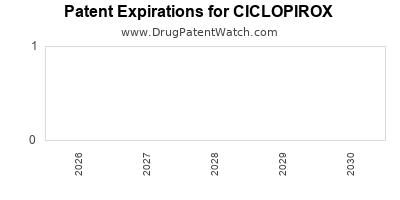
Drug patent expirations by year for CICLOPIROX
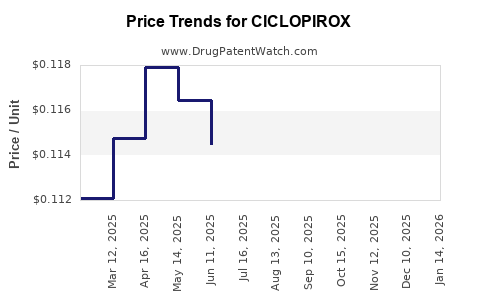
Drug Prices for CICLOPIROX

See drug prices for CICLOPIROX

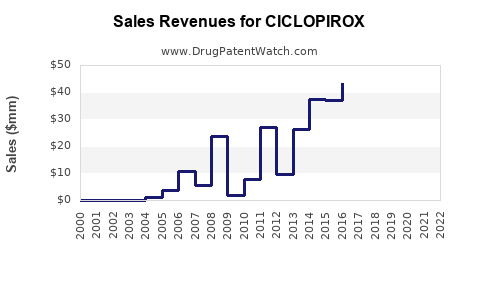
Drug Sales Revenue Trends for CICLOPIROX

See drug sales revenues for CICLOPIROX

Recent Clinical Trials for CICLOPIROX

Identify potential brand extensions & 505(b)(2) entrants

SponsorPhase
Atlas Molecular PharmaPHASE1
Universidad Complutense de MadridPhase 4
Atlas Molecular PharmaPhase 1

See all CICLOPIROX clinical trials

Pharmacology for CICLOPIROX
Paragraph IV (Patent) Challenges for CICLOPIROX
Tradename Dosage Ingredient Strength NDA ANDAs Submitted Submissiondate
CICLOPIROX Gel ciclopirox 0.77% 020519 1 2006-05-10

US Patents and Regulatory Information for CICLOPIROX

Applicant Tradename Generic Name Dosage NDA Approval Date TE Type RLD RS Patent No. Patent Expiration Product Substance Delist Req. Exclusivity Expiration
Sun Pharma Canada CICLOPIROX ciclopirox SUSPENSION;TOPICAL 077092-001 Aug 10, 2005 DISCN No No ⤷  Start Trial ⤷  Start Trial ⤷  Start Trial
Cosette CICLOPIROX ciclopirox CREAM;TOPICAL 078463-001 Dec 20, 2010 AB RX No No ⤷  Start Trial ⤷  Start Trial ⤷  Start Trial
Encube CICLOPIROX ciclopirox SOLUTION;TOPICAL 077687-001 Sep 18, 2007 AT RX No No ⤷  Start Trial ⤷  Start Trial ⤷  Start Trial
Taro Pharm Inds CICLOPIROX ciclopirox SOLUTION;TOPICAL 078144-001 Sep 18, 2007 DISCN No No ⤷  Start Trial ⤷  Start Trial ⤷  Start Trial
>Applicant >Tradename >Generic Name >Dosage >NDA >Approval Date >TE >Type >RLD >RS >Patent No. >Patent Expiration >Product >Substance >Delist Req. >Exclusivity Expiration

Ciclopirox: Market Dynamics and Financial Trajectory

Last updated: February 19, 2026

Ciclopirox is an antifungal agent used to treat superficial mycoses. Its market performance is influenced by the prevalence of fungal infections, generic competition, and regulatory approvals for new formulations and indications. The global market for antifungal drugs, including ciclopirox, is projected to grow, driven by increasing awareness, early diagnosis, and the development of combination therapies.

What is the current market size and projected growth for Ciclopirox?

The market for ciclopirox is a segment within the broader antifungal therapeutics market. Accurate, specific market size figures for ciclopirox alone are often not independently reported by market research firms, as it is typically aggregated with other topical antifungals or broader antifungal drug categories. However, the global antifungal drug market was valued at approximately USD 13.5 billion in 2022 and is expected to expand at a compound annual growth rate (CAGR) of 5.3% from 2023 to 2030, reaching an estimated USD 20.3 billion by 2030 (1).

Ciclopirox's market share within this broader segment is driven by its efficacy against a range of dermatophytes, yeasts, and molds. Its use in treating conditions such as athlete's foot, ringworm, jock itch, and candidiasis contributes to its sustained demand. The availability of various dosage forms, including creams, lotions, shampoos, and nail lacquers, further supports its market penetration.

Key factors influencing its growth trajectory include:

  • Increasing prevalence of fungal infections: Lifestyle factors, environmental conditions, and a growing immunocompromised population contribute to a higher incidence of fungal skin and nail infections (2).
  • Generic availability: The presence of multiple generic manufacturers has increased accessibility and affordability, driving volume sales. However, it also leads to price erosion, impacting overall revenue growth for individual brands.
  • New formulations and delivery systems: Research and development efforts focused on improving drug delivery and patient compliance, such as enhanced permeation technologies for nail lacquers, can create new market opportunities.
  • Off-label uses and combination therapies: While primarily approved for superficial mycoses, ongoing research may explore or validate additional therapeutic applications or synergistic effects with other agents.

What are the key therapeutic indications for Ciclopirox?

Ciclopirox is approved for the topical treatment of superficial mycoses. Its primary indications include:

  • Tinea Pedis (Athlete's Foot): A common fungal infection affecting the feet.
  • Tinea Cruris (Jock Itch): A fungal infection of the groin area.
  • Tinea Corporis (Ringworm): A fungal infection of the body's skin.
  • Onychomycosis (Nail Fungus): Fungal infections of the fingernails and toenails. Ciclopirox olamine nail lacquer is specifically developed for this indication.
  • Seborrheic Dermatitis: While not a primary antifungal indication, ciclopirox has shown efficacy in managing the Malassezia yeast component often implicated in seborrheic dermatitis of the scalp and face (3).
  • Cutaneous Candidiasis: Fungal infections caused by Candida species affecting the skin.

The efficacy of ciclopirox is attributed to its broad spectrum of activity, which includes dermatophytes, yeasts, and some gram-positive and gram-negative bacteria. This broad-spectrum action differentiates it from some other topical antifungals.

Who are the major manufacturers and suppliers of Ciclopirox products?

The manufacturing and supply landscape for ciclopirox is characterized by both originator products and a significant number of generic manufacturers, particularly after patent expirations. Key players involved in the production and distribution of ciclopirox-containing formulations include:

  • Sanofi-Aventis (Originator of Penlac® Nail Lacquer): Sanofi remains a significant player, particularly with its branded formulations.
  • Generic Manufacturers: Numerous companies produce generic versions of ciclopirox cream, lotion, and shampoo. These include, but are not limited to:
    • Apotex Inc.
    • Taro Pharmaceutical Industries Ltd.
    • Bausch Health Companies Inc.
    • Mylan N.V. (now Viatris)
    • Sun Pharmaceutical Industries Ltd.
    • Teva Pharmaceutical Industries Ltd.
    • Actavis (now part of AbbVie)

The market for generic ciclopirox is highly competitive, with pricing and market access strategies being critical for sustained sales. Supply chain reliability and adherence to Good Manufacturing Practices (GMP) are paramount for all manufacturers.

What is the patent landscape and exclusivity status for Ciclopirox?

Ciclopirox was originally developed by Hoechst AG (now part of Sanofi). The primary patents related to the compound itself and its initial formulations have long expired. For example, the core patents for ciclopirox olamine were filed in the late 1970s and early 1980s.

The exclusivity for specific formulations, such as the 8% nail lacquer (Penlac®), was maintained through subsequent patent filings related to specific delivery systems, manufacturing processes, or new indications. However, these have also largely expired, paving the way for generic competition.

  • Core Compound Patents: Expired.
  • Formulation Patents (e.g., Nail Lacquer): Expired in major markets like the United States and Europe. For instance, the patent for the 8% nail lacquer was a key driver of its branded market position for many years.
  • Exclusivity Periods: Generic entry typically occurs following the expiration of listed patents and any market exclusivity granted by regulatory bodies (e.g., Hatch-Waxman Act in the U.S.).

The absence of significant patent protection for the active pharmaceutical ingredient (API) and most formulations means that the market is largely driven by generic competition, price, and market penetration strategies of formulators and distributors. Innovation is now focused on novel delivery systems or combinations rather than fundamental IP.

What are the key regulatory considerations and approval pathways for Ciclopirox?

Regulatory approval for ciclopirox products is managed by health authorities in different regions, such as the Food and Drug Administration (FDA) in the United States, the European Medicines Agency (EMA) in Europe, and others globally.

The approval pathway depends on the type of product:

  • New Drug Application (NDA) / Marketing Authorisation Application (MAA): This pathway is for novel formulations or new indications. It requires extensive clinical trial data demonstrating safety and efficacy. For ciclopirox, this would apply to a new delivery system or if it were seeking approval for a new therapeutic use.
  • Abbreviated New Drug Application (ANDA) / Generic Marketing Authorisation Application: For generic versions of approved ciclopirox products, the pathway involves demonstrating bioequivalence to the reference listed drug. This significantly reduces the preclinical and clinical data requirements, making the approval process faster and less expensive.

Key Regulatory Considerations:

  • Active Pharmaceutical Ingredient (API) Quality: Manufacturers must adhere to stringent quality standards for the API, including purity, impurity profiles, and stability, as per Good Manufacturing Practices (GMP).
  • Finished Product Quality: Formulations (creams, lotions, shampoos, lacquers) must meet specifications for active ingredient content, uniformity, stability, and microbial limits.
  • Labeling: Product labeling must accurately reflect approved indications, contraindications, warnings, precautions, and adverse reactions, consistent with the reference product or newly approved information.
  • Post-Market Surveillance: Manufacturers are responsible for monitoring and reporting adverse events after product launch.
  • International Harmonization: While regional authorities manage approvals, efforts towards international harmonization of regulatory requirements can streamline global market access.

The regulatory environment for topical antifungals is generally well-established, but any new claims or significant changes to formulations can trigger more rigorous review processes.

What are the competitive dynamics and market positioning of Ciclopirox?

The competitive landscape for ciclopirox is characterized by intense generic competition and its positioning as a broad-spectrum topical antifungal agent.

Key Competitive Factors:

  • Price: As a largely genericized market, pricing is a primary determinant of market share. Generic manufacturers compete aggressively on cost.
  • Availability and Distribution: Widespread availability through pharmacies, hospitals, and online retailers is crucial. Established distribution networks are a significant advantage.
  • Brand Recognition (for branded products): While generic penetration is high, established branded products like Penlac® maintain some market presence due to brand equity and physician familiarity.
  • Formulation Efficacy and Patient Compliance: The performance of different formulations (e.g., the convenience of a once-daily lotion versus a multi-application shampoo) and their impact on patient adherence influence physician prescribing habits and patient preference. Ciclopirox's efficacy against a broad range of pathogens, including some resistant strains, can be a differentiating factor.
  • Therapeutic Alternatives: Ciclopirox competes with other topical antifungal agents, including azoles (e.g., clotrimazole, miconazole, ketoconazole), allylamines (e.g., terbinafine), and other agents. The choice of treatment often depends on the specific fungal pathogen, the site of infection, severity, and patient factors.
  • Newer Therapies: While less common in the topical space, the development of novel antifungal agents or combination therapies could eventually shift market dynamics.

Market Positioning:

Ciclopirox is positioned as a reliable, broad-spectrum topical antifungal. Its strength lies in its broad spectrum of activity and availability in multiple dosage forms. For onychomycosis, the nail lacquer formulation offers a topical alternative or adjunct to systemic therapies. In seborrheic dermatitis, it is often used to manage the fungal component, sometimes in combination with other treatments.

The challenge for many manufacturers is maintaining profitability in a highly competitive generic market. Companies focus on efficient manufacturing, robust supply chains, and strong marketing to healthcare professionals and consumers.

What is the financial trajectory and revenue potential for Ciclopirox?

The financial trajectory of ciclopirox is largely dictated by the dynamics of the generic pharmaceutical market.

  • Revenue Drivers:

    • Volume Sales: The primary driver of revenue is the volume of prescriptions and over-the-counter sales, fueled by the prevalence of fungal infections.
    • Generic Pricing: While individual generic products have lower profit margins compared to branded drugs, a high volume of sales can still generate significant revenue. Price erosion is a constant factor.
    • Market Penetration: Expanding reach into new geographic markets or securing formulary acceptance can increase sales.
    • New Formulations/Indications: Although less likely for a mature drug, successful development and approval of novel formulations with enhanced efficacy or patient convenience could create new revenue streams.
  • Revenue Limitations:

    • Price Competition: Intense competition among generic manufacturers leads to continuous downward pressure on prices.
    • Patent Expirations: The absence of strong patent protection limits the ability to command premium pricing.
    • Maturity of the Drug: Ciclopirox is a well-established compound. The market for major indications is largely saturated by generics.

Financial Trajectory Outlook:

The revenue generated by ciclopirox is expected to remain relatively stable, with growth primarily driven by increased demand for antifungal treatments globally. However, significant revenue expansion beyond current levels is unlikely without major product innovations or significant market expansion.

The profitability for individual manufacturers will depend on their cost-efficiency, scale of production, and market access strategies. For the overall market, the trajectory reflects the steady demand for topical antifungals, tempered by the pricing pressures inherent in a genericized product category. Forecasts for the broader antifungal market (5.3% CAGR) suggest a generally positive, albeit moderate, growth environment for effective agents like ciclopirox.

Key Takeaways

Ciclopirox operates within a mature, competitive generic market segment of the broader antifungal therapeutics industry. Its established efficacy across a range of superficial mycoses ensures sustained demand, driven by increasing infection prevalence. However, the absence of significant patent protection limits pricing power, making volume and cost-efficiency critical for manufacturers. Growth is projected to align with the overall antifungal market, with innovation focusing on formulations rather than the API.

Frequently Asked Questions

  1. Are there any new patent filings or extensions that could impact Ciclopirox's market exclusivity? As of recent analysis, there are no active primary patents providing market exclusivity for the ciclopirox API or its standard formulations in major markets. Future patent activity would likely focus on novel delivery systems, synergistic combinations, or specific manufacturing processes, which could offer limited, formulation-specific protection.

  2. What is the current prescribing trend for Ciclopirox versus other topical antifungals like terbinafine or azoles? Prescribing trends vary by indication and physician preference. Ciclopirox is often chosen for its broad spectrum, including activity against yeasts and some bacteria, making it suitable for mixed infections or when the causative agent is not clearly identified. Terbinafine is typically preferred for dermatophyte infections due to its fungicidal activity and often shorter treatment durations. Azoles are widely used for their broad-spectrum coverage and availability in various formulations.

  3. What are the primary challenges for generic manufacturers in the Ciclopirox market? The primary challenges include intense price competition, achieving economies of scale in manufacturing, ensuring consistent API supply, and navigating complex regulatory requirements for ANDA/generic MAA submissions. Maintaining profitability requires efficient operations and effective market access strategies.

  4. How does the use of Ciclopirox in seborrheic dermatitis compare to its use in onychomycosis? In seborrheic dermatitis, ciclopirox is used to target the Malassezia yeast component, often as part of a combination therapy. Its efficacy is based on antifungal action. In onychomycosis, it is used as a topical lacquer to treat nail fungus, a more chronic and challenging condition requiring consistent application and often extended treatment periods.

  5. What is the typical duration of treatment for the most common indications of Ciclopirox, and how does this affect market demand? Treatment durations vary. For tinea pedis or corporis, treatment can range from two to four weeks. For onychomycosis with nail lacquer, treatment can extend for six months or longer due to the slow growth of the nail. These varied durations contribute to consistent, albeit episodic, demand for the product.

Citations

  1. Grand View Research. (2023). Antifungal Drugs Market Size, Share & Trends Analysis Report By Type (Echinocandins, Azoles, Polyenes, Others), By Route Of Administration, By End-Use, By Region, And Segment Forecasts, 2023 - 2030.
  2. Pappas, P. G., Perlin, M. H., & Casadei, J. A. (2022). Antifungal Drug Discovery: Challenges and Opportunities. Journal of Fungi, 8(12), 1259.
  3. Korting, H. C. (2000). Topical antifungal agents. Journal of the European Academy of Dermatology and Venereology, 14(1), 2-12.

More… ↓

⤷  Start Trial

Make Better Decisions: Try a trial or see plans & pricing

Drugs may be covered by multiple patents or regulatory protections. All trademarks and applicant names are the property of their respective owners or licensors. Although great care is taken in the proper and correct provision of this service, thinkBiotech LLC does not accept any responsibility for possible consequences of errors or omissions in the provided data. The data presented herein is for information purposes only. There is no warranty that the data contained herein is error free. We do not provide individual investment advice. This service is not registered with any financial regulatory agency. The information we publish is educational only and based on our opinions plus our models. By using DrugPatentWatch you acknowledge that we do not provide personalized recommendations or advice. thinkBiotech performs no independent verification of facts as provided by public sources nor are attempts made to provide legal or investing advice. Any reliance on data provided herein is done solely at the discretion of the user. Users of this service are advised to seek professional advice and independent confirmation before considering acting on any of the provided information. thinkBiotech LLC reserves the right to amend, extend or withdraw any part or all of the offered service without notice.