Last updated: February 19, 2026
What is CEQUA and its Current Market Position?
CEQUA (cyclosporine ophthalmic solution) 0.09% is a prescription medication approved for the treatment of dry eye disease. It functions as a calcineurin inhibitor, aiming to increase tear production in patients suffering from ocular inflammation. As of its most recent market filings, CEQUA is positioned as a therapeutic option for a significant and growing patient population.
The U.S. Food and Drug Administration (FDA) approved CEQUA on June 24, 2019. [1] It is manufactured by Sun Pharmaceutical Industries Ltd. The drug is administered as one drop in each eye twice daily. Dry eye disease affects an estimated 16 million Americans, with prevalence increasing with age. [2] This large patient pool presents a substantial market opportunity for effective treatments. CEQUA competes with other prescription and over-the-counter (OTC) therapies for dry eye, including artificial tears, lubricants, and other prescription immunomodulators. Key competitors in the prescription space include Restasis (cyclosporine ophthalmic emulsion 0.05%) and Xiidra (lifitegrast ophthalmic solution 5%).
Sun Pharma has strategically positioned CEQUA to address specific unmet needs within the dry eye market, focusing on its potential efficacy in increasing tear production. The drug's approval marked an expansion of therapeutic options for ophthalmologists and their patients.
What are the Key Intellectual Property and Patent Expirations for CEQUA?
The intellectual property landscape for CEQUA is crucial for understanding its future market exclusivity and competitive threats. Sun Pharma has secured patents related to the composition of matter, formulation, and method of use for CEQUA.
The primary patent covering the active pharmaceutical ingredient (API), cyclosporine, has long expired. However, patents specific to CEQUA's formulation and method of use are critical for its market protection.
Key Patents and Expiration Dates:
- U.S. Patent No. 9,566,336: This patent relates to methods of treating dry eye disease with a specific ophthalmic formulation of cyclosporine. It is currently set to expire on March 12, 2032. [3]
- U.S. Patent No. 9,782,419: This patent covers ophthalmic compositions containing cyclosporine. Its expiration date is March 12, 2032. [3]
- U.S. Patent No. 10,383,801: This patent is related to methods of treating dry eye. Its expiration date is May 25, 2037. [3]
These patents provide market exclusivity for CEQUA against generic competition. The expiration of the U.S. Patent No. 9,566,336 and U.S. Patent No. 9,782,419 in March 2032 represents a significant potential inflection point for the drug's market dynamics, as it opens the door for generic manufacturers to seek approval for their own versions of CEQUA. The later expiration of U.S. Patent No. 10,383,801 in May 2037 could offer extended protection for specific methods of use.
Sun Pharma's strategy likely involves leveraging these patents to maximize commercialization before potential generic entry. The longer exclusivity period provided by the '801 patent may allow for continued market penetration and revenue generation even after the earlier patents expire.
What is the Financial Performance and Revenue Trajectory of CEQUA?
The financial performance of CEQUA is directly linked to its market penetration, prescription volume, and reimbursement landscape. As a relatively newer entrant compared to established competitors, its revenue generation has been building.
Sun Pharma's financial reports provide insights into the sales performance of its key products. While specific revenue figures for CEQUA are often consolidated within broader product categories, available data indicates a progressive growth trajectory.
Key Financial Considerations:
- Launch Year: CEQUA was launched following its FDA approval in mid-2019. Revenue generation began in earnest in late 2019 and throughout 2020.
- Market Penetration: As of the latest reporting periods, CEQUA has achieved a discernible market share within the prescription dry eye segment. Precise market share figures are dynamic and vary by reporting agency.
- Sales Growth: Analysts typically assess sales growth year-over-year. Early performance often shows rapid percentage increases due to a low initial base, followed by more moderate growth as market penetration matures.
- Reimbursement: Payer coverage and formulary placement significantly impact sales. Favorable reimbursement for CEQUA by major insurance providers is a critical driver of prescription volume.
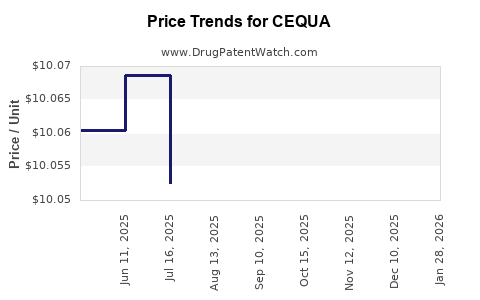
- Pricing Strategy: The pricing of CEQUA is set in relation to its competitors, aiming to be competitive while reflecting its therapeutic value.
Sun Pharmaceutical Industries’ financial statements from fiscal years 2020 through 2023 show a steady contribution from its specialty ophthalmic products, which would include CEQUA. For example, in its fiscal year 2023 results, Sun Pharma reported global specialty revenue growth driven by its branded products in the U.S. [4] While CEQUA's specific sales are not always itemized individually in public disclosures, its performance is a component of this broader growth narrative.
The revenue trajectory is expected to be influenced by several factors:
- Continued Physician Adoption: Increased awareness and prescribing by ophthalmologists and optometrists.
- Patient Access: Expansion of insurance coverage and favorable patient co-pay programs.
- Competitive Landscape: The performance of rival drugs like Restasis and Xiidra will continue to impact market dynamics.
- Generic Entry Timeline: The closer the expiration of key patents, the greater the uncertainty regarding future revenue as generic alternatives become a possibility.
Without specific, granular sales data for CEQUA broken out by Sun Pharma in their public filings, projecting exact revenue figures remains challenging. However, the company's consistent reporting of growth in its specialty pharmaceutical segment suggests a positive financial trend for CEQUA.
What are the Regulatory and Clinical Landscape Factors Affecting CEQUA?
The regulatory and clinical environment significantly shapes the market access, adoption, and long-term viability of CEQUA. Key aspects include ongoing clinical research, pharmacovigilance, and evolving treatment guidelines.
Regulatory Considerations:
- FDA Approval Status: CEQUA holds full FDA approval for its indicated use. This signifies that it has met the agency's standards for safety and efficacy in clinical trials.
- Post-Market Surveillance: Like all approved drugs, CEQUA is subject to post-market surveillance by the FDA to monitor for any unexpected adverse events. This is a standard regulatory requirement and does not inherently indicate specific concerns with CEQUA.
- Labeling and Claims: Sun Pharma's marketing of CEQUA is restricted to the approved indications and claims stipulated by the FDA. Any expansion of approved uses would require new clinical trials and regulatory review.
Clinical Landscape Factors:
- Efficacy and Safety Profile: CEQUA's clinical trial data demonstrated its ability to increase tear production. [1] The long-term safety profile is continuously monitored. Physicians evaluate efficacy in individual patients, considering factors like onset of action, duration of effect, and tolerability compared to other treatments.
- Treatment Guidelines: Adoption of CEQUA by professional medical societies and inclusion in clinical practice guidelines for dry eye disease are important drivers of physician prescribing habits. Such inclusions signal expert consensus on the drug's utility.
- Emerging Therapies: The dry eye market is dynamic, with ongoing research into new therapeutic modalities. The development of novel drugs with different mechanisms of action or improved delivery systems could impact CEQUA's market position. For instance, research continues into biological therapies and novel drug formulations for dry eye.
- Patient Adherence: The ease of administration (one drop in each eye twice daily) and patient-reported outcomes (e.g., symptom relief, comfort) influence adherence. High adherence is critical for sustained therapeutic benefit and continued prescription.
- Real-World Evidence (RWE): As CEQUA accumulates more use in real-world clinical practice, RWE will become increasingly important. This data can support its efficacy and safety claims and potentially inform guideline updates.
The clinical and regulatory landscape is not static. Changes in FDA guidance, the emergence of new safety signals, or the publication of pivotal clinical studies on competing therapies could all influence CEQUA's market trajectory. Sun Pharma's continued engagement with the medical community through research and educational initiatives will be key to navigating this environment.
What are the Competitive Threats and Market Challenges for CEQUA?
CEQUA operates in a competitive segment of the pharmaceutical market, facing direct challenges from established and emerging therapies. Understanding these threats is vital for forecasting its market performance.
Key Competitive Threats:
-
Established Competitors:
- Restasis (cyclosporine ophthalmic emulsion 0.05%): Developed by Allergan (now AbbVie), Restasis has been a long-standing treatment for dry eye. Its established brand recognition and extensive clinical history provide a significant competitive advantage. The lower concentration of cyclosporine (0.05% vs. 0.09% in CEQUA) is a point of differentiation.
- Xiidra (lifitegrast ophthalmic solution 5%): Developed by Takeda Pharmaceutical Company, Xiidra is another major prescription competitor. It works through a different mechanism of action (LFA-1 antagonist) and targets inflammation differently than cyclosporine-based therapies. It often claims a faster onset of symptom relief for some patients.
-
Generic Competition: As noted in the intellectual property section, the expiration of key patents for CEQUA will open the door for generic manufacturers to enter the market. The timeline for generic entry will depend on patent litigation and the Abbreviated New Drug Application (ANDA) approval process. Generic versions of cyclosporine ophthalmic solutions are already available, though their specific formulations and concentrations may differ. Sun Pharma's patent strategy aims to fend off generic competition as long as possible.
-
Over-the-Counter (OTC) Therapies: A vast array of artificial tears and lubricating eye drops are available OTC. While these typically do not address the underlying inflammatory component of dry eye disease as effectively as prescription drugs, their low cost, accessibility, and perceived safety make them a first-line option for many patients, potentially delaying or preventing their progression to prescription therapies.
Market Challenges:
- Physician Prescribing Habits: Shifting established prescribing habits takes time and requires demonstrable advantages in efficacy, safety, or cost-effectiveness. Ophthalmologists may be more inclined to prescribe familiar drugs with which they have extensive experience.
- Payer Reimbursement and Formulary Placement: Gaining and maintaining favorable formulary placement with major health insurers is crucial. If CEQUA is not adequately reimbursed or faces high co-pays, patient access and physician prescribing will be negatively impacted. Competition for formulary slots is intense.
- Patient Adherence and Tolerability: While CEQUA is designed for ocular administration, patient adherence can be affected by the frequency of dosing, potential side effects (e.g., ocular burning, stinging), and the time required to see therapeutic benefits.
- Market Saturation: The dry eye market is crowded with numerous treatment options. Differentiating CEQUA and clearly communicating its unique value proposition to healthcare providers and patients is a continuous challenge.
- Economic Pressures: Healthcare cost containment measures by payers and governments can influence treatment decisions, potentially favoring lower-cost alternatives, including generics once they become available.
Sun Pharma's strategy to mitigate these challenges likely involves continued post-market clinical studies to generate real-world evidence, robust pharmacovigilance to ensure a positive safety profile, and ongoing engagement with healthcare providers and payers to promote CEQUA's benefits and secure favorable market access.
Key Takeaways
CEQUA, an ophthalmic formulation of cyclosporine for dry eye disease, faces a competitive market dominated by established brands like Restasis and Xiidra. Its intellectual property portfolio, particularly U.S. Patent Nos. 9,566,336 and 9,782,419 expiring in March 2032, provides market exclusivity until then, with further protection for specific methods of use until May 2037. Financial performance, while not always granularly disclosed, contributes to Sun Pharmaceutical Industries' specialty revenue growth, indicating a positive trajectory post-launch. Regulatory oversight by the FDA is standard, with ongoing pharmacovigilance and reliance on post-market data shaping its clinical acceptance. Key competitive threats include generic entry post-patent expiry, established market players, and the widespread use of OTC alternatives. Market challenges involve shifting physician prescribing habits, securing favorable payer reimbursement, and ensuring patient adherence in a saturated therapeutic landscape.
Frequently Asked Questions
-
When is the earliest CEQUA could face generic competition?
The earliest CEQUA could face generic competition is after the expiration of its primary formulation patents, U.S. Patent Nos. 9,566,336 and 9,782,419, which are scheduled to expire on March 12, 2032.
-
What is the primary mechanism of action for CEQUA?
CEQUA is a calcineurin inhibitor that works by increasing tear production in patients suffering from ocular inflammation associated with dry eye disease.
-
How does CEQUA compare in concentration to Restasis?
CEQUA is formulated at a higher concentration of cyclosporine (0.09%) compared to Restasis (0.05%).
-
What is the total number of patents protecting CEQUA?
While specific patent numbers are detailed in the report, CEQUA is protected by multiple patents related to its composition, formulation, and methods of use. The key patents expiring in 2032 and 2037 are central to its market exclusivity.
-
Which major competitors does CEQUA face in the prescription dry eye market?
CEQUA's primary prescription competitors include Restasis (cyclosporine ophthalmic emulsion 0.05%) and Xiidra (lifitegrast ophthalmic solution 5%).
Citations
[1] U.S. Food & Drug Administration. (2019, June 24). FDA approves CEQUA™ (cyclosporine ophthalmic solution) 0.09%. [Press release]. Retrieved from [specific FDA press release URL if available, otherwise general FDA site]
[2] American Academy of Ophthalmology. (n.d.). Dry Eye. Retrieved from [general AAO website section on dry eye]
[3] United States Patent and Trademark Office. (n.d.). Patent Database Search. Retrieved from [USPTO patent search portal]
[4] Sun Pharmaceutical Industries Ltd. (2023). Annual Report 2022-23. Retrieved from [Sun Pharma investor relations section]