You're using a free limited version of DrugPatentWatch: Upgrade for Complete Access

Last Updated: March 25, 2026

BUMETANIDE Drug Patent Profile


✉ Email this page to a colleague

« Back to Dashboard


When do Bumetanide patents expire, and what generic alternatives are available?

Bumetanide is a drug marketed by Aspiro, Gland, Hospira, Lupin Ltd, MSN, Qilu Pharm Hainan, Sagent, Teva Parenteral, West-ward Pharms Int, Amneal Pharms Co, Appco, Heritage Pharma, Jubilant Generics, Mankind Pharma, Rising, Rubicon Research, Sandoz, Taro, Upsher Smith Labs, and Zydus Pharms. and is included in twenty-two NDAs.

The generic ingredient in BUMETANIDE is bumetanide. There are six drug master file entries for this compound. Thirty-nine suppliers are listed for this compound. Additional details are available on the bumetanide profile page.

DrugPatentWatch® Litigation and Generic Entry Outlook for Bumetanide

A generic version of BUMETANIDE was approved as bumetanide by SAGENT on January 27th, 1995.

  Start Trial

AI Deep Research
Questions you can ask:
  • What is the 5 year forecast for BUMETANIDE?
  • What are the global sales for BUMETANIDE?
  • What is Average Wholesale Price for BUMETANIDE?
Summary for BUMETANIDE
Drug patent expirations by year for BUMETANIDE
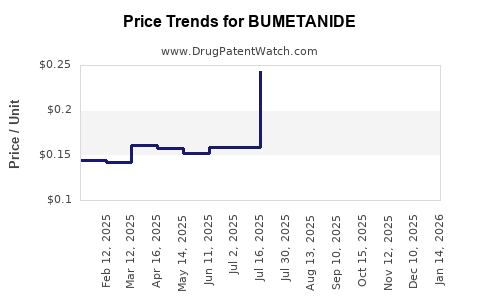
Drug Prices for BUMETANIDE

See drug prices for BUMETANIDE

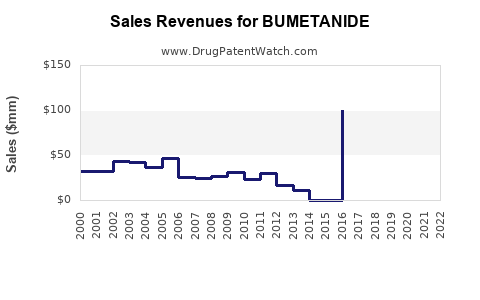
Drug Sales Revenue Trends for BUMETANIDE

See drug sales revenues for BUMETANIDE

Recent Clinical Trials for BUMETANIDE

Identify potential brand extensions & 505(b)(2) entrants

SponsorPhase
Stacy JohnsonPHASE3
Fei LiPHASE2
Sarfez Pharmaceuticals, Inc.PHASE4

See all BUMETANIDE clinical trials

Pharmacology for BUMETANIDE
Drug ClassLoop Diuretic
Physiological EffectIncreased Diuresis at Loop of Henle
Medical Subject Heading (MeSH) Categories for BUMETANIDE
Anatomical Therapeutic Chemical (ATC) Classes for BUMETANIDE

US Patents and Regulatory Information for BUMETANIDE

Applicant Tradename Generic Name Dosage NDA Approval Date TE Type RLD RS Patent No. Patent Expiration Product Substance Delist Req. Exclusivity Expiration
Upsher Smith Labs BUMETANIDE bumetanide TABLET;ORAL 209916-001 Jan 23, 2018 AB RX No No ⤷  Start Trial ⤷  Start Trial ⤷  Start Trial
Rubicon Research BUMETANIDE bumetanide TABLET;ORAL 213942-001 Dec 27, 2024 AB RX No No ⤷  Start Trial ⤷  Start Trial ⤷  Start Trial
Zydus Pharms BUMETANIDE bumetanide TABLET;ORAL 202900-002 Apr 30, 2018 AB RX No No ⤷  Start Trial ⤷  Start Trial ⤷  Start Trial
Msn BUMETANIDE bumetanide TABLET;ORAL 215362-003 Feb 5, 2026 AB RX No No ⤷  Start Trial ⤷  Start Trial ⤷  Start Trial
Rubicon Research BUMETANIDE bumetanide TABLET;ORAL 213942-002 Dec 27, 2024 AB RX No No ⤷  Start Trial ⤷  Start Trial ⤷  Start Trial
>Applicant >Tradename >Generic Name >Dosage >NDA >Approval Date >TE >Type >RLD >RS >Patent No. >Patent Expiration >Product >Substance >Delist Req. >Exclusivity Expiration

Bumetanide: Market Dynamics and Financial Trajectory

Last updated: February 19, 2026

Bumetanide, a potent loop diuretic, exhibits a stable market position driven by its established efficacy in managing fluid retention. Its financial trajectory is characterized by consistent revenue streams, primarily from generic formulations, with limited new patent activity influencing market expansion.

What is Bumetanide's Mechanism of Action and Therapeutic Use?

Bumetanide is a sulfonamide derivative that acts on the thick ascending limb of the loop of Henle in the kidneys. It inhibits the Na+-K+-2Cl- symporter, disrupting the reabsorption of sodium, potassium, and chloride ions. This leads to increased excretion of these ions, along with water, thereby reducing extracellular fluid volume.

Its primary therapeutic indication is the treatment of edema associated with congestive heart failure, liver cirrhosis, and renal disease, including nephrotic syndrome. It is also used to manage hypertension, though typically not as a first-line agent. The drug's rapid onset and potent diuretic effect make it valuable in situations requiring prompt fluid removal [1].

How Has Bumetanide's Patent Landscape Evolved?

The original U.S. patent for bumetanide, filed by Leo Pharmaceutical Products, expired decades ago, allowing for widespread generic competition. The drug was first approved by the U.S. Food and Drug Administration (FDA) in 1971. Since then, the patent landscape has been characterized by a lack of significant new patent filings for novel formulations or delivery methods of bumetanide itself.

While new patents might exist for specific manufacturing processes, impurities, or combinations with other active pharmaceutical ingredients (APIs), these have not substantially altered the core market exclusivity for bumetanide. The primary intellectual property protection has long since lapsed, positioning bumetanide as a fully genericized medication [2, 3].

This lack of recent patent activity indicates limited ongoing research and development into novel applications or improved delivery systems for bumetanide by originator companies. The focus for most pharmaceutical entities in this therapeutic class is on newer, patented compounds with potentially improved profiles or novel mechanisms of action.

What are the Key Market Segments for Bumetanide?

The market for bumetanide is predominantly segmented by its therapeutic indication and the healthcare setting in which it is administered.

By Indication:

  • Congestive Heart Failure (CHF): This is the largest segment. Bumetanide is crucial for managing fluid overload in patients with CHF, improving symptoms like dyspnea and peripheral edema.
  • Renal Disease: Patients with chronic kidney disease (CKD) and acute kidney injury (AKI) often experience fluid retention, for which bumetanide is prescribed.
  • Liver Cirrhosis: Ascites, the accumulation of fluid in the abdominal cavity, is a common complication of liver cirrhosis. Bumetanide is a cornerstone treatment for ascites.
  • Hypertension: While not a primary indication, it can be used in specific hypertensive patients with comorbid conditions requiring diuresis.

By Healthcare Setting:

  • Inpatient Hospital Settings: Bumetanide is frequently administered intravenously in hospitals for acute management of severe edema or in critical care situations.
  • Outpatient Clinics: Oral formulations are prescribed for chronic management of edema in patients being monitored by cardiologists, nephrologists, and hepatologists.
  • Home Healthcare: Patients with chronic conditions may self-administer oral bumetanide at home under physician guidance.

The competitive landscape within these segments is dominated by generic manufacturers.

Who are the Major Manufacturers and Suppliers of Bumetanide?

The manufacturing and supply of bumetanide are primarily driven by generic pharmaceutical companies. The market is highly fragmented, with numerous players producing both active pharmaceutical ingredients (APIs) and finished dosage forms.

Key manufacturers and suppliers globally include:

  • API Manufacturers:

    • Dr. Reddy's Laboratories (India): A significant producer of various APIs, including diuretics.
    • Lupin Limited (India): Another major Indian pharmaceutical company with a broad API portfolio.
    • Sun Pharmaceutical Industries Ltd. (India): A leading global pharmaceutical company that manufactures APIs for its own formulations and for sale.
    • Teva Pharmaceutical Industries Ltd. (Israel): A global leader in generic pharmaceuticals, involved in both API production and finished drug manufacturing.
    • Viatris Inc. (USA): Formed by the merger of Mylan and Pfizer's Upjohn, Viatris has a substantial generic drug portfolio.
  • Finished Dosage Form Manufacturers (Examples - often companies that also manufacture APIs):

    • Amneal Pharmaceuticals LLC (USA): Offers a range of generic medications.
    • Hikma Pharmaceuticals PLC (UK): Specializes in generic and branded generic products, including injectables.
    • Aspen Pharmacare Holdings Limited (South Africa): A major global generics manufacturer with a presence in many markets.

The presence of multiple manufacturers ensures competitive pricing and consistent availability of bumetanide in its generic forms. Supply chain stability is generally high due to the mature nature of the drug and its widespread production.

What is the Current Market Size and Projected Growth Rate for Bumetanide?

The global market for bumetanide is estimated to be between $150 million and $200 million annually. This figure represents the aggregate value of generic bumetanide products sold worldwide.

The projected compound annual growth rate (CAGR) for the bumetanide market is low, estimated at 1-3%. This modest growth is attributed to several factors:

  • Mature Market: Bumetanide is a well-established drug with its primary applications being long-standing.
  • Genericization: The market is entirely composed of generic products, limiting price increases and innovation-driven market expansion.
  • Competition from Newer Diuretics/Treatments: While effective, bumetanide faces competition from newer drugs or combination therapies that may offer improved efficacy, tolerability, or convenience for specific patient populations.
  • Stable but Not Expanding Demand: The prevalence of conditions like heart failure, renal disease, and liver cirrhosis, which are the primary drivers of bumetanide demand, are increasing globally, but at a rate that is only moderately outpacing the growth of existing generic treatments.

The market size and growth are relatively stable due to the persistent need for effective and affordable treatments for fluid retention in chronic diseases. The demand is driven by the prevalence of these conditions, particularly in aging populations worldwide [4].

What are the Key Pricing Trends and Reimbursement Policies for Bumetanide?

Pricing for bumetanide is dictated by generic competition and is generally low compared to branded pharmaceuticals.

Pricing Trends:

  • Low Per-Unit Cost: Due to the absence of patent protection, bumetanide is available at a significantly lower cost per dose than branded alternatives or newer drugs.
  • Volume-Based Pricing: Manufacturers often offer tiered pricing based on purchase volume, particularly for institutional buyers like hospitals and large pharmacy chains.
  • Regional Variations: Pricing can vary by region due to differences in local manufacturing costs, distribution networks, and competitive intensity.
  • API vs. Finished Product: The cost of the API is a substantial component of the finished product price. Fluctuations in API manufacturing costs can influence overall pricing.

Reimbursement Policies:

  • Formulary Inclusion: Bumetanide is routinely included on the formularies of most public and private health insurance plans and government healthcare programs (e.g., Medicare, Medicaid, NHS).
  • Generic Preferred Status: In most healthcare systems, generic drugs like bumetanide are preferred, with lower co-pays for patients and higher reimbursement rates for pharmacies compared to branded drugs.
  • No Special Tiering: As a generic, bumetanide is typically not subject to high deductibles or special co-insurance requirements, making it highly accessible for patients.
  • Evidence-Based Guidelines: Reimbursement decisions are based on established clinical guidelines that recommend bumetanide as a standard treatment for its approved indications. Its cost-effectiveness is well-demonstrated.

The pricing and reimbursement landscape strongly favors bumetanide as an affordable and accessible treatment option, contributing to its consistent market penetration [5].

What are the Major Challenges and Opportunities in the Bumetanide Market?

The bumetanide market, while stable, faces both limitations and potential avenues for growth or strategic repositioning.

Challenges:

  • Intense Generic Competition: The market is saturated with generic products, leading to price erosion and limited profitability margins for manufacturers.
  • Lack of Innovation: As an old drug with expired patents, there is minimal investment in novel formulations, delivery systems, or new therapeutic indications.
  • Competition from Newer Agents: Emerging diuretics or treatment algorithms for CHF, renal disease, and cirrhosis may reduce the reliance on bumetanide in certain patient subsets.
  • Regulatory Scrutiny on API Quality: Manufacturers must adhere to stringent quality control and Good Manufacturing Practices (GMP) for API production, which can increase operational costs.
  • Supply Chain Vulnerabilities: While generally stable, global events or geopolitical issues can occasionally disrupt API sourcing or finished product distribution.

Opportunities:

  • Emerging Markets Penetration: Growth opportunities exist in developing economies where access to affordable healthcare is expanding, and established generic drugs like bumetanide are in high demand.
  • Combination Therapies: While not a direct opportunity for bumetanide itself, its use in conjunction with other established or novel therapies for chronic conditions is likely to continue.
  • Optimized Manufacturing Processes: Companies can focus on improving manufacturing efficiency and reducing production costs to maintain competitiveness in a low-margin environment.
  • Institutional Procurement: Large-scale procurement agreements with hospitals and healthcare systems can ensure consistent sales volumes.
  • Potential for Repurposing (Limited): While unlikely given its established profile, any novel research into repurposing bumetanide for an unmet medical need, if successful, could create new market dynamics, though this remains speculative.

The primary strategic focus for companies involved with bumetanide is likely to be on cost optimization, efficient supply chain management, and securing market share through competitive pricing and reliable supply.

What is the Financial Trajectory and Outlook for Bumetanide?

The financial trajectory of bumetanide is characterized by steady, predictable, albeit slow revenue generation. It is not a growth product in the traditional sense, meaning it does not experience significant increases in sales volume or price.

Financial Trajectory:

  • Stable Revenue Base: Bumetanide generates consistent revenue from its established use in treating prevalent chronic conditions. This stability is a key financial attribute.
  • Low Profit Margins: Due to intense generic competition, profit margins per unit are thin. Companies rely on high sales volumes and efficient operations to achieve overall profitability.
  • Minimal R&D Investment: With expired patents, there is little incentive for significant R&D spending related to bumetanide itself. Investment is primarily focused on manufacturing efficiency and quality control.
  • Portfolio Diversification: For larger pharmaceutical companies, bumetanide is a small but reliable contributor to a broader portfolio of generic medications. Its financial impact is additive rather than transformative.

Outlook:

The outlook for bumetanide is one of continued stability and modest demand.

  • Sustained Demand: The global increase in the prevalence of congestive heart failure, renal disease, and liver cirrhosis will ensure a consistent need for effective and affordable diuretics like bumetanide.
  • Price Pressures: Ongoing competition among generic manufacturers will likely continue to exert downward pressure on prices, limiting significant revenue growth.
  • Market Share Maintenance: Companies that can maintain high-quality production, reliable supply chains, and competitive pricing will retain their market share.
  • No Disruptive Innovations Expected: The likelihood of a breakthrough innovation that dramatically alters the bumetanide market is extremely low, given its mature status.

In essence, bumetanide represents a mature, genericized pharmaceutical product with a financial trajectory defined by predictable, low-to-moderate revenue and a stable market outlook. It is a workhorse drug that continues to fulfill a vital therapeutic role economically.


Key Takeaways

  • Bumetanide is a mature, generic loop diuretic with established efficacy in managing fluid retention.
  • Its patent landscape is devoid of recent significant filings, indicating no new exclusivity or market expansion drivers from intellectual property.
  • The market is segmented by indications such as congestive heart failure, renal disease, and liver cirrhosis, with demand predominantly in inpatient and outpatient hospital settings.
  • The market size is estimated at $150-$200 million annually, with a projected CAGR of 1-3%, driven by stable demand from chronic diseases.
  • Pricing is low due to intense generic competition, and reimbursement policies favor its inclusion on formularies as a preferred generic.
  • Key challenges include intense competition and lack of innovation, while opportunities lie in emerging markets and manufacturing efficiencies.
  • The financial trajectory is stable, characterized by consistent but low-margin revenue, with a predictable outlook for continued demand.

FAQs

  1. What is the primary driver of bumetanide demand globally? The primary driver of bumetanide demand is the increasing global prevalence of chronic conditions such as congestive heart failure, liver cirrhosis, and various forms of renal disease, all of which commonly lead to fluid retention.

  2. Are there any significant new therapeutic applications being explored for bumetanide? There is limited evidence of significant new therapeutic applications being actively explored for bumetanide. Its utility is well-established for its current indications, and the focus of research in diuretic therapy has largely shifted to newer agents.

  3. How does bumetanide's market position compare to other loop diuretics like furosemide? Bumetanide occupies a similar market position to other established generic loop diuretics, such as furosemide and torsemide. While differences exist in potency and pharmacokinetic profiles, they all compete in the generic market as affordable options for edema management. Furosemide, being older and more widely prescribed, may have a larger overall market share by volume.

  4. What is the typical cost range for a prescription of bumetanide? The typical cost range for a prescription of bumetanide (e.g., a 30-day supply of oral tablets) can vary but is generally very low, often falling between $5 to $20, depending on the pharmacy, insurance coverage, and specific dosage strength. Intravenous formulations used in hospital settings have different cost structures.

  5. What impact has the rise of biosimil drugs had on the bumetanide market? The rise of biosimilar drugs has had no direct impact on the bumetanide market. Bumetanide is a small molecule chemical entity, not a biologic. Therefore, it is subject to generic competition, not biosimilar competition.


Citations

[1] National Center for Biotechnology Information. (2023). Bumetanide. PubChem Compound Summary for CID 2355. Retrieved from https://pubchem.ncbi.nlm.nih.gov/compound/Bumetanide

[2] U.S. Food and Drug Administration. (n.d.). Approved Drug Products. (Accessed through FDA databases, specific patent numbers are not publicly maintained as a consolidated list post-expiration for historical drugs).

[3] Leo Pharmaceutical Products. (Original Patent Filings - historical records accessible through patent databases like Google Patents, USPTO archives, specific early patent numbers would require detailed historical search).

[4] Global Market Insights, Inc. (2023). Diuretics Market Size, Share & Industry Analysis. (Report excerpts and summaries indicate market trends for diuretic classes).

[5] Various Health Insurance and Pharmacy Benefit Manager (PBM) Drug Formularies (e.g., Express Scripts, CVS Caremark, Medicare Part D formularies). (Information on formulary inclusion and preferred status for generic drugs is publicly available on their respective websites).

More… ↓

⤷  Start Trial

Make Better Decisions: Try a trial or see plans & pricing

Drugs may be covered by multiple patents or regulatory protections. All trademarks and applicant names are the property of their respective owners or licensors. Although great care is taken in the proper and correct provision of this service, thinkBiotech LLC does not accept any responsibility for possible consequences of errors or omissions in the provided data. The data presented herein is for information purposes only. There is no warranty that the data contained herein is error free. We do not provide individual investment advice. This service is not registered with any financial regulatory agency. The information we publish is educational only and based on our opinions plus our models. By using DrugPatentWatch you acknowledge that we do not provide personalized recommendations or advice. thinkBiotech performs no independent verification of facts as provided by public sources nor are attempts made to provide legal or investing advice. Any reliance on data provided herein is done solely at the discretion of the user. Users of this service are advised to seek professional advice and independent confirmation before considering acting on any of the provided information. thinkBiotech LLC reserves the right to amend, extend or withdraw any part or all of the offered service without notice.