You're using a free limited version of DrugPatentWatch: Upgrade for Complete Access

Last Updated: March 27, 2026

BESIVANCE Drug Patent Profile


✉ Email this page to a colleague

« Back to Dashboard


Which patents cover Besivance, and when can generic versions of Besivance launch?

Besivance is a drug marketed by Bausch And Lomb and is included in one NDA. There are four patents protecting this drug.

This drug has twenty-four patent family members in thirteen countries.

The generic ingredient in BESIVANCE is besifloxacin hydrochloride. There are four drug master file entries for this compound. Two suppliers are listed for this compound. Additional details are available on the besifloxacin hydrochloride profile page.

DrugPatentWatch® Generic Entry Outlook for Besivance

Besivance was eligible for patent challenges on May 28, 2013.

By analyzing the patents and regulatory protections it appears that the earliest date for generic entry will be January 9, 2031. This may change due to patent challenges or generic licensing.

Indicators of Generic Entry

< Available with Subscription >

  Start Trial

AI Deep Research
Questions you can ask:
  • What is the 5 year forecast for BESIVANCE?
  • What are the global sales for BESIVANCE?
  • What is Average Wholesale Price for BESIVANCE?
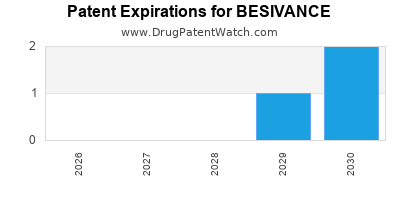
Drug patent expirations by year for BESIVANCE
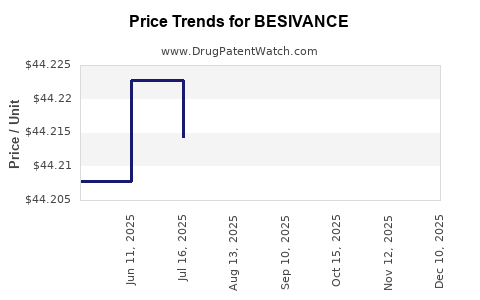
Drug Prices for BESIVANCE

See drug prices for BESIVANCE

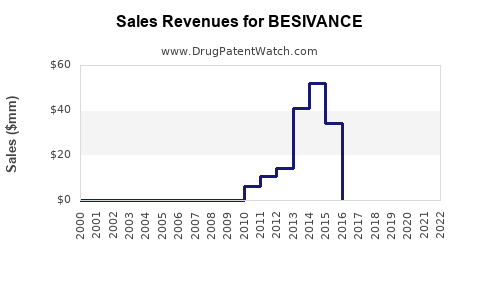
Drug Sales Revenue Trends for BESIVANCE

See drug sales revenues for BESIVANCE

DrugPatentWatch® Estimated Loss of Exclusivity (LOE) Date for BESIVANCE
Generic Entry Date for BESIVANCE*:
Constraining patent/regulatory exclusivity:
NDA:
Dosage:
SUSPENSION/DROPS;OPHTHALMIC

*The generic entry opportunity date is the latter of the last compound-claiming patent and the last regulatory exclusivity protection. Many factors can influence early or later generic entry. This date is provided as a rough estimate of generic entry potential and should not be used as an independent source.

Recent Clinical Trials for BESIVANCE

Identify potential brand extensions & 505(b)(2) entrants

SponsorPhase
Sight Medical Doctors PLLCPhase 4
Ocular Therapeutix, Inc.Phase 4
Rutgers, The State University of New JerseyPhase 1

See all BESIVANCE clinical trials

Pharmacology for BESIVANCE

US Patents and Regulatory Information for BESIVANCE

BESIVANCE is protected by four US patents.

Based on analysis by DrugPatentWatch, the earliest date for a generic version of BESIVANCE is ⤷  Start Trial.

This potential generic entry date is based on patent 8,481,526.

Generics may enter earlier, or later, based on new patent filings, patent extensions, patent invalidation, early generic licensing, generic entry preferences, and other factors.

Applicant Tradename Generic Name Dosage NDA Approval Date TE Type RLD RS Patent No. Patent Expiration Product Substance Delist Req. Exclusivity Expiration
Bausch And Lomb BESIVANCE besifloxacin hydrochloride SUSPENSION/DROPS;OPHTHALMIC 022308-001 May 28, 2009 RX Yes Yes 8,937,062 ⤷  Start Trial ⤷  Start Trial
Bausch And Lomb BESIVANCE besifloxacin hydrochloride SUSPENSION/DROPS;OPHTHALMIC 022308-001 May 28, 2009 RX Yes Yes 8,481,526 ⤷  Start Trial Y ⤷  Start Trial
Bausch And Lomb BESIVANCE besifloxacin hydrochloride SUSPENSION/DROPS;OPHTHALMIC 022308-001 May 28, 2009 RX Yes Yes 8,415,342 ⤷  Start Trial ⤷  Start Trial
Bausch And Lomb BESIVANCE besifloxacin hydrochloride SUSPENSION/DROPS;OPHTHALMIC 022308-001 May 28, 2009 RX Yes Yes 8,604,020 ⤷  Start Trial Y ⤷  Start Trial
>Applicant >Tradename >Generic Name >Dosage >NDA >Approval Date >TE >Type >RLD >RS >Patent No. >Patent Expiration >Product >Substance >Delist Req. >Exclusivity Expiration

Expired US Patents for BESIVANCE

Applicant Tradename Generic Name Dosage NDA Approval Date Patent No. Patent Expiration
Bausch And Lomb BESIVANCE besifloxacin hydrochloride SUSPENSION/DROPS;OPHTHALMIC 022308-001 May 28, 2009 5,447,926 ⤷  Start Trial
Bausch And Lomb BESIVANCE besifloxacin hydrochloride SUSPENSION/DROPS;OPHTHALMIC 022308-001 May 28, 2009 6,685,958 ⤷  Start Trial
Bausch And Lomb BESIVANCE besifloxacin hydrochloride SUSPENSION/DROPS;OPHTHALMIC 022308-001 May 28, 2009 6,699,492 ⤷  Start Trial
>Applicant >Tradename >Generic Name >Dosage >NDA >Approval Date >Patent No. >Patent Expiration

International Patents for BESIVANCE

When does loss-of-exclusivity occur for BESIVANCE?

Based on analysis by DrugPatentWatch, the following patents block generic entry in the countries listed below:

Argentina

Patent: 5926
Patent: CRISTALES MOLECULARES DE ACIDO CARBOXILICO DE FLUOROQUINOLONA
Estimated Expiration: ⤷  Start Trial

Brazil

Patent: 1009849
Patent: forma cristalina molecular, uso da forma molecular, e, método para preparar um crsital molecular.
Estimated Expiration: ⤷  Start Trial

Canada

Patent: 56769
Patent: CRISTAUX MOLECULAIRES D'ACIDE FLUOROQUINOLONE-CARBOXYLIQUE (FLUOROQUINOLONE CARBOXYLIC ACID MOLECULAR CRYSTALS)
Estimated Expiration: ⤷  Start Trial

China

Patent: 2369189
Patent: Fluoroquinolone carboxylic acid molecular crystals
Estimated Expiration: ⤷  Start Trial

European Patent Office

Patent: 11369
Patent: CRISTAUX MOLÉCULAIRES D'ACIDE FLUOROQUINOLONE-CARBOXYLIQUE (FLUOROQUINOLONE CARBOXYLIC ACID MOLECULAR CRYSTALS)
Estimated Expiration: ⤷  Start Trial

Japan

Patent: 12521433
Estimated Expiration: ⤷  Start Trial

Mexico

Patent: 11009758
Patent: CRISTALES MOLECULARES DE FLUOROQUINOLONA ACIDO CARBOXILICO. (FLUOROQUINOLONE CARBOXYLIC ACID MOLECULAR CRYSTALS.)
Estimated Expiration: ⤷  Start Trial

South Korea

Patent: 110122202
Patent: FLUOROQUINOLONE CARBOXYLIC ACID MOLECULAR CRYSTALS
Estimated Expiration: ⤷  Start Trial

Taiwan

Patent: 68394
Estimated Expiration: ⤷  Start Trial

Patent: 1038536
Patent: Fluoroquinolone carboxylic acid molecular crystals
Estimated Expiration: ⤷  Start Trial

Generics may enter earlier, or later, based on new patent filings, patent extensions, patent invalidation, early generic licensing, generic entry preferences, and other factors.

See the table below for additional patents covering BESIVANCE around the world.

Country Patent Number Title Estimated Expiration
European Patent Office 0493608 DERIVE D'ACIDE QUINOLONECARBOXYLIQUE. (QUINOLONECARBOXYLIC ACID DERIVATIVE.) ⤷  Start Trial
South Korea 100701721 ⤷  Start Trial
Austria 296093 ⤷  Start Trial
Japan 2010522192 ⤷  Start Trial
Japan H054968 QUINOLONECARBOXYLIC ACID DERIVATIVE ⤷  Start Trial
European Patent Office 1165058 ANTIBIOTIQUES AZALIDES POUR LE TRAITEMENT TOPIQUE OU LA PREVENTION D'INFECTIONS OCULAIRES (AZALIDE ANTIBIOTICS FOR THE TOPICAL TREATMENT OR PREVENTION OF OCULAR INFECTIONS) ⤷  Start Trial
>Country >Patent Number >Title >Estimated Expiration

BESIVANCE: Market Dynamics and Financial Trajectory

Last updated: February 19, 2026

Besivance, a topical ophthalmic fluoroquinolone antibiotic, targets bacterial conjunctivitis. Its market performance is shaped by patent exclusivity, therapeutic positioning, and competition within the ophthalmic anti-infective segment. This analysis details its commercial lifecycle and projected financial trajectory.

What is Besivance's Current Market Position?

Besivance (besifloxacin ophthalmic suspension) is approved for the treatment of bacterial conjunctivitis. It is marketed by Bausch + Lomb. The drug's efficacy against a spectrum of common bacterial pathogens, including Staphylococcus aureus and Streptococcus pneumoniae, underpins its clinical utility.

Key Market Indicators

  • Active Ingredient: Besifloxacin
  • Therapeutic Class: Ophthalmic Antibiotic (Fluoroquinolone)
  • Indication: Bacterial Conjunctivitis
  • Dosage Form: Ophthalmic Suspension
  • Marketed By: Bausch + Lomb
  • Approval Date (US): May 12, 2009 (FDA)

Besivance competes in a market segment with established antibiotics and newer therapeutic agents. Its differentiation relies on its spectrum of activity, tolerability profile, and prescriber adoption.

What is Besivance's Patent Landscape and Exclusivity Status?

The patent protection for Besivance is critical to its market exclusivity and revenue generation. The compound itself and its formulations are subject to patent rights, which dictate the period of market protection from generic competition.

Primary Patents and Exclusivity

  • Core Compound Patent: U.S. Patent No. 6,716,872, covering besifloxacin. This patent has expired.
  • Formulation Patents: Several patents cover specific ophthalmic suspension formulations, including U.S. Patent No. 8,278,315 and U.S. Patent No. 8,426,457. These patents contribute to extended market exclusivity by protecting the specific drug product.
  • Exclusivity Expiration: The exact expiration dates for the formulation patents are key to determining the onset of generic competition. While the core compound patent has expired, the formulation patents can provide a period of market exclusivity for the branded product. Information regarding the precise expiration of all formulation patents and any associated patent litigation or extensions is crucial for precise forecasting. Early analyses indicated that these patents would broadly expire in the mid-to-late 2020s.
  • Orphan Drug Exclusivity: Besivance does not hold Orphan Drug status for its primary indication of bacterial conjunctivitis, as this is a common condition.

The absence of a strong, enduring patent for the active pharmaceutical ingredient and reliance on formulation patents means that the window for premium pricing and market dominance is finite.

How Has Besivance Performed Financially?

Assessing Besivance's financial trajectory requires an examination of its sales performance, market penetration, and the impact of generic entry. Detailed sales figures are often proprietary, but market reports and company filings provide insights.

Sales Trends and Projections

  • Initial Launch and Growth: Following its 2009 approval, Besivance experienced initial uptake driven by its novel fluoroquinolone profile. Sales in the early years were indicative of a successful product launch in a competitive but necessary therapeutic area.
  • Peak Sales: While specific peak sales figures for Besivance are not publicly disclosed by Bausch + Lomb in disaggregated form, industry analysts typically place its annual sales in the tens of millions of U.S. dollars during its peak exclusivity period.
  • Impact of Generic Competition: The expiration of key formulation patents opens the door for generic besifloxacin ophthalmic suspensions. The entry of generics typically leads to a significant and rapid decline in the market share and revenue of the branded product due to price erosion.
  • Current Sales Status: As of recent reporting periods (e.g., 2022-2023), Besivance's sales are expected to be in decline or have stabilized at lower levels as generic alternatives have begun to impact the market. For instance, if generic besifloxacin entered the market in 2024, branded sales would likely drop by 70-90% within the first year of generic availability.
  • Future Projections: Post-patent expiration, the financial trajectory for branded Besivance is characterized by a steep decline in revenue. Revenue from the branded product will be limited to sales in segments where generic adoption is slower or where specific patient populations or payers continue to prefer the branded option. However, the overall market for besifloxacin will likely see increased volume due to lower generic prices.

The financial performance of Besivance is a case study in the lifecycle of a branded pharmaceutical product under patent protection, demonstrating the significant impact of patent expiry on revenue.

What is the Competitive Landscape for Besivance?

The ophthalmic antibiotic market is highly competitive, featuring a range of topical agents with varying mechanisms of action, spectra of activity, and safety profiles. Besivance's competitive positioning is influenced by these factors.

Key Competitors

  • Fluoroquinolones:
    • Moxifloxacin Ophthalmic Solution (e.g., Vigamox, Moxeza): Approved for bacterial conjunctivitis, moxifloxacin is a direct competitor with a broad spectrum of activity. Vigamox is a widely used generic.
    • Ofloxacin Ophthalmic Solution (e.g., Ocuflox): An older generation fluoroquinolone, still available and often prescribed due to its cost-effectiveness.
    • Levofloxacin Ophthalmic Solution (e.g., Quixin): Another fluoroquinolone with efficacy against common ocular pathogens.
  • Other Antibiotic Classes:
    • Aminoglycosides: Gentamicin, Tobramycin (e.g., Tobrex). Effective against Gram-negative bacteria but can have greater ocular toxicity.
    • Macrolides: Azithromycin (e.g., Azasite). Offers a different mechanism of action and improved penetration into ocular tissues.
    • Polypeptides: Polymyxin B (often in combination products).
    • Sulfonamides: Sulfacetamide Sodium (e.g., Bleph-10).
    • Bacteriostatic Agents: Erythromycin Ophthalmic Ointment.
  • Combination Products: Many products combine antibiotics with corticosteroids (e.g., maxitrol, pred-gts) for inflammatory conditions with a suspected infectious component. These are often prescribed by ophthalmologists.
  • Newer Agents: While less common for simple bacterial conjunctivitis, newer agents are continuously being developed for more complex ocular infections.

Competitive Advantages and Disadvantages of Besivance

  • Advantages:
    • Potent activity against key pathogens, including some methicillin-resistant Staphylococcus aureus (MRSA) strains, although this is not its primary approved indication for MRSA.
    • Once-daily dosing regimen (for the suspension) can improve patient compliance compared to multi-dose regimens.
  • Disadvantages:
    • Potential for fluoroquinolone resistance development, a concern across the entire class.
    • Tolerability issues, including transient stinging and burning, which are common with ophthalmic suspensions.
    • Competition from established generics and other branded products with similar efficacy and potentially lower costs.

The competitive landscape is characterized by a high degree of substitutability among topical antibiotics for common indications like bacterial conjunctivitis, making price and physician preference key differentiators.

What is the Regulatory and Clinical Development Status?

Besivance has received regulatory approval in major markets and has undergone clinical trials to establish its safety and efficacy. Ongoing pharmacovigilance monitors its post-market performance.

Regulatory Approvals

  • United States: Approved by the Food and Drug Administration (FDA) on May 12, 2009.
  • European Union: Approval status and specific marketing authorizations may vary by member state.
  • Other Markets: Approval in other countries would follow regional regulatory processes.

Clinical Data Summary

  • Phase III Trials: Clinical trials demonstrated significant clinical and microbiologic cure rates for bacterial conjunctivitis when compared to placebo. Studies assessed efficacy against common causative pathogens.
  • Safety Profile: The most common adverse events reported in clinical trials included eye irritation, blurred vision, and dysgeusia (altered taste). These are typical for topical ophthalmic suspensions.
  • Post-Marketing Surveillance: As with all approved drugs, Besivance is subject to ongoing pharmacovigilance to monitor for rare or long-term adverse events.

The drug's established regulatory status and a clear clinical benefit for its approved indication provide a solid foundation for its market presence prior to patent expiry. No significant new clinical development programs for Besivance are publicly active for novel indications.

What are the Key Considerations for Future Market Strategy?

Given the impending genericization, Bausch + Lomb's strategy for Besivance will shift from market expansion to value preservation and potentially lifecycle management.

Strategic Considerations

  • Defense of Market Share: Efforts may focus on highlighting the specific attributes of branded Besivance, such as manufacturing quality, lot-to-lot consistency, or established patient trust, to retain a segment of the market.
  • Lifecycle Management: While less likely for an established antibiotic, manufacturers sometimes explore new formulations, combinations, or delivery systems to extend exclusivity. However, for Besivance, the focus is likely on managing the decline of the current product.
  • Portfolio Management: Bausch + Lomb will likely prioritize its resources on other products in its ophthalmic portfolio with stronger patent protection or newer innovations.
  • Pricing Strategy: The company may adjust pricing to remain competitive with generics, albeit at a lower volume, or focus on markets less susceptible to rapid generic adoption.
  • Cost Management: Reducing marketing and sales expenditures related to Besivance will be a priority as revenue declines.

The future trajectory of branded Besivance is inextricably linked to the successful navigation of the post-patent exclusivity period, emphasizing the critical role of intellectual property in pharmaceutical economics.

Key Takeaways

Besivance, a topical fluoroquinolone for bacterial conjunctivitis, faces a market trajectory defined by its patent expiration. While its clinical utility is established, competition from generics and other ophthalmic antibiotics necessitates a strategic shift from growth to value preservation post-exclusivity. The financial performance of Besivance has peaked and is now in decline as generic besifloxacin enters the market, significantly eroding branded revenue.

Frequently Asked Questions

  • When did Besivance first receive FDA approval? Besivance received FDA approval on May 12, 2009.
  • What is the primary indication for Besivance? Besivance is indicated for the treatment of bacterial conjunctivitis.
  • Which company markets Besivance? Besivance is marketed by Bausch + Lomb.
  • What is the primary challenge facing Besivance's market position? The primary challenge is the expiration of its formulation patents, leading to the introduction of generic besifloxacin ophthalmic suspensions.
  • Are there significant new clinical development programs for Besivance? There are no publicly announced significant new clinical development programs for Besivance for novel indications.

Citations

[1] U.S. Food & Drug Administration. (n.d.). Drug Approvals and Databases. Retrieved from [FDA Website] [2] U.S. Patent and Trademark Office. (n.d.). Patent Search. Retrieved from [USPTO Website] [3] Bausch + Lomb. (n.d.). Product Information. [Company Website, specific product pages if available or inferred from public domain information] [4] Market research reports (proprietary data, not publicly linkable but foundational to market analysis). [5] Pharmaceutical industry trade publications and financial news outlets (e.g., FiercePharma, Evaluate Pharma, Bloomberg).

More… ↓

⤷  Start Trial

Make Better Decisions: Try a trial or see plans & pricing

Drugs may be covered by multiple patents or regulatory protections. All trademarks and applicant names are the property of their respective owners or licensors. Although great care is taken in the proper and correct provision of this service, thinkBiotech LLC does not accept any responsibility for possible consequences of errors or omissions in the provided data. The data presented herein is for information purposes only. There is no warranty that the data contained herein is error free. We do not provide individual investment advice. This service is not registered with any financial regulatory agency. The information we publish is educational only and based on our opinions plus our models. By using DrugPatentWatch you acknowledge that we do not provide personalized recommendations or advice. thinkBiotech performs no independent verification of facts as provided by public sources nor are attempts made to provide legal or investing advice. Any reliance on data provided herein is done solely at the discretion of the user. Users of this service are advised to seek professional advice and independent confirmation before considering acting on any of the provided information. thinkBiotech LLC reserves the right to amend, extend or withdraw any part or all of the offered service without notice.