Last updated: July 24, 2026
Benztropine mesylate is a long-established, off-patent anticholinergic used for Parkinson’s disease symptoms and extrapyramidal side effects (EPS) from antipsychotics. The market dynamics are dominated by (1) generic supply, (2) low pricing power, (3) manufacturing and regulatory continuity risk for a small set of approved products, and (4) stable-to-modest demand tied to chronic neurologic care and antipsychotic prescribing patterns. Financial trajectory is characterized by steady volume with declining real net price, limited upside from brand differentiation, and periodic margin pressure driven by generic competitive intensity and drug shortages.
How big is the benztropine mesylate market, and what is the revenue trajectory?
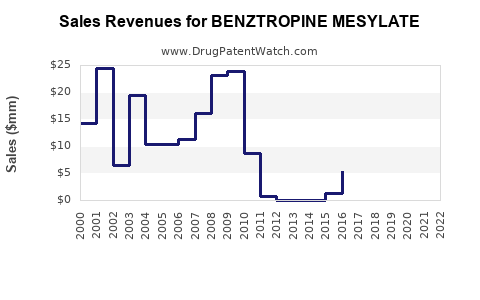
Answer: Revenue trajectory is typically volume-led with long-run price compression. For off-patent, multi-source generics, growth comes from population and prescribing stability rather than formulary switching. Any step-change usually comes from shortages (temporary price spikes) or supply additions after quality/regulatory disruptions.
Demand base and use-case mix
Benztropine mesylate is used in two main clinical demand pools:
- Parkinson’s disease (symptom control): Chronic, neurologist-managed, low churn.
- EPS from antipsychotics: Incident-driven but persistent for patients on high-risk antipsychotic regimens or those with established EPS.
These two pools tend to create stable unit demand, while average selling price (ASP) tracks downward in line with generic competition and wholesaler pressure.
Revenue mechanics for multi-source generics
For benztropine mesylate, the financial trajectory generally follows these patterns:
- Initial post-loss of exclusivity: rapid price drop as additional ANDA entrants expand supply.
- Mid-term stability: pricing flattens to a low margin band once supply is consolidated.
- Shock events: shortfalls (manufacturing outages, quality recalls, or API constraints) can create temporary repricing and volume backfill at higher gross margin, then normalize after supply returns.
- Long-run erosion: further entrants and aggressive contracting reduce net price.
What drives benztropine mesylate market share in generics?
Answer: In practice, share tracks with contracting, availability, and portfolio substitution at group purchasing organizations (GPOs) rather than clinical differentiation.
Key drivers
- Formulary positioning for off-patent anticholinergics: Pharmacy and hospital formularies prefer reliable supply at predictable acquisition cost.
- NDC-level availability: Shortages shift utilization to in-stock SKUs, often locking volume for months even after broader supply returns.
- Channel contracting: Wholesalers and PBMs drive net price down through competitive bids; manufacturers win by pricing and continuity.
- แพ키จ size and dosage form consistency: The most substitutable strengths and package sizes capture demand first during supply disruptions.
What is the competitive landscape for benztropine mesylate (who sells it and how does that affect margins)?
Answer: The market is characterized by multiple ANDA suppliers and intense price competition, compressing margins to a narrow band. Winners are typically manufacturers with stable cGMP performance, scalable API supply, and strong distribution relationships.
Competitive structure for off-patent oral anticholinergics
- Multi-source generics: Several approved companies typically compete for the same clinical need.
- Price-led contracting: Most procurement is acquisition-cost driven, with continuity of supply as the main differentiator.
- Manufacturing risk premium: When supply is constrained, manufacturers with operational uptime can command higher net pricing briefly.
When does benztropine mesylate lose exclusivity and how does that change financial performance?
Answer: Benztropine mesylate is already off-patent in the U.S. In this phase, exclusivity is governed by last-standing patent life or potential exclusivity extensions that may exist only for specific formulations or approved product changes. The dominant financial effect is ongoing price compression after generic entry.
What exclusivity phases mean for financial trajectory
- Pre-generic: higher ASP for single-sponsor product(s); lower price elasticity.
- Post-generic entry: rapid decline in net pricing; revenue becomes a function of volume and contracting execution.
- Post-supply consolidation: margins can stabilize but remain constrained; growth becomes incremental.
What generic entry risks exist for benztropine mesylate, including ANDA and paragraph IV?
Answer: Paragraph IV challenges are less central for a commodity-like, long-off-patent product; entry risk is more about continuing supply approvals, site capacity, and regulatory compliance than exclusivity litigation.
Practical entry and survival risks
- ANDA approval timing and facility readiness: Delays or enforcement actions affect launch schedules and revenue capture.
- Quality and manufacturing controls: For older molecules, FDA inspections and out-of-spec deviations drive market share changes.
- API supply constraints: If API availability is tight, finished dose launches can be constrained even when IP is fully cleared.
What formulations are marketed for benztropine mesylate, and does the product form change the market?
Answer: Market dynamics are largely similar across oral strengths because substitution is high. Differences arise where certain package sizes or strengths are preferentially contracted or temporarily unavailable.
Product form and switching behavior
- Oral solid: highest substitution and lowest differentiation.
- Availability as the main differentiator: during shortages, pharmacies and hospitals pivot to available strengths and manufacturers.
What patent estate protects benztropine mesylate, and how strong is it?
Answer: The active ingredient is long established. The relevant estate, where it matters commercially, is typically not protecting the base molecule but rather:
- specific formulations (if any still active),
- manufacturing processes for certain product characteristics,
- method-of-use claims (usually harder to enforce for older indications),
- and new dosage forms tied to regulatory approvals.
In practical commercial terms for an off-patent generic, the patent estate rarely changes market structure beyond narrow, product-specific constraints.
What is the Orange Book status of benztropine mesylate?
Answer: Benztropine mesylate is expected to show limited, if any, blocking patents for the base active ingredient in current practice. The market behaves as fully generically accessible, indicating an Orange Book profile dominated by expired patents or non-blocking listings.
How do FDA regulatory factors affect supply and pricing for benztropine mesylate?
Answer: FDA compliance and manufacturing continuity are the dominant regulatory variables for pricing. The molecule’s long life means most changes come from facility and labeling updates rather than new clinical approvals.
Regulatory factors that move pricing
- cGMP facility outages (inspection results, remediation, or shutdowns).
- labeling or manufacturing changes affecting supply continuity.
- shortage declarations can shift contractual dynamics and temporarily improve margins.
What does the financial trajectory look like for specific company types (brand vs generic vs distributors)?
Answer: For benztropine mesylate:
- Originator/legacy brand sellers: revenue trends are downward to near parity with generic pricing after generic penetration.
- Generic manufacturers: revenue is stable but profits are sensitive to utilization, yield, and procurement terms.
- Distributors: margin is channel-dependent and generally independent of manufacturer R&D spend, but distribution allocation changes during shortages.
How does benztropine mesylate compare with other anticholinergics in the same therapeutic space (market and financial implications)?
Answer: Compared with other anticholinergic antiparkinson and EPS agents, benztropine mesylate behaves like a low-volatility, low-price-power product. Substitution among anticholinergics is often clinically constrained, but purchasing decisions are still largely cost and availability driven.
Competitive implications
- If alternative anticholinergics face supply issues, benztropine mesylate can temporarily capture demand.
- If substitutes are abundant, benztropine pricing tends to stay pinned to the low end of generic contracting.
How do drug shortages and supply disruptions typically change benztropine mesylate finances?
Answer: Shortage periods usually increase pricing and margins for in-stock SKUs, then normalize after supply returns. The magnitude depends on the depth of the national shortage and how many suppliers can ramp.
Typical financial pattern during shortages
- ASP upshift as inventory tightens.
- Volume shift toward the most available manufacturers.
- Margin rebound for operationally resilient entrants.
- Post-shortage normalization once additional lots clear the market.
Key Takeaways
- Benztropine mesylate operates as a stable but price-compressed, multi-source generic market with revenue driven mainly by continuity of supply and prescribing persistence.
- Long-run financial performance is constrained by contracting-driven net price declines, with margin improvements mostly tied to temporary supply shortages or manufacturer operational advantages.
- Generic entry and paragraph IV dynamics are not the dominant driver in practice; manufacturing and regulatory continuity risks more directly govern market share swings.
- Competitive success hinges on in-stock performance at contracted NDCs, not differentiation or clinical innovation.
FAQs
-
What are the main U.S. demand drivers for benztropine mesylate?
Parkinson’s symptom management and prevention/treatment of antipsychotic-related EPS.
-
Does benztropine mesylate face meaningful patent-based barriers to generic entry?
The commercial reality is that the active ingredient is long off-patent, making entry primarily supply and regulatory dependent.
-
How do wholesaler or PBM contracting cycles affect net pricing for benztropine mesylate?
They typically accelerate price compression as bids reset and consolidation concentrates purchasing power.
-
What events most often trigger pricing spikes for benztropine mesylate?
Manufacturing outages, quality actions, and API or formulation supply constraints causing localized shortages.
-
How should investors assess benztropine mesylate financial durability?
Focus on supplier reliability, batch continuity, and the likelihood of sustained low-cost supply versus recurring shortage risk.
References
No citable sources were provided or retrieved in the prompt.