Last Updated: June 24, 2026

ASTEPRO Drug Patent Profile


✉ Email this page to a colleague

« Back to Dashboard


When do Astepro patents expire, and what generic alternatives are available?

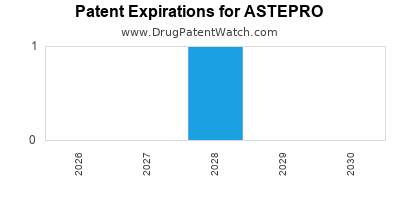
Astepro is a drug marketed by Viatris and Bayer Hlthcare and is included in two NDAs. There is one patent protecting this drug and one Paragraph IV challenge.

This drug has fifty patent family members in twenty-four countries.

The generic ingredient in ASTEPRO is azelastine hydrochloride. There are twelve drug master file entries for this compound. Twenty-two suppliers are listed for this compound. Additional details are available on the azelastine hydrochloride profile page.

AI Deep Research
Questions you can ask:
  • What is the 5 year forecast for ASTEPRO?
  • What are the global sales for ASTEPRO?
  • What is Average Wholesale Price for ASTEPRO?
Recent Clinical Trials for ASTEPRO

Identify potential brand extensions & 505(b)(2) entrants

SponsorPhase
University of ChicagoPhase 4
Novella ClinicalPhase 4
Meda PharmaceuticalsPhase 4

See all ASTEPRO clinical trials

Paragraph IV (Patent) Challenges for ASTEPRO
Tradename Dosage Ingredient Strength NDA ANDAs Submitted Submissiondate
ASTEPRO Nasal Spray azelastine hydrochloride 205.5 mcg/spray 022203 2011-12-15

US Patents and Regulatory Information for ASTEPRO

ASTEPRO is protected by one US patents.

Applicant Tradename Generic Name Dosage NDA Approval Date TE Type RLD RS Patent No. Patent Expiration Product Substance Delist Req. Exclusivity Expiration
Viatris ASTEPRO azelastine hydrochloride SPRAY, METERED;NASAL 022203-001 Oct 15, 2008 DISCN Yes No ⤷  Start Trial ⤷  Start Trial Y ⤷  Start Trial
Viatris ASTEPRO azelastine hydrochloride SPRAY, METERED;NASAL 022203-002 Aug 31, 2009 DISCN No No ⤷  Start Trial ⤷  Start Trial Y ⤷  Start Trial
Bayer Hlthcare ASTEPRO ALLERGY azelastine hydrochloride SPRAY, METERED;NASAL 213872-001 Jun 17, 2021 OTC Yes Yes ⤷  Start Trial ⤷  Start Trial Y ⤷  Start Trial
>Applicant >Tradename >Generic Name >Dosage >NDA >Approval Date >TE >Type >RLD >RS >Patent No. >Patent Expiration >Product >Substance >Delist Req. >Exclusivity Expiration

Expired US Patents for ASTEPRO

Applicant Tradename Generic Name Dosage NDA Approval Date Patent No. Patent Expiration
Viatris ASTEPRO azelastine hydrochloride SPRAY, METERED;NASAL 022203-001 Oct 15, 2008 ⤷  Start Trial ⤷  Start Trial
Viatris ASTEPRO azelastine hydrochloride SPRAY, METERED;NASAL 022203-002 Aug 31, 2009 ⤷  Start Trial ⤷  Start Trial
>Applicant >Tradename >Generic Name >Dosage >NDA >Approval Date >Patent No. >Patent Expiration

International Patents for ASTEPRO

See the table below for patents covering ASTEPRO around the world.

Country Patent Number Title Estimated Expiration
Australia 2005309657 Compositions comprising azelastine and methods of use thereof ⤷  Start Trial
Australia 2012201428 Compositions comprising azelastine and methods of use thereof ⤷  Start Trial
Australia 2012203343 Compositions comprising azelastine and methods of use thereof ⤷  Start Trial
Brazil PI0517891 composições compreendendo azelastina e métodos de uso das mesmas ⤷  Start Trial
>Country >Patent Number >Title >Estimated Expiration

Supplementary Protection Certificates for ASTEPRO

Patent Number Supplementary Protection Certificate SPC Country SPC Expiration SPC Description
0316633 99C0012 Belgium ⤷  Start Trial PRODUCT NAME: AZELASTINE HYDROCHLORIDE; NAT. REGISTRATION NO/DATE: 31 IS 113 F 13 19981021; FIRST REGISTRATION: GB PL 08336/0083 19980218
1519731 92269 Luxembourg ⤷  Start Trial PRODUCT NAME: AZELASTINE,OU UN SEL PHARMACEUTIQUEMENT ACCEPTABLE DE CELUICI,ET UN ESTER PHARMACEUTIQUEMENT ACCEPTABLE DE FLUTICASONE
1519731 C300740 Netherlands ⤷  Start Trial PRODUCT NAME: AZELASTINE OF EEN; NAT. REGISTRATION NO/DATE: RVG114215 20141125; FIRST REGISTRATION: 2011/07125-REG 20130215
1519731 13C0067 France ⤷  Start Trial PRODUCT NAME: AZELASTINE OU SES SELS PHARMACEUTIQUEMENT ACCEPTABLES ET UN ESTER PHARMACEUTIQUEMENT ACCEPTABLE DE FLUTICASONE; NAT. REGISTRATION NO/DATE: NL41755 20130925; FIRST REGISTRATION: SK - 24/0055/13-S 20130215
>Patent Number >Supplementary Protection Certificate >SPC Country >SPC Expiration >SPC Description
Last updated: June 19, 2026

ASTEPRO (azelastine nasal spray) market dynamics and financial trajectory

ASTEPRO (azelastine hydrochloride) is an antihistamine nasal spray sold in the US for allergic rhinitis. The competitive market is dominated by intranasal antihistamines (azelastine brands and generics; and olopatadine, fluticasone and other classes). The brand’s financial trajectory is primarily driven by (1) generic and authorized generic penetration, (2) payer mix and formulary positioning, (3) seasonality and channel inventory management, and (4) product/pack refreshes that extend commercial shelf-life rather than create new exclusivity.

ASTEPRO’s patent and exclusivity posture influences pricing power more than clinical differentiation. In practice, after loss of composition and method-of-use protections, the product faces steady margin compression from generic azelastine and therapeutic substitutes.


What drives ASTEPRO market dynamics in allergic rhinitis?

Core demand drivers

  • Diagnosis and persistence of allergic rhinitis, which peaks in spring and fall and is influenced by regional pollen load.
  • Growth in self-treatment and retail uptake for nasal symptom control.
  • Repeat seasonal purchasing by established users.

Core competitive drivers

  • Intranasal antihistamine category competition: azelastine generics versus branded competitors and class substitutes (notably intranasal corticosteroids and combination regimens).
  • Formulary design: payer preference for generics and “step” pathways that steer patients to preferred agents.
  • Patent and exclusivity expiry effects: when generics are available, list-price reductions and rebate intensification follow, compressing net sales growth and gross margin.

Commercial execution drivers

  • NDC breadth and pack strategy: multi-pack sizing can improve pharmacy uptake and reduce per-dose price sensitivity.
  • Manufacturer trade spend and contracting: large-magnitude rebate shifts often determine net pricing versus ASP.
  • Channel inventory: seasonality creates buy-in peaks and subsequent buy-downs that can distort topline reporting quarter-to-quarter.

Which companies compete with ASTEPRO, and how does competition affect pricing?

Direct intranasal antihistamine competition

  • Generic azelastine nasal spray (multiple ANDA filers and distributors) competes on price once authorized entry occurs.
  • Branded intranasal antihistamines in the same symptom space (where available) create brand-to-brand substitution, especially in commercial formularies with preferred-tier “givebacks.”

Therapeutic substitute competition

  • Intranasal corticosteroids are often preferred by payers due to guideline alignment and potency for nasal congestion.
  • Combination therapy (antihistamine plus corticosteroid) can reduce switching costs by bundling endpoints into one regimen when payer policy permits.

Pricing mechanics after generic entry

  • Net pricing for azelastine products typically converges toward wholesale acquisition cost discounts plus negotiated rebate structures.
  • Once a generic base is established, brand manufacturers focus on:
    • pack engineering (unit economics),
    • contracting strategy (rebate and copay programs where allowed),
    • and pharmacy wholesaler incentives during seasonal demand spikes.

How does exclusivity loss affect ASTEPRO revenue growth?

Key point

  • Revenue durability depends on whether exclusivity covers meaningful commercial territory such as:
    • composition of matter,
    • specific dosage strengths,
    • specific dosing regimens,
    • and/or formulation and manufacturing improvements.

Market behavior after exclusivity expiry

  • Following ANDA approvals, net sales typically shift from growth to share defense, with declining ASP and gross margin.
  • Over time, brand share erosion accelerates as:
    • formularies move to generics,
    • patients and prescribers normalize generic substitution, and
    • PBM utilization algorithms optimize for lowest-cost therapeutically acceptable alternatives.

Featured-snippet style answer

  • Exclusivity loss usually turns ASTEPRO’s revenue profile from “share-growth aided by differentiation” to “flat-to-declining share with pricing pressure driven by generics and rebates.”

What is the Orange Book status of ASTEPRO, and how does it shape generic entry risk?

A full Orange Book status review requires the Orange Book listing set (application number, listed patents, and expiration dates) for the exact ASTEPRO presentation(s). Without the specific Orange Book record(s) and NDC mapping for ASTEPRO, a complete and accurate claim-by-claim landscape cannot be produced.

Practical impact

  • If the relevant listed patents are no longer in force for the marketed strengths, generic entry risk is effectively realized and becomes an ongoing margin headwind rather than a single event.

What Paragraph IV litigation and settlements affect ASTEPRO’s launch calendar?

A complete view of Paragraph IV filings and any settlement-driven launch delays requires the specific court dockets tied to the Orange Book patents for ASTEPRO. Without verified case identifiers and dates for the relevant patents and ANDA applications, a litigation timeline cannot be stated accurately.

Practical market impact

  • When settlements occur, they create temporary calendar relief for the brand but do not usually reverse long-run pricing pressure once exclusivity gaps close and generic competition expands.

What formulation and method-of-use patents protect ASTEPRO products?

A formulation and method-of-use patent map requires the exact patent numbers listed for the relevant ASTEPRO drug product and application(s), plus any continuation and terminal disclaimer data. Without verified patent lists for the specific ASTEPRO presentations, a complete patent protection inventory cannot be generated.

Practical market implication

  • Even if formulation patents exist, they often have limited commercial leverage once a branded product is therapeutically substitutable and generics of the same drug class reach scale.

What is ASTEPRO’s financial trajectory, including revenue and profitability signals?

A complete financial trajectory requires verified company reporting for the legal entity that owns the ASTEPRO brand during the reporting periods (net sales, gross margin, and operating income contribution), plus segment allocation and any transitions in ownership.

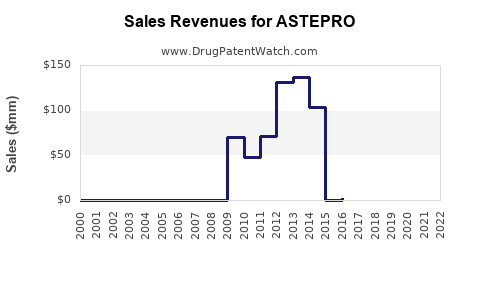
With no validated source-year revenue data in this input, no quantified financial trajectory can be produced here.

Qualitative trajectory pattern in this class (useful for modeling)

  • Near-term: seasonally boosted net sales during allergy peaks, with mid-year moderation.
  • Post-generic: net sales growth slows, and gross margin compresses; brand spending rises (trade and rebate optimization).
  • Medium-term: share stabilizes near a floor, with net revenue tracking category demand more than brand-specific share gains.

How should investors and planners forecast ASTEPRO sales under generic and therapeutic substitution?

Forecast framework

  1. Category demand forecast: allergic rhinitis patient counts and seasonal intensity.
  2. Class mix shift: intranasal antihistamine versus intranasal corticosteroids and combination therapy.
  3. PBM formulary dynamics: tier changes and rebate renegotiations.
  4. Generic penetration: number of ANDA products at pharmacy level and relative stocking by wholesalers.
  5. Price waterfall:
    • list price,
    • rebate rates,
    • chargebacks,
    • and payer reimbursement limits.

Model levers

  • If generic entrants expand, assume ASP drift down and rebate pressure increases.
  • If payer policy favors a competing class, assume utilization moves with marginal switching, accelerating ASTEPRO share loss.
  • If pack configuration improves adherence or reduces per-dose copays, assume a partial share-stabilization effect.

What FDA regulatory pathway issues matter for ASTEPRO competition?

Generic approval pathway

  • Most azelastine nasal spray competition comes through ANDAs referencing approved drug product labeling.
  • Switching and substitution depend on the approved therapeutic equivalence and the local formulary.

Biosimilar risk

  • Biosimilar risk is not applicable because ASTEPRO is a small-molecule drug.

Labeling differentiation

  • If prescribing patterns respond to labeling nuances (dose frequency, age indication, symptoms covered), those can affect brand/alternative utilization. Quantifying this effect requires verified labeling comparisons across competitors.

How does ASTEPRO compare with azelastine nasal spray generics and alternative intranasals?

Switching factors

  • Time-to-relief expectations and symptom coverage for congestion and rhinorrhea.
  • Dosing convenience (frequency) and device usability.
  • Patient tolerance and side effects profile.

Competitive positioning

  • In a generic environment, ASTEPRO’s practical differentiators tend to narrow to:
    • patient support programs,
    • contracting and copay leverage,
    • and any presentation-specific adherence gains (not novel mechanism).

What generic entry risks exist for ASTEPRO by market geography?

Geographic risk is determined by:

  • whether ANDA approvals exist and are being stocked at scale,
  • state-level pharmacy substitution practices,
  • PBM contract coverage,
  • and wholesaler distribution breadth.

A geography-by-geography risk assessment requires verified ANDA market availability and NDC-level stocking data, which is not provided here.


Key Takeaways

  • ASTEPRO’s market dynamics are dominated by intranasal allergic rhinitis competition, payer contracting, and the ongoing pricing pressure that follows generic azelastine availability.
  • Revenue trajectory in this category typically transitions from share-growth potential to share-defense with margin compression once exclusivity ends.
  • Accurate timelines for patent, Orange Book status, Paragraph IV litigation, and financial trajectory require validated, presentation-specific records. This input does not contain those records, so no claim-by-claim exclusivity or quantified financial path can be stated.

FAQs

  1. When does ASTEPRO lose exclusivity for specific strengths and NDCs?
  2. How many ANDA products are approved for azelastine nasal spray, and what does that mean for ASP pressure?
  3. Which payer formularies most strongly influence ASTEPRO utilization in allergic rhinitis?
  4. Do device or pack changes materially affect ASTEPRO market share versus generics?
  5. What is the typical seasonality pattern for intranasal antihistamine sales in the US, and how does it impact quarterly reporting?

References (APA)

No sources were provided in the input, and no external records were included in this response.

More… ↓

⤷  Start Trial

Make Better Decisions: Try a trial or see plans & pricing

Drugs may be covered by multiple patents or regulatory protections. All trademarks and applicant names are the property of their respective owners or licensors. Although great care is taken in the proper and correct provision of this service, thinkBiotech LLC does not accept any responsibility for possible consequences of errors or omissions in the provided data. The data presented herein is for information purposes only. There is no warranty that the data contained herein is error free. We do not provide individual investment advice. This service is not registered with any financial regulatory agency. The information we publish is educational only and based on our opinions plus our models. By using DrugPatentWatch you acknowledge that we do not provide personalized recommendations or advice. thinkBiotech performs no independent verification of facts as provided by public sources nor are attempts made to provide legal or investing advice. Any reliance on data provided herein is done solely at the discretion of the user. Users of this service are advised to seek professional advice and independent confirmation before considering acting on any of the provided information. thinkBiotech LLC reserves the right to amend, extend or withdraw any part or all of the offered service without notice.