You're using a free limited version of DrugPatentWatch: Upgrade for Complete Access

Last Updated: December 15, 2025

ARIMIDEX Drug Patent Profile


✉ Email this page to a colleague

« Back to Dashboard


Which patents cover Arimidex, and what generic alternatives are available?

Arimidex is a drug marketed by Ani Pharms and is included in one NDA.

The generic ingredient in ARIMIDEX is anastrozole. There are twenty-four drug master file entries for this compound. Twenty-five suppliers are listed for this compound. Additional details are available on the anastrozole profile page.

DrugPatentWatch® Litigation and Generic Entry Outlook for Arimidex

A generic version of ARIMIDEX was approved as anastrozole by ACCORD HLTHCARE on June 28th, 2010.

  Get Started Free

AI Deep Research
Questions you can ask:
  • What is the 5 year forecast for ARIMIDEX?
  • What are the global sales for ARIMIDEX?
  • What is Average Wholesale Price for ARIMIDEX?
Summary for ARIMIDEX
Drug patent expirations by year for ARIMIDEX
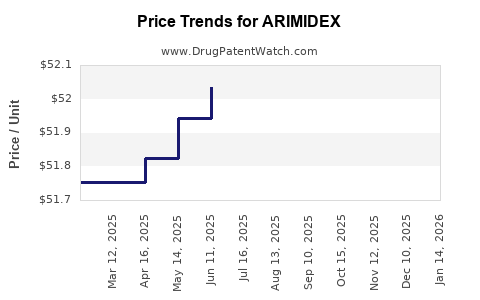
Drug Prices for ARIMIDEX

See drug prices for ARIMIDEX

Recent Clinical Trials for ARIMIDEX

Identify potential brand extensions & 505(b)(2) entrants

SponsorPhase
Breast Cancer Research FoundationPhase 2
University of WashingtonPhase 2
European Network of Gynaecological Oncological Trial Groups (ENGOT)Phase 3

See all ARIMIDEX clinical trials

Pharmacology for ARIMIDEX
Drug ClassAromatase Inhibitor
Mechanism of ActionAromatase Inhibitors

US Patents and Regulatory Information for ARIMIDEX

Applicant Tradename Generic Name Dosage NDA Approval Date TE Type RLD RS Patent No. Patent Expiration Product Substance Delist Req. Exclusivity Expiration
Ani Pharms ARIMIDEX anastrozole TABLET;ORAL 020541-001 Dec 27, 1995 AB RX Yes Yes ⤷  Get Started Free ⤷  Get Started Free ⤷  Get Started Free
>Applicant >Tradename >Generic Name >Dosage >NDA >Approval Date >TE >Type >RLD >RS >Patent No. >Patent Expiration >Product >Substance >Delist Req. >Exclusivity Expiration

Expired US Patents for ARIMIDEX

Applicant Tradename Generic Name Dosage NDA Approval Date Patent No. Patent Expiration
Ani Pharms ARIMIDEX anastrozole TABLET;ORAL 020541-001 Dec 27, 1995 ⤷  Get Started Free ⤷  Get Started Free
>Applicant >Tradename >Generic Name >Dosage >NDA >Approval Date >Patent No. >Patent Expiration

International Patents for ARIMIDEX

See the table below for patents covering ARIMIDEX around the world.

Country Patent Number Title Estimated Expiration
Finland 882882 ⤷  Get Started Free
Japan S6419067 (SUBSTITUTED-ARALKYL) HETEROCYCLIC COMPOUND, MANUFACTURE, AND PHARMACOLOGICAL AND VETERIARY COMPOSITION HAVING AROMATASE INHIBITION ⤷  Get Started Free
Mexico 9202876 COMPUESTOS HETEROCICLICOS (DE ARALQUILO SUBSTITUIDO). ⤷  Get Started Free
Denmark 330488 ⤷  Get Started Free
Austria 113277 ⤷  Get Started Free
>Country >Patent Number >Title >Estimated Expiration

Supplementary Protection Certificates for ARIMIDEX

Patent Number Supplementary Protection Certificate SPC Country SPC Expiration SPC Description
0296749 97C0023 France ⤷  Get Started Free PRODUCT NAME: ANASTROZOLE, EVENTUELLEMENT SOUS LA FORME D UN SEL D ADDITION ACCEPTABLE EN MEDECINE PHARMACEUTIQUE; NAT REG. NO/DATE: NL 21126 19961227; FIRST REG.: 12619/0106 19950811
0296749 SPC/GB96/004 United Kingdom ⤷  Get Started Free PRODUCT NAME: ANASTROZOLE OPTIONALLY IN THE FORM OF A PHARMACEUTICALLY ACCEPTABLE ACID ADDITION SALT; REGISTRATION NO/DATE: UK 12619/0106 19950811
0296749 C970012 Netherlands ⤷  Get Started Free PRODUCT NAME: ANASSTROZOLUM, DESGEWENST IN DE VORM VAN EEN FARMACEUTISCH AANVAARDBAAR ZUURADDITIEZOUT; NAT. REGISTRATION NO/DATE: RVG 19123 19960905; FIRST REGISTRATION: GB 12619/0106 19950811
0296749 09C0055 France ⤷  Get Started Free PRODUCT NAME: ANASTROZOLE, EVENTUELLEMENT SOUS LA FORME D’UN SEL D’ADDITION ACCEPTABLE EN MEDECINE PHARMACEUTIQUE; REGISTRATION NO/DATE IN FRANCE: NL 21126 DU 19961227; REGISTRATION NO/DATE AT EEC: 12619/0106 DU 19950811
0296749 97C0032 Belgium ⤷  Get Started Free PRODUCT NAME: ANASTROZOLUM; NAT. REGISTRATION NO/DATE: 624 IS 94 F 3 19961216; FIRST REGISTRATION: GB 12619/0106 19950811
>Patent Number >Supplementary Protection Certificate >SPC Country >SPC Expiration >SPC Description

Market Dynamics and Financial Trajectory for the Pharmaceutical Drug: ARIMIDEX

Last updated: October 1, 2025

Introduction

ARIMIDEX (anastrozole) is a prominent aromatase inhibitor primarily prescribed for hormone receptor-positive breast cancer in postmenopausal women. Since its approval by the U.S. Food and Drug Administration (FDA) in 1995, ARIMIDEX has established itself as a cornerstone therapy within oncological treatment protocols. This report examines the evolving market dynamics and financial trajectories influencing ARIMIDEX’s position, driven by factors such as therapeutic demand, competitive landscape, patent status, and emerging treatment alternatives.

Market Overview and Therapeutic Demand

The global breast cancer treatment market has experienced robust growth, driven by increasing incidence rates, advancements in targeted therapies, and expanding healthcare infrastructure. Breast cancer, representing approximately 12% of all female cancers worldwide, notably affects postmenopausal women, creating consistent demand for hormone therapy options such as ARIMIDEX [1].

ARIMIDEX’s mechanism of action—selective aromatase inhibition—specifically targets estrogen synthesis, which fuels hormone receptor-positive breast cancers. Its efficacy in reducing disease recurrence and improving progression-free survival has cemented its role in first-line adjuvant therapy and in metastatic settings [2].

The aging global population correlates with increased postmenopausal women, further amplifying market potential. The advent of extended adjuvant therapy guidelines, encouraging prolonged use of aromatase inhibitors, sustains high utilization volumes. Moreover, the drug's favorable side effect profile compared to earlier hormonal therapies enhances adherence, positively impacting market demand.

Market Segmentation and Geographic Trends

Regional Market Dynamics

  • North America: Dominates the ARIMIDEX market due to high breast cancer prevalence, established healthcare infrastructure, and proactive treatment guidelines. The U.S. accounts for a substantial market share, driven by regulatory approvals and insurance coverage.

  • Europe: Exhibits similar trends with high adoption rates, though market growth is moderated by reimbursement policies and national treatment protocols.

  • Asia-Pacific: Demonstrates rapid growth potential, spurred by increasing breast cancer incidence, expanding healthcare access, and evolving clinical practices. Countries like China and India offer significant untapped markets.

Patient Demographics

The typical patient demographic includes postmenopausal women aged 50–70. Rising awareness and screening programs enable earlier diagnosis, increasing the pool of eligible patients for ARIMIDEX therapy.

Competitive Landscape

Patent and Generic Dynamics

ARIMIDEX's original patent expired in the early 2010s, opening pathways for generic versions. Generics have introduced competitive pricing, pressuring the revenues of branded formulations. However, the originator's brand equity and clinical familiarity sustain continued uptake among prescribers.

Key Competitors

  • Letrozole (Femara): Another aromatase inhibitor with comparable efficacy, often positioned as an alternative first-line agent.

  • exemestane (Aromasin): A steroidal aromatase inhibitor with differing pharmacodynamics.

  • Emerging therapies: Selective estrogen receptor degraders (SERDs) and CDK4/6 inhibitors are increasingly integrated into treatment regimens, potentially affecting aromatase inhibitor demand.

Market Share Trends

While generics have eroded traditional margins, ARIMIDEX maintains a stable core user base owing to clinical familiarity, established approval labels, and real-world effectiveness data. Nonetheless, ongoing patent expirations and competitive pressures necessitate strategic adjustments.

Regulatory and Reimbursement Factors

Regulatory agencies have approved ARIMIDEX for multiple indications, including early-stage and metastatic breast cancer. Reimbursement policies influence adoption rates, especially in emerging markets where drug prices are scrutinized.

In some regions, reimbursement restrictions or preference for generic alternatives influence market penetration. Patent litigation, exclusivity periods, and government-led price negotiations significantly impact revenue streams.

Financial Trajectory and Revenue Outlook

Historical Performance

ARIMIDEX generated over $1.2 billion globally in sales at its peak [3]. Post-patent expiration leading to generics, revenues experienced a decline, yet the drug retains a meaningful market share within oncology treatment.

Forecasting Future Revenues

  • Steady Demand: The persistent need for hormone therapy in breast cancer sustains baseline revenues. Clinical guidelines endorsing long-term adjuvant therapy support sustained demand.

  • Market Penetration in Emerging Economies: Expanding access and increasing diagnosis rates could offset revenue declines from mature markets.

  • Pipeline and Combination Therapies: Integration with targeted agents such as CDK4/6 inhibitors may expand adjunct use, creating new revenue avenues.

  • Pricing and Reimbursement Strategies: Companies may employ differential pricing, patient assistance programs, and strategic partnerships to maintain competitiveness.

Potential Challenges

  • Competition from Generics: Price erosion impacts profitability.

  • Emergence of New Standards of Care: Transition to combination therapies involving novel agents could reduce aromatase inhibitor monotherapy sales.

  • Regulatory Hurdles: New clinical evidence or safety concerns may influence prescribing behaviors and regulatory approvals.

Strategic Considerations

Manufacturers should focus on:

  • Differentiating ARIMIDEX through clinical data supporting superior outcomes.
  • Expanding into emerging markets with high growth potential.
  • Developing combination regimens to extend lifecycle and capture additional market segments.
  • Investing in evidence-based educational initiatives and patient support programs to reinforce brand loyalty.

Key Takeaways

  • ARIMIDEX remains a critical treatment for hormone receptor-positive breast cancer, with sustained demand driven by demographic trends and evolving clinical guidelines.
  • Patent expirations have led to increased generic competition, pressuring margins but also expanding overall treatment access.
  • Market growth in Asia-Pacific and other emerging markets offers significant upside potential.
  • Competition from novel therapies and combination regimens necessitates strategic innovation and diversification.
  • Reimbursement policies and regulatory landscapes are pivotal in shaping future revenue trajectories.

FAQs

1. How has the patent expiration impacted ARIMIDEX’s market share?
Patent expiration prompted entry of generic versions, leading to significant price competition and revenue decline in mature markets. However, the brand maintains a loyal prescriber base due to clinical familiarity and perceived efficacy.

2. What are the main competitors to ARIMIDEX?
Letrozole (Femara) and exemestane (Aromasin) are primary competitors, offering similar efficacy with different pharmacological profiles. Emerging targeted therapies like CDK4/6 inhibitors also influence treatment paradigms.

3. Can ARIMIDEX’s sales rebound with new indications?
Potentially, if new clinical evidence supports expanded use—such as in other hormone-sensitive cancers or combination protocols—sales could see upticks; however, this depends on regulatory approvals and clinical adoption.

4. How do regional healthcare policies influence ARIMIDEX’s market?
Reimbursement levels, approval status, and treatment guidelines vary regionally. High reimbursement and inclusion in clinical pathways catalyze usage, whereas restrictions may limit access and sales.

5. What strategic moves can sustain ARIMIDEX’s commercial viability?
Focusing on emerging markets, developing new indications, integrating with combination therapies, and engaging in educational initiatives can sustain competitive advantage and revenue streams.

References

[1] World Health Organization. Global Cancer Observatory 2020.

[2] NCCN Clinical Practice Guidelines in Oncology. Breast Cancer Version 4.2021.

[3] IQVIA. Top Selling Oncology Drugs 2019 Data Report.

More… ↓

⤷  Get Started Free

Make Better Decisions: Try a trial or see plans & pricing

Drugs may be covered by multiple patents or regulatory protections. All trademarks and applicant names are the property of their respective owners or licensors. Although great care is taken in the proper and correct provision of this service, thinkBiotech LLC does not accept any responsibility for possible consequences of errors or omissions in the provided data. The data presented herein is for information purposes only. There is no warranty that the data contained herein is error free. We do not provide individual investment advice. This service is not registered with any financial regulatory agency. The information we publish is educational only and based on our opinions plus our models. By using DrugPatentWatch you acknowledge that we do not provide personalized recommendations or advice. thinkBiotech performs no independent verification of facts as provided by public sources nor are attempts made to provide legal or investing advice. Any reliance on data provided herein is done solely at the discretion of the user. Users of this service are advised to seek professional advice and independent confirmation before considering acting on any of the provided information. thinkBiotech LLC reserves the right to amend, extend or withdraw any part or all of the offered service without notice.