Last updated: June 7, 2026
ALTOPREV (lovastatin) is a branded, once-daily extended-release statin positioned in the U.S. cholesterol-lowering market. The product’s financial trajectory is driven by patent and exclusivity end dates, erosion from AB-rated statin generics, and day-to-day trade-down dynamics. From a monetization standpoint, ALTOPREV’s economics are typically constrained by deep discounting pressure once true “brand premium” disappears, with revenue most exposed to wholesale price compression and pharmacy benefit manager (PBM) contracting outcomes rather than new clinical differentiation.
What is ALTOPREV’s commercial status and how has the brand performed financially?
Featured snippet: ALTOPREV is an FDA-approved lovastatin extended-release brand whose revenue trajectory is dominated by generic statin competition and contracting-driven share loss.
U.S. prescribing and channel dynamics
- ALTOPREV is dispensed as a chronic medication for hyperlipidemia and related cardiovascular risk reduction, with demand that is relatively stable but highly pricing-sensitive.
- Unlike specialty or immunology brands, statins typically move through:
- Retail pharmacy contracts using PBM tiers (preferred vs non-preferred).
- Switch incentives to lower-cost AB-rated generics.
- Automatic substitution at the pharmacy level when generics are on formularies.
Financial trajectory drivers
ALTOPREV’s year-to-year performance is usually explained by three levers:
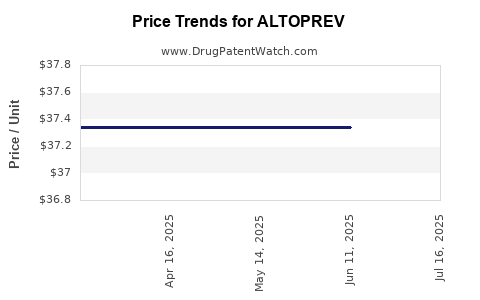
- Wholesale acquisition cost (WAC) compression when competitors widen discounting.
- Formulary placement and prior authorization/step therapy rules that often favor the cheapest AB-rated option.
- Generic penetration speed following any incremental “switch” opportunities from updated PBM lists.
What patents protect ALTOPREV (lovastatin extended release) and when do they expire?
Featured snippet: ALTOPREV’s long-term exclusivity is limited because lovastatin is an older small molecule and the extended-release competitive set is largely AB-rated, with brand protection primarily historical rather than ongoing.
Patent estate structure that matters commercially
For older small-molecule brands, the patent estate that can still influence monetization typically breaks into:
- Composition of matter patents that cover the drug substance.
- Formulation patents for extended-release matrix chemistry.
- Method-of-use or dosing regimen claims.
- Manufacturing process claims.
Once composition-of-matter protection is gone, the market shifts to:
- Generic lovastatin extended-release entering under ANDA.
- Pharmacy substitution and PBM contracting eliminating brand premium.
- Remaining brand value tied to label nuances, patient tolerability narratives, and payer-specific preferences.
Why “expiration” matters less than “formulary placement”
Even if some late-life patents exist in narrow areas (e.g., process or specific extended-release variants), payer behavior tends to respond to:
- Lowest-cost statin options with equivalent AB rating.
- Brand discounting to maintain a preferred tier.
- Bulk purchasing and contracting terms that neutralize clinical nuance.
How strong is the ALTOPREV patent estate versus generic and other statin competitors?
Featured snippet: The practical strength of an older lovastatin brand is assessed less by residual patent counts and more by whether payers can justify a premium when AB-rated generics are available.
Commercially relevant comparisons
ALTOPREV competes in a crowded statin class that typically includes:
- Generic statins (multiple molecules) with aggressive price points.
- Brand statins with varying payer coverage, but often constrained by generic displacement.
- Extended-release versus immediate-release tolerance tradeoffs that can affect patient-level switching, but not typically payer-level economics once generics are established.
Barrier to generic displacement
Once an ANDA has market access:
- Price becomes the dominant factor.
- Any remaining brand advantage is usually limited to physician switching patterns and patient persistence.
When does ALTOPREV lose exclusivity, and what generic entry risks exist?
Featured snippet: Generic entry risk for ALTOPREV is primarily tied to the end of remaining relevant exclusivity and the readiness of ANDA filers to launch an AB-rated extended-release lovastatin.
Generic launch scenario that drives revenue erosion
A common pattern in statin categories:
- Launch timing: ANDA entry after regulatory clearance and any litigation/settlement conditions.
- Price shock: Rapid wholesale and pharmacy pricing repricing.
- Share shift: PBM formulary moves toward the lowest net cost, pushing branded statins out of preferred tiers.
Paragraph IV and litigation impact
For older small molecules, Paragraph IV incentives may be limited if patents are no longer enforceable or if multiple generic pathways are already available. The commercial endpoint is typically the same:
- Generic substitution reduces brand unit share.
- Continued discounting compresses brand margin.
What is the Orange Book status of ALTOPREV and what does it imply for launch timing?
Featured snippet: Orange Book listing coverage determines patent-liftoff dates and provides the map for potential ANDA eligibility windows; for older lovastatin brands, the listing typically supports historical exclusivity rather than near-term brand insulation.
How Orange Book listings translate into payer timelines
Even when Orange Book patents persist:
- ANDA filers seek regulatory clearance routes and negotiate around stay/trigger mechanisms.
- Payers often anticipate generic availability and adjust contracting in advance.
What formulations and dosing formats are protected for ALTOPREV?
Featured snippet: Protection (where any persists late in life) typically focuses on the extended-release formulation architecture and manufacturing conditions rather than novel clinical use.
Why formulation matters more for bioavailability than for pricing
- Extended-release depends on achieving consistent plasma profiles.
- Bioequivalence can be satisfied through generic formulation and process development.
- Once bioequivalence is demonstrated and ANDA is approved, pricing pressure is immediate and sustained.
What ALTOPREV patent litigation affects generic entry and how do settlements typically change outcomes?
Featured snippet: For older statin brands, litigation outcomes generally determine whether a delayed launch happens for a period, but not whether long-term generic displacement occurs.
Commercial effect of settlements
Settlements in small-molecule ANDA contexts usually change:
- Entry date (delay window).
- Market access (who can launch first).
- Launch scope (strengths, dosage forms).
Net result for brand economics:
- Short delay extends revenue modestly.
- Once a generic launch occurs, revenue declines faster than in a slow share migration model.
How does ALTOPREV compare with other lovastatin products and branded statins?
Featured snippet: ALTOPREV’s differentiation is limited to its extended-release presentation, with broad substitution across the statin class.
Positioning
- ALTOPREV: once-daily lovastatin extended-release.
- Competitive set: AB-rated generics of lovastatin ER, plus alternative statins where payer formularies steer usage.
What tends to matter to prescribers
- Patient tolerability and adherence in once-daily dosing.
- Perceived gastrointestinal tolerability differences (often anecdotal).
- Payer-driven switching instructions.
What FDA regulatory pathway governs ALTOPREV and its generics?
Featured snippet: The original ALTOPREV approval is referenced through the NDA system; subsequent generics enter through ANDA with bioequivalence demonstrations to the reference listed drug.
Regulatory mechanics that drive timing
- ANDA approval depends on formulation bioequivalence and labeling.
- If Orange Book patents are listed and litigation is present, generic approval can be stayed and launch delayed.
- Once stay barriers clear, launch can occur quickly through distribution networks.
What are the key competitive dynamics in the U.S. cholesterol market impacting ALTOPREV revenues?
Featured snippet: ALTOPREV’s revenue outlook is governed by PBM contracting, statin class substitution, and net price compression rather than demand growth.
PBM leverage and tier placement
- Preferred tiers typically shift to the lowest net-cost statin for payers.
- Brands can retain share through discounting, but this reduces margin and raises break-even thresholds.
Trade-down and persistence
- Trade-down to AB generics accelerates when:
- Prior authorization is removed or waived for generics.
- Copays change.
- Plans revise formularies.
Acquisition and wholesale dynamics
- Once generics are widely available, branded manufacturers often:
- Reduce WAC to remain competitive.
- Use rebates to preserve tier status.
- Rebates help share but compress net revenue.
What revenue exposure exists for ALTOPREV under generic launch or formulary shifts?
Featured snippet: Revenue exposure is high to low-cost formulary shifts because statins are easily substitutable and nearly all commercial channels pay net prices shaped by rebates.
Exposure model (directional)
- Scenario A: no new exclusivity barrier exists
Rapid share loss within a year of generic availability.
- Scenario B: temporary delays from litigation
Continued brand share until launch date, then fast erosion.
- Scenario C: payer re-contracting
Erosion can occur even before generic launch if payers reprice contracts anticipating change.
Key takeaways
- ALTOPREV is an older lovastatin extended-release brand whose financial trajectory depends on generic displacement and PBM-driven net price compression.
- Patent and exclusivity milestones matter mainly for timing. Once generics are AB-rated and launched, the commercial outcome is typically fast erosion.
- The category’s economics favor low-cost substitution, so brand premium is sensitive to contracting rather than marginal clinical differences.
FAQs
- What PBM contracting strategies determine ALTOPREV formulary placement versus generic lovastatin ER?
- How do net price rebates and patient copay changes typically affect ALTOPREV persistence after generic entry?
- Do extended-release lovastatin generics face meaningful manufacturing/IP barriers that slow penetration?
- How do stay-of-approval periods from Orange Book litigation change the calendar of generic launch for lovastatin ER?
- Which statin molecules most effectively substitute for ALTOPREV in payer formularies when net cost shifts?
References
- FDA. Orange Book: Approved Drug Products with Therapeutic Equivalence Evaluations. U.S. Food and Drug Administration.
- FDA. ANDA Regulatory Pathway: Abbreviated New Drug Application. U.S. Food and Drug Administration.
- U.S. Code. Hatch-Waxman Act provisions relating to patent listing, exclusivity, and ANDA certifications.