Last updated: September 8, 2026
ALTACE, the brand name for ramipril, is a mature ACE inhibitor that lost meaningful U.S. market exclusivity in the early 2000s. Its commercial trajectory followed the standard small-molecule lifecycle: strong branded sales supported by cardiovascular outcome data, rapid generic substitution after patent expiry, and a long tail of low-priced prescription volume. Current value is concentrated in generic ramipril, while the ALTACE brand has limited strategic importance.
What is ALTACE and how is ramipril used?
ALTACE contains ramipril, an orally administered angiotensin-converting enzyme inhibitor. The FDA approved ALTACE for hypertension and later recognized indications involving cardiovascular risk reduction and post-myocardial-infarction heart failure management.[1]
| Attribute |
ALTACE / ramipril |
| Active ingredient |
Ramipril |
| Drug class |
ACE inhibitor |
| Original developer |
Hoechst Marion Roussel, later associated with Aventis and Sanofi |
| U.S. dosage forms |
Capsules |
| Principal indications |
Hypertension; reduction of cardiovascular risk in selected high-risk patients; heart failure and post-myocardial-infarction use under approved labeling |
| FDA application |
NDA 19-901 |
| Approval period |
Early 1990s |
| Current commercial position |
Mature brand with extensive generic competition |
| Biologic status |
Small molecule; biosimilar pathway does not apply |
Ramipril is converted in vivo to ramiprilat, the active ACE-inhibiting metabolite. The drug competes clinically with lisinopril, enalapril, perindopril, benazepril and other ACE inhibitors, as well as angiotensin receptor blockers such as losartan and valsartan.
When did ALTACE lose exclusivity?
ALTACE lost its principal U.S. compound-patent protection around 2002, allowing generic ramipril products to enter the market. The core ramipril patent commonly associated with the product is U.S. Patent No. 4,587,258, issued in 1986. Patent-term adjustment and regulatory exclusivity details can affect the precise commercial timetable, but the practical U.S. generic-entry date was the early 2000s.[2]
ALTACE exclusivity timeline
| Period |
Commercial or regulatory event |
| 1980s |
Ramipril patents issued and development advanced |
| Early 1990s |
FDA approval and branded U.S. launch |
| 1990s |
Expansion of cardiovascular use and physician adoption |
| 2000 |
HOPE trial results increased clinical visibility for ramipril in high-risk cardiovascular patients |
| Early 2000s |
Core U.S. patent protection expired |
| 2002 onward |
FDA-approved generic ramipril products entered the U.S. market |
| 2000s |
Brand sales declined as pharmacy substitution increased |
| 2010s onward |
Ramipril became a mature, multisource generic medicine |
The HOPE study was commercially important because it linked ramipril with reduced cardiovascular events in high-risk patients, including patients without left ventricular dysfunction or clinical heart failure.[3] That evidence helped differentiate ALTACE from some competing antihypertensive products before generic erosion.
What patents protect ALTACE and ramipril?
The principal intellectual-property value was historically concentrated in composition-of-matter and formulation protection. That protection has expired or lost practical market force in the United States.
Core patent estate
| Patent or protection category |
Relevance |
Current commercial effect |
| U.S. Patent No. 4,587,258 |
Core ramipril compound protection |
Expired; no longer blocks U.S. generic entry |
| Formulation and dosage patents |
Potential protection for specific compositions, release profiles or manufacturing approaches |
Limited ability to prevent ordinary generic capsules |
| Method-of-use patents |
Possible protection for defined patient populations or cardiovascular-risk uses |
Generally narrower than compound protection and difficult to use against routine substitution |
| Regulatory exclusivity |
FDA exclusivity associated with the original approval or later supplements |
No meaningful current barrier to generic ramipril |
The commercial protection of ALTACE did not depend on a durable formulation platform comparable with extended-release products or complex delivery systems. Standard ramipril capsules are technically straightforward relative to inhaled products, injectables, liposomes or combination devices.
What formulations are protected by ALTACE patents?
ALTACE was marketed primarily as immediate-release capsules in several strengths. The product did not establish a high-value formulation moat after generic entry. Generic manufacturers were able to develop conventional ramipril capsules through the abbreviated new drug application pathway.
Formulation patents, where relevant, would have protected specific compositions rather than the entire ramipril market. Generic companies could often avoid narrow claims through alternative excipients, manufacturing processes or capsule compositions. The lack of a clinically essential delivery technology reduced the defensive value of secondary patents.
What is the Orange Book status of ALTACE?
The FDA Orange Book identifies approved drug products and patent or exclusivity information relevant to abbreviated new drug applications.[4] ALTACE is an approved small-molecule prescription product with generic ramipril competition. Its original patent protection does not provide a current barrier to ANDA approvals.
The relevant commercial distinction is between:
- The historical ALTACE NDA and its labeling.
- Approved generic ramipril capsules.
- Any currently marketed branded product.
- Discontinued or inactive product presentations recorded in FDA databases.
A product remaining listed in an FDA database does not mean that the brand retains meaningful market share, active exclusivity or commercial pricing power. The market is determined primarily by generic availability, payer formulary treatment and pharmacy substitution.
Were there Paragraph IV challenges to ALTACE?
Generic manufacturers commonly use Paragraph IV certifications when asserting that listed patents are invalid, unenforceable or not infringed. Ramipril became a genericized product in the early 2000s, and the relevant patent disputes were part of the broader effort by generic manufacturers to enter before or immediately after remaining patent barriers expired.
The commercial result was generic availability rather than sustained brand exclusion. Once multiple ANDA holders supplied ramipril, the brand could not preserve its historical price position through patent litigation alone.
What patent litigation affected ALTACE?
ALTACE litigation involved the standard issues for an aging small-molecule product:
- Validity of compound and formulation patents.
- Infringement by proposed generic capsule products.
- FDA listing of patents in the Orange Book.
- Paragraph IV certifications by ANDA applicants.
- Potential 30-month stays triggered by patent litigation.
- Settlement or licensing arrangements affecting the timing of generic entry.
Publicly reported litigation has less current economic significance than the fact of broad generic entry. No remaining U.S. patent dispute appears capable of restoring ALTACE’s former commercial position.
How did generic entry change ALTACE revenue?
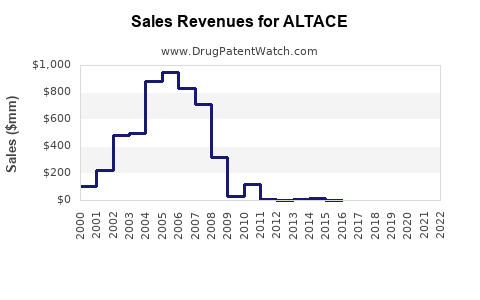
Generic entry materially reduced the economic value of the ALTACE franchise. Before loss of exclusivity, the product benefited from branded pricing, physician familiarity and cardiovascular-outcome evidence. After generic launch, three forces compressed revenue:
- Automatic pharmacy substitution.
- Formulary preference for lower-cost ramipril.
- Price competition among multiple ANDA suppliers.
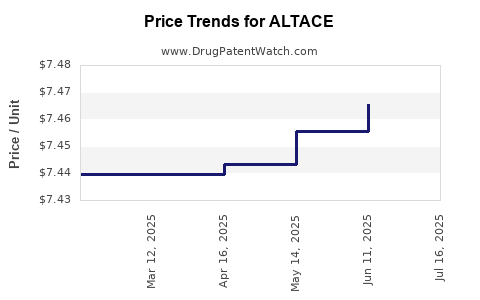
The brand’s revenue trajectory therefore shifted from a high-margin cardiovascular franchise to a residual branded product with limited pricing power. Ramipril prescriptions continued, but the economic value migrated from the original manufacturer to generic suppliers, distributors, pharmacies and payers.
ALTACE financial trajectory
| Lifecycle stage |
Revenue pattern |
Main economic driver |
| Pre-launch |
Negative or limited revenue |
Clinical development and regulatory investment |
| Early launch |
Rapid growth |
New product adoption and branded pricing |
| Mature brand period |
High-margin revenue |
Established prescribing and cardiovascular evidence |
| HOPE-era expansion |
Increased visibility |
Outcome data and broader risk-reduction positioning |
| Generic-entry period |
Sharp brand erosion |
ANDA approvals and substitution |
| Current mature market |
Low unit economics |
Commodity generic volume |
A precise current ALTACE revenue figure is not publicly established because manufacturers generally do not disclose standalone revenue for an old product after genericization. Sanofi and predecessor companies reported at portfolio or regional levels, while later brand owners and distributors did not consistently identify ALTACE as a separately material reporting segment.[5]
How strong is the ALTACE patent estate today?
The current patent estate is weak from a market-exclusion perspective.
Patent-strength assessment
| Factor |
Assessment |
| Core compound patent |
Expired |
| Generic entry |
Established |
| Formulation complexity |
Low to moderate |
| Manufacturing barriers |
Low for conventional capsules |
| Regulatory pathway |
Standard ANDA pathway |
| Method-of-use protection |
Narrow and difficult to enforce against ordinary prescribing |
| Biosimilar exposure |
Not applicable |
| Pricing protection |
Minimal |
| Litigation leverage |
Low |
ALTACE lacks the structural features that preserve value in mature branded pharmaceuticals, such as a device-dependent delivery system, a difficult-to-replicate formulation, a protected combination product or a manufacturing process with substantial regulatory complexity.
Does ALTACE face biosimilar risk?
No. ALTACE is a chemical small molecule, not a biologic. Biosimilar competition under the Public Health Service Act does not apply. The relevant competitors are generic ramipril products approved under the Federal Food, Drug, and Cosmetic Act and the ANDA pathway.[6]
The distinction matters commercially. Biosimilar markets can retain meaningful manufacturer differentiation because of manufacturing complexity and interchangeability rules. Ramipril is exposed to conventional generic competition, which generally produces faster substitution and steeper price erosion.
Which companies compete with ALTACE?
ALTACE competes in two separate markets: ramipril generics and the broader cardiovascular treatment market.
Ramipril competitors
Generic ramipril has historically been supplied by multiple manufacturers, including large generic companies and contract suppliers. Availability varies by country, wholesaler and dosage strength. The relevant competitive factors are:
- Wholesale acquisition cost.
- Pharmacy reimbursement.
- Supply reliability.
- FDA manufacturing compliance.
- Contracting with health plans and pharmacy benefit managers.
- Ability to maintain inventory across strengths.
Therapeutic competitors
| Drug or class |
Competitive relationship |
| Lisinopril |
High-volume generic ACE inhibitor and major substitute |
| Enalapril |
Established generic ACE inhibitor |
| Benazepril |
Generic ACE inhibitor used in hypertension |
| Perindopril |
ACE inhibitor with international competition |
| Losartan and other ARBs |
Alternative renin-angiotensin-system therapy |
| Sacubitril/valsartan |
Newer heart-failure therapy competing in selected patients |
| Calcium-channel blockers and thiazide diuretics |
Alternative hypertension treatments |
Ramipril retains clinical relevance because ACE inhibitors remain guideline-supported for selected hypertension, diabetes, kidney disease and cardiovascular-risk populations. Clinical relevance does not translate into branded pricing power.
What is the FDA regulatory status of ALTACE?
ALTACE is an FDA-approved prescription drug, and ramipril is available through approved generic products. The key regulatory status is therefore mature approval rather than active innovation exclusivity.
The product has no biosimilar pathway, no need for a supplemental biologics license application and no complex-device dependence. New market entrants generally rely on ANDA approval demonstrating pharmaceutical equivalence and bioequivalence to the reference product.
What licensing deals affected ALTACE?
ALTACE changed commercial hands and licensing relationships during the consolidation of the pharmaceutical industry. The product was associated with Hoechst, Aventis and Sanofi corporate structures, while U.S. commercialization involved separate operating and marketing arrangements during portions of its lifecycle.[5]
Those arrangements were commercially significant before generic entry because control of the U.S. brand affected pricing, promotion and cardiovascular sales-force economics. After genericization, licensing became less valuable. A licensee could not preserve the original franchise economics without exclusivity or a differentiated formulation.
What generic launch scenarios exist for ramipril?
The principal generic-entry scenario has already occurred. Future market changes are more likely to involve supply and contracting shifts than a new patent cliff.
Current generic-market scenarios
| Scenario |
Likely effect |
| Additional supplier entry |
Lower prices and greater pharmacy substitution |
| Supplier consolidation |
Higher shortage risk if manufacturing becomes concentrated |
| FDA warning or manufacturing suspension |
Temporary supply disruption and price movement |
| Formulary redesign |
Volume migration among generic suppliers |
| Brand relaunch |
Low probability of meaningful share recovery without differentiation |
| New combination product |
Potential niche growth, subject to separate patent and regulatory analysis |
The main risk is not a conventional generic launch. It is commoditization combined with manufacturing concentration, reimbursement pressure and occasional product shortages.
How does ALTACE compare with lisinopril?
Lisinopril has a stronger generic volume position in many markets, while ramipril benefits from the HOPE evidence base and continued use in selected cardiovascular-risk populations.
| Metric |
ALTACE / ramipril |
Lisinopril |
| Drug class |
ACE inhibitor |
ACE inhibitor |
| Brand status |
Mature and largely genericized |
Mature and genericized |
| Core market |
Hypertension and cardiovascular risk reduction |
Hypertension, heart failure and cardiovascular treatment |
| Commercial moat |
Historical clinical evidence |
Broad use and high generic penetration |
| Formulation complexity |
Low |
Low |
| Biosimilar risk |
None |
None |
| Current pricing power |
Minimal |
Minimal |
| Strategic value |
Generic portfolio product |
High-volume generic portfolio product |
For manufacturers, lisinopril generally offers broader volume potential. Ramipril may remain attractive where local prescribing guidelines, physician familiarity or supply gaps support share.
What geographic coverage does ALTACE have?
ALTACE and ramipril achieved international distribution, but patent expiry and generic penetration occurred on different schedules by jurisdiction. Europe, Canada, Japan and emerging markets each applied national patent, regulatory and reimbursement rules.
Current geographic value is highest where:
- Ramipril remains widely prescribed.
- Generic competition is fragmented.
- Local branded-generics retain physician or pharmacy preference.
- Tender systems have not reduced prices to commodity levels.
- Regulatory barriers limit rapid supplier entry.
In the United States and other highly genericized markets, geographic expansion offers limited value unless supported by a differentiated combination product, reliable supply or local distribution advantage.
What manufacturing and intellectual-property barriers remain?
Manufacturing ramipril capsules is less difficult than producing sterile injectables, inhaled products or biologics. Remaining barriers include:
- Consistent active pharmaceutical ingredient supply.
- Control of impurity profiles.
- Stability across dosage strengths.
- Compliance with FDA and international current good manufacturing practice requirements.
- Bioequivalence testing.
- Reliable packaging and distribution.
These barriers can affect supplier continuity, but they do not recreate patent exclusivity. A manufacturing disruption may raise short-term prices without materially improving the long-term economics of the ALTACE brand.
Key Takeaways
- ALTACE is the original branded ramipril product and is now a mature, largely genericized medicine.
- Core U.S. patent protection expired around the early 2000s, with generic entry beginning in 2002.
- The HOPE cardiovascular-outcomes data strengthened the brand before loss of exclusivity.
- Generic ramipril, not branded ALTACE, captures most current prescription-market economics.
- ALTACE has no biosimilar risk because ramipril is a small molecule.
- Formulation and method-of-use patents do not provide a meaningful current barrier to ordinary generic capsules.
- Current commercial risk centers on supplier concentration, reimbursement pressure and manufacturing interruptions.
- Standalone current ALTACE revenue is not publicly disclosed at a level that supports a reliable brand-specific estimate.
- Compared with lisinopril, ramipril has strong clinical recognition but generally weaker current commercial scale.
- The franchise has residual value as a generic product, but limited value as a protected branded asset.
FAQs
When did generic ramipril first enter the U.S. market?
Generic ramipril entered the U.S. market in the early 2000s, with commercial availability generally associated with 2002 after expiration of core patent protection.
Is ALTACE still a patented drug?
No. The principal U.S. patent protection that supported ALTACE’s branded exclusivity has expired. Narrow formulation or use claims, where applicable, do not block the established generic ramipril market.
Can a company launch a generic ALTACE capsule without conducting clinical trials?
Generally, an applicant can pursue an ANDA by demonstrating pharmaceutical equivalence and bioequivalence to the reference product. A full clinical efficacy program is not normally required for a conventional generic capsule.
Is ramipril more valuable than lisinopril for generic manufacturers?
Usually not on a volume basis. Lisinopril has broad utilization and strong generic demand. Ramipril can still be commercially attractive in markets with favorable prescribing patterns, fragmented competition or reliable supply advantages.
Could ALTACE regain branded market share?
A meaningful recovery would require a differentiated product, such as a protected combination, new delivery system or commercially compelling indication. A relaunch of conventional ramipril capsules would face entrenched generic substitution and limited pricing power.
References
- U.S. Food and Drug Administration. (2013). Altace (ramipril) prescribing information.
- U.S. Patent and Trademark Office. (1986). U.S. Patent No. 4,587,258: Ramipril.
- Yusuf, S., Sleight, P., Pogue, J., Bosch, J., Davies, R., & Dagenais, G. (2000). Effects of an angiotensin-converting-enzyme inhibitor, ramipril, on cardiovascular events in high-risk patients. New England Journal of Medicine, 342(3), 145-153.
- U.S. Food and Drug Administration. (2024). Approved drug products with therapeutic equivalence evaluations: Orange Book.
- Sanofi. (Various years). Annual reports and regulatory filings.
- U.S. Food and Drug Administration. (2024). Abbreviated new drug application process and generic drugs.