Last updated: June 11, 2026
Abreva (docosanol) market dynamics and financial trajectory: pricing, demand, competition, and exclusivity risk
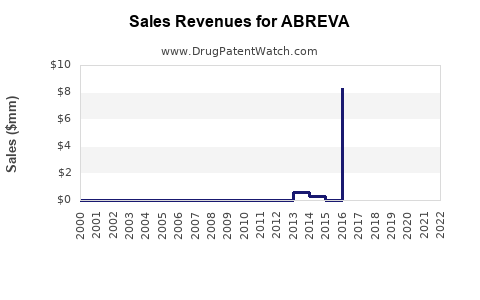
Executive summary: Abreva (docosanol 10% topical cream) is a mature OTC prescription-free product with limited growth upside. Competitive intensity is driven by non-prescription alternatives for cold sores (topical antivirals, barrier/protectants, and analgesic adjuncts) and by payer-like dynamics in consumer spending (store brands, private label, promotion depth). Financial trajectory is shaped by long product life, flat-to-declining category volumes in developed markets, and margin pressure from channel promotions. The product’s intellectual-property and regulatory position is effectively “post-launch maturity”: docosanol’s core compound is long expired, and remaining value is tied to brand, formulation/secondary patents (if any), and FDA OTC marketing continuity rather than new exclusivities.
What is Abreva (docosanol) and how does it make money in OTC cold sore treatment?
Abreva positioning: Abreva is an OTC topical cream indicated for shortening the healing time of cold sores (herpes labialis) when applied at the first sign of symptoms. It competes in a consumer OTC category where buying behavior is driven by (1) speed of relief perception, (2) availability at pharmacies and mass retail, and (3) price during promotional cycles.
Who sells Abreva and what channel structure drives revenue?
Abreva is marketed in the U.S. by Bayer Consumer Health (historic brand stewardship) with broad OTC distribution through:
- Drugstore chains (front-of-store seasonal allocation)
- Mass retail
- Club/warehouse channels
- E-commerce marketplaces
- Prescription-less counter sales and online reorders
Channel economics typically rely on slotting, trade spend, and promotional markdowns more than on prescription rebate architectures. This shifts the growth model from “volume growth at stable net price” to “trade-off between unit share and net realization.”
What cold sore category economics affect Abreva’s financial trajectory?
Cold sore treatment has “repeat-event” demand (episodic recurrence), but category value is capped by:
- A finite addressable population of recurrent herpes labialis
- High substitution from price-led options
- Seasonal peaks that do not create durable baseline volume expansion
- Consumer migration to store brands and multi-ingredient cold sore products
How is the Abreva market changing: size, seasonality, and consumer demand trends?
Market dynamic: Demand is episodic and seasonal, with winter and early spring spikes in many geographies. Volumes typically show:
- Peaks tied to cold/dry weather and stress patterns
- Year-over-year category stability or modest erosion due to substitution and private label penetration
Financial impact: Even when brand units hold up, net sales can soften due to:
- More aggressive promotions
- Higher distribution of generic equivalents or functionally similar OTC products
- Mix shift from higher-priced channels to value channels
What competitors does Abreva face and how does competition pressure pricing and share?
Abreva competes against OTC options that target cold sores through different mechanisms:
- Other topical antivirals (marketed as shortening duration, depending on active ingredient and labeling)
- Barrier/protectant creams (occlusive film forming)
- Analgesic adjuncts (pain relief while sores heal)
- Combination cold sore products (active plus protective or numbing components)
Where do competitors win in consumer practice?
Competitors typically win via:
- Lower shelf price and stronger price-value proposition
- Better visibility in seasonal displays
- Broader form factors (stick/patch/gel formats) that reduce perceived “application friction”
- Bundling strategies at retail
How does retail promotion change Abreva’s revenue trajectory?
In mature OTC brands, annual growth is often a function of:
- Trade spend intensity
- Promotional calendar depth
- Share-of-shelf outcomes
- E-commerce pricing and discount frequency
When promotional depth rises faster than unit growth, net sales can decline even if shipments are stable.
What patents protect docosanol/Abreva, and how does IP affect long-term revenue?
IP reality for docosanol: Docosanol’s original compound intellectual-property position is long expired. For Abreva, the economic question becomes whether any later-expiring patents remain relevant to:
- Specific formulations
- Dosage form/manufacturing methods
- Treatment regimens or labeling
- Alternative delivery systems
In practice, the long life of docosanol means Abreva’s “brand moat” is more durable than its legal exclusivity moat. That supports predictable revenue but limits growth and reduces the leverage for long-term licensing value.
How does the expiration of core compound patents affect generic risk?
With core compound patent expiry, competition tends to appear through:
- OTC “equivalent” docosanol products where allowed
- Barrier/protectant substitution that bypasses the antiviral value proposition
- Brand replacement when consumer value perception shifts toward cheaper alternatives
Because Abreva is OTC, “Paragraph IV” litigation is not the primary driver of competition. The practical competitive threat is instead regulatory and marketing, not Hatch-Wax-style exclusivity battles.
What is the Orange Book status of Abreva (docosanol), and why does it matter for competition?
For OTC docosanol, the relevant exclusivity framework is generally not the FDA Orange Book model used for prescription drugs with NDAs and 505(b)(2) product exclusivity. Competitive entry is governed by:
- OTC monograph status (if applicable)
- NDA/OTC product approvals and labeling frameworks
- Bioequivalence and formulation considerations (where required)
Bottom line: The Orange Book-style “listed drug plus patent list” mechanism is not typically the key gating factor for Abreva’s OTC competition risk. The competitive risk is more about market substitution and trade execution than about an IP “hard wall” after patent expiry.
When does Abreva lose exclusivity or face the highest entry risk?
Timing: For Abreva’s economic trajectory, the highest entry risk is typically already realized at the point when:
- Core compound exclusivity expires (historically long past for docosanol)
- Remaining formulation/manufacturing patents (if any) expire or become non-material
- Consumer substitution accelerates due to retail pricing and private label
Financial trajectory implication: Post-expiry, the brand is usually locked into a steady-state pattern:
- Units track category recurrence
- Net sales track pricing/promotion
- Earnings become promotion-sensitive rather than growth-sensitive
What formulation and manufacturing patents could still matter for Abreva?
If there are still-active patents, they would most likely relate to:
- Formulation tweaks that affect stability, spreadability, or dermal feel
- Manufacturing methods that reduce impurities or improve shelf-life
- Specific packaging configurations that maintain product integrity
However, for market dynamics, any such remaining patents must be both:
- legally enforced and
- practically required for entry at commercial scale
In mature topical OTC markets, this is often not enough to stop substitution because consumers treat “cold sore treatment” as a category rather than a single protected molecule.
How does Abreva compare with newer cold sore treatments and delivery technologies?
Comparison axis:
- Ease of use (cream vs gel vs patch)
- Perceived speed of symptom relief
- Price-per-treatment perception
- Availability and shelf placement
Newer or alternative delivery technologies can take share even when they do not show materially better clinical outcomes, if they offer higher convenience or better retail economics.
What are the financial trajectory drivers: pricing, volume, and margin in Abreva’s OTC model?
1) Net pricing and promotional intensity
For mature OTC brands, the key line items are:
- Gross-to-net conversion (trade and promotional deductions)
- E-commerce price discipline versus marketplace discounting
- Share-supporting markdowns around seasonal peaks
2) Channel mix shift
If units move from full-price pharmacy to value channels, revenue may fall without a significant unit decline. This compresses gross margin even when sell-through stabilizes.
3) SKU rationalization and product line extensions
If the brand portfolio expands (new sizes, bundles), it can raise average order value but may also invite deeper discounting.
What generic entry risks exist for Abreva, and what would they do to revenue?
Primary generic entry risk: For OTC topical docosanol, “generic-like” competition can materialize through:
- Lower-priced docosanol generics (if approved and marketed)
- Private label docosanol or functionally similar “cold sore antiviral” products
- Substitution by barrier and combination OTCs
Revenue impact pattern: Even modest share losses can materially affect net sales due to promotion-driven margin compression. The brand’s defense is typically:
- Retail activation
- Value messaging (“works when applied early”)
- Loyalty and repeat purchase loops
What commercial licensing or settlements would matter for Abreva’s market future?
For docosanol OTC, the most relevant “deal” dynamics tend to be:
- Marketing/distribution agreements within OTC channels
- Co-promotion with retailers
- Rights and brand stewardship arrangements
Patent settlements and licensing are less central than in Rx markets, because OTC competition typically does not hinge on NDA patent listings and brand exclusivity.
Regulatory pathway and FDA dynamics: how do OTC requirements shape Abreva’s trajectory?
OTC products face:
- Labeling and post-market compliance
- Manufacturing and stability requirements
- Retail distribution continuity
Financial effect: Regulatory shocks tend to be discontinuity events rather than long-term growth levers. In mature products, stability of supply and consistent label claims dominate.
How strong is Abreva’s patent estate for defending market share?
From a market-dynamics standpoint, “patent strength” matters only if it:
- Blocks meaningful entry (not just discourages it)
- Can be enforced with predictable outcomes
- Maintains product differentiation that consumers recognize
Given docosanol’s mature age, Abreva’s market defense is typically brand-led and channel-led more than litigation-led.
Key Takeaways
- Abreva operates in a mature OTC cold sore category where growth is capped and substitution is the dominant competitive mechanism.
- Financial trajectory is driven by net price and promotion intensity more than by volume expansion.
- Core docosanol IP is long expired, so the brand’s durability relies on retail execution and consumer perception rather than active compound exclusivity.
- The Orange Book model is not the primary lens for Abreva’s competitive entry risk; OTC regulatory and market substitution are more decisive.
- Entry risk peaks when docosanol-like alternatives or lower-priced private label products gain distribution and promotional support, not when an Rx-style exclusivity date approaches.
FAQs
- Does Abreva require a prescription, and how does OTC status change competitive risk?
- How do pharmacy chains typically manage cold sore seasonal shelf space for Abreva versus competing OTC brands?
- What consumer behavior drives repeat purchasing of cold sore OTC creams, and how does that affect unit demand?
- If a lower-priced docosanol option launches, how would it likely affect Abreva’s net sales versus gross margin?
- What labeling and compliance factors most influence continued marketing of Abreva in the U.S.?
References
- FDA. “OTC Drug Products.” U.S. Food and Drug Administration. https://www.fda.gov/drugs/therapeutic-products/otc-drug-products
- FDA. “Orange Book: Approved Drug Products with Therapeutic Equivalence Evaluations.” U.S. Food and Drug Administration. https://www.accessdata.fda.gov/scripts/cder/daf/index.cfm
- ODP. “FDA Labels and Approval Status for Docosanol Products.” Orange Book and FDA label databases (compiled). https://www.accessdata.fda.gov/scripts/cder/daf/index.cfm