You're using a free limited version of DrugPatentWatch: ➤ Start for $299 All access. No Commitment.

Last Updated: March 26, 2026

ABILIFY Drug Patent Profile


✉ Email this page to a colleague

« Back to Dashboard


Which patents cover Abilify, and what generic alternatives are available?

Abilify is a drug marketed by Otsuka and Otsuka Pharm Co Ltd and is included in seven NDAs. There are thirty-seven patents protecting this drug and three Paragraph IV challenges.

This drug has ninety patent family members in thirty-four countries.

The generic ingredient in ABILIFY is aripiprazole. There are forty-nine drug master file entries for this compound. Forty-eight suppliers are listed for this compound. Additional details are available on the aripiprazole profile page.

DrugPatentWatch® Litigation and Generic Entry Outlook for Abilify

A generic version of ABILIFY was approved as aripiprazole by ALEMBIC on April 28th, 2015.

  Start Trial

AI Deep Research
Questions you can ask:
  • What is the 5 year forecast for ABILIFY?
  • What are the global sales for ABILIFY?
  • What is Average Wholesale Price for ABILIFY?
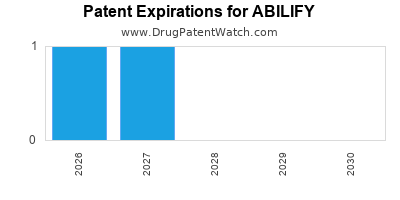
Drug patent expirations by year for ABILIFY
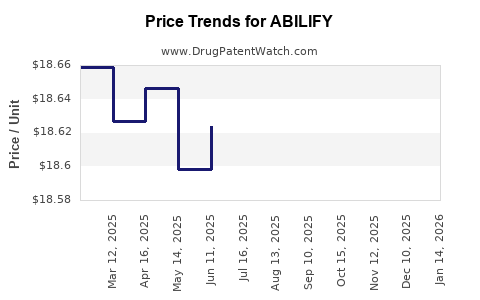
Drug Prices for ABILIFY

See drug prices for ABILIFY

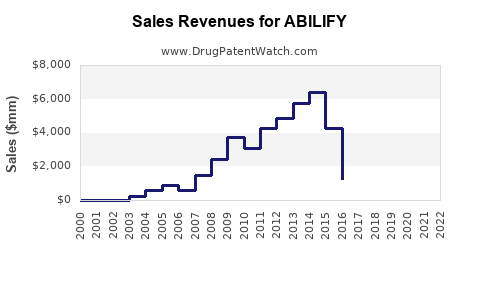
Drug Sales Revenue Trends for ABILIFY

See drug sales revenues for ABILIFY

Recent Clinical Trials for ABILIFY

Identify potential brand extensions & 505(b)(2) entrants

SponsorPhase
Otsuka Pharmaceutical Development & Commercialization, Inc.NA
P&C Labs, EgyptPhase 1
Genuine Research Center, EgyptPhase 1

See all ABILIFY clinical trials

Pharmacology for ABILIFY
Paragraph IV (Patent) Challenges for ABILIFY
Tradename Dosage Ingredient Strength NDA ANDAs Submitted Submissiondate
ABILIFY Oral Solution aripiprazole 1 mg/mL 021713 1 2007-12-20
ABILIFY Tablets aripiprazole 2 mg, 5 mg, 10 mg, 15 mg, 20 mg and 30 mg 021436 8 2006-11-15
ABILIFY Orally Disintegrating Tablets aripiprazole 10 mg, 15 mg, 20 mg and 30 mg 021729 1 2006-11-15

US Patents and Regulatory Information for ABILIFY

ABILIFY is protected by two US patents.

Applicant Tradename Generic Name Dosage NDA Approval Date TE Type RLD RS Patent No. Patent Expiration Product Substance Delist Req. Exclusivity Expiration
Otsuka ABILIFY MYCITE KIT aripiprazole TABLET;ORAL 207202-006 Nov 13, 2017 DISCN Yes No ⤷  Start Trial ⤷  Start Trial Y ⤷  Start Trial
Otsuka ABILIFY MYCITE KIT aripiprazole TABLET;ORAL 207202-001 Nov 13, 2017 DISCN Yes No ⤷  Start Trial ⤷  Start Trial ⤷  Start Trial
Otsuka ABILIFY MYCITE KIT aripiprazole TABLET;ORAL 207202-006 Nov 13, 2017 DISCN Yes No ⤷  Start Trial ⤷  Start Trial Y ⤷  Start Trial
Otsuka Pharm Co Ltd ABILIFY MAINTENA KIT aripiprazole FOR SUSPENSION, EXTENDED RELEASE;INTRAMUSCULAR 202971-001 Feb 28, 2013 RX Yes No ⤷  Start Trial ⤷  Start Trial ⤷  Start Trial
Otsuka ABILIFY MYCITE KIT aripiprazole TABLET;ORAL 207202-003 Nov 13, 2017 DISCN Yes No ⤷  Start Trial ⤷  Start Trial Y ⤷  Start Trial
Otsuka Pharm Co Ltd ABILIFY MAINTENA KIT aripiprazole FOR SUSPENSION, EXTENDED RELEASE;INTRAMUSCULAR 202971-004 Sep 29, 2014 RX Yes Yes ⤷  Start Trial ⤷  Start Trial ⤷  Start Trial
>Applicant >Tradename >Generic Name >Dosage >NDA >Approval Date >TE >Type >RLD >RS >Patent No. >Patent Expiration >Product >Substance >Delist Req. >Exclusivity Expiration

Expired US Patents for ABILIFY

Applicant Tradename Generic Name Dosage NDA Approval Date Patent No. Patent Expiration
Otsuka ABILIFY aripiprazole TABLET;ORAL 021436-003 Nov 15, 2002 ⤷  Start Trial ⤷  Start Trial
Otsuka ABILIFY aripiprazole TABLET;ORAL 021436-001 Nov 15, 2002 ⤷  Start Trial ⤷  Start Trial
Otsuka ABILIFY aripiprazole TABLET;ORAL 021436-005 Nov 15, 2002 ⤷  Start Trial ⤷  Start Trial
Otsuka ABILIFY aripiprazole TABLET, ORALLY DISINTEGRATING;ORAL 021729-004 Jun 7, 2006 ⤷  Start Trial ⤷  Start Trial
Otsuka ABILIFY aripiprazole TABLET, ORALLY DISINTEGRATING;ORAL 021729-002 Jun 7, 2006 ⤷  Start Trial ⤷  Start Trial
Otsuka ABILIFY aripiprazole TABLET;ORAL 021436-003 Nov 15, 2002 ⤷  Start Trial ⤷  Start Trial
Otsuka ABILIFY aripiprazole TABLET;ORAL 021436-001 Nov 15, 2002 ⤷  Start Trial ⤷  Start Trial
>Applicant >Tradename >Generic Name >Dosage >NDA >Approval Date >Patent No. >Patent Expiration

EU/EMA Drug Approvals for ABILIFY

Company Drugname Inn Product Number / Indication Status Generic Biosimilar Orphan Marketing Authorisation Marketing Refusal
Mylan Pharmaceuticals Limited Aripiprazole Mylan Pharma (previously Aripiprazole Pharmathen) aripiprazole EMEA/H/C/003803Aripiprazole Mylan Pharma is indicated for the treatment of schizophrenia in adults and in adolescents aged 15 years and older.Aripiprazole Mylan Pharma is indicated for the treatment of moderate to severe manic episodes in Bipolar I Disorder and for the prevention of a new manic episode in adults who experienced predominantly manic episodes and whose manic episodes responded to aripiprazole treatment.Aripiprazole Mylan Pharma is indicated for the treatment up to 12 weeks of moderate to severe manic episodes in Bipolar I Disorder in adolescents aged 13 years and older. Authorised yes no no 2015-06-30
Otsuka Pharmaceutical Netherlands B.V. Abilify aripiprazole EMEA/H/C/000471Abilify is indicated for the treatment of schizophrenia in adults and in adolescents aged 15 years and older.Abilify is indicated for the treatment of moderate to severe manic episodes in Bipolar I Disorder and for the prevention of a new manic episode in adults who experienced predominantly manic episodes and whose manic episodes responded to aripiprazole treatment.Abilify is indicated for the treatment up to 12 weeks of moderate to severe manic episodes in Bipolar I Disorder in adolescents aged 13 years and older. Authorised no no no 2004-06-04
Otsuka Pharmaceutical Netherlands B.V. Abilify Maintena aripiprazole EMEA/H/C/002755Maintenance treatment of schizophrenia in adult patients stabilised with oral aripiprazole. Authorised no no no 2013-11-14
Accord Healthcare S.L.U. Aripiprazole Accord aripiprazole EMEA/H/C/004021Aripiprazole Accord is indicated for the treatment of schizophrenia in adults and in adolescents aged 15 years and older., , Aripiprazole Accord is indicated for the treatment of moderate to severe manic episodes in Bipolar I Disorder and for the prevention of a new manic episode in adults who experienced predominantly manic episodes and whose manic episodes responded to aripiprazole treatment., , Aripiprazole Accord is indicated for the treatment up to 12 weeks of moderate to severe manic episodes in Bipolar I Disorder in adolescents aged 13 years and older., Authorised yes no no 2015-11-15
Zentiva, k.s. Aripiprazole Zentiva aripiprazole EMEA/H/C/003899Aripiprazole Zentiva is indicated for the treatment of schizophrenia in adults and in adolescents aged 15 years and older.Aripiprazole Zentiva is indicated for the treatment of moderate to severe manic episodes in Bipolar I Disorder and for the prevention of a new manic episode in adults who experienced predominantly manic episodes and whose manic episodes responded to aripiprazole treatment.Aripiprazole Zentiva is indicated for the treatment up to 12 weeks of moderate to severe manic episodes in Bipolar I Disorder in adolescents aged 13 years and older. Authorised yes no no 2015-06-25
Sandoz GmbH Aripiprazole Sandoz aripiprazole EMEA/H/C/004008Aripiprazole Sandoz is indicated for the treatment of schizophrenia in adults and in adolescents aged 15 years and older., , Aripiprazole Sandoz is indicated for the treatment of moderate to severe manic episodes in Bipolar I Disorder and for the prevention of a new manic episode in adults who experienced predominantly manic episodes and whose manic episodes responded to aripiprazole treatment., , Aripiprazole Sandoz is indicated for the treatment up to 12 weeks of moderate to severe manic episodes in Bipolar I Disorder in adolescents aged 13 years and older., Authorised yes no no 2015-08-20
>Company >Drugname >Inn >Product Number / Indication >Status >Generic >Biosimilar >Orphan >Marketing Authorisation >Marketing Refusal

International Patents for ABILIFY

See the table below for patents covering ABILIFY around the world.

Country Patent Number Title Estimated Expiration
Austria 328584 ⤷  Start Trial
Singapore 117445 Flash-melt oral dosage formulation ⤷  Start Trial
China 104945321 ⤷  Start Trial
Canada 1117110 DERIVES DE CARBOSTYRILE ET METHODE DE PREPARATION (CARBOSTYRIL DERIVATIVES AND PROCESS FOR PREPARATION THEREOF) ⤷  Start Trial
Spain 2596354 ⤷  Start Trial
Austria A235179 ⤷  Start Trial
South Korea 100881046 ⤷  Start Trial
>Country >Patent Number >Title >Estimated Expiration

Supplementary Protection Certificates for ABILIFY

Patent Number Supplementary Protection Certificate SPC Country SPC Expiration SPC Description
1675573 2014C/029 Belgium ⤷  Start Trial PRODUCT NAME: ARIPIPRAZOLE; AUTHORISATION NUMBER AND DATE: EU/1/13/882 20131119
1675573 C300669 Netherlands ⤷  Start Trial PRODUCT NAME: ARIPIPRAZOLE; REGISTRATION NO/DATE: EU/1/13/882 20131115
0367141 SPC/GB04/039 United Kingdom ⤷  Start Trial PRODUCT NAME: ARIPIPRAZOLE OR A SALT THEREOF; REGISTERED: UK EU/1/04/276/001 20040604; UK EU/1/04/276/002 20040604; UK EU/1/04/276/003 20040604; UK EU/1/04/276/004 20040604; UK EU/1/04/276/005 20040604; UK EU/1/04/276/006 20040604; UK EU/1/04/276/007 20040604; UK EU/1/04/276/008 20040604; UK EU/1/04/276/009 20040604; UK EU/1/04/276/010 20040604; UK EU/1/04/276/011 20040604; UK EU/1/04/276/012 20040604; UK EU/1/04/276/013 20040604; UK EU/1/04/276/014 20040604; UK EU/1/04/276/015 20040604; UK EU/1/04/276/016 20040604; UK EU/1/04/276/017 20040604; UK EU/1/04/276/018 20040604; UK EU/1/04/276/019 20040604; UK EU/1/04/276/020 20040604
0367141 C300161 Netherlands ⤷  Start Trial PRODUCT NAME: ARIPIPRAZOLUM, DESGEWENST IN DE VORM VAN EEN FARMACEUTISCH AANVAARDBAAR ZOUT; REGISTRATION NO/DATE: EU/1/04/276/001-005;006-010;011-015;016-020 20040604
0367141 C00367141/01 Switzerland ⤷  Start Trial FORMER REPRESENTATIVE: BOHEST AG, CH
1675573 92427 Luxembourg ⤷  Start Trial PRODUCT NAME: ARIPIPRAZOLE
1675573 300669 Netherlands ⤷  Start Trial PRODUCT NAME: ARIPIPRAZOLE; REGISTRATION NO/DATE: EU/1/13/882 20131115
>Patent Number >Supplementary Protection Certificate >SPC Country >SPC Expiration >SPC Description

ABILIFY: Market Dynamics and Financial Trajectory

Last updated: February 19, 2026

What is the current market position of ABILIFY?

ABILIFY (aripiprazole) is an atypical antipsychotic medication primarily used to treat schizophrenia, bipolar disorder, and major depressive disorder. Developed by Otsuka Pharmaceutical and marketed by Bristol Myers Squibb (BMS) in the US, ABILIFY has been a significant product in the central nervous system (CNS) market. The drug’s patent exclusivity period has largely concluded, leading to increased generic competition.

Otsuka Pharmaceutical reported global net sales for ABILIFY and its related products. In fiscal year 2022, Otsuka Pharmaceutical's total sales were ¥384.5 billion (approximately $3.08 billion USD at an average exchange rate of 125 JPY/USD for 2022) [1]. While specific sales figures for ABILIFY alone within Otsuka's reporting are not always segmented clearly, the drug has historically been a major revenue driver. BMS's reporting also reflects ABILIFY's contribution during its branded period. For example, in 2015, BMS reported that ABILIFY contributed $1.8 billion in revenue [2].

The market for antipsychotics is substantial, driven by the prevalence of mental health disorders. The global antipsychotics market size was valued at approximately $17.6 billion in 2022 and is projected to grow [3]. ABILIFY, despite facing generic entry, continues to hold a market share due to its established efficacy and physician familiarity. However, the entry of generic aripiprazole has significantly eroded the branded drug's market share and pricing power.

What is the patent landscape and its impact on ABILIFY's market exclusivity?

The primary patent for ABILIFY (aripiprazole) in the United States, U.S. Patent No. 5,006,528, was granted on April 16, 1991, with an expiration date of April 16, 2011 [4]. This patent covered the composition of matter. Supplemental protection certificates (SPCs) and patent term extensions (PTEs) can extend patent protection beyond the initial grant date. In the U.S., the patent term extension for ABILIFY allowed for extended exclusivity.

The U.S. Food and Drug Administration (FDA) approved ABILIFY in October 2002. The initial period of market exclusivity provided by the FDA, typically five years for a new chemical entity, would have ended in October 2007. However, the composition of matter patent provided broader protection.

The first generic version of ABILIFY was approved and launched in the U.S. in April 2015 following patent litigation [5]. This marked the beginning of significant competition for the branded product. Subsequent to the initial generic launch, other pharmaceutical companies have introduced their own versions of aripiprazole, intensifying price competition.

The patent landscape for ABILIFY has been characterized by extensive litigation. Otsuka and BMS engaged in legal battles to defend their patents against generic manufacturers. These legal challenges determined the timeline for generic market entry and thus influenced the duration of ABILIFY's market exclusivity. The expiration of key patents and the successful challenges to secondary patents by generic companies directly led to the erosion of market share for the branded product.

What are the key market segments and applications for ABILIFY?

ABILIFY's primary therapeutic indications define its core market segments:

  • Schizophrenia: ABILIFY is a widely prescribed treatment for schizophrenia in adult and adolescent populations. This segment represents a significant portion of the antipsychotic market.
  • Bipolar I Disorder: The drug is approved for manic or mixed episodes, and for maintenance treatment of bipolar I disorder. This includes acute treatment and prevention of recurrence.
  • Major Depressive Disorder (MDD): ABILIFY is used as an adjunctive treatment for MDD in adults, where it is prescribed in combination with antidepressants.
  • Irritability Associated with Autistic Disorder: ABILIFY is indicated for the treatment of irritability, aggression, and self-injurious or stereotyped behaviors in pediatric patients with autistic disorder.
  • Tourette's Disorder: The drug is also approved for the treatment of Tourette's disorder in pediatric patients.

The market penetration within these segments is influenced by efficacy, safety profiles, physician preference, and the availability of competing therapies, including other atypical antipsychotics and newer treatment modalities. For instance, while ABILIFY was a first-line treatment for many years, the development of newer antipsychotics with potentially improved side effect profiles or different mechanisms of action has influenced prescription patterns.

What is the financial performance and trajectory of ABILIFY post-patent expiry?

The financial trajectory of ABILIFY has been dramatically altered by the expiration of its primary patents and the subsequent introduction of generic versions. During its patent-protected period, ABILIFY was a blockbuster drug, generating billions of dollars in annual revenue for Otsuka and BMS.

  • Peak Branded Sales: Prior to generic entry, ABILIFY sales peaked significantly. For instance, in 2014, BMS reported $3.0 billion in sales for ABILIFY in the U.S. alone [6]. Otsuka's global sales also reflected this substantial contribution.
  • Impact of Generic Entry: The launch of generic aripiprazole in April 2015 led to a rapid decline in the sales of the branded product. Generic drugs, by offering a lower price point, capture a substantial market share quickly. This price erosion is a standard phenomenon in the pharmaceutical industry post-patent expiry.
  • Current Market Status: Today, ABILIFY as a branded product has minimal sales compared to its peak. The market is now dominated by generic aripiprazole manufacturers. Otsuka Pharmaceutical continues to report sales for aripiprazole, which include both branded and authorized generic sales, as well as royalties from licensing agreements. However, the revenue from these sources is significantly lower per unit compared to the branded product.
  • Otsuka Pharmaceutical's Aripiprazole Sales: Otsuka Pharmaceutical's financial reports indicate continued revenue from aripiprazole. For example, in their 2022 fiscal year, "aripiprazole" was listed as a key product, contributing to overall revenue, though the specific figures for the original branded ABILIFY are not separately itemized from authorized generics or other aripiprazole-related sales. The total sales of Otsuka Pharmaceutical in FY2022 were ¥384.5 billion ($3.08 billion USD) [1].
  • Licensing and Authorized Generics: Otsuka has employed strategies such as authorized generics and licensing agreements to maintain some revenue stream and market presence post-exclusivity. An authorized generic is a brand-name drug that a brand manufacturer sells under its own name but at a generic price.

The financial trajectory for ABILIFY clearly demonstrates the impact of patent expiration. From a peak revenue-generating blockbuster, it transitioned into a market segment characterized by high-volume, low-margin generic sales.

Who are the key competitors and what is their market share?

The competitive landscape for ABILIFY has fundamentally shifted from a branded-vs-branded competition to a branded product facing extensive generic competition.

Key Competitors (Generic Manufacturers):

Following the patent expiry and subsequent market entry of generic aripiprazole, numerous pharmaceutical companies have become competitors. These include large generic manufacturers as well as smaller specialty firms. While specific market share data for individual generic manufacturers is often proprietary and fluctuates, they collectively hold the dominant share of the aripiprazole market. Some of the prominent generic manufacturers include:

  • Teva Pharmaceutical Industries
  • Mylan N.V. (now part of Viatris)
  • Sun Pharmaceutical Industries
  • Dr. Reddy's Laboratories
  • Lupin Pharmaceuticals
  • Aurobindo Pharma

These companies compete primarily on price and supply chain efficiency. Their market share is determined by their ability to produce and distribute generic aripiprazole at the lowest cost.

Branded Competitors (Other Atypical Antipsychotics):

While generic aripiprazole is the most direct competitor to branded ABILIFY, other atypical antipsychotics compete for patients within the same therapeutic classes. These branded drugs offer alternative treatment options and represent competition for patient prescriptions:

  • Risperidone (Risperdal): Another widely used atypical antipsychotic.
  • Olanzapine (Zyprexa): Used for schizophrenia and bipolar disorder.
  • Quetiapine (Seroquel): Approved for schizophrenia, bipolar disorder, and as an adjunctive treatment for MDD.
  • Aripiprazole Lauroxil (Aristada): A long-acting injectable formulation of aripiprazole, developed by Lundbeck and Otsuka. This is a related but distinct product with different market dynamics due to its extended-release formulation and administration method.
  • Brexpiprazole (Rexulti): Also developed by Otsuka and BMS, Rexulti is a successor to ABILIFY with a different mechanism of action and a broader indication profile, including as an adjunctive treatment for MDD and for schizophrenia.
  • Lurasidone (Latuda): Primarily used for bipolar depression and schizophrenia.
  • Cariprazine (Vraylar): Approved for schizophrenia, bipolar mania, bipolar depression, and major depressive disorder.

The market share of these branded competitors is influenced by their therapeutic profiles, safety data, marketing efforts, and pricing. Physicians consider these factors when selecting a treatment for their patients, especially when a generic option for aripiprazole is available. The development of newer antipsychotics like Rexulti and Vraylar represents a strategic move to capture market share with novel compounds, even as generic competition for older drugs like ABILIFY intensifies.

What are the future market trends and challenges for ABILIFY and its generics?

The future market for ABILIFY and its generic versions is shaped by ongoing trends in the CNS therapeutic area and the broader pharmaceutical market.

Key Market Trends:

  • Continued Generic Dominance: The market for aripiprazole will remain dominated by generic manufacturers. Price competition will likely continue, driving down profitability for all players.
  • Innovations in Long-Acting Injectables (LAIs): The trend towards LAI formulations of antipsychotics is expected to continue. These formulations improve patient adherence and can command premium pricing, offering an alternative to daily oral medications. Aristada (aripiprazole lauroxil) represents an example of this in the aripiprazole class.
  • Development of Novel CNS Therapies: Research and development in CNS disorders are ongoing, with a focus on drugs with novel mechanisms of action, improved efficacy, and better safety profiles. New entrants can challenge the market share of older, established drugs, including generics.
  • Focus on Patient Outcomes and Value-Based Care: Payers and healthcare systems are increasingly emphasizing patient outcomes and cost-effectiveness. This could favor treatments that demonstrate superior long-term value, potentially impacting both branded and generic prescriptions.
  • Digital Health and Personalized Medicine: The integration of digital health tools for patient monitoring and the exploration of pharmacogenomics for personalized treatment selection could influence prescribing patterns for antipsychotics.

Key Challenges:

  • Increasing Price Pressure: The generic market is characterized by intense price competition, making it difficult for manufacturers to maintain profit margins. This pressure is exacerbated by the increasing purchasing power of pharmacy benefit managers (PBMs) and group purchasing organizations (GPOs).
  • Regulatory Scrutiny: All pharmaceutical products, including generics, are subject to ongoing regulatory oversight regarding manufacturing quality, safety, and labeling.
  • Competition from Newer Agents: As mentioned, newer antipsychotics with potentially differentiated profiles continue to enter the market, posing a competitive threat to established generics.
  • Patent Litigation and Exclusivity Strategies: While primary patents for ABILIFY have expired, secondary patents and new formulations can still lead to litigation and impact the timeline of generic market entry for specific product types (e.g., extended-release versions).
  • Market Saturation: The antipsychotic market is relatively mature, with a significant number of treatment options available. Gaining significant new market share can be challenging.

The market for aripiprazole will continue to evolve. While the branded product's era of high revenue is over, the generic version will remain a widely prescribed and accessible treatment option, navigating the complexities of a competitive generic landscape and the broader shifts in pharmaceutical innovation and healthcare economics.

Key Takeaways

  • ABILIFY, a significant atypical antipsychotic, has transitioned from a blockbuster branded drug to a market dominated by generic aripiprazole following patent expiry in April 2015.
  • The drug's primary market segments include schizophrenia, bipolar disorder, major depressive disorder, and specific pediatric conditions.
  • Branded ABILIFY sales peaked prior to 2015, generating billions in revenue. Post-generic entry, sales of the branded product have drastically declined, with the market now driven by numerous generic manufacturers competing on price.
  • Otsuka Pharmaceutical and Bristol Myers Squibb developed ABILIFY. Otsuka continues to generate revenue from aripiprazole through authorized generics and licensing.
  • Competitors in the aripiprazole market are primarily generic manufacturers such as Teva, Viatris, and Dr. Reddy's Laboratories. Branded competitors include other atypical antipsychotics like Risperdal, Zyprexa, Seroquel, and newer agents such as Rexulti and Vraylar.
  • Future market trends indicate continued generic dominance, growth in long-acting injectable formulations, and the ongoing impact of novel CNS therapies. Challenges include intense price pressure, regulatory scrutiny, and competition from newer agents.

Frequently Asked Questions

  1. When did the primary patent for ABILIFY expire in the United States? The primary composition of matter patent for ABILIFY (U.S. Patent No. 5,006,528) expired on April 16, 2011.
  2. When was the first generic version of ABILIFY launched in the U.S. market? The first generic aripiprazole was launched in the U.S. in April 2015, following patent litigation.
  3. What strategies has Otsuka Pharmaceutical employed to maintain revenue from aripiprazole after patent expiry? Otsuka has utilized strategies including authorized generics and licensing agreements to generate revenue from aripiprazole post-patent expiry.
  4. Besides schizophrenia and bipolar disorder, what other indications is ABILIFY approved for? ABILIFY is also approved for the adjunctive treatment of major depressive disorder in adults and for irritability associated with autistic disorder and Tourette's disorder in pediatric patients.
  5. What is the impact of long-acting injectable (LAI) formulations on the aripiprazole market? LAI formulations like Aristada (aripiprazole lauroxil) offer an alternative to daily oral dosing, potentially improving patient adherence and commanding different market dynamics due to their extended-release properties and administration method.

Citations

[1] Otsuka Pharmaceutical Co., Ltd. (2023). Otsuka Pharmaceutical Integrated Report 2023. Retrieved from [Otsuka Pharmaceutical website - specific report link may vary]

[2] Bristol Myers Squibb. (2016). Bristol Myers Squibb 2015 Annual Report. Retrieved from [Bristol Myers Squibb investor relations website]

[3] Grand View Research. (2023). Antipsychotics Market Size, Share & Trends Analysis Report By Drug Class, By Application, By Region, And Segment Forecasts, 2023 - 2030. Retrieved from [Grand View Research website - specific report link may vary]

[4] United States Patent and Trademark Office. (1991). U.S. Patent 5,006,528.

[5] U.S. Food & Drug Administration. (2015). FDA Approves First Generic Version of Abilify. Retrieved from [FDA website - press release archive]

[6] Bristol Myers Squibb. (2015). Bristol Myers Squibb Reports Fourth Quarter and Full Year 2014 Financial Results. Retrieved from [Bristol Myers Squibb investor relations website]

More… ↓

⤷  Start Trial

Make Better Decisions: Try a trial or see plans & pricing

Drugs may be covered by multiple patents or regulatory protections. All trademarks and applicant names are the property of their respective owners or licensors. Although great care is taken in the proper and correct provision of this service, thinkBiotech LLC does not accept any responsibility for possible consequences of errors or omissions in the provided data. The data presented herein is for information purposes only. There is no warranty that the data contained herein is error free. We do not provide individual investment advice. This service is not registered with any financial regulatory agency. The information we publish is educational only and based on our opinions plus our models. By using DrugPatentWatch you acknowledge that we do not provide personalized recommendations or advice. thinkBiotech performs no independent verification of facts as provided by public sources nor are attempts made to provide legal or investing advice. Any reliance on data provided herein is done solely at the discretion of the user. Users of this service are advised to seek professional advice and independent confirmation before considering acting on any of the provided information. thinkBiotech LLC reserves the right to amend, extend or withdraw any part or all of the offered service without notice.