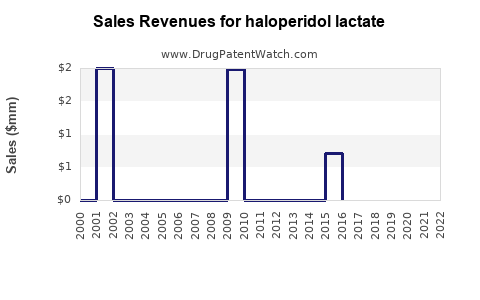
Last updated: July 27, 2025
Introduction
Haloperidol Lactate is a widely used antipsychotic medication primarily indicated for the management of schizophrenia, acute psychosis, and Tourette’s syndrome. As a long-acting injectable formulation of haloperidol, it serves an essential role in psychiatric treatment, especially for patients requiring sustained medication adherence. The global market for antipsychotics is expanding, driven by rising mental health awareness, increased prevalence of schizophrenia, and technological advances in drug delivery systems. This article analyzes the intricate market dynamics and the projected financial trajectory of Haloperidol Lactate, offering insights for stakeholders contemplating investment, R&D, or strategic positioning.
Market Overview and Key Drivers
Global Market Size and Growth Trends
The global antipsychotic drugs market was valued at approximately USD 15.4 billion in 2022 and is projected to grow at a compound annual growth rate (CAGR) of around 4.2% through 2030. The segment of long-acting injectable (LAI) formulations like Haloperidol Lactate is experiencing heightened demand, accounting for about 20-25% of the entire antipsychotic market, with increasing adoption due to improved adherence and reduced hospitalization rates ([1], [2]).
Prevalence of Mental Health Disorders
The global burden of schizophrenia affects over 20 million individuals, with a significant proportion requiring sustained pharmacotherapy. The World Health Organization (WHO) reports rising incidence rates, compounded by broader awareness and improved diagnostics. Moreover, the aging population contributes to increased prevalence of neuropsychiatric conditions, further fueling market growth.
Shift Towards Long-Acting Formulations
Long-acting injectables like Haloperidol Lactate have gained favor among clinicians due to their capacity to ensure consistent medication levels, minimize non-adherence, and reduce relapse rates. Their convenience boosts treatment compliance, especially in populations with adherence challenges, such as adolescents and cognitively impaired patients ([3]).
Healthcare Policy and Reimbursement Landscape
Government initiatives promoting mental health treatment, coupled with reimbursement policies favoring drug adherence strategies, further accelerate LAI adoption. Countries with universal healthcare systems are increasingly integrating depot antipsychotics into standard care protocols, positively impacting sales volumes.
Market Challenges and Limitations
Side Effect Profile and Safety Concerns
Haloperidol spp. are known for extrapyramidal side effects, including tardive dyskinesia and neuroleptic malignant syndrome. Such adverse effects limit its use, especially amidst the advent of newer atypical antipsychotics with improved safety profiles, potentially constraining market expansion.
Market Competition and Patent Landscape
While Haloperidol Lactate is a generic product, the presence of newer atypical antipsychotics like risperidone, paliperidone, and aripiprazole, which are often branded and associated with less severe side effects, pose significant competitive threats. Patent expirations have facilitated generic proliferation, leading to pricing pressures, though in some markets, exclusivity for certain formulations persists.
Regulatory and Manufacturing Challenges
Manufacturing complex injectable formulations demands stringent quality control and compliance with Good Manufacturing Practices (GMP). Regulatory navigation can be resource-intensive, especially in emerging markets with evolving pharmaceutical standards.
Financial Trajectory and Revenue Forecasts
Revenue Streams and Pricing Dynamics
As a generic formulation, Haloperidol Lactate's revenue is largely driven by volume rather than premium pricing. Current average global prices for haloperidol LAI range between USD 1.50 to USD 4.00 per injection, depending on country and healthcare setting ([4]). The volume-driven revenue model means market penetration and adherence rates critically influence financial performance.
Impact of Market Penetration Strategies
Pharmaceutical companies focusing on expanding access in emerging markets, leveraging government contracts, and increasing clinician awareness can significantly bolster sales. Furthermore, innovations in manufacturing—such as extended-release formulations—can command premium prices and elevate margins.
Projected Growth
Assuming steady adoption, the segment for Haloperidol Lactate could see a CAGR of approximately 3-4%, reaching an estimated USD 2.0–2.5 billion globally by 2030. Market penetration adjustments, regulatory changes, and competitive dynamics will influence this trajectory. The rise of biosimilars and generics will likely compress prices but increase overall volume earned.
Potential Market Risks
- Regulatory delays or restrictions.
- Introduction of superior pharmacological alternatives.
- Economic downturns impacting healthcare spending.
- Supply chain disruptions affecting manufacturing output.
Emerging Trends and Opportunities
Innovation in Delivery Systems
Recent advances include the development of more patient-friendly injectable devices and formulations with extended half-lives. Such innovations can command higher market shares and improve adherence, positively affecting revenues.
Expansion into New Geographies
Emerging markets represent a substantial growth frontier, with a rising burden of mental health disorders amidst increasing healthcare infrastructure alongside growing affordability.
Combination Therapies and Personalized Medicine
Personalized approaches, including pharmacogenomics, may refine patient selection and improve outcomes. Such innovations could elevate the perceived value of Haloperidol Lactate, translating into better financial performance.
Regulatory and Patent Outlook
Given that Haloperidol Lactate has been on the market for decades, most formulations are off-patent, leading to a highly competitive environment. However, sustained revenue from branded formulations may be maintained through formulation refinements and brand loyalty. Regulatory landscapes are predominantly supportive but necessitate continual compliance, especially regarding biosimilar entry.
Key Takeaways
- Market Stability with Growth Potential: The global antipsychotics market, especially long-acting injectables like Haloperidol Lactate, is poised for steady growth driven by rising mental health awareness and treatment adherence priorities.
- Competitive Landscape: Price erosion due to generics challenges profit margins; innovation and differentiated delivery systems provide avenues for revenue enhancement.
- Emerging Markets: Expanding healthcare access and local disease burden present significant growth opportunities, provided regulatory pathways are navigated effectively.
- Adoption Drivers: Clinician awareness, patient preference, and reimbursement policies favor depot formulations, positively influencing sales.
- Risks and Barriers: Side effect profiles, newer drug alternatives, and pricing pressures must be monitored continually to sustain financial performance.
FAQs
1. How does Haloperidol Lactate compare financially to newer atypical antipsychotics?
Being a generic, Haloperidol Lactate typically costs significantly less per dose, making it a cost-effective option, particularly in resource-constrained settings. However, newer atypicals often command higher prices due to perceived better tolerability, impacting their market share but offering higher margins for branded formulations.
2. What factors influence the market penetration of Haloperidol Lactate?
Key determinants include clinical guidelines promoting depot injections, healthcare provider familiarity, patient acceptance, reimbursement policies, and the availability of competing therapies.
3. Are there ongoing innovations that could reshape the financial outlook for Haloperidol Lactate?
Yes, research into extended-release formulations, combination therapies, and novel delivery devices has the potential to improve adherence, reduce side effects, and allow for premium pricing, thereby enhancing revenues.
4. How does patent expiry affect the financial trajectory of Haloperidol Lactate?
Patent expirations lead to increased generic competition, reducing prices and profit margins. However, brand loyalty and formulation-specific patents or exclusivities may sustain revenue streams temporarily.
5. What are the primary challenges to market growth for Haloperidol Lactate?
Challenges include adverse side effect profiles, competition from newer drugs, regulatory hurdles, and pricing pressures, especially in markets where healthcare budgets are tightening.
References
- MarketsandMarkets. "Antipsychotics Market by Drug Class and Region." 2022.
- GlobalData. "Long-Acting Injectable Antipsychotics Market Analysis." 2022.
- Schizophrenia International Research Society. "Efficacy of Depot Formulations." 2021.
- FDA Drug Pricing Data. "Average Wholesale Price for Haloperidol Decanoate." 2022.