You're using a free limited version of DrugPatentWatch: Upgrade for Complete Access

Last Updated: December 15, 2025

MUPIROCIN - Generic Drug Details


✉ Email this page to a colleague

« Back to Dashboard


What are the generic drug sources for mupirocin and what is the scope of patent protection?

Mupirocin is the generic ingredient in three branded drugs marketed by Glaxosmithkline, Padagis Us, Encube, Fougera Pharms, Glenmark Pharms, Padagis Israel, Sun Pharma Canada, Teva, Alembic, Amneal, and Glenmark Pharms Inc, and is included in sixteen NDAs. Additional information is available in the individual branded drug profile pages.

There are sixteen drug master file entries for mupirocin. Twenty suppliers are listed for this compound.

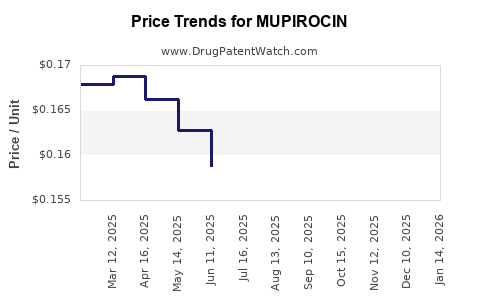
Drug Prices for MUPIROCIN

See drug prices for MUPIROCIN

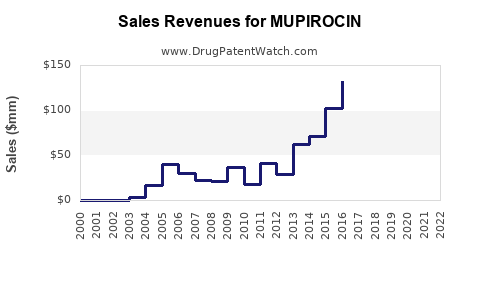
Drug Sales Revenue Trends for MUPIROCIN

See drug sales revenues for MUPIROCIN

Recent Clinical Trials for MUPIROCIN

Identify potential brand extensions & 505(b)(2) entrants

SponsorPhase
Boston Children's HospitalPHASE4
Adam OlsonPHASE2
Pittsburgh Cure SarcomaPHASE2

See all MUPIROCIN clinical trials

Pharmacology for MUPIROCIN
Medical Subject Heading (MeSH) Categories for MUPIROCIN

US Patents and Regulatory Information for MUPIROCIN

Applicant Tradename Generic Name Dosage NDA Approval Date TE Type RLD RS Patent No. Patent Expiration Product Substance Delist Req. Exclusivity Expiration
Glenmark Pharms Inc MUPIROCIN mupirocin calcium CREAM;TOPICAL 201587-001 Jan 24, 2013 AB RX No Yes ⤷  Get Started Free ⤷  Get Started Free ⤷  Get Started Free
Sun Pharma Canada MUPIROCIN mupirocin calcium CREAM;TOPICAL 207116-001 Apr 27, 2020 AB RX No No ⤷  Get Started Free ⤷  Get Started Free ⤷  Get Started Free
Amneal MUPIROCIN mupirocin calcium CREAM;TOPICAL 214811-001 Nov 15, 2022 AB RX No No ⤷  Get Started Free ⤷  Get Started Free ⤷  Get Started Free
>Applicant >Tradename >Generic Name >Dosage >NDA >Approval Date >TE >Type >RLD >RS >Patent No. >Patent Expiration >Product >Substance >Delist Req. >Exclusivity Expiration

Market Dynamics and Financial Trajectory for Mupirocin

Last updated: July 27, 2025

Introduction

Mupirocin, a topical antibiotic primarily used to eradicate nasal colonization of Staphylococcus aureus, including methicillin-resistant strains (MRSA), has sustained significance within infectious disease management. Since its initial approval, mupirocin's pharmaceutical landscape has evolved, governed by intricate market dynamics, regulatory shifts, and emergent antimicrobial resistance concerns. This analysis examines mupirocin's current market environment, projected financial trajectory, and strategic considerations shaping its future.

Pharmaceutical Profile and Regulatory Status

Mupirocin (marketed as Bactroban among others) was first approved by the FDA in 1983. Its mechanism of action involves selective inhibition of bacterial isoleucyl-tRNA synthetase, leading to bacteriostatic effects. This specificity underpins its utility against Gram-positive pathogens, notably MRSA, for both skin infections and decolonization procedures.

Historically, mupirocin's patent exclusivity extended into the early 2000s, but generic formulations now dominate, significantly influencing pricing and market competition. Regulatory adaptations, particularly for nasal application indications, expanded mupirocin's utilization scope, reinforcing its prominence.

Market Dynamics

Demand Drivers

  1. Antimicrobial Resistance (AMR): The rise of multidrug-resistant S. aureus strains, especially MRSA, escalates mupirocin's importance in infection control protocols. Healthcare settings prioritize nasal decolonization strategies to curb infection rates, elevating demand[^1].

  2. Hospital Infection Control Policies: Regulatory agencies advocate for comprehensive MRSA management. Mupirocin's role in preoperative decolonization and eradication protocols sustains hospital procurement volumes.

  3. Limited Competition: While generic formulations dominate, no direct alternatives precisely replace mupirocin's efficacy in nasal decolonization. This unique positioning ensures a steady demand.

  4. Global Expansion: Increasing adoption in emerging markets, driven by growing inpatient healthcare investments and global antimicrobial stewardship initiatives, broadens the market base.

Supply Side Factors

  1. Pricing Pressure: Generic competition results in declining per-unit prices. However, the high volume of prescriptions maintains revenue streams for manufacturers.

  2. Manufacturing Challenges: The production complexity, especially for nasal formulations requiring specialized stability and delivery systems, influences supply stability and costs.

  3. Regulatory Challenges: Ongoing concerns over antibiotic stewardship and antimicrobial resistance prompt regulatory scrutiny, which could affect approval processes for new formulations or indications.

Competitive Landscape

Several pharmaceutical companies produce generic mupirocin, including Teva, Sandoz, and Mylan. Limited innovation activity has led to a mature market, with growth primarily driven by volume rather than price increases.

Clinical and Regulatory Trends

Emerging data suggest potential resistance development against mupirocin, threatening long-term efficacy[^2]. Additionally, regulatory agencies are emphasizing stewardship to prevent resistance proliferation, possibly restricting usage or requiring new formulations with enhanced properties.

Financial Trajectory

Revenue Trends

The global mupirocin market was valued at approximately USD 370 million in 2021, with projections indicating a compound annual growth rate (CAGR) of 3-5% through 2028[^3]. Market expansion is tempered by price competition and the impact of antimicrobial resistance.

Market Segmentation

  • By Application: Decolonization procedures (~60%), skin infections (~40%).
  • By Region: North America remains the largest market (~50%), followed by Europe (~25%) and Asia-Pacific (~15%). The Asia-Pacific region exhibits significant growth potential due to healthcare infrastructure expansion.

Key Growth Drivers

  • Increasing adoption of nasal mupirocin for MRSA decolonization.
  • Rising hospital-acquired infection control initiatives.
  • Implementation of guidelines endorsing mupirocin in preoperative protocols.
  • Rising healthcare expenditure in emerging markets.

Market Challenges

  • Potential resistance leading to diminished clinical utility.
  • Regulatory pressures to minimize antibiotic overuse.
  • Competition from alternative therapies and preventive measures, such as vaccines.

Forecast Outlook

Given current conditions, mupirocin's global revenues are expected to experience steady but modest growth. Market resilience hinges on balancing effective stewardship with sustained clinical demand. Companies investing in resistance surveillance and formulation innovation—such as sustained-release devices or combined therapies—may augment their market share.

Strategic Considerations

  1. Innovation: Development of formulations with reduced resistance potential or alternative delivery systems could offset declining prices and extend product lifecycle.

  2. Stewardship Programs: Collaborating with healthcare entities to promote optimal use aligns with regulatory expectations and sustains demand.

  3. Geographic Expansion: Penetrating emerging markets with tailored marketing strategies could drive volume growth.

  4. Regulatory Engagement: Active involvement in policy discussions regarding antimicrobial use will position manufacturers favorably for future approvals.

Conclusion

Mupirocin’s market remains anchored by its critical role in infection control amidst a landscape of generics and rising antimicrobial resistance. Demand persists with steady growth prospects, predominantly driven by infection prevention initiatives within healthcare settings. Nonetheless, its financial trajectory faces headwinds from resistance development and regulatory oversight, necessitating innovation and strategic agility. Companies that adapt to these dynamics—through formulation improvements, stewardship alignment, and broader geographic penetration—can maximize long-term value.


Key Takeaways

  • Consistent Demand: Mupirocin remains vital in MRSA decolonization, securing stable prescription volumes despite generic competition.

  • Price Competition: Generic proliferation drives down prices; revenue growth relies on volume rather than premium pricing.

  • Emergent Resistance: Rising mupirocin resistance poses a threat to long-term utility, prompting the need for novel formulations and stewardship.

  • Regional Growth: Developing healthcare infrastructure, especially in Asia-Pacific, offers new avenues for market expansion.

  • Innovation and Regulation: Future success depends on balancing innovation with regulatory compliance and antimicrobial stewardship efforts.


FAQs

1. What factors influence mupirocin's market growth?
Demand from infection control protocols, hospital adoption rates, emerging resistance patterns, and geographic expansion drive growth, while price pressures and resistance undermine it.

2. How is antimicrobial resistance affecting mupirocin's market?
Resistance reduces mupirocin's effectiveness, leading to cautious prescribing and potential restrictions, which may curtail demand and influence development incentives.

3. Are there new formulations of mupirocin under development?
Research is ongoing into sustained-release formulations and combination therapies to enhance efficacy and reduce resistance development.

4. How does the regulatory environment impact mupirocin sales?
Stringent antimicrobial stewardship policies and approval restrictions can limit prescribing, affecting revenue streams.

5. What are the key opportunities for companies in this market?
Developing resistance-resistant formulations, expanding into emerging markets, and collaborating on stewardship initiatives offer strategic growth pathways.


References

[^1]: CDC. "Management of Multidrug-Resistant Organisms in Healthcare Settings." 2020.
[^2]: Liu, C. et al., "Emerging Resistance to Mupirocin in MRSA," Antimicrobial Agents and Chemotherapy, 2021.
[^3]: MarketsandMarkets. "Antimicrobial Market by Type, Application, and Geography," 2022.

More… ↓

⤷  Get Started Free

Make Better Decisions: Try a trial or see plans & pricing

Drugs may be covered by multiple patents or regulatory protections. All trademarks and applicant names are the property of their respective owners or licensors. Although great care is taken in the proper and correct provision of this service, thinkBiotech LLC does not accept any responsibility for possible consequences of errors or omissions in the provided data. The data presented herein is for information purposes only. There is no warranty that the data contained herein is error free. We do not provide individual investment advice. This service is not registered with any financial regulatory agency. The information we publish is educational only and based on our opinions plus our models. By using DrugPatentWatch you acknowledge that we do not provide personalized recommendations or advice. thinkBiotech performs no independent verification of facts as provided by public sources nor are attempts made to provide legal or investing advice. Any reliance on data provided herein is done solely at the discretion of the user. Users of this service are advised to seek professional advice and independent confirmation before considering acting on any of the provided information. thinkBiotech LLC reserves the right to amend, extend or withdraw any part or all of the offered service without notice.