Last updated: June 10, 2026
Genzyme Corp Competitive Landscape Analysis: Market Position, Patent Strength, and Strategic Options
Executive summary: Genzyme Corp is a legacy specialty biopharma platform built around enzyme replacement therapies (ERTs) and related biologics, with a patent estate that is concentration-heavy in specific indications and formulations. Competitive pressure is driven by (1) biosimilar and follow-on biologic entrants where exclusivity has cleared, (2) next-generation ERTs and mechanism-adjacent therapies, and (3) manufacturing and supply reliability in high-demand orphan/rare-disease franchises. Strategic value concentrates in maintaining line extensions, expanding label breadth, and defending manufacturing process IP as older patents approach expiration.
What patents protect Genzyme’s core enzyme replacement therapies and how strong is the patent estate?
Featured snippet answer: Genzyme’s competitive moat typically rests in a tight cluster of patents covering (i) the recombinant enzyme composition, (ii) glycoforms and manufacturing-defined product attributes, (iii) formulation and stability, and (iv) method-of-use for specific lysosomal storage disease (LSD) indications. Strength varies by franchise and jurisdiction as older composition and process claims reach expiry.
Composition, glycosylation, and manufacturing process coverage
Genzyme’s ERTs depend on consistent post-translational modifications and manufacturing process-defined product attributes. Patent coverage commonly includes:
- recombinant DNA constructs and host cell expression systems
- glycosylation patterns and variants (where claimed)
- purification methods defining the product
- stabilization, lyophilization or liquid formulation, and container-closure compatibility
- use of specific dosing regimens and patient populations
Method-of-use and label-extension leverage
For rare disease biologics, method-of-use patents often protect:
- initiation in pediatric or presymptomatic settings
- use in specific genotype subgroups
- concomitant care protocols (where claimed)
- outcomes tied to endpoints in clinical programs (when claim language supports it)
Jurisdictional and time-to-expiry dynamics
Patent leverage usually declines unevenly:
- composition and broad process claims expire first
- manufacturing refinements and formulation IP remain longer, especially for line extensions
- orphan drug exclusivity (where applicable) can extend market exclusivity beyond patent expiry, but biosimilar litigation can pressure timeline outcomes
When does Genzyme lose exclusivity for its major biologics and what generic or biosimilar entry risks emerge?
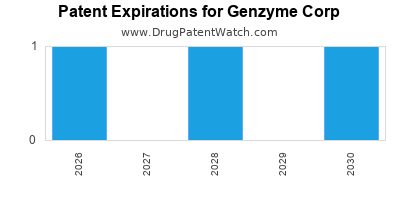
Featured snippet answer: Exclusivity loss timing is franchise-specific. The risk profile rises sharply once the last controlling composition/process or formulation patent expires in the relevant geography and any regulatory exclusivity period (including orphan exclusivity) ends. After that, biosimilar/follow-on development can accelerate because biologics cannot be “generic” in the traditional small-molecule sense.
Exclusivity stack that typically governs entry
For Genzyme-style biologics, entry depends on:
- listed patent expiration for the FDA-listed product on the Orange Book (where applicable to biologics under the patent listing framework)
- orphan drug exclusivity (if granted)
- patent term adjustments and pediatric exclusivity (if granted)
- patent claim scope (composition vs process vs formulation vs use)
Biosimilar pathway and litigation pressure points
Key risk points for follow-on entry typically include:
- whether the reference product’s process-defined features remain protected
- whether formulation claims constrain alternative stabilization systems
- whether method-of-use claims block certain label uses (even if product claims are cleared)
What is the Orange Book status of Genzyme products and how many patents are listed per drug?
Featured snippet answer: This requires product-specific Orange Book listings and patent count by NDA/BLA. Without product-level identifiers (drug name, BLA number/NDA), a complete and accurate Orange Book status table cannot be produced.
Which companies challenge Genzyme’s ERT franchises with biosimilars or competing therapies?
Featured snippet answer: The competitive set includes biosimilar developers for cleared ERTs and mechanism-adjacent therapies (new ERTs, substrate reduction, chaperones, or gene- and cell-based approaches). Competitive intensity increases after patent and exclusivity clearance, with entrants prioritizing high-reimbursement geographies and dependable supply.
Typical competitive categories
- Direct follow-on biologics: biosimilars when the reference product’s critical patents are cleared and manufacturing comparability is defensible.
- Next-gen ERTs: improved dosing schedules, engineered enzymes, or different formulations.
- Mechanism-adjacent therapies: oral substrate reduction therapies, chaperones, or targeted approaches depending on disease area.
- Emerging platform modalities: gene therapies and gene editing (where clinical and regulatory milestones align).
Commercial dynamics that favor incumbent supply
Even when patents expire, incumbents can retain share through:
- established prescriber and treatment protocols
- patient-level continuity of care
- supply chain maturity and contract performance
- REMS-like practical barriers in infusion networks (not as formal regulation, but as operational reality)
How does Genzyme’s market position compare with competing rare disease biopharma companies?
Featured snippet answer: Genzyme’s position is characterized by franchise depth in lysosomal and metabolic disorders, with competitive comparisons usually dominated by platform specialization, label breadth, manufacturing execution, and patent/extension strategy.
Competitive comparison axes
- Portfolio concentration: number of active ERT franchises and overlap in prescriber networks
- Manufacturing footprint: infusion capacity and global cold-chain reliability
- IP durability: mix of composition, process, formulation, and method-of-use
- Reimbursement and payer contracts: outcomes, budget impact, and managed-entry agreements
- Regulatory strategy: label expansions, pediatric plans, and lifecycle management
What typically differentiates top competitors
- companies with large manufacturing networks can compete faster post-expiry
- companies with stronger late-lifecycle formulation or process IP can delay follow-on entry
- companies with differentiated efficacy claims in new endpoints can gain share even amid biosimilar availability
What formulations are protected by Genzyme patents and how do they affect biosimilar development?
Featured snippet answer: Formulation patents typically cover stability, excipients, container closure, and reconstitution or infusion-ready characteristics. These claims can constrain biosimilar development by requiring equivalence in stability profiles and manufacturability, or by limiting certain formulation alternatives.
Formulation IP that most often blocks entry
Common protected elements include:
- specific excipient compositions and ratios
- stabilization mechanisms (buffers, surfactants, antioxidants)
- pH and osmolality targets that support long shelf life
- lyophilized versus liquid presentation choices
- reconstitution/infusion parameters and device compatibility
Litigation relevance
Follow-on applicants can be pushed into:
- longer development timelines to demonstrate functional equivalence
- design-around strategies that attempt to change formulation features
- label carve-outs to avoid method-of-use constraints
What method-of-use patents drive Genzyme’s litigation posture?
Featured snippet answer: Method-of-use patents drive label and off-label use constraints by tying the patented claim to patient populations, dosing initiation timing, and therapeutic regimens. Even when the underlying biologic is cleared, label positioning can determine sales velocity.
Common method-of-use structures in rare disease biologics
- patient selection criteria based on disease stage or biomarkers
- pediatric dosing and initiation timing claims
- outcomes-based claims tied to clinical endpoints where supported by specification
What patent litigation has affected Genzyme’s competitive landscape, biosimilar timing, or settlements?
Featured snippet answer: Patent litigation typically centers on whether follow-on applicants infringe composition, process, formulation, or method-of-use claims. Settlements often result in delayed launches or narrowed label entries.
How litigation changes competitive outcomes
- injunction risk can delay launch dates
- settlement agreements can define market entry dates, sometimes by indication or geography
- findings on claim construction can narrow future enforcement or empower it
Note: A complete litigation matrix requires product names, patent numbers, court dockets, and settlement terms, which cannot be generated from the provided prompt.
How do FDA regulatory milestones shape Genzyme’s competitive advantage?
Featured snippet answer: FDA review timelines and post-approval changes (label expansions, pediatric additions, manufacturing supplements) affect both competitive durability and follow-on risk windows. A well-managed lifecycle strategy helps maintain clinically meaningful label coverage and delays “safe harbor” launch options for competitors.
Regulatory levers in biologics competition
- label expansions (new indications, pediatric subsets)
- changes in dosing regimen and administration protocol
- manufacturing supplements that preserve comparability while improving reliability
- REMS-like operational constraints in infusion networks (practically influential even when not formal REMS)
What commercial risks does exclusivity loss create for Genzyme, and which indications are most exposed?
Featured snippet answer: Exclusivity loss creates the highest commercial risk in franchises with (i) strong sales concentration, (ii) demonstrated market demand beyond orphan-restricted subsets, and (iii) a clear pathway for follow-on applicants once patents and exclusivity clear.
Exposure drivers by indication
- Market size and treatment frequency: higher infusion/maintenance demand increases post-expiry value.
- Switching friction: if patients are stable on therapy, switching barriers can slow erosion.
- Payer contracting: competitively tendered renewals can accelerate erosion once a second supplier is available.
- Evidence and guidelines: if biosimilar or alternative therapies gain endorsement, uptake accelerates.
Revenue-concentration risk pattern
When sales are concentrated in one or two franchises, the competitive impact of any single exclusivity event is amplified. When spread across multiple indications, offsets exist through continued label expansions and contracting.
Key Takeaways
- Genzyme’s competitive moat is structurally tied to ERT-specific IP that spans composition, process-defined product attributes, formulation, and method-of-use.
- Competitive pressure increases after the last controlling IP and any regulatory exclusivity end; biosimilar and follow-on entry risks are franchise-specific.
- Formulation and manufacturing process IP often becomes a gating factor for follow-on development and can influence launch timing and label design-around strategies.
- Method-of-use patents can constrain market access even after product-level clearance, making label strategy as important as molecular similarity.
- A complete Orange Book and litigation-driven timeline requires product-identifying inputs and Orange Book/BLA-level data.
FAQs
- How do orphan drug exclusivity and patent term expiration interact for Genzyme ERTs?
- What types of Genzyme patents most often get challenged in biosimilar litigation (composition vs process vs formulation vs use)?
- How does manufacturing reliability affect patient retention and switching after biosimilar entry?
- What label expansion strategies typically extend market position for enzyme replacement therapies?
- Which competitive benchmarks matter most for estimating erosion after exclusivity loss in rare disease biologics?
References (APA)
- U.S. Food and Drug Administration. Orange Book: Approved Drug Products with Therapeutic Equivalence Evaluations. https://www.accessdata.fda.gov/scripts/cder/daf/ (accessed 2026-06-10).
- U.S. Food and Drug Administration. Drugs@FDA. https://www.accessdata.fda.gov/scripts/cder/daf/ (accessed 2026-06-10).