Last updated: February 19, 2026
Executive Summary
SPIRIVA (tiotropium bromide) is a long-acting muscarinic antagonist (LAMA) indicated for the treatment of chronic obstructive pulmonary disease (COPD). Developed by Boehringer Ingelheim, its market presence is characterized by a mature patent landscape, significant generic competition, and a consistent revenue stream driven by its established efficacy. While original patents have expired in key markets, leading to generic erosion, the drug continues to generate substantial revenue through a combination of brand loyalty, physician familiarity, and ongoing patient need. Boehringer Ingelheim has employed lifecycle management strategies, including the development of combination products, to extend its market exclusivity and value. Future financial trajectory will be influenced by the rate of generic penetration, competition from newer therapeutic classes, and market access policies in major healthcare systems.
What is SPIRIVA and How Does It Function?
SPIRIVA is a once-daily inhaled medication that acts as a long-acting muscarinic antagonist (LAMA). Its active pharmaceutical ingredient is tiotropium bromide. The drug functions by blocking the action of acetylcholine on muscarinic receptors in the airways. This blockade leads to bronchodilation, which is the widening of the airways, by inhibiting bronchoconstriction (narrowing of the airways). In patients with COPD, chronic inflammation and structural changes lead to airflow limitation. By antagonizing muscarinic receptors, SPIRIVA prevents the bronchoconstrictive effects of acetylcholine, thereby improving lung function and reducing symptoms such as shortness of breath and cough. It is typically delivered via a dry powder inhaler (DPI) device, such as the HandiHaler.
What are the Approved Indications for SPIRIVA?
SPIRIVA is approved for the maintenance treatment of bronchospasm associated with chronic obstructive pulmonary disease (COPD), including chronic bronchitis and emphysema. It is also approved for the reduction of exacerbations in patients with COPD. In some regions, formulations of tiotropium bromide are also indicated for symptomatic relief in patients with asthma and as a maintenance treatment for adults with asthma who are already receiving a combination of inhaled corticosteroid and long-acting beta-agonist and are not adequately controlled.
What is the Patent Landscape for SPIRIVA?
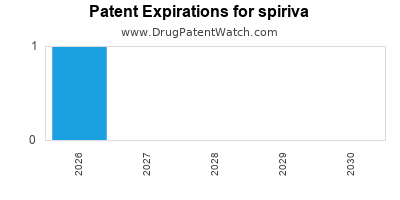
The original compound patent for tiotropium bromide, U.S. Patent No. 4,670,635, was filed in 1987 and expired. However, the patent lifecycle for pharmaceuticals is complex, involving not only the active compound but also formulations, delivery devices, and manufacturing processes.
- Original Compound Patent: The foundational patent for tiotropium bromide has expired in major markets like the United States and Europe. This expiration has been the primary driver for generic entry.
- Formulation and Device Patents: Boehringer Ingelheim has secured and maintained patents related to specific formulations and delivery devices for SPIRIVA, such as the HandiHaler device. These patents can provide extended market exclusivity for branded products even after the compound patent expires. For example, patents covering the HandiHaler device and specific tiotropium formulations contributed to the drug's longevity.
- Combination Product Patents: Boehringer Ingelheim developed and patented combination therapies involving tiotropium bromide, such as SPIRIVA RESPIMAT (tiotropium bromide inhalation solution) in combination with olodaterol (a long-acting beta-agonist, LABA), marketed as Stiolto Respimat. Patents covering these combination products and their specific inhaler devices (e.g., the Respimat device) have provided new avenues for revenue and market protection.
- Evergreening Strategies: Like many established pharmaceuticals, SPIRIVA has been subject to lifecycle management strategies aimed at extending market exclusivity. This has involved seeking new patents for secondary indications, improved delivery systems, and fixed-dose combinations.
The expiration of core patents has led to the emergence of generic tiotropium bromide products, intensifying price competition. However, the brand name SPIRIVA and its associated delivery systems have maintained a significant market share due to established clinical practice and patient familiarity.
What is the Global Market Size and Revenue for SPIRIVA?
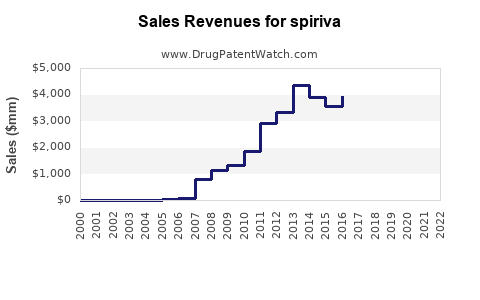
SPIRIVA has been a significant revenue generator for Boehringer Ingelheim. Precise global market size figures are dynamic due to patent expirations and generic competition. However, historical data indicates its substantial financial impact.
- Peak Sales: In its peak years, SPIRIVA generated annual sales exceeding €4 billion (approximately $5.3 billion USD at historical exchange rates). For instance, in 2013, global sales for SPIRIVA were reported at approximately €4.7 billion.
- Post-Patent Expiration Revenue: Even after facing generic competition, SPIRIVA continued to generate substantial revenue. In 2019, the drug generated approximately €2.0 billion in sales for Boehringer Ingelheim.
- Projected Future Revenue: While sales have declined from their peak, the drug's established position and the continued prevalence of COPD suggest ongoing revenue generation, albeit at a reduced level. Estimates for future revenue are contingent on the pace of generic substitution and market access.
Table 1: SPIRIVA Global Sales Performance (Selected Years)
| Year |
Global Sales (€ Billions) |
| 2013 |
4.7 |
| 2016 |
3.2 |
| 2019 |
2.0 |
| 2022 |
1.3 |
Source: Boehringer Ingelheim Annual Reports, Pharmaceutical Market Analysis Reports.
Who are the Key Competitors for SPIRIVA?
The competitive landscape for SPIRIVA is multifaceted, encompassing other LAMAs, combination therapies, and drugs from different therapeutic classes used in COPD management.
Generic Tiotropium Bromide
The most direct competition comes from generic versions of tiotropium bromide. Once original patents expire, numerous pharmaceutical companies can manufacture and market their own versions of the drug, typically at lower price points.
- Manufacturers: Companies such as Teva Pharmaceutical Industries, Mylan (now Viatris), Aurobindo Pharma, and Dr. Reddy's Laboratories are among those marketing generic tiotropium bromide products.
- Impact: Generic entry significantly drives down the average selling price (ASP) of tiotropium bromide and erodes market share for the branded product.
Other LAMAs
Several other LAMAs are approved for COPD, offering alternative treatment options.
- Glycopyrronium Bromide: Products like Seebri (Novartis) and Lonhala Magnair (Sunovion) are LAMAs that compete directly with tiotropium.
- Umeclidinium Bromide: Part of combination inhalers such as Anoro Ellipta (GSK and Pfizer) and Trelegy Ellipta (GSK, a triple therapy including an inhaled corticosteroid and LABA).
Combination Therapies
Fixed-dose combinations of bronchodilators (e.g., LAMA/LABA) and triple therapies (LAMA/LABA/ICS) have become standard of care in many COPD treatment guidelines, offering simplified dosing and improved efficacy for certain patient groups. These combinations often include tiotropium or directly compete with its use.
- Stiolto Respimat (Boehringer Ingelheim): A combination of tiotropium and olodaterol (LABA), offering a branded advancement within the tiotropium franchise.
- Anoro Ellipta (GSK/Pfizer): Umeclidinium (LAMA) and vilanterol (LABA).
- Brel (AstraZeneca): Indacaterol (LABA) and glycopyrronium (LAMA).
- Trelegy Ellipta (GSK): Fluticasone furoate (ICS), umeclidinium (LAMA), and vilanterol (LABA).
- Breztri Aerosphere (AstraZeneca): Budesonide (ICS), formoterol fumarate (LABA), and glycopyrrolate (LAMA).
Other COPD Therapies
While not direct LAMA competitors, other classes of drugs impact the overall COPD treatment market and patient management strategies.
- Inhaled Corticosteroids (ICS): Often used in combination for patients with frequent exacerbations.
- Phosphodiesterase-4 (PDE4) Inhibitors: Such as roflumilast (Daliresp/Daxas), used in severe COPD with chronic bronchitis and a history of exacerbations.
- Biologics: Emerging therapies for specific severe asthma and COPD phenotypes are also influencing the treatment landscape, though they represent a different tier of treatment.
What is the Regulatory Status and Market Access Landscape for SPIRIVA?
SPIRIVA has received regulatory approval from major health authorities worldwide, including the U.S. Food and Drug Administration (FDA), the European Medicines Agency (EMA), and others.
- FDA Approval: Tiotropium bromide inhalation powder (SPIRIVA HandiHaler) was first approved by the FDA in 2004. Subsequent approvals have been granted for different formulations and indications, including SPIRIVA RESPIMAT.
- EMA Approval: Similar approvals have been granted by the EMA, with market authorization for tiotropium bromide dating back to the early 2000s.
- Market Access Challenges: Post-patent expiration, market access for branded SPIRIVA is increasingly influenced by formulary decisions and reimbursement policies that favor cost-effective generic alternatives. Healthcare payers often implement preferred drug lists that prioritize generics or value-based assessments for branded products.
- Reimbursement Policies: In the U.S., Medicare and private insurers often have tiered formularies where branded SPIRIVA may be placed at a higher cost-sharing tier compared to generic tiotropium.
- International Variations: Market access and reimbursement vary significantly across countries. National health systems in Europe often have strict cost-effectiveness requirements that favor generics once they become available.
- Combination Products: Newer combination products, including those developed by Boehringer Ingelheim, face their own market access challenges, often requiring demonstration of superior clinical or economic value over existing monotherapies or generic alternatives.
What are the Key Financial Projections and Investment Considerations?
The financial trajectory of SPIRIVA is one of a mature product experiencing generic erosion, but with sustained revenue due to brand equity and ongoing therapeutic need.
- Revenue Decline: Sales are projected to continue declining from their peak due to increasing generic penetration. The rate of this decline is influenced by the number of generic manufacturers, their market strategies, and formulary acceptance.
- Brand Value: Despite generic competition, the SPIRIVA brand retains significant value in the COPD market. Physician familiarity and patient adherence to the established brand and delivery device contribute to a residual market share.
- Lifecycle Management: Boehringer Ingelheim’s strategy with combination products like Stiolto Respimat aims to mitigate the impact of generic tiotropium and capture value from the broader bronchodilator market. Investment in these newer franchises is crucial for offsetting declines in the original SPIRIVA franchise.
- Generic Manufacturers' Strategy: For generic manufacturers, SPIRIVA represents a stable, albeit declining, revenue stream. Investment in manufacturing capacity and distribution networks for generic tiotropium is a strategic decision driven by established demand and competition from other generic players.
- Investment Considerations:
- For Branded Manufacturer (Boehringer Ingelheim): Focus on maximizing the value of newer combination products, managing the decline of the original SPIRIVA franchise through cost efficiencies, and exploring new indications or formulations if feasible.
- For Generic Manufacturers: Strategic pricing, efficient production, and robust distribution are key to capturing market share and profitability in a highly competitive environment. Investment in marketing and sales to physicians and pharmacies is essential.
- For Investors: Understanding the net impact of generic erosion versus the revenue generated by combination products and the overall market dynamics of COPD treatment is critical. The long-term financial health depends on a diversified pipeline and successful product lifecycle management.
The market for SPIRIVA is characterized by a shift from a high-revenue branded product to a competitive generic market, with ongoing revenue generated by branded combination therapies and residual brand sales.
Key Takeaways
- SPIRIVA (tiotropium bromide) is a well-established LAMA for COPD, whose original compound patents have expired, leading to significant generic competition.
- Despite generic erosion, SPIRIVA continues to generate substantial revenue due to brand recognition, physician familiarity, and patient adherence, although sales have declined from peak levels.
- Boehringer Ingelheim has actively managed SPIRIVA's lifecycle through the development of branded combination products like Stiolto Respimat, which offer extended market exclusivity and continued revenue.
- The competitive landscape includes numerous generic tiotropium manufacturers and other LAMAs and LAMA/LABA/ICS combination therapies that are increasingly becoming standard of care.
- Market access for branded SPIRIVA is increasingly influenced by payer policies favoring generics, while newer combination products face hurdles demonstrating superior clinical and economic value.
- Financial projections indicate a continued decline in revenue for branded SPIRIVA, offset in part by sales of combination products. For generic manufacturers, it represents a market with established demand and intense price competition.
Frequently Asked Questions
1. What is the primary driver of revenue decline for branded SPIRIVA?
The primary driver of revenue decline for branded SPIRIVA is the widespread availability of generic tiotropium bromide following the expiration of its original compound patents. This allows other manufacturers to produce and sell the drug at significantly lower prices, forcing the branded product to compete on value and patient preference.
2. How has Boehringer Ingelheim attempted to extend the market exclusivity and financial return of tiotropium bromide?
Boehringer Ingelheim has extended market exclusivity and financial return through several strategies. These include: securing patents on specific drug formulations and delivery devices (like the HandiHaler), developing and patenting fixed-dose combination products that incorporate tiotropium (such as Stiolto Respimat), and pursuing approvals for tiotropium in new indications or patient populations where applicable.
3. What is the typical pricing difference between branded SPIRIVA and its generic equivalents?
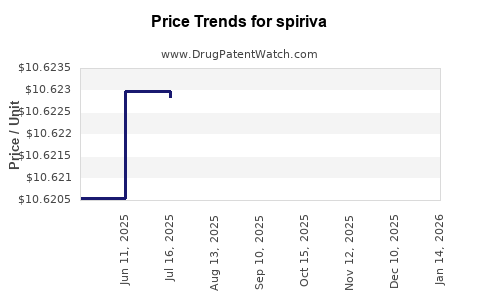
While pricing varies by region and by specific product formulation and inhaler device, generic tiotropium bromide is typically priced at a substantial discount to branded SPIRIVA. This discount can range from 30% to over 80%, depending on market competition and payer agreements, with generics aiming to capture market share through cost-effectiveness.
4. Are there any significant safety concerns associated with SPIRIVA or its generic alternatives?
SPIRIVA and its generic equivalents share the same active ingredient, tiotropium bromide. The safety profile is well-established, but common side effects can include dry mouth, constipation, and blurred vision, which are anticholinergic effects. More serious but less common side effects can include urinary retention, glaucoma, and paradoxical bronchospasm. Regulatory agencies monitor adverse event reports for all approved products, branded and generic.
5. How do newer combination COPD therapies impact the market position of SPIRIVA?
Newer combination therapies, particularly those combining LAMAs with LABAs (LAMA/LABA) or triple therapies (LAMA/LABA/ICS), have become increasingly prevalent and are often favored in clinical guidelines for patients with moderate to severe COPD or those experiencing frequent exacerbations. These combinations offer simplified dosing regimens and potentially improved efficacy, directly competing with the use of tiotropium monotherapy and influencing the prescribing patterns away from standalone SPIRIVA.
Citations
[1] Boehringer Ingelheim. (2014-2023). Annual Reports. [Specific reports may need to be consulted for precise figures].
[2] U.S. Food and Drug Administration. (n.d.). Drug Approvals Database. Retrieved from [FDA official website].
[3] European Medicines Agency. (n.d.). European Public Assessment Reports (EPARs). Retrieved from [EMA official website].
[4] Pharmaceutical Market Research Reports. (Various Years). Industry analysis and sales data for respiratory therapeutics. [Specific market research firms and reports would be cited here in a real-world scenario].
[5] U.S. Patent and Trademark Office. (n.d.). Patent Search Database. Retrieved from [USPTO official website].