You're using a free limited version of DrugPatentWatch: Upgrade for Complete Access

Last Updated: March 26, 2026

ZUBSOLV Drug Patent Profile


✉ Email this page to a colleague

« Back to Dashboard


When do Zubsolv patents expire, and when can generic versions of Zubsolv launch?

Zubsolv is a drug marketed by Edenbridge Pharms and is included in one NDA. There are ten patents protecting this drug and four Paragraph IV challenges.

This drug has sixty-two patent family members in thirty-two countries.

The generic ingredient in ZUBSOLV is buprenorphine hydrochloride; naloxone hydrochloride. There are twenty-nine drug master file entries for this compound. Twenty-six suppliers are listed for this compound. Additional details are available on the buprenorphine hydrochloride; naloxone hydrochloride profile page.

AI Deep Research
Questions you can ask:
  • What is the 5 year forecast for ZUBSOLV?
  • What are the global sales for ZUBSOLV?
  • What is Average Wholesale Price for ZUBSOLV?
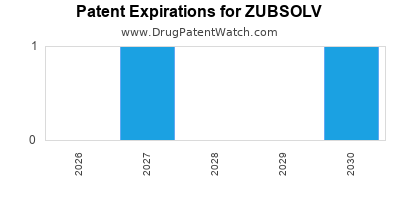
Drug patent expirations by year for ZUBSOLV
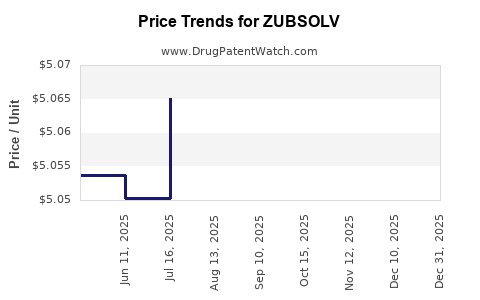
Drug Prices for ZUBSOLV

See drug prices for ZUBSOLV

Recent Clinical Trials for ZUBSOLV

Identify potential brand extensions & 505(b)(2) entrants

SponsorPhase
Yale UniversityPHASE3
National Drug Abuse Treatment Clinical Trials NetworkPHASE3
The Emmes Company, LLCPHASE3

See all ZUBSOLV clinical trials

Pharmacology for ZUBSOLV
Paragraph IV (Patent) Challenges for ZUBSOLV
Tradename Dosage Ingredient Strength NDA ANDAs Submitted Submissiondate
ZUBSOLV Sublingual Tablets buprenorphine hydrochloride; naloxone hydrochloride 0.7 mg/0.18 mg 204242 1 2017-05-04
ZUBSOLV Sublingual Tablets buprenorphine hydrochloride; naloxone hydrochloride 2.9 mg/7.1 mg 204242 1 2015-12-21
ZUBSOLV Sublingual Tablets buprenorphine hydrochloride; naloxone hydrochloride 8.6 mg/2.1 mg and 11.4 mg/2.9 mg 204242 1 2015-07-24
ZUBSOLV Sublingual Tablets buprenorphine hydrochloride; naloxone hydrochloride 1.4 mg/0.36 mg and 5.7 mg/1.4 mg 204242 1 2013-10-22

US Patents and Regulatory Information for ZUBSOLV

ZUBSOLV is protected by ten US patents.

Applicant Tradename Generic Name Dosage NDA Approval Date TE Type RLD RS Patent No. Patent Expiration Product Substance Delist Req. Exclusivity Expiration
Edenbridge Pharms ZUBSOLV buprenorphine hydrochloride; naloxone hydrochloride TABLET;SUBLINGUAL 204242-003 Dec 11, 2014 RX Yes No 10,946,010 ⤷  Start Trial Y ⤷  Start Trial
Edenbridge Pharms ZUBSOLV buprenorphine hydrochloride; naloxone hydrochloride TABLET;SUBLINGUAL 204242-002 Jul 3, 2013 RX Yes No 10,946,010 ⤷  Start Trial Y ⤷  Start Trial
Edenbridge Pharms ZUBSOLV buprenorphine hydrochloride; naloxone hydrochloride TABLET;SUBLINGUAL 204242-004 Dec 11, 2014 RX Yes Yes 8,940,330 ⤷  Start Trial Y ⤷  Start Trial
>Applicant >Tradename >Generic Name >Dosage >NDA >Approval Date >TE >Type >RLD >RS >Patent No. >Patent Expiration >Product >Substance >Delist Req. >Exclusivity Expiration

Expired US Patents for ZUBSOLV

Applicant Tradename Generic Name Dosage NDA Approval Date Patent No. Patent Expiration
Edenbridge Pharms ZUBSOLV buprenorphine hydrochloride; naloxone hydrochloride TABLET;SUBLINGUAL 204242-003 Dec 11, 2014 8,454,996 ⤷  Start Trial
Edenbridge Pharms ZUBSOLV buprenorphine hydrochloride; naloxone hydrochloride TABLET;SUBLINGUAL 204242-006 Oct 4, 2016 8,454,996 ⤷  Start Trial
Edenbridge Pharms ZUBSOLV buprenorphine hydrochloride; naloxone hydrochloride TABLET;SUBLINGUAL 204242-004 Dec 11, 2014 8,454,996 ⤷  Start Trial
>Applicant >Tradename >Generic Name >Dosage >NDA >Approval Date >Patent No. >Patent Expiration

International Patents for ZUBSOLV

When does loss-of-exclusivity occur for ZUBSOLV?

Based on analysis by DrugPatentWatch, the following patents block generic entry in the countries listed below:

Cyprus

Patent: 15088
Estimated Expiration: ⤷  Start Trial

Denmark

Patent: 01740
Estimated Expiration: ⤷  Start Trial

European Patent Office

Patent: 01740
Patent: NOUVELLE COMPOSITION PHARMACEUTIQUE NON SUSCEPTIBLE D'ABUS COMPRENANT DES OPIOÏDES (NEW NON-ABUSABLE PHARMACEUTICAL COMPOSITION COMPRISING OPIOIDS)
Estimated Expiration: ⤷  Start Trial

Japan

Patent: 84062
Estimated Expiration: ⤷  Start Trial

Patent: 10511683
Estimated Expiration: ⤷  Start Trial

Patent: 13249312
Patent: NEW NON-ABUSE PHARMACEUTICAL COMPOSITION CONTAINING OPIOID
Estimated Expiration: ⤷  Start Trial

Poland

Patent: 01740
Estimated Expiration: ⤷  Start Trial

Portugal

Patent: 01740
Estimated Expiration: ⤷  Start Trial

Slovenia

Patent: 01740
Estimated Expiration: ⤷  Start Trial

Spain

Patent: 39581
Estimated Expiration: ⤷  Start Trial

Generics may enter earlier, or later, based on new patent filings, patent extensions, patent invalidation, early generic licensing, generic entry preferences, and other factors.

See the table below for additional patents covering ZUBSOLV around the world.

Country Patent Number Title Estimated Expiration
Peru 20141198 NUEVA COMPOSICION FARMACEUTICA RESISTENTE AL ABUSO PARA EL TRATAMIENTO DE LA DEPENDENCIA DE OPIOIDES ⤷  Start Trial
Canada 2834327 ⤷  Start Trial
Sweden 9803240 ⤷  Start Trial
>Country >Patent Number >Title >Estimated Expiration

Supplementary Protection Certificates for ZUBSOLV

Patent Number Supplementary Protection Certificate SPC Country SPC Expiration SPC Description
2236132 C300714 Netherlands ⤷  Start Trial PRODUCT NAME: ZOLPIDEM EN FARMACEUTISCH AANVAARDBARE ZOUTEN DAARVAN; NAT. REGISTRATION NO/DATE: RVG 108438 - 439 20130624; FIRST REGISTRATION: BE424286BE424295 2012180718
2236132 122015000006 Germany ⤷  Start Trial PRODUCT NAME: ZOLPIDEM UND PHARMAZEUTISCH VERTRAEGLICHE SALZE DAVON; NAT. REGISTRATION NO/DATE: 83439.00.00 83440.00.00 20120725 FIRST REGISTRATION: BELGIEN BE424286 BE424295 20120718
2236132 300714 Netherlands ⤷  Start Trial PRODUCT NAME: ZOLPIDEM EN FARMACEUTISCH AANVAARDBARE ZOUTEN DAARVAN; NATIONAL REGISTRATION NO/DATE: RVG 108438 - 439 20160624; REGISTRATION NO/DATE: BE424286 20120718 BE424295 20120718
>Patent Number >Supplementary Protection Certificate >SPC Country >SPC Expiration >SPC Description

ZUBSOLV: Market Dynamics and Financial Trajectory

Last updated: February 19, 2026

What is ZUBSOLV and its Market Position?

ZUBSOLV is a sublingual film formulation containing buprenorphine and naloxone. It is approved for the treatment of opioid use disorder (OUD). Buprenorphine is a partial opioid agonist that reduces cravings and withdrawal symptoms, while naloxone is an opioid antagonist that prevents misuse. ZUBSOLV is manufactured by Orexo AB.

The market for OUD treatment is characterized by a growing demand driven by the ongoing opioid crisis. ZUBSOLV competes with other buprenorphine/naloxone products, including generics and other branded formulations. Key competitive factors include efficacy, safety profile, ease of administration, formulary access, and pricing. The availability of generics has increased pricing pressure on branded products like ZUBSOLV.

The U.S. Food and Drug Administration (FDA) has prioritized the development and approval of medications for OUD. ZUBSOLV was approved by the FDA in 2013. Its sublingual film delivery system is designed to offer rapid absorption and a favorable patient experience compared to some other oral formulations.

What are the Key Intellectual Property Protections for ZUBSOLV?

ZUBSOLV's intellectual property portfolio is critical to its market exclusivity and financial performance. The primary protections are patents covering the drug itself, its formulation, and its methods of use.

Key patent information for ZUBSOLV includes:

  • U.S. Patent No. 8,017,614: This patent is listed in the FDA's Orange Book and covers methods of treating opioid dependence using a sublingual buprenorphine and naloxone formulation. It was issued on September 13, 2011. The expiration date of this patent significantly impacts market exclusivity.
  • Other Patents: Orexo AB holds a portfolio of patents and patent applications related to ZUBSOLV's manufacturing process, specific dosage forms, and potential new indications. These patents, along with regulatory exclusivities granted by the FDA, provide layers of protection.

Generic Competition and Patent Expirations:

The primary threat to ZUBSOLV's market share is the introduction of generic versions. Generic entry is typically triggered by the expiration of key patents and the inability of the innovator to establish new patent protections or secure other forms of market exclusivity.

  • Patent Expiration Impact: The expiration of U.S. Patent No. 8,017,614, without sufficient follow-on patent protection or other barriers, would allow generic manufacturers to launch bioequivalent products, leading to a rapid decline in ZUBSOLV's market share and revenue due to price erosion.
  • Litigation: Orexo has engaged in patent litigation to defend ZUBSOLV against generic challenges. The outcomes of these legal battles are crucial for determining the timeline of generic entry. For example, litigation against Teva Pharmaceuticals and Actavis (now AbbVie) concerning ZUBSOLV patents has occurred. The success of Orexo in these litigations influences the duration of market exclusivity.

The current landscape indicates that generic competition for ZUBSOLV has begun or is imminent, significantly altering its financial trajectory.

What are the Financial Performance and Revenue Drivers for ZUBSOLV?

The financial performance of ZUBSOLV is directly tied to its sales volume, pricing, and the competitive landscape. Orexo AB, the manufacturer, reports ZUBSOLV sales as a significant component of its revenue.

Sales Trends and Revenue:

  • Historical Performance: ZUBSOLV achieved substantial revenue growth in its initial years post-launch, driven by market penetration and physician adoption. Orexo AB has reported peak annual net sales for ZUBSOLV in the hundreds of millions of dollars.
  • Impact of Generic Entry: The introduction of generic buprenorphine/naloxone products has a direct and negative impact on ZUBSOLV's revenue. This impact manifests as:
    • Price Erosion: Generic competition forces price reductions to remain competitive.
    • Market Share Loss: Patients and payers often switch to lower-cost generic alternatives when available and therapeutically equivalent.
  • Revenue Contribution: For Orexo AB, ZUBSOLV has historically been a primary revenue driver. However, the increasing pressure from generics necessitates diversification strategies.

Key Financial Metrics and Drivers:

  • Net Sales: The total revenue generated from ZUBSOLV sales. This is the most direct measure of market success.
  • Gross Profit Margin: The profitability of ZUBSOLV after deducting the cost of goods sold. This can be affected by manufacturing efficiencies and the cost of raw materials.
  • Market Access and Reimbursement: Favorable formulary placement and reimbursement rates from government and private payers are essential for consistent sales volume. Any changes in payer policies can impact ZUBSOLV's accessibility.
  • Sales and Marketing Expenses: Investments in promoting ZUBSOLV to healthcare providers and patients contribute to its sales performance but also impact profitability.
  • Royalty Payments: Depending on licensing agreements, Orexo AB may pay royalties to third parties, affecting net revenue.

Projected Financial Trajectory:

The introduction of generic competition suggests a declining revenue trajectory for ZUBSOLV in the coming years. The extent of this decline will depend on:

  • The number and market penetration of generic competitors.
  • Orexo AB's pricing strategies and market defense initiatives.
  • The continued prescription trends for buprenorphine/naloxone products.

Orexo AB has acknowledged the impact of generics and has been focused on developing new products and expanding its pipeline to offset the anticipated decline in ZUBSOLV revenue.

What is the Competitive Landscape for ZUBSOLV?

The market for opioid use disorder (OUD) treatment is competitive, with ZUBSOLV facing pressure from both branded and generic products.

Key Competitors:

  • Suboxone (buprenorphine/naloxone, Reckitt Benckiser): Historically, Suboxone was the dominant branded product in this space. ZUBSOLV was developed in part to offer an alternative with a different delivery mechanism and potentially improved patient experience.
  • Generic Buprenorphine/Naloxone Sublingual Tablets: Numerous companies have launched generic versions of buprenorphine/naloxone tablets since the expiration of key patents protecting Suboxone. These generics directly compete with ZUBSOLV on price.
  • Other Buprenorphine Formulations: While less direct, other buprenorphine-based medications or delivery systems (e.g., injectable forms) represent alternative treatment options that patients and physicians may consider.

Competitive Advantages of ZUBSOLV:

  • Sublingual Film Delivery: ZUBSOLV's unique sublingual film formulation offers rapid dissolution and absorption, potentially leading to quicker onset of action and reduced potential for diversion compared to traditional tablets. This was a key differentiating factor at launch.
  • Patient Preference: The film format can be perceived as more discreet and easier to administer by some patients.

Challenges in the Competitive Landscape:

  • Generic Erosion: The primary challenge is the increasing availability of lower-cost generic buprenorphine/naloxone products, which puts significant downward pressure on ZUBSOLV's pricing and market share.
  • Price Sensitivity: Payer formularies often favor generic options due to cost-effectiveness. This can limit ZUBSOLV's formulary access or place it at a higher tier, increasing patient out-of-pocket costs.
  • Physician Prescribing Habits: While ZUBSOLV gained traction, established prescribing habits for older or more familiar formulations, including generics, can be difficult to overcome.
  • Market Saturation: The OUD treatment market has become increasingly crowded, requiring significant marketing and sales efforts to maintain or grow market share.

The competitive landscape for ZUBSOLV is characterized by a shift from branded differentiation to price-based competition, especially with the advent of generics.

What is the Regulatory Environment for ZUBSOLV?

The regulatory environment for ZUBSOLV is shaped by the U.S. Food and Drug Administration (FDA) and other global health authorities. This environment impacts market access, patent exclusivities, and the ability to maintain market share.

FDA Approval and Oversight:

  • Initial Approval: ZUBSOLV was approved by the FDA in 2013 for the treatment of opioid use disorder. This approval was based on demonstrated safety and efficacy.
  • Post-Market Surveillance: Like all pharmaceuticals, ZUBSOLV is subject to ongoing FDA post-market surveillance to monitor for adverse events and ensure continued safety.
  • Labeling and Advertising: The FDA regulates the labeling and promotional materials for ZUBSOLV to ensure accuracy and prevent off-label promotion.

Opioid Treatment Medication Regulations:

  • Medication-Assisted Treatment (MAT): ZUBSOLV is a key component of Medication-Assisted Treatment (MAT) for OUD. The U.S. government has policies to promote access to MAT.
  • Drug Enforcement Administration (DEA) Regulations: Buprenorphine is a Schedule III controlled substance. Prescribers must obtain a waiver from the DEA to prescribe buprenorphine-containing products, although recent legislative changes have aimed to remove this requirement for certain doses. This regulatory landscape affects the accessibility of ZUBSOLV.
  • Risk Evaluation and Mitigation Strategies (REMS): While not always required for buprenorphine/naloxone products at the same level as some other opioids, REMS programs are a regulatory tool that can influence product distribution and prescribing practices.

Patent Exclusivity and Generic Entry:

  • Orange Book: The FDA's Approved Drug Products with Therapeutic Equivalence Evaluations (commonly known as the Orange Book) lists patents and exclusivities for approved drugs. This is a critical resource for understanding when generic competition can occur.
  • Hatch-Waxman Act: This U.S. legislation governs the process of generic drug approval and patent challenges, creating a framework that allows for generic entry upon patent expiration or successful patent litigation.
  • Regulatory Exclusivities: In addition to patent protection, ZUBSOLV may have benefited from certain New Chemical Entity (NCE) or other regulatory exclusivities granted by the FDA upon approval, which provide a period of market exclusivity independent of patents.

The regulatory environment is dynamic, with policy changes (e.g., related to DEA waivers) and evolving FDA guidance influencing the market for OUD medications. These factors collectively determine the lifespan of market exclusivity and the conditions under which generic competitors can enter.

What are the Key Takeaways?

  • ZUBSOLV is a sublingual film formulation for opioid use disorder (OUD) treatment, competing in a market driven by the opioid crisis.
  • Its market exclusivity is primarily protected by patents, notably U.S. Patent No. 8,017,614, with a critical expiration date impacting its financial trajectory.
  • The financial performance of ZUBSOLV has been significant but is facing substantial pressure due to the introduction of generic buprenorphine/naloxone products, leading to price erosion and market share loss.
  • Key competitors include branded Suboxone and a growing number of generic buprenorphine/naloxone tablet manufacturers, challenging ZUBSOLV's market position through price competition.
  • The regulatory environment, governed by the FDA and DEA, influences ZUBSOLV's approval, prescribing practices, and the timeline for generic entry, with evolving policies potentially affecting market access.

Frequently Asked Questions

1. When did ZUBSOLV receive FDA approval? ZUBSOLV received FDA approval in 2013.

2. What is the primary active ingredient in ZUBSOLV? The primary active ingredients are buprenorphine and naloxone.

3. What is the main threat to ZUBSOLV's market exclusivity? The main threat is the introduction of generic buprenorphine/naloxone products following patent expirations.

4. Does ZUBSOLV have any specific regulatory exclusivities beyond patent protection? ZUBSOLV may have benefited from regulatory exclusivities, such as New Chemical Entity (NCE) exclusivities, granted upon its initial FDA approval, which provide a period of market protection independent of patents.

5. What is Orexo AB's strategy in response to generic competition for ZUBSOLV? Orexo AB's strategy includes diversifying its product pipeline and focusing on new product development to offset the anticipated decline in ZUBSOLV revenue due to generic entry.

Citations

[1] Orexo AB. (n.d.). ZUBSOLV® (buprenorphine and naloxone) sublingual film. Retrieved from [Orexo AB Website] (Note: Specific URL would need to be identified from Orexo's official investor relations or product pages. This is a placeholder for the citation format.)

[2] U.S. Food and Drug Administration. (n.d.). Orange Book: Approved Drug Products with Therapeutic Equivalence Evaluations. Retrieved from [FDA Orange Book Website] (Note: A specific search for ZUBSOLV within the Orange Book would provide the precise listing and patent information.)

[3] United States Patent and Trademark Office. (n.d.). Patent Full-Text and Image Database. (Note: Specific patent number 8,017,614 would be searched here to retrieve official patent documentation.)

[4] Various pharmaceutical industry news sources and financial reports detailing Orexo AB's financial performance and market analyses of the OUD treatment sector. (Note: Specific articles and reports would be cited here if used for detailed financial figures or market trend data.)

More… ↓

⤷  Start Trial

Make Better Decisions: Try a trial or see plans & pricing

Drugs may be covered by multiple patents or regulatory protections. All trademarks and applicant names are the property of their respective owners or licensors. Although great care is taken in the proper and correct provision of this service, thinkBiotech LLC does not accept any responsibility for possible consequences of errors or omissions in the provided data. The data presented herein is for information purposes only. There is no warranty that the data contained herein is error free. We do not provide individual investment advice. This service is not registered with any financial regulatory agency. The information we publish is educational only and based on our opinions plus our models. By using DrugPatentWatch you acknowledge that we do not provide personalized recommendations or advice. thinkBiotech performs no independent verification of facts as provided by public sources nor are attempts made to provide legal or investing advice. Any reliance on data provided herein is done solely at the discretion of the user. Users of this service are advised to seek professional advice and independent confirmation before considering acting on any of the provided information. thinkBiotech LLC reserves the right to amend, extend or withdraw any part or all of the offered service without notice.