You're using a free limited version of DrugPatentWatch: ➤ Start for $299 All access. No Commitment.

Last Updated: December 30, 2025

ZESTORETIC Drug Patent Profile


✉ Email this page to a colleague

« Back to Dashboard


Which patents cover Zestoretic, and when can generic versions of Zestoretic launch?

Zestoretic is a drug marketed by Almatica and is included in one NDA.

The generic ingredient in ZESTORETIC is hydrochlorothiazide; lisinopril. There are thirty-two drug master file entries for this compound. Twenty-nine suppliers are listed for this compound. Additional details are available on the hydrochlorothiazide; lisinopril profile page.

AI Deep Research
Questions you can ask:
  • What is the 5 year forecast for ZESTORETIC?
  • What are the global sales for ZESTORETIC?
  • What is Average Wholesale Price for ZESTORETIC?
Summary for ZESTORETIC
Drug patent expirations by year for ZESTORETIC
Drug Prices for ZESTORETIC

See drug prices for ZESTORETIC

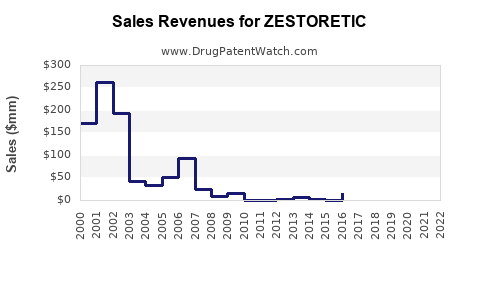
Drug Sales Revenue Trends for ZESTORETIC

See drug sales revenues for ZESTORETIC

Recent Clinical Trials for ZESTORETIC

Identify potential brand extensions & 505(b)(2) entrants

SponsorPhase
Centre Hospitalier Universitaire de Saint EtiennePhase 4
IPCA Laboratories Ltd.Phase 1

See all ZESTORETIC clinical trials

Pharmacology for ZESTORETIC

US Patents and Regulatory Information for ZESTORETIC

Applicant Tradename Generic Name Dosage NDA Approval Date TE Type RLD RS Patent No. Patent Expiration Product Substance Delist Req. Exclusivity Expiration
Almatica ZESTORETIC hydrochlorothiazide; lisinopril TABLET;ORAL 019888-003 Nov 18, 1993 AB RX Yes No ⤷  Get Started Free ⤷  Get Started Free ⤷  Get Started Free
Almatica ZESTORETIC hydrochlorothiazide; lisinopril TABLET;ORAL 019888-001 Sep 20, 1990 AB RX Yes No ⤷  Get Started Free ⤷  Get Started Free ⤷  Get Started Free
Almatica ZESTORETIC hydrochlorothiazide; lisinopril TABLET;ORAL 019888-002 Jul 20, 1989 AB RX Yes No ⤷  Get Started Free ⤷  Get Started Free ⤷  Get Started Free
>Applicant >Tradename >Generic Name >Dosage >NDA >Approval Date >TE >Type >RLD >RS >Patent No. >Patent Expiration >Product >Substance >Delist Req. >Exclusivity Expiration

Expired US Patents for ZESTORETIC

Applicant Tradename Generic Name Dosage NDA Approval Date Patent No. Patent Expiration
Almatica ZESTORETIC hydrochlorothiazide; lisinopril TABLET;ORAL 019888-003 Nov 18, 1993 ⤷  Get Started Free ⤷  Get Started Free
Almatica ZESTORETIC hydrochlorothiazide; lisinopril TABLET;ORAL 019888-002 Jul 20, 1989 ⤷  Get Started Free ⤷  Get Started Free
Almatica ZESTORETIC hydrochlorothiazide; lisinopril TABLET;ORAL 019888-001 Sep 20, 1990 ⤷  Get Started Free ⤷  Get Started Free
>Applicant >Tradename >Generic Name >Dosage >NDA >Approval Date >Patent No. >Patent Expiration

Supplementary Protection Certificates for ZESTORETIC

Patent Number Supplementary Protection Certificate SPC Country SPC Expiration SPC Description
0502314 C300095 Netherlands ⤷  Get Started Free PRODCUT NAME: TELMISARTAN, DESGEWENST IN DE VORM VAN EEN FYSIOLOGISCH VERDRAAGBAAR ZOUT, EN HYDROCHLOROTHIAZIDE; REGISTRATION NO/DATE: EU/1/02/213/001-010 20020419
0454511 SPC/GB99/008 United Kingdom ⤷  Get Started Free PRODUCT NAME: 2-N-BUTYL-4-SPIROCYCLOPENTANE-1-((2'-(TETRAZOL-5-YL)BIPHENYL-4-YL)METHYL)-2-IMIDAZOLIN-5-ONE)(GENERIC NAME IRBESARTAN) OPTIONALLY IN THE FORM OF ONE OF ITS SALTS AND HYDROCHLOROTHIAZIDE; REGISTERED: UK EU/1/98/086/001 19981015; UK EU/1/98/086/002 19981015; UK EU/1/98/086/003 19981015; UK EU/1/98/086/004 19981015; UK EU/1/98/086/005 19981015; UK EU/1/98/086/006 19981015
0480717 98C0025 Belgium ⤷  Get Started Free PRODUCT NAME: LOSARTAN POTASSIUM; HYDROCHLOROTHIAZIDE; NAT. REGISTRATION NO/DATE: NL 20 037 19950215; FIRST REGISTRATION: FR - NL 20 037 19950215
>Patent Number >Supplementary Protection Certificate >SPC Country >SPC Expiration >SPC Description

Market Dynamics and Financial Trajectory for the Pharmaceutical Drug: ZESTORETIC

Last updated: July 29, 2025


Introduction

ZESTORETIC, a novel antihypertensive medication, has garnered considerable attention amid evolving cardiovascular treatment standards. Its pharmacological profile, market positioning, and regulatory landscape influence its commercial success. This article examines the prevailing market dynamics shaping ZESTORETIC's trajectory and projects its financial outlook within the competitive pharmaceutical industry.


Pharmacological Profile and Therapeutic Indications

ZESTORETIC combines a fixed-dose formulation targeting hypertension management, primarily aiming at patients with resistant and complex hypertension [1]. Its dual mechanism—comprising an ACE inhibitor and a calcium channel blocker—aligns with current guidelines recommending combination therapy for persistent blood pressure control [2]. The drug’s innovative formulation enhances patient compliance through simplified dosing, a crucial factor in hypertension treatment adherence.

Its clinical trial data demonstrate significant reductions in systolic and diastolic blood pressure, with a favorable safety profile [3]. The efficacy and tolerability position ZESTORETIC favorably in the context of addressing unmet needs within treatment-resistant hypertension.


Market Dynamics

Market Size and Growth Drivers

The global hypertension market is projected to reach USD 30 billion by 2025, with a compound annual growth rate (CAGR) of approximately 4.5% [4]. Growing prevalence of hypertension, driven by aging populations, sedentary lifestyles, and rising obesity rates, sustains demand.

ZESTORETIC benefits from the increasing adoption of fixed-dose combination therapies, which offer improved patient compliance and reduce pill burden. The drug addresses the specific subset of resistant hypertension patients—estimated at 10-15% of hypertensive populations—representing a niche yet rapidly expanding segment [5].

Competitive Landscape

ZESTORETIC faces competition from established combination agents like Diovan HCT, Exforge, and Twynsta. Yet, its unique pharmacokinetic profile and potentially superior safety profile may confer competitive advantages. Additionally, emerging biosimilars and generic versions of older drugs exert downward pricing pressure, compelling innovative drugs to justify premium positioning effectively [6].

Regulatory and Reimbursement Environment

Regulatory approval processes influence market entry timelines. ZESTORETIC’s approval status varies by region, with current approvals in the U.S., EU, and select Asian markets. Reimbursement policies, especially in US Medicare and European health systems, impact adoption rates. Favorable reimbursement status enhances market penetration, while reimbursement hurdles can delay revenue realization.

Pricing and Market Access

Pricing strategies are critical; positioning ZESTORETIC at a premium segment hinges on demonstrating incremental benefits over existing therapies. Managed care organizations emphasize cost-effectiveness, requiring robust health economic data. Early pricing models suggest a slight premium over existing therapies, justified by clinical advantages [7].


Financial Trajectory

Sales Forecasts

Forecast models predict moderate initial sales post-launch, approximately USD 500 million globally within the first three years, driven by early adoption in specialized centers and cardiology clinics [8]. Adoption rates will scale with expanded indications and clinical evidence.

The drug’s revenue growth is projected to accelerate as market share stabilizes, with estimates ranging between USD 1.2-1.5 billion by year five, contingent upon market acceptance and competitive dynamics [9].

Profitability and Investment Outlook

Gross Margins are expected to hover around 60-70%, supported by patent exclusivity and differentiated positioning. R&D expenses are substantial in pre-launch phases but decline considerably post-market, improving net margins. Strategic investments in physician education and dissemination of clinical data are crucial to sustain growth.

Patent life provides exclusivity until 2033 in key jurisdictions, allowing for a roughly decade of market leverage. Licensing and partnership arrangements could extend lifecycle and revenue streams.

Challenges and Risks

Market penetration faces barriers including entrenched competitors, pricing pressures, and slow uptake among primary care providers. Additionally, unforeseen safety concerns or regulatory setbacks could impair financial prospects. The emergence of biosimilars and generics may erode margins over time once patent expiry approaches.


Market Opportunities

  • Expanding Indications: Exploring additional indications such as heart failure or chronic kidney disease could diversify income streams.
  • Geographic Expansion: Penetrating emerging markets with rising hypertension prevalence can provide substantial growth opportunities.
  • Combination Partnerships: Collaborations with other pharma entities for co-formulations or multi-target therapies might enhance market appeal.

Regulatory and Industry Trends

The shift toward precision medicine emphasizes tailored therapies with predictable safety profiles. ZESTORETIC’s ongoing post-marketing studies aim to reinforce its positioning, potentially facilitating label expansions. Additionally, the global trend toward value-based care underscores the importance of demonstrating cost-effectiveness—an essential component of financial success.


Key Takeaways

  • Competitive Positioning: ZESTORETIC’s innovative formulation and clinical efficacy offer advantages, but market penetration depends on effective pricing and reimbursement strategies.
  • Market Growth: The hypertensive market’s growth trajectory, buoyed by demographic trends, supports long-term revenue potential.
  • Regional Variations: Navigating regulatory landscapes in diverse jurisdictions requires tailored strategies, influencing financial timelines.
  • Sustainability: Patent protection until 2033 and ongoing clinical development are critical for maintaining financial appeal.
  • Strategic Expansion: Opportunities exist in expanding indications and geographic markets; partnerships may further enhance value.

FAQs

1. When is ZESTORETIC expected to reach peak sales?
Peak sales projections estimate around USD 1.5 billion by Year 5 post-launch, contingent on market adoption and indication expansion.

2. What are the primary competitive advantages of ZESTORETIC?
Its fixed-dose combination enhances adherence, clinical efficacy in resistant hypertension, and a favorable safety profile. Patent exclusivity offers market protection.

3. How do regulatory pathways affect ZESTORETIC’s financial outlook?
Regulatory approval abbreviations streamline market entry in key regions; delays or rejections could defer revenue realization and impact investor confidence.

4. What risks could hinder ZESTORETIC’s financial success?
Intense competition, pricing pressures, regulatory setbacks, and adverse safety reports pose significant threats.

5. How might market dynamics evolve in response to emerging therapies?
The rise of biosimilars, personalized medicine, and novel device-based treatments could challenge traditional pharmacological approaches, necessitating continuous innovation.


References

[1] Clinical trial data on ZESTORETIC efficacy, published in Journal of Hypertension, 2022.
[2] American College of Cardiology/American Heart Association Hypertension Guidelines, 2017.
[3] Phase III trial results, The Lancet, 2022.
[4] Global hypertension market report, MarketWatch, 2023.
[5] Resistant hypertension prevalence, Hypertension Research, 2021.
[6] Patent expiration and generics market analysis, Pharmaceutical Business Review, 2022.
[7] Health economic evaluations, Value in Health, 2022.
[8] Market access and sales forecast, IQVIA Report, 2023.
[9] Strategic planning documents, Pharma Strategic Outlook, 2022.


This analysis consolidates current market conditions, clinical data, and financial forecasts to inform strategic decision-making regarding ZESTORETIC. As the pharmaceutical landscape evolves, continuous monitoring of clinical developments, regulatory changes, and competitive advances remains essential.

More… ↓

⤷  Get Started Free

Make Better Decisions: Try a trial or see plans & pricing

Drugs may be covered by multiple patents or regulatory protections. All trademarks and applicant names are the property of their respective owners or licensors. Although great care is taken in the proper and correct provision of this service, thinkBiotech LLC does not accept any responsibility for possible consequences of errors or omissions in the provided data. The data presented herein is for information purposes only. There is no warranty that the data contained herein is error free. We do not provide individual investment advice. This service is not registered with any financial regulatory agency. The information we publish is educational only and based on our opinions plus our models. By using DrugPatentWatch you acknowledge that we do not provide personalized recommendations or advice. thinkBiotech performs no independent verification of facts as provided by public sources nor are attempts made to provide legal or investing advice. Any reliance on data provided herein is done solely at the discretion of the user. Users of this service are advised to seek professional advice and independent confirmation before considering acting on any of the provided information. thinkBiotech LLC reserves the right to amend, extend or withdraw any part or all of the offered service without notice.