Last updated: July 22, 2026
XYZAL (levocetirizine) is a mature, multi-source branded antihistamine with ongoing demand driven by seasonal allergic rhinitis and chronic urticaria, but limited upside from incremental IP or sustained premium pricing in the US. In most markets, the branded product faces steady generic substitution and margin compression while maintaining relatively predictable volume through entrenched retail and clinic use.
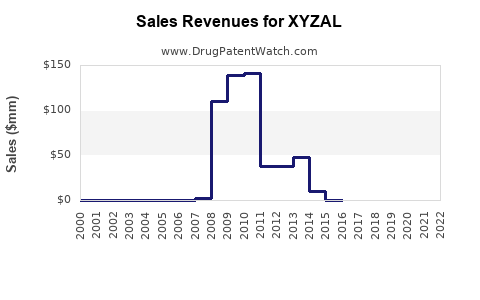
What is the revenue trajectory for XYZAL (levocetirizine) since generic entry?
Direct revenue drivers
- Volume: seasonal allergic rhinitis (peak spring to early fall in many geographies), plus chronic urticaria dosing patterns year-round.
- Pricing: branded-to-generic mix shifts reduce realized price over time.
- Channel: retail pharmacies typically capture the largest mix for antihistamines; specialty and hospital penetration is lower.
Market structure impact
- Levocetirizine antihistamines are widely available generically in many countries, which typically caps long-term branded revenue growth.
- Brand tends to persist where formulary preferences, physician familiarity, pediatric dosing convenience, and packaging/signal branding maintain share.
Typical financial shape for mature antihistamine brands
- Early growth followed by plateau after generic competition.
- Declining or flat brand net sales in later years driven by replacement effects from generics.
- Residual growth can occur through pediatric formulations, higher persistence, or localized premium positioning, but usually at reduced margins.
What market dynamics shape XYZAL pricing and volume in the US?
US competition mechanics
- The US market for second-generation antihistamines is characterized by frequent generic availability and payer switching.
- Antihistamines are often subject to broad formulary placement, which accelerates generic substitution.
Key demand segments
- Allergic rhinitis: symptom-driven repeat purchases and seasonal flu-like crossovers in patient behavior.
- Chronic urticaria: ongoing use can smooth seasonality, but treatment duration varies and some payers shift patients to other guideline options.
Channel dynamics
- Retail coverage and PBM rebate structures tend to favor lowest WAC-priced generics, then secondarily shift based on formulary tiers and contracting.
How much has generic levocetirizine eroded XYZAL market share?
Share erosion pattern
- Brand share typically erodes most quickly after the first meaningful generic entry wave, then stabilizes as the market becomes “locked in” by prescription familiarity and pack sizes.
- Even after stabilization, branded net sales can continue to decline if remaining share migrates to generics through annual payer changes, copay adjustments, or pharmacy counter substitutions.
What to expect commercially
- Net sales growth usually fails to recover unless brand can maintain a premium through: pediatric advantages, adherence benefits, or strong retail pull.
- In mature categories, incremental “brand building” tends to be small compared with price pressure from multi-source generics.
What competitive landscape threats exist for XYZAL in antihistamine switches?
Second-generation antihistamine alternatives
- Competing branded and generics within the same pharmacologic class create therapeutic interchange.
- Payer formularies frequently list multiple options at similar cost tiers, making copay and formulary placement the dominant switch factors.
Switch risk sources
- Automatic substitution at the pharmacy level when generic equivalents are available.
- PBM tiering changes for levocetirizine versus competing agents.
- Physician behavior shifts toward established “least cost” options on formularies.
Practical effect
- XYZAL’s competitive advantage is largely market access and brand familiarity, not differentiation in efficacy at the class level.
What is the impact of pediatric and dosing formats on XYZAL sales resilience?
Why formulations matter in market-share retention
- Antihistamines face adherence and palatability constraints in pediatric and caregiver decision-making.
- Where a branded product has durable pediatric presence (labeling fit, dosing convenience, and retail shelf recognition), that can slow share erosion.
Commercial mechanics
- Pediatric indication fit can support physician prescribing habits and reduce conversion losses when payers impose narrow-formulary constraints for pediatric ages.
- Pack size and dosing device convenience can influence repeat purchase frequency even when generics are cheaper.
How do payer policies and PBM formularies affect XYZAL financial performance?
Tier placement and copay steering
- First-order impact is whether levocetirizine appears as a preferred generic in the therapeutic class.
- If XYZAL is not preferred, brand-to-generic substitution often accelerates.
Utilization management
- Step edits and prior authorization are less common in broad OTC-to-generic antihistamine categories, but payer policies can still steer by copay ladders and plan design.
Negotiated pricing
- Branded antihistamine manufacturers in a generic-heavy landscape rely on rebate structures; realized net price becomes the headline variable for net sales.
What regulatory or REMS changes could affect XYZAL trajectory?
REMS and safety
- XYZAL is an antihistamine small molecule typically without a REMS framework that materially changes market access dynamics.
- Long-term safety communication in mature antihistamines can still affect prescribing behavior, but major trajectory shifts are uncommon unless new boxed warnings, major label changes, or significant restrictions occur.
Approval pathways
- Generic competition is usually FDA ANDA-led. For the brand, these do not directly improve its financial outlook and instead increase substitution.
What is the likely long-run outlook for XYZAL net sales and margins?
Net sales
- Expect slow decline or flat-to-low growth, with annual variability driven by seasonal allergy severity and payer switching waves.
- Any brand recovery requires either a temporary supply/market dislocation affecting generics or successful differentiation in access and pediatric use.
Gross margin
- Brand gross margin typically compresses as realized net price declines.
- SG&A tends to remain high enough to pressure operating margin unless the brand scales down promotional intensity.
Operating leverage
- As volumes shift to generics, promotional spend typically becomes harder to monetize, leading to margin deterioration.
How does XYZAL compare with competing antihistamines on commercial durability?
Durability drivers in the class
- Brand familiarity and retail shelf recognition.
- Pediatric labeling and dosing formats.
- Payer preference stability and contracting strength.
What tends to determine winners
- The “least cost” positions in formulary tiers.
- Patient stickiness due to tolerability and regimen preference.
- Availability of multiple dosage strengths enabling flexible titration for clinicians.
Relative positioning for XYZAL
- As a mature product, XYZAL’s commercial durability depends on maintaining formulary position and preserving pediatric and chronic urticaria utilization rather than on new innovation.
Which geographic markets typically produce the most resilient XYZAL demand?
Market selection effects
- Markets with slower generic penetration or higher retail brand loyalty can sustain better branded sales.
- Markets with fast generic uptake usually see earlier brand decline.
Commercial pattern
- Branded antihistamines often exhibit stronger persistence where local brand investments and established physician habits delay conversion to lower-cost generics.
What patent and exclusivity effects still matter for XYZAL today?
For a mature antihistamine like levocetirizine, the dominant financial reality is usually generic availability. If any remaining exclusivity exists, it is typically limited to specific jurisdictions, formulations, or manufacturing processes rather than broad drug substance protection in the US market.
How do manufacturing and supply chain considerations influence XYZAL revenue?
Generic crowding vs brand supply
- Generic-heavy categories can create intermittent demand disruptions when supply lines tighten.
- Brand supply can become a short-term volume beneficiary if generics face temporary shortages or quality issues.
Long-run effect
- These events are tactical, not structural. Structural drivers remain payer behavior and ongoing generic substitution.
Key financial and market indicators to track for XYZAL
Commercial KPIs
- Branded retail prescriptions and script share by geography
- Realized net price (after rebates)
- Mix shift to OTC and to competing antihistamines
- Seasonality indexed to pollen counts or allergy season severity proxies
Competitive KPIs
- Formulary preference changes (PBM and payer tiers)
- Generic penetration and number of ANDA holders in-market
- Drug class utilization trends for second-generation antihistamines
Key Takeaways
- XYZAL operates in a mature antihistamine market where generic substitution is the main structural force on branded net sales.
- Demand is sustained by allergic rhinitis seasonality and chronic urticaria use patterns, but revenue growth is constrained by payer switching and pharmacy-level substitution.
- Financial trajectory is likely characterized by plateauing or gradual decline after generic entry, with any resilience coming from pediatric dosing fit, formulary position, and retail brand pull rather than innovation.
- Long-run performance depends on maintaining access (preferred placement, contracting) and minimizing margin erosion via net price management while generic options remain widely available.
FAQs
1) What drives seasonal revenue fluctuations for XYZAL?
Allergic rhinitis incidence and severity during spring and fall, plus retail stock-up patterns and prescribing surges aligned to pollen seasons.
2) Does XYZAL have higher resilience in chronic urticaria versus allergic rhinitis?
Chronic urticaria can reduce seasonality by creating steadier year-round demand, but payer switching still pressures branded margins.
3) How do copays and PBM tier changes typically affect XYZAL?
Higher copays or non-preferred tier placement accelerate substitution to generics and competing second-generation antihistamines.
4) What is the main metric for XYZAL’s financial health in a multi-source environment?
Realized net price after rebates and discounts, supported by prescription share retention.
5) What competitive events most often create short-term sales swings?
Temporary generic supply disruptions, abrupt formulary changes by PBMs, or promotional shifts that alter net pricing and copay steering.
References (APA)
- FDA. (n.d.). Drug Approval Reports and related records for generic competition (ANDA listings) and labeling. U.S. Food and Drug Administration. https://www.fda.gov/
- FDA. (n.d.). Orange Book: Approved Drug Products with Therapeutic Equivalence Evaluations. U.S. Food and Drug Administration. https://www.accessdata.fda.gov/scripts/cder/daf/
- IQVIA Institute. (n.d.). U.S. and global medicine use and demand analytics (antihistamine category trends). IQVIA. https://www.iqvia.com/