XIGDUO XR Drug Patent Profile
✉ Email this page to a colleague
Which patents cover Xigduo Xr, and when can generic versions of Xigduo Xr launch?
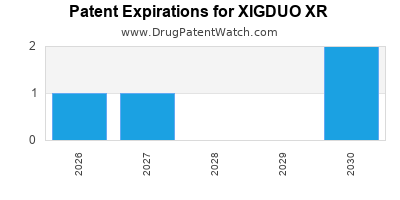
Xigduo Xr is a drug marketed by Astrazeneca Ab and is included in one NDA. There are five patents protecting this drug and two Paragraph IV challenges.
This drug has two hundred and thirty-six patent family members in forty-six countries.
The generic ingredient in XIGDUO XR is dapagliflozin; metformin hydrochloride. There are twenty-six drug master file entries for this compound. Nine suppliers are listed for this compound. Additional details are available on the dapagliflozin; metformin hydrochloride profile page.
DrugPatentWatch® Litigation and Generic Entry Outlook for Xigduo Xr
A generic version of XIGDUO XR was approved as dapagliflozin; metformin hydrochloride by ALKEM LABS LTD on April 6th, 2026.
AI Deep Research
Questions you can ask:
- What is the 5 year forecast for XIGDUO XR?
- What are the global sales for XIGDUO XR?
- What is Average Wholesale Price for XIGDUO XR?
Summary for XIGDUO XR
| International Patents: | 236 |
| US Patents: | 5 |
| Applicants: | 1 |
| NDAs: | 1 |
| Finished Product Suppliers / Packagers: | 2 |
| Raw Ingredient (Bulk) Api Vendors: | 1 |
| Clinical Trials: | 7 |
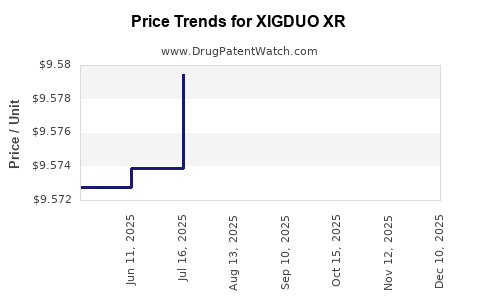
| Drug Prices: | Drug price information for XIGDUO XR |
| Patent Litigation and PTAB cases: | See patent lawsuits and PTAB cases for XIGDUO XR |
| DailyMed Link: | XIGDUO XR at DailyMed |
Recent Clinical Trials for XIGDUO XR
Identify potential brand extensions & 505(b)(2) entrants
| Sponsor | Phase |
|---|---|
| Chinese University of Hong Kong | PHASE4 |
| AstraZeneca | PHASE4 |
| Beni-Suef University | Phase 3 |
Pharmacology for XIGDUO XR
| Drug Class | Biguanide Sodium-Glucose Cotransporter 2 Inhibitor |
| Mechanism of Action | Sodium-Glucose Transporter 2 Inhibitors |
Paragraph IV (Patent) Challenges for XIGDUO XR
| Tradename | Dosage | Ingredient | Strength | NDA | ANDAs Submitted | Submissiondate |
|---|---|---|---|---|---|---|
| XIGDUO XR | Extended-release Tablets | dapagliflozin; metformin hydrochloride | 2.5 mg/1000 mg | 205649 | 1 | 2018-10-29 |
| XIGDUO XR | Extended-release Tablets | dapagliflozin; metformin hydrochloride | 5 mg/500 mg 5 mg/1000 mg 10 mg/500 mg 10 mg/1000 mg | 205649 | 10 | 2018-01-08 |
US Patents and Regulatory Information for XIGDUO XR
XIGDUO XR is protected by five US patents and two FDA Regulatory Exclusivities.
| Applicant | Tradename | Generic Name | Dosage | NDA | Approval Date | TE | Type | RLD | RS | Patent No. | Patent Expiration | Product | Substance | Delist Req. | Exclusivity Expiration |
|---|---|---|---|---|---|---|---|---|---|---|---|---|---|---|---|
| Astrazeneca Ab | XIGDUO XR | dapagliflozin; metformin hydrochloride | TABLET, EXTENDED RELEASE;ORAL | 205649-003 | Oct 29, 2014 | AB | RX | Yes | No | ⤷ Start Trial | ⤷ Start Trial | Y | ⤷ Start Trial | ||
| Astrazeneca Ab | XIGDUO XR | dapagliflozin; metformin hydrochloride | TABLET, EXTENDED RELEASE;ORAL | 205649-004 | Oct 29, 2014 | AB | RX | Yes | Yes | ⤷ Start Trial | ⤷ Start Trial | ⤷ Start Trial | |||
| Astrazeneca Ab | XIGDUO XR | dapagliflozin; metformin hydrochloride | TABLET, EXTENDED RELEASE;ORAL | 205649-003 | Oct 29, 2014 | AB | RX | Yes | No | ⤷ Start Trial | ⤷ Start Trial | Y | ⤷ Start Trial | ||
| >Applicant | >Tradename | >Generic Name | >Dosage | >NDA | >Approval Date | >TE | >Type | >RLD | >RS | >Patent No. | >Patent Expiration | >Product | >Substance | >Delist Req. | >Exclusivity Expiration |
Expired US Patents for XIGDUO XR
| Applicant | Tradename | Generic Name | Dosage | NDA | Approval Date | Patent No. | Patent Expiration |
|---|---|---|---|---|---|---|---|
| Astrazeneca Ab | XIGDUO XR | dapagliflozin; metformin hydrochloride | TABLET, EXTENDED RELEASE;ORAL | 205649-003 | Oct 29, 2014 | ⤷ Start Trial | ⤷ Start Trial |
| Astrazeneca Ab | XIGDUO XR | dapagliflozin; metformin hydrochloride | TABLET, EXTENDED RELEASE;ORAL | 205649-002 | Oct 29, 2014 | ⤷ Start Trial | ⤷ Start Trial |
| Astrazeneca Ab | XIGDUO XR | dapagliflozin; metformin hydrochloride | TABLET, EXTENDED RELEASE;ORAL | 205649-001 | Oct 29, 2014 | ⤷ Start Trial | ⤷ Start Trial |
| >Applicant | >Tradename | >Generic Name | >Dosage | >NDA | >Approval Date | >Patent No. | >Patent Expiration |
International Patents for XIGDUO XR
When does loss-of-exclusivity occur for XIGDUO XR?
Based on analysis by DrugPatentWatch, the following patents block generic entry in the countries listed below:
Australia
Patent: 10319343
Patent: Bilayer tablet formulations
Estimated Expiration: ⤷ Start Trial
Brazil
Patent: 2012011726
Patent: comprimidos de duas camadas, seu uso, e suas combinações farmacêuticas
Estimated Expiration: ⤷ Start Trial
Canada
Patent: 80939
Patent: FORMULATIONS DE COMPRIME BICOUCHE (BILAYER TABLET FORMULATIONS)
Estimated Expiration: ⤷ Start Trial
Patent: 87757
Patent: FORMULATIONS DE COMPRIME BICOUCHE (BILAYER TABLET FORMULATIONS)
Estimated Expiration: ⤷ Start Trial
China
Patent: 2711739
Patent: Bilayer tablet formulations
Estimated Expiration: ⤷ Start Trial
Patent: 5193761
Patent: BILAYER TABLET FORMULATIONS
Estimated Expiration: ⤷ Start Trial
Croatia
Patent: 0181347
Estimated Expiration: ⤷ Start Trial
Denmark
Patent: 98758
Estimated Expiration: ⤷ Start Trial
European Patent Office
Patent: 98758
Patent: FORMULATIONS DE COMPRIMÉ BICOUCHE (BILAYER TABLET FORMULATIONS)
Estimated Expiration: ⤷ Start Trial
Patent: 15124
Patent: FORMULATIONS DE COMPRIMÉS BICOUCHES (BILAYER TABLET FORMULATIONS)
Estimated Expiration: ⤷ Start Trial
Hungary
Patent: 40486
Estimated Expiration: ⤷ Start Trial
Patent: 000009
Estimated Expiration: ⤷ Start Trial
Japan
Patent: 75522
Estimated Expiration: ⤷ Start Trial
Patent: 67299
Estimated Expiration: ⤷ Start Trial
Patent: 22862
Estimated Expiration: ⤷ Start Trial
Patent: 13510873
Estimated Expiration: ⤷ Start Trial
Patent: 15110630
Patent: 二層錠製剤 (BILAYER TABLET FORMULATIONS)
Estimated Expiration: ⤷ Start Trial
Patent: 17081943
Patent: 二層錠製剤 (BILAYER TABLET FORMULATIONS)
Estimated Expiration: ⤷ Start Trial
Patent: 18172418
Patent: 二層錠製剤 (BILAYER TABLET FORMULATIONS)
Estimated Expiration: ⤷ Start Trial
Lithuania
Patent: 98758
Estimated Expiration: ⤷ Start Trial
Patent: 498758
Estimated Expiration: ⤷ Start Trial
Patent: 2020003
Estimated Expiration: ⤷ Start Trial
Mexico
Patent: 5777
Patent: FORMULACIONES DE TABLETAS BICAPA. (BILAYER TABLET FORMULATIONS.)
Estimated Expiration: ⤷ Start Trial
Patent: 12005416
Patent: FORMULACIONES DE TABLETAS BICAPA. (BILAYER TABLET FORMULATIONS.)
Estimated Expiration: ⤷ Start Trial
Norway
Patent: 20009
Estimated Expiration: ⤷ Start Trial
Poland
Patent: 98758
Estimated Expiration: ⤷ Start Trial
Portugal
Patent: 98758
Estimated Expiration: ⤷ Start Trial
Russian Federation
Patent: 83920
Patent: КОМПОЗИЦИЯ ДВУХСЛОЙНОЙ ТАБЛЕТКИ (BI-LAYER TABLET COMPOSITION)
Estimated Expiration: ⤷ Start Trial
Patent: 12757
Patent: КОМПОЗИЦИЯ ДВУХСЛОЙНОЙ ТАБЛЕТКИ (DOUBLE-LAYER TABLET COMPOSITION)
Estimated Expiration: ⤷ Start Trial
Patent: 12123947
Patent: КОМПОЗИЦИЯ ДВУХСЛОЙНОЙ ТАБЛЕТКИ
Estimated Expiration: ⤷ Start Trial
Patent: 16112599
Patent: КОМПОЗИЦИЯ ДВУХСЛОЙНОЙ ТАБЛЕТКИ
Estimated Expiration: ⤷ Start Trial
Serbia
Patent: 756
Patent: FORMULACIJE TABLETA SA DVA SLOJA (BILAYER TABLET FORMULATIONS)
Estimated Expiration: ⤷ Start Trial
Slovenia
Patent: 98758
Estimated Expiration: ⤷ Start Trial
Spain
Patent: 89107
Estimated Expiration: ⤷ Start Trial
Patent: 56888
Estimated Expiration: ⤷ Start Trial
Generics may enter earlier, or later, based on new patent filings, patent extensions, patent invalidation, early generic licensing, generic entry preferences, and other factors.
See the table below for additional patents covering XIGDUO XR around the world.
| Country | Patent Number | Title | Estimated Expiration |
|---|---|---|---|
| Argentina | 026024 | COMPUESTOS INHIBIDORES SGLT2 DE GLUCOSIDOS DE C-ARILO Y METODO, LAS COMPOSICIONES FARAMCEUTICAS QUE LOS CONTIENEN Y LOS INTERMEDIARIOS DE SINTESIS DEDICHOS COMPUESTOS | ⤷ Start Trial |
| Argentina | 040032 | C-ARIL-GLUCOSIDOS COMO INHIBIDORES DE SGLT2 Y METODO | ⤷ Start Trial |
| Austria | 295848 | ⤷ Start Trial | |
| >Country | >Patent Number | >Title | >Estimated Expiration |
Supplementary Protection Certificates for XIGDUO XR
| Patent Number | Supplementary Protection Certificate | SPC Country | SPC Expiration | SPC Description |
|---|---|---|---|---|
| 1506211 | C300585 | Netherlands | ⤷ Start Trial | PRODUCT NAME: DAPAGLIFLOZINE, DESGEWENST IN DE VORM VAN EEN FARMACEUTISCH AANVAARDBAAR ZOUT; REGISTRATION NO/DATE: EU/1/12/795/001-010 20121112 |
| 1506211 | PA2013008 | Lithuania | ⤷ Start Trial | PRODUCT NAME: DAPAGLIFLOZINUM; REGISTRATION NO/DATE: EU/1/12/795/001 - EU/1/12/795/010 20121112 |
| 1506211 | 122013000033 | Germany | ⤷ Start Trial | PRODUCT NAME: DAPAGLIFLOZIN UND PHARMAZEUTISCH VERTRAEGLICHE SALZE DAVON; REGISTRATION NO/DATE: EU/1/12/795/001-010 20121112 |
| >Patent Number | >Supplementary Protection Certificate | >SPC Country | >SPC Expiration | >SPC Description |
XIGDUO XR (dapagliflozin/metformin HCl extended-release): market dynamics and financial trajectory
More… ↓
Make Better Decisions: Try a trial or see plans & pricing
Drugs may be covered by multiple patents or regulatory protections. All trademarks and applicant names are the property of their respective owners or licensors. Although great care is taken in the proper and correct provision of this service, thinkBiotech LLC does not accept any responsibility for possible consequences of errors or omissions in the provided data. The data presented herein is for information purposes only. There is no warranty that the data contained herein is error free. We do not provide individual investment advice. This service is not registered with any financial regulatory agency. The information we publish is educational only and based on our opinions plus our models. By using DrugPatentWatch you acknowledge that we do not provide personalized recommendations or advice. thinkBiotech performs no independent verification of facts as provided by public sources nor are attempts made to provide legal or investing advice. Any reliance on data provided herein is done solely at the discretion of the user. Users of this service are advised to seek professional advice and independent confirmation before considering acting on any of the provided information. thinkBiotech LLC reserves the right to amend, extend or withdraw any part or all of the offered service without notice.
ISSN: 2162-2639

Privacy and Cookies
Terms & Conditions
Site Map
DrugPatentWatch Alternatives
LOE / Major Patent Expirations 2026 - 2027
NCE-1 Patent Challenge Dates 2026 - 2027
Friedman, Yali. "DrugPatentWatch" DrugPatentWatch, thinkBiotech, 2026, www.DrugPatentWatch.com.
See Primary Research Papers Citing DrugPatentWatch