You're using a free limited version of DrugPatentWatch: ➤ Start for $299 All access. No Commitment.

Last Updated: December 31, 2025

XANAX Drug Patent Profile


✉ Email this page to a colleague

« Back to Dashboard


When do Xanax patents expire, and what generic alternatives are available?

Xanax is a drug marketed by Upjohn and is included in two NDAs.

The generic ingredient in XANAX is alprazolam. There are fifteen drug master file entries for this compound. Thirty-four suppliers are listed for this compound. Additional details are available on the alprazolam profile page.

DrugPatentWatch® Litigation and Generic Entry Outlook for Xanax

A generic version of XANAX was approved as alprazolam by NOVITIUM PHARMA on October 19th, 1993.

  Get Started Free

AI Deep Research
Questions you can ask:
  • What is the 5 year forecast for XANAX?
  • What are the global sales for XANAX?
  • What is Average Wholesale Price for XANAX?
Drug patent expirations by year for XANAX
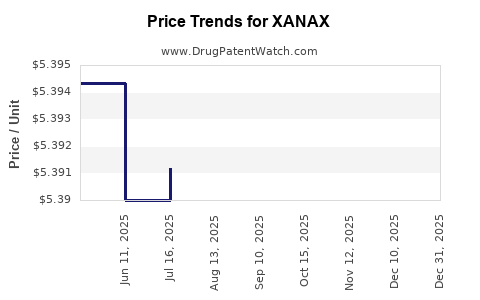
Drug Prices for XANAX

See drug prices for XANAX

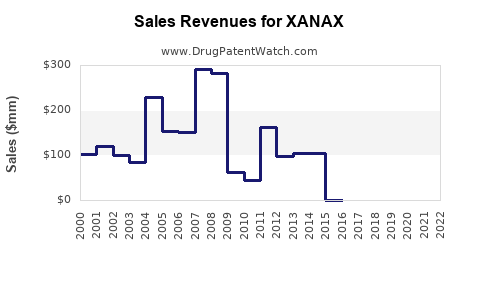
Drug Sales Revenue Trends for XANAX

See drug sales revenues for XANAX

Pharmacology for XANAX
Drug ClassBenzodiazepine

US Patents and Regulatory Information for XANAX

Applicant Tradename Generic Name Dosage NDA Approval Date TE Type RLD RS Patent No. Patent Expiration Product Substance Delist Req. Exclusivity Expiration
Upjohn XANAX alprazolam TABLET;ORAL 018276-001 Approved Prior to Jan 1, 1982 AB RX Yes No ⤷  Get Started Free ⤷  Get Started Free ⤷  Get Started Free
Upjohn XANAX XR alprazolam TABLET, EXTENDED RELEASE;ORAL 021434-003 Jan 17, 2003 AB RX Yes No ⤷  Get Started Free ⤷  Get Started Free ⤷  Get Started Free
Upjohn XANAX alprazolam TABLET;ORAL 018276-004 Nov 27, 1985 AB RX Yes No ⤷  Get Started Free ⤷  Get Started Free ⤷  Get Started Free
Upjohn XANAX XR alprazolam TABLET, EXTENDED RELEASE;ORAL 021434-004 Jan 17, 2003 AB RX Yes Yes ⤷  Get Started Free ⤷  Get Started Free ⤷  Get Started Free
Upjohn XANAX alprazolam TABLET;ORAL 018276-002 Approved Prior to Jan 1, 1982 AB RX Yes No ⤷  Get Started Free ⤷  Get Started Free ⤷  Get Started Free
Upjohn XANAX alprazolam TABLET;ORAL 018276-003 Approved Prior to Jan 1, 1982 AB RX Yes Yes ⤷  Get Started Free ⤷  Get Started Free ⤷  Get Started Free
Upjohn XANAX XR alprazolam TABLET, EXTENDED RELEASE;ORAL 021434-002 Jan 17, 2003 AB RX Yes No ⤷  Get Started Free ⤷  Get Started Free ⤷  Get Started Free
>Applicant >Tradename >Generic Name >Dosage >NDA >Approval Date >TE >Type >RLD >RS >Patent No. >Patent Expiration >Product >Substance >Delist Req. >Exclusivity Expiration

Expired US Patents for XANAX

Applicant Tradename Generic Name Dosage NDA Approval Date Patent No. Patent Expiration
Upjohn XANAX alprazolam TABLET;ORAL 018276-003 Approved Prior to Jan 1, 1982 ⤷  Get Started Free ⤷  Get Started Free
Upjohn XANAX alprazolam TABLET;ORAL 018276-004 Nov 27, 1985 ⤷  Get Started Free ⤷  Get Started Free
Upjohn XANAX alprazolam TABLET;ORAL 018276-001 Approved Prior to Jan 1, 1982 ⤷  Get Started Free ⤷  Get Started Free
Upjohn XANAX alprazolam TABLET;ORAL 018276-002 Approved Prior to Jan 1, 1982 ⤷  Get Started Free ⤷  Get Started Free
Upjohn XANAX alprazolam TABLET;ORAL 018276-001 Approved Prior to Jan 1, 1982 ⤷  Get Started Free ⤷  Get Started Free
Upjohn XANAX alprazolam TABLET;ORAL 018276-003 Approved Prior to Jan 1, 1982 ⤷  Get Started Free ⤷  Get Started Free
>Applicant >Tradename >Generic Name >Dosage >NDA >Approval Date >Patent No. >Patent Expiration

International Patents for XANAX

See the table below for patents covering XANAX around the world.

Country Patent Number Title Estimated Expiration
France 2034999 ⤷  Get Started Free
Spain 400038 ⤷  Get Started Free
Yugoslavia 35139 ⤷  Get Started Free
Spain 376689 ⤷  Get Started Free
Philippines 9316 2-ACYLHYDRAZINO BENZODIAZEPINES ⤷  Get Started Free
Denmark 449378 ⤷  Get Started Free
Israel 38810 ⤷  Get Started Free
>Country >Patent Number >Title >Estimated Expiration

Market Dynamics and Financial Trajectory for Xanax (Alprazolam)

Last updated: October 18, 2025

Introduction

Xanax, the trade name for alprazolam, is a benzodiazepine primarily prescribed for anxiety and panic disorders. Since its introduction in the late 1980s, it has become one of the most prescribed psychiatric medications worldwide. This analysis explores the evolving market dynamics, regulatory landscape, and financial trajectory of Xanax, contextualized within broader psychotropic drug markets and societal shifts influencing prescription patterns.

Market Dynamics

1. Global and Regional Market Size

Xanax commands significant market share within the benzodiazepine class, valued globally at approximately USD 1.8 billion in 2022, according to industry reports [[1]]. North America—particularly the United States—dominates this landscape, accounting for over 60% of sales, owing to high prevalence rates of anxiety disorders and a robust healthcare infrastructure [[2]]. Europe and Asia-Pacific regions follow, driven by increasing mental health awareness and evolving prescribing practices.

2. Demographic and Epidemiological Drivers

The rising prevalence of anxiety and panic disorders, compounded by societal stressors such as economic downturns, pandemic-related trauma, and urbanization, continue to fuel demand. The Anxiety and Depression Association of America estimates that anxiety disorders affect over 40 million adults in the U.S. alone [[3]]. These figures underpin persisting demand for rapid-acting anxiolytics like Xanax.

3. Prescribing Trends and Physician Behavior

Despite concerns surrounding dependency and abuse potential, Xanax remains a first-line treatment. Prescribing rates have shown stability or modest growth in regions with mental health service gaps. However, increasing awareness of benzodiazepine risks prompts physicians to adopt more cautious prescribing, favoring short-term use or alternative therapies like SSRIs.

4. Regulatory and Legal Challenges

Xanax's addictive potential has led to stringent regulatory scrutiny. In 2016, the U.S. DEA classified alprazolam as a Schedule IV controlled substance. Ongoing legislation aims to mitigate misuse while balancing access for patients in need [[4]]. These regulatory measures influence market dynamics by potentially constraining supply, increasing compliance costs, and shaping prescribing behaviors.

5. Competitive Landscape

Xanax faces competition from other benzodiazepines such as lorazepam, diazepam, and newer anxiolytics with improved safety profiles. The introduction of non-benzodiazepine drugs, including buspirone and certain antidepressants, pressures Xanax's market share, especially among younger and at-risk populations.

6. Abuse, Dependence, and Illicit Markets

Xanax's popularity in illicit settings, particularly among substance use disorder communities, impacts its legal market. The prevalence of counterfeit and diverted pills adds complexity to market management and legal enforcement efforts [[5]].

Financial Trajectory

1. Revenue Trends

Xanax has historically ranked among top-selling psychiatric drugs. While peak sales occurred in the early 2000s, annual revenues have plateaued or declined slightly due to increased regulation and competition. Nonetheless, the drug still generates substantial income for patent-holding companies, with estimates citing annual sales of around USD 500 million in the U.S.

2. Patent and Market Exclusivity

Alprazolam's patent protections have long expired; thus, generic versions dominate the market, exerting downward pressure on prices and revenue potential for branded formulations. This commoditization limits profit margins but ensures broad accessibility.

3. Impact of Generic Competition

The widespread availability of generics has stabilized Xanax's price and volume in mature markets. The entry of multiple suppliers results in price erosion—estimated at a compounded annual rate of 4% over the past decade—prompting companies to diversify their portfolios into newer or branded formulations with differentiation potential.

4. Market Expansion and Licensing Opportunities

Emerging markets display opportunities for growth, especially where mental health awareness and prescription practices are evolving. Licensing deals, local manufacturing, and tailored marketing strategies could unlock new revenue streams.

5. Pharmacovigilance Costs

Monitoring for adverse effects and preventing diversion incurs ongoing costs. Companies allocate significant resources to compliance, customer education, and anti-diversion initiatives, impacting net profitability.

6. Future Financial Outlook

Given regulatory and societal trends, Xanax's revenues are predicted to decline marginally over the next five years, unless supplemented by new formulations, indications, or ancillary services. Strategic shifts toward personalized medicine and digital health integration may offer avenues for sustained financial performance.

Societal and Regulatory Influences

1. Public Perception and Prescribing Policies

The growing stigma associated with benzodiazepine misuse may influence clinician prescribing. Incorporation of prescription drug monitoring programs (PDMPs) aims to curtail over-prescription, affecting sales volumes.

2. Reimbursement and Insurance Dynamics

Insurance coverage trends impact patient access and adherence. Reimbursement restrictions and formulary shifts favor alternative therapies, constraining Xanax's market penetration.

3. Legal and Enforcement Developments

Legal actions against diversion networks and crackdown on illicit sales influence supply chains and consumer access. These measures may temporarily curb misuse but complicate legitimate prescribing.

Conclusion

Xanax remains a pivotal anxiolytic drug with a complex interplay of market drivers and constraints. Its legacy of widespread use is challenged by regulatory and societal pressures but preserved by ongoing demand driven by mental health needs. The financial trajectory indicates modest decline without strategic innovation or market expansion, emphasizing the importance of diversification for manufacturers.


Key Takeaways

  • Market Stability with Challenges: Xanax sustains significant revenue streams but faces declining margins due to generic competition and regulatory scrutiny.
  • Regulatory Impact: Stringent controls and prescription monitoring efforts influence prescribing and sales volumes, generally reducing misuse without entirely curbing legitimate access.
  • Growing Competition: Alternatives and emerging therapies threaten Xanax's dominance, prompting a need for differentiation or repositioning.
  • Expansion Opportunities: Emerging markets and potential new indications may provide future growth avenues.
  • Strategic Focus: Companies should emphasize compliance, diversion prevention, and innovation in formulation or delivery methods to preserve financial stability.

FAQs

1. How has the legalization of medical marijuana affected Xanax sales?
Medical marijuana's legalization in various regions has prompted some patients to seek alternative anxiolytic therapies, potentially reducing prescription rates of benzodiazepines like Xanax. However, the impact remains modest, as clinical considerations and regulatory constraints influence prescribing behaviors.

2. Can Xanax be prescribed for conditions other than anxiety?
While primarily indicated for anxiety and panic disorders, Xanax is occasionally used off-label for short-term insomnia and sedation, though these uses are generally less common due to safety concerns.

3. What are the main risks associated with Xanax?
Xanax carries risks of dependence, tolerance, respiratory depression, and withdrawal syndromes. Combined with alcohol or opioids, it significantly increases overdose risk.

4. Are there patented formulations or new derivatives of Xanax in development?
No recent patents for new Xanax formulations exist, though research into safer benzodiazepine derivatives is ongoing. Most companies focus on shifting towards novel anxiolytics with improved safety profiles.

5. How do regulatory agencies monitor Xanax misuse?
Agencies utilize PDMPs, law enforcement collaboration, and public health initiatives to track prescriptions, identify diversion, and implement control measures aimed at reducing misuse.


Sources
[1] MarketWatch, 2022. Global Benzodiazepine Market Report.
[2] IQVIA, 2022. U.S. Prescription Drug Sales Data.
[3] Anxiety and Depression Association of America, 2022. Mental Health Disorders Statistics.
[4] DEA, 2016. Controlled Substances Schedule Updates.
[5] National Institute on Drug Abuse, 2021. Benzodiazepine Misuse and Abuse.

More… ↓

⤷  Get Started Free

Make Better Decisions: Try a trial or see plans & pricing

Drugs may be covered by multiple patents or regulatory protections. All trademarks and applicant names are the property of their respective owners or licensors. Although great care is taken in the proper and correct provision of this service, thinkBiotech LLC does not accept any responsibility for possible consequences of errors or omissions in the provided data. The data presented herein is for information purposes only. There is no warranty that the data contained herein is error free. We do not provide individual investment advice. This service is not registered with any financial regulatory agency. The information we publish is educational only and based on our opinions plus our models. By using DrugPatentWatch you acknowledge that we do not provide personalized recommendations or advice. thinkBiotech performs no independent verification of facts as provided by public sources nor are attempts made to provide legal or investing advice. Any reliance on data provided herein is done solely at the discretion of the user. Users of this service are advised to seek professional advice and independent confirmation before considering acting on any of the provided information. thinkBiotech LLC reserves the right to amend, extend or withdraw any part or all of the offered service without notice.