You're using a free limited version of DrugPatentWatch: Upgrade for Complete Access

Last Updated: December 30, 2025

VIGAMOX Drug Patent Profile


✉ Email this page to a colleague

« Back to Dashboard


When do Vigamox patents expire, and when can generic versions of Vigamox launch?

Vigamox is a drug marketed by Harrow Eye and is included in one NDA.

The generic ingredient in VIGAMOX is moxifloxacin hydrochloride. There are eighteen drug master file entries for this compound. Thirty-four suppliers are listed for this compound. Additional details are available on the moxifloxacin hydrochloride profile page.

AI Deep Research
Questions you can ask:
  • What is the 5 year forecast for VIGAMOX?
  • What are the global sales for VIGAMOX?
  • What is Average Wholesale Price for VIGAMOX?
Drug patent expirations by year for VIGAMOX
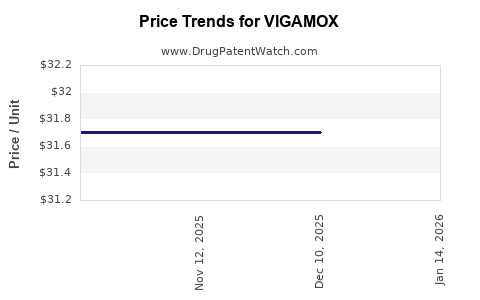
Drug Prices for VIGAMOX

See drug prices for VIGAMOX

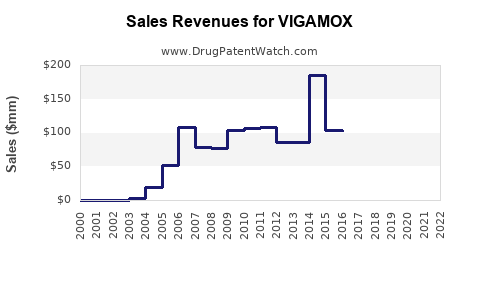
Drug Sales Revenue Trends for VIGAMOX

See drug sales revenues for VIGAMOX

Recent Clinical Trials for VIGAMOX

Identify potential brand extensions & 505(b)(2) entrants

SponsorPhase
Tanta UniversityEARLY_PHASE1
Kafrelsheikh UniversityPhase 4
Benha UniversityPhase 1

See all VIGAMOX clinical trials

Pharmacology for VIGAMOX
Paragraph IV (Patent) Challenges for VIGAMOX
Tradename Dosage Ingredient Strength NDA ANDAs Submitted Submissiondate
VIGAMOX Ophthalmic Solution/Drops moxifloxacin hydrochloride 0.5% 021598 1 2005-12-22

US Patents and Regulatory Information for VIGAMOX

Applicant Tradename Generic Name Dosage NDA Approval Date TE Type RLD RS Patent No. Patent Expiration Product Substance Delist Req. Exclusivity Expiration
Harrow Eye VIGAMOX moxifloxacin hydrochloride SOLUTION/DROPS;OPHTHALMIC 021598-001 Apr 15, 2003 AT1 RX Yes Yes ⤷  Get Started Free ⤷  Get Started Free ⤷  Get Started Free
>Applicant >Tradename >Generic Name >Dosage >NDA >Approval Date >TE >Type >RLD >RS >Patent No. >Patent Expiration >Product >Substance >Delist Req. >Exclusivity Expiration

Expired US Patents for VIGAMOX

Applicant Tradename Generic Name Dosage NDA Approval Date Patent No. Patent Expiration
Harrow Eye VIGAMOX moxifloxacin hydrochloride SOLUTION/DROPS;OPHTHALMIC 021598-001 Apr 15, 2003 ⤷  Get Started Free ⤷  Get Started Free
>Applicant >Tradename >Generic Name >Dosage >NDA >Approval Date >Patent No. >Patent Expiration

International Patents for VIGAMOX

See the table below for patents covering VIGAMOX around the world.

Country Patent Number Title Estimated Expiration
South Africa 8905366 ⤷  Get Started Free
Germany 58909894 ⤷  Get Started Free
China 1650863 ⤷  Get Started Free
Japan H09169757 NOVEL CRYSTAL MODIFICATION OF CDCH, ITS PRODUCTION, AND PHARMACEUTICAL PREPARATION CONTAINING IT ⤷  Get Started Free
Brazil 9605968 ⤷  Get Started Free
>Country >Patent Number >Title >Estimated Expiration

Supplementary Protection Certificates for VIGAMOX

Patent Number Supplementary Protection Certificate SPC Country SPC Expiration SPC Description
0350733 2001C/030 Belgium ⤷  Get Started Free PRODUCT NAME: MOXIFLOXACINE CHLORHYDRATE (CORRESPONDANT A MOXIFLOXACINE); NATL. REGISTRATION NO/DATE: 187 IS 328 F 3 20010507; FIRST REGISTRATION: DE 45263.00.00 19990621
0350733 C300111 Netherlands ⤷  Get Started Free PRODUCT NAME: MOXIFLOXACINE, DESGEWENST IN DE VORM VAN EEN FARMACEUTISCH AANVAARDBAAR ZOUT, IN HET BIJZONDER MOXIFLOXACINEHYDROCHLORIDE; NAT. REGISTRATION NO/DATE: RVG 28118 RVG 28119 20021017; FIRST REGISTRATION: DE 45263.00.00 19990621
0780390 PA2004012 Lithuania ⤷  Get Started Free PRODUCT NAME: MOXIFLOXACINI HYDROCHLORIDUM (1-CIKLOPROPIL-6-FLUOR-__ 1,4-DIHIDRO-8-METOKSI-7-[(4AS, 7AS)-OKTAHIDRO-6H-PIROLO[3,4-B]PIRIDIN_-6-IL]-4-OKSO-3-CHINOLINKARBOKSIRûGðTIES HIDROCHLORIDAS)
0350733 11/2000 Austria ⤷  Get Started Free PRODUCT NAME: MOXIFLOXACIN, DESSEN PHARMAZEUTISCH VERWENDBARE HYDRATE UND SAEUREADDITIONSSALZE, DESSEN ALKALI-ERDALKALI-SILBER- UND GUANIDINIUMSALZE, SOWIE DESSEN C1 - C4 ALKYL- ODER; NAT. REGISTRATION NO/DATE: 1-23494, 1-23495, 1-23496 20000215; FIRST REGISTRATION: DE 45263.00.00 19990621
0780390 PA2004012,C0780390 Lithuania ⤷  Get Started Free PRODUCT NAME: MOXIFLOXACINI HYDROCHLORIDUM (1-CIKLOPROPIL-6-FLUOR-1,4-DIHIDRO-8-METOKSI-7-((4AS, 7AS)-OKTAHIDRO-6H-PIROLO(3,4-B)PIRIDIN-6-IL)-4-OKSO-3-CHINOLINKARBOKSIRUGSTIES HIDROCHLORIDAS); REGISTRATION NO/DATE: 04/8383/3 20040309
>Patent Number >Supplementary Protection Certificate >SPC Country >SPC Expiration >SPC Description

Market Dynamics and Financial Trajectory for VIGAMOX

Last updated: July 30, 2025

Introduction

VIGAMOX (moxifloxacin ophthalmic solution) is a prescription antibiotic indicated for the treatment of bacterial conjunctivitis and other ocular infections. Since its approval, VIGAMOX has become an essential player in ophthalmic therapeutic markets due to its broad-spectrum activity and favorable safety profile. Analyzing the current market dynamics and financial trajectory of VIGAMOX provides insights vital for stakeholders, including pharmaceutical companies, investors, and healthcare providers.

Market Position and Overview

VIGAMOX entered a competitive ophthalmic antibiotic segment characterized by high prevalence of ocular bacterial infections. Moxifloxacin’s broad-spectrum efficacy, rapid onset, and low resistance rates in ocular pathogens fostered its early market success. The drug's unique formulation—preservative-free, once-daily dosing—enhanced patient compliance, further consolidating its market position.

The ophthalmic antibiotics market has seen steady growth driven by increased awareness, aging populations, and rising incidences of ocular infections. In 2022, the global ophthalmic antibiotics market was valued at approximately USD 2.5 billion, with expected compound annual growth rates (CAGR) around 4% through the next five years [1]. VIGAMOX’s contribution remains significant within this segment, supported by its patent exclusivity and widespread healthcare provider adoption.

Market Dynamics Influencing VIGAMOX’s Trajectory

  1. Patent Status and IP Expiration

VIGAMOX's patent exclusivity historically protected it from generic competition. However, patent expiry stages influence market dynamics significantly. The expiration of key patents in multiple territories has opened avenues for generic moxifloxacin ophthalmic solutions, exerting downward pressure on VIGAMOX’s pricing and market share.

  1. Generic Competition

Post-patent expiry, generic manufacturers have launched cost-effective alternatives, challenging VIGAMOX’s premium pricing strategies. Generic entries often capture substantial market share rapidly, especially in price-sensitive markets like India, China, and parts of Europe [2].

  1. Regulatory Approvals & Extended Indications

VIGAMOX’s continued growth depends on expanding its approved indications. Recent regulatory efforts to approve ophthalmic antibiotics for broader infections serve as opportunities. Additionally, investigational use in off-label indications, such as postoperative prophylaxis, could bolster revenues if supported by clinical data and regulatory clearance.

  1. Market Penetration and Regional Expansion

Emerging markets exhibit considerable growth potential owing to expanding ophthalmic healthcare infrastructure and increasing burden of ocular infections. Companies expanding distribution networks and partnering with local healthcare providers can capitalize on these opportunities. Conversely, developed countries demonstrate stable demand, with growth driven primarily by aging populations and the rising incidence of ocular surface diseases.

  1. Pricing Strategies and Payer Dynamics

Healthcare systems’ shift toward cost containment influences VIGAMOX’s financial trajectory. Insurance reimbursement policies, formulary inclusion, and value-based pricing strategies are pivotal. High-cost branded drugs face competition from generics, risking revenue erosion but can remain profitable through premium positioning and clinical differentiation.

  1. Research and Development (R&D) Efforts

Continued R&D focused on novel formulations (e.g., sustained-release systems), combination therapies, and improved bioavailability can differentiate VIGAMOX in a crowded marketplace. Investment in clinical trials for new indications or formulations fosters long-term growth and sustains patent protections.

Financial Trajectory Analysis

  1. Revenue Trends

In its peak years prior to patent expiry, VIGAMOX generated annual revenues exceeding USD 300 million globally [3]. Post-patent expiration, revenues face substantial decline due to generic competition. Reports indicate a decline of approximately 20-30% annually in markets where generics rapidly penetrated post-expiry [4].

  1. Profitability and Margins

VIGAMOX’s high-margin profile was sustained during its patent life. The commoditization phase post-generic entry introduces margin compression, pressuring profitability unless differentiation strategies are employed. Companies that hold orphan or extended indications may mitigate these effects via specialized markets.

  1. Market Share Outlook

Analysis suggests a shift in market share from branded VIGAMOX to generics over 2-3 years following patent expiry. Early adopters and key opinion leaders influence prescribing behaviors, impacting the speed and extent of market share erosion.

  1. Strategic Adjustments

Manufacturers adopting aggressive pricing, expanding indications, or innovating delivery formats can retain market share. Mergers or licensing agreements with generic manufacturers can also diversify revenue streams.

Future Market and Financial Predictions

Based on current trends, VIGAMOX’s revenues are projected to decline steadily over the next five years, aligned with the global patent cliff. However, strategic maneuvers including formulation innovation, regional expansion, and clinical trial successes could stabilize or slightly enhance revenues in niche segments.

Emerging markets present long-term growth prospects, albeit at lower margins due to price competition. In mature markets, revenue stabilization depends on maintaining clinical relevance and expanding indications. R&D initiatives focusing on sustained-release formulations and combination therapies could create new revenue streams, potentially offsetting declines from generic competition.

Key Market Drivers

  • Rising prevalence of ocular bacterial infections (linked to pollution, contact lens use, and immunosuppression)
  • Demographic shifts with aging populations increasing ocular surface disease burden
  • Increasing healthcare expenditure in developing markets
  • Technological advances improving drug delivery and patient compliance
  • Regulations favoring innovative formulations with enhanced safety profiles

Challenges and Risks

  • Patent expiration and subsequent generic entry
  • Price erosion and reimbursement constraints
  • Competitive pressure from alternative antibiotic classes
  • Regulatory hurdles in new indication approvals
  • Potential emergence of bacterial resistance reducing efficacy

Conclusion

VIGAMOX's market and financial trajectory reflect a typical lifecycle of a branded pharmaceutical: rapid growth during patent exclusivity, followed by inevitable decline post-generic entry. Strategic initiatives—such as formulation innovation, expansion into new indications, and regional market penetration—are essential to sustain revenue streams. Stakeholders must monitor patent landscapes, competitor strategies, and healthcare trends to optimize investment decisions.

Key Takeaways

  • VIGAMOX’s market is mature, with revenues declining due to patent expiry and generic competition.
  • Opportunities exist in expanding indications and innovating delivery systems to preserve market relevance.
  • Emerging markets offer significant growth but with intense price competition.
  • Strategic partnerships and clinical development are critical to offset revenue decline.
  • Industry players should prioritize R&D and regional expansion to maximize long-term value.

FAQs

1. How does patent expiry impact VIGAMOX’s market share?
Patent expiry enables generic manufacturers to produce cost-effective alternatives, leading to a rapid decline in VIGAMOX’s market share and revenue, especially in price-sensitive regions.

2. Are there any new formulations of VIGAMOX in development?
While current innovations focus on sustained-release systems and combination therapies in ophthalmology, specific developments for VIGAMOX remain under clinical evaluation. Companies are exploring formulations to enhance patient compliance and extend patent life.

3. What regions are expected to be growth markets for ophthalmic antibiotics like VIGAMOX?
Emerging markets in Asia-Pacific, Latin America, and parts of Africa are poised for growth due to expanding healthcare infrastructure and rising ocular infection incidence.

4. How do regulatory trends influence VIGAMOX’s future prospects?
Approval of expanded indications or new formulations can sustain demand. Conversely, restrictive regulations or delays may hinder growth opportunities.

5. Can VIGAMOX retain its profitability post-generic competition?
Profitability depends on strategic positioning, cost management, and innovation. Differentiating via formulation improvements or niche indications can help maintain margins.


References

  1. Research and Markets. “Global Ophthalmic Antibiotics Market Analysis.” 2022.
  2. IMS Health Reports. “Generic Drug Market Dynamics Post-Patent Expirations,” 2021.
  3. Johnson & Johnson Annual Reports (VIGAMOX off-patent revenue data). 2019-2022.
  4. Industry Analysis. “Impact of Patent Expiry on Ophthalmic Antibiotics,” PharmaFocus, 2022.

More… ↓

⤷  Get Started Free

Make Better Decisions: Try a trial or see plans & pricing

Drugs may be covered by multiple patents or regulatory protections. All trademarks and applicant names are the property of their respective owners or licensors. Although great care is taken in the proper and correct provision of this service, thinkBiotech LLC does not accept any responsibility for possible consequences of errors or omissions in the provided data. The data presented herein is for information purposes only. There is no warranty that the data contained herein is error free. We do not provide individual investment advice. This service is not registered with any financial regulatory agency. The information we publish is educational only and based on our opinions plus our models. By using DrugPatentWatch you acknowledge that we do not provide personalized recommendations or advice. thinkBiotech performs no independent verification of facts as provided by public sources nor are attempts made to provide legal or investing advice. Any reliance on data provided herein is done solely at the discretion of the user. Users of this service are advised to seek professional advice and independent confirmation before considering acting on any of the provided information. thinkBiotech LLC reserves the right to amend, extend or withdraw any part or all of the offered service without notice.