VANCOMYCIN Drug Patent Profile
✉ Email this page to a colleague
Which patents cover Vancomycin, and when can generic versions of Vancomycin launch?
Vancomycin is a drug marketed by Hikma, Fresenius Kabi Usa, Lupin, Orient Pharma Co Ltd, Pai Holdings, Strides Pharma, Watson Labs, Alkem Labs Ltd, Amneal, Aurobindo Pharma, Aspiro, Avet Lifesciences, Eugia Pharma, Eurofarma, Gland, Hainan Poly, Hikma Pharms, Hospira, Hospira Inc, Knack, Meitheal, Mylan Labs Ltd, Plano Pharms, Sagent Pharms, Teva Pharms Usa, Xellia Pharms Aps, Samson Medcl, Steriscience, Zhejiang Novus Pharm, and Baxter Hlthcare. and is included in fifty-six NDAs. There are five patents protecting this drug.
The generic ingredient in VANCOMYCIN is vancomycin hydrochloride. There are two drug master file entries for this compound. Thirty-seven suppliers are listed for this compound. Additional details are available on the vancomycin hydrochloride profile page.
DrugPatentWatch® Litigation and Generic Entry Outlook for Vancomycin
A generic version of VANCOMYCIN was approved as vancomycin hydrochloride by FRESENIUS KABI USA on March 17th, 1987.
AI Deep Research
Questions you can ask:
- What is the 5 year forecast for VANCOMYCIN?
- What are the global sales for VANCOMYCIN?
- What is Average Wholesale Price for VANCOMYCIN?
Summary for VANCOMYCIN
| US Patents: | 5 |
| Applicants: | 30 |
| NDAs: | 56 |
| Raw Ingredient (Bulk) Api Vendors: | 37 |
| Clinical Trials: | 481 |
| Drug Prices: | Drug price information for VANCOMYCIN |
| What excipients (inactive ingredients) are in VANCOMYCIN? | VANCOMYCIN excipients list |
| DailyMed Link: | VANCOMYCIN at DailyMed |
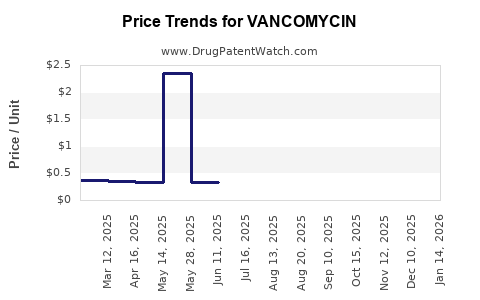
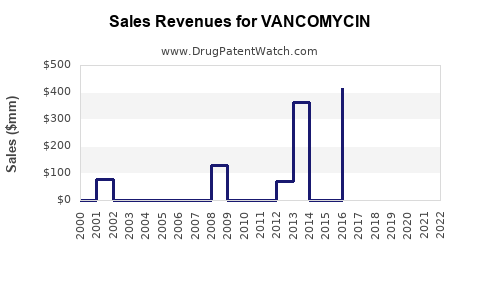
DrugPatentWatch® Estimated Loss of Exclusivity (LOE) Date for VANCOMYCIN
Generic Entry Date for VANCOMYCIN*:
Constraining patent/regulatory exclusivity:
NDA:
Dosage:
SOLUTION;INTRAVENOUS, ORAL |
*The generic entry opportunity date is the latter of the last compound-claiming patent and the last regulatory exclusivity protection. Many factors can influence early or later generic entry. This date is provided as a rough estimate of generic entry potential and should not be used as an independent source.
Recent Clinical Trials for VANCOMYCIN
Identify potential brand extensions & 505(b)(2) entrants
| Sponsor | Phase |
|---|---|
| McGill University Health Centre/Research Institute of the McGill University Health Centre | PHASE3 |
| The Methodist Hospital Research Institute | NA |
| Nantes University Hospital | PHASE2 |
Anatomical Therapeutic Chemical (ATC) Classes for VANCOMYCIN
US Patents and Regulatory Information for VANCOMYCIN
VANCOMYCIN is protected by five US patents.
Based on analysis by DrugPatentWatch, the earliest date for a generic version of VANCOMYCIN is ⤷ Start Trial.
This potential generic entry date is based on patent 10,849,956.
Generics may enter earlier, or later, based on new patent filings, patent extensions, patent invalidation, early generic licensing, generic entry preferences, and other factors.
| Applicant | Tradename | Generic Name | Dosage | NDA | Approval Date | TE | Type | RLD | RS | Patent No. | Patent Expiration | Product | Substance | Delist Req. | Exclusivity Expiration |
|---|---|---|---|---|---|---|---|---|---|---|---|---|---|---|---|
| Meitheal | VANCOMYCIN HYDROCHLORIDE | vancomycin hydrochloride | INJECTABLE;INJECTION | 215196-002 | Jul 27, 2022 | AP | RX | No | No | ⤷ Start Trial | ⤷ Start Trial | ⤷ Start Trial | |||
| Hikma | VANCOMYCIN HYDROCHLORIDE | vancomycin hydrochloride | POWDER;INTRAVENOUS | 217489-001 | Jun 29, 2023 | AP | RX | No | No | ⤷ Start Trial | ⤷ Start Trial | ⤷ Start Trial | |||
| Gland | VANCOMYCIN HYDROCHLORIDE | vancomycin hydrochloride | INJECTABLE;INJECTION | 205694-003 | Jun 6, 2023 | AP | RX | No | No | ⤷ Start Trial | ⤷ Start Trial | ⤷ Start Trial | |||
| Eugia Pharma | VANCOMYCIN HYDROCHLORIDE | vancomycin hydrochloride | INJECTABLE;INJECTION | 205780-001 | Mar 31, 2016 | AP | RX | No | No | ⤷ Start Trial | ⤷ Start Trial | ⤷ Start Trial | |||
| Teva Pharms Usa | VANCOMYCIN HYDROCHLORIDE | vancomycin hydrochloride | INJECTABLE;INJECTION | 201251-002 | Dec 23, 2015 | DISCN | No | No | ⤷ Start Trial | ⤷ Start Trial | ⤷ Start Trial | ||||
| Zhejiang Novus Pharm | VANCOMYCIN HYDROCHLORIDE | vancomycin hydrochloride | POWDER;INTRAVENOUS, ORAL | 210274-006 | Aug 1, 2025 | RX | Yes | Yes | ⤷ Start Trial | ⤷ Start Trial | ⤷ Start Trial | ||||
| Hikma | VANCOMYCIN HYDROCHLORIDE | vancomycin hydrochloride | INJECTABLE;INJECTION | 203300-002 | Aug 11, 2020 | AP | RX | No | No | ⤷ Start Trial | ⤷ Start Trial | ⤷ Start Trial | |||
| >Applicant | >Tradename | >Generic Name | >Dosage | >NDA | >Approval Date | >TE | >Type | >RLD | >RS | >Patent No. | >Patent Expiration | >Product | >Substance | >Delist Req. | >Exclusivity Expiration |
International Patents for VANCOMYCIN
When does loss-of-exclusivity occur for VANCOMYCIN?
Based on analysis by DrugPatentWatch, the following patents block generic entry in the countries listed below:
Australia
Patent: 15341763
Estimated Expiration: ⤷ Start Trial
Brazil
Patent: 2017009405
Estimated Expiration: ⤷ Start Trial
Canada
Patent: 64524
Estimated Expiration: ⤷ Start Trial
Chile
Patent: 17001139
Estimated Expiration: ⤷ Start Trial
China
Patent: 7073072
Estimated Expiration: ⤷ Start Trial
Colombia
Patent: 17005391
Estimated Expiration: ⤷ Start Trial
Costa Rica
Patent: 170234
Estimated Expiration: ⤷ Start Trial
Croatia
Patent: 0200101
Estimated Expiration: ⤷ Start Trial
Patent: 0210342
Estimated Expiration: ⤷ Start Trial
Cyprus
Patent: 22960
Estimated Expiration: ⤷ Start Trial
Patent: 24011
Estimated Expiration: ⤷ Start Trial
Denmark
Patent: 15173
Estimated Expiration: ⤷ Start Trial
Patent: 42812
Estimated Expiration: ⤷ Start Trial
Eurasian Patent Organization
Patent: 5368
Estimated Expiration: ⤷ Start Trial
Patent: 1790997
Estimated Expiration: ⤷ Start Trial
European Patent Office
Patent: 15173
Estimated Expiration: ⤷ Start Trial
Patent: 42812
Estimated Expiration: ⤷ Start Trial
Patent: 34837
Estimated Expiration: ⤷ Start Trial
Patent: 47710
Estimated Expiration: ⤷ Start Trial
Hungary
Patent: 49857
Estimated Expiration: ⤷ Start Trial
Patent: 53347
Estimated Expiration: ⤷ Start Trial
Israel
Patent: 2120
Estimated Expiration: ⤷ Start Trial
Japan
Patent: 97795
Estimated Expiration: ⤷ Start Trial
Patent: 32488
Estimated Expiration: ⤷ Start Trial
Patent: 17533218
Estimated Expiration: ⤷ Start Trial
Patent: 20183424
Estimated Expiration: ⤷ Start Trial
Mexico
Patent: 7229
Patent: COMPOSICIONES ANTIBIÓTICAS (GLYCOPEPTIDE COMPOSITIONS)
Estimated Expiration: ⤷ Start Trial
Patent: 17005749
Patent: COMPOSICIONES ANTIBIÓTICAS. (GLYCOPEPTIDE COMPOSITIONS.)
Estimated Expiration: ⤷ Start Trial
New Zealand
Patent: 1955
Patent: Glycopeptide compositions
Estimated Expiration: ⤷ Start Trial
Philippines
Patent: 017500720
Patent: GLYCOPEPTIDE COMPOSITIONS
Estimated Expiration: ⤷ Start Trial
Poland
Patent: 15173
Estimated Expiration: ⤷ Start Trial
Patent: 42812
Estimated Expiration: ⤷ Start Trial
Portugal
Patent: 15173
Estimated Expiration: ⤷ Start Trial
Patent: 42812
Estimated Expiration: ⤷ Start Trial
Saudi Arabia
Patent: 7381446
Patent: تركيبات مضاد حيوي (ANTIBIOTIC COMPOSITIONS)
Estimated Expiration: ⤷ Start Trial
Serbia
Patent: 851
Patent: KOMPOZICIJE GLIKOPEPTIDA (GLYCOPEPTIDE COMPOSITIONS)
Estimated Expiration: ⤷ Start Trial
Patent: 418
Patent: KOMPOZICIJE GLIKOPEPTIDA (GLYCOPEPTIDE COMPOSITIONS)
Estimated Expiration: ⤷ Start Trial
Singapore
Patent: 201703568W
Patent: GLYCOPEPTIDE COMPOSITIONS
Estimated Expiration: ⤷ Start Trial
Slovenia
Patent: 15173
Estimated Expiration: ⤷ Start Trial
Patent: 42812
Estimated Expiration: ⤷ Start Trial
South Africa
Patent: 1702767
Patent: GLYCOPEPTIDE COMPOSITIONS
Estimated Expiration: ⤷ Start Trial
South Korea
Patent: 2603756
Estimated Expiration: ⤷ Start Trial
Patent: 2763211
Estimated Expiration: ⤷ Start Trial
Patent: 170078830
Patent: 글리코펩티드 조성물 (GLYCOPEPTIDE COMPOSITIONS)
Estimated Expiration: ⤷ Start Trial
Patent: 230096142
Patent: 글리코펩티드 조성물 (GLYCOPEPTIDE COMPOSITIONS)
Estimated Expiration: ⤷ Start Trial
Spain
Patent: 69849
Estimated Expiration: ⤷ Start Trial
Patent: 52550
Estimated Expiration: ⤷ Start Trial
Tunisia
Patent: 17000182
Patent: GLYCOPEPTIDE COMPOSITIONS
Estimated Expiration: ⤷ Start Trial
Generics may enter earlier, or later, based on new patent filings, patent extensions, patent invalidation, early generic licensing, generic entry preferences, and other factors.
See the table below for additional patents covering VANCOMYCIN around the world.
| Country | Patent Number | Title | Estimated Expiration |
|---|---|---|---|
| Australia | 2015341763 | ⤷ Start Trial | |
| Brazil | 112017009405 | ⤷ Start Trial | |
| Canada | 2964524 | ⤷ Start Trial | |
| Chile | 2017001139 | ⤷ Start Trial | |
| China | 107073072 | ⤷ Start Trial | |
| Colombia | 2017005391 | ⤷ Start Trial | |
| Costa Rica | 20170234 | ⤷ Start Trial | |
| >Country | >Patent Number | >Title | >Estimated Expiration |
Vancomycin: Market Dynamics and Financial Trajectory
More… ↓
DrugChatter Q&A for VANCOMYCIN
Make Better Decisions: Try a trial or see plans & pricing
Drugs may be covered by multiple patents or regulatory protections. All trademarks and applicant names are the property of their respective owners or licensors. Although great care is taken in the proper and correct provision of this service, thinkBiotech LLC does not accept any responsibility for possible consequences of errors or omissions in the provided data. The data presented herein is for information purposes only. There is no warranty that the data contained herein is error free. We do not provide individual investment advice. This service is not registered with any financial regulatory agency. The information we publish is educational only and based on our opinions plus our models. By using DrugPatentWatch you acknowledge that we do not provide personalized recommendations or advice. thinkBiotech performs no independent verification of facts as provided by public sources nor are attempts made to provide legal or investing advice. Any reliance on data provided herein is done solely at the discretion of the user. Users of this service are advised to seek professional advice and independent confirmation before considering acting on any of the provided information. thinkBiotech LLC reserves the right to amend, extend or withdraw any part or all of the offered service without notice.
ISSN: 2162-2639

Privacy and Cookies
Terms & Conditions
Site Map
DrugPatentWatch Alternatives
LOE / Major Patent Expirations 2026 - 2027
NCE-1 Patent Challenge Dates 2026 - 2027
Friedman, Yali. "DrugPatentWatch" DrugPatentWatch, thinkBiotech, 2026, www.DrugPatentWatch.com.
See Primary Research Papers Citing DrugPatentWatch