TYBOST Drug Patent Profile
✉ Email this page to a colleague
When do Tybost patents expire, and what generic alternatives are available?
Tybost is a drug marketed by Gilead Sciences Inc and is included in one NDA. There are two patents protecting this drug and one Paragraph IV challenge.
The generic ingredient in TYBOST is cobicistat. There is one drug master file entry for this compound. One supplier is listed for this compound. Additional details are available on the cobicistat profile page.
DrugPatentWatch® Generic Entry Outlook for Tybost
Tybost was eligible for patent challenges on August 27, 2016.
By analyzing the patents and regulatory protections it appears that the earliest date
for generic entry will be June 20, 2028. This may change due to patent challenges or generic licensing.
There have been six patent litigation cases involving the patents protecting this drug, indicating strong interest in generic launch. Recent data indicate that 63% of patent challenges are decided in favor of the generic patent challenger and that 54% of successful patent challengers promptly launch generic drugs.
Indicators of Generic Entry
AI Deep Research
Questions you can ask:
- What is the 5 year forecast for TYBOST?
- What are the global sales for TYBOST?
- What is Average Wholesale Price for TYBOST?
Summary for TYBOST
| US Patents: | 2 |
| Applicants: | 1 |
| NDAs: | 1 |
| Finished Product Suppliers / Packagers: | 1 |
| Raw Ingredient (Bulk) Api Vendors: | 62 |
| Clinical Trials: | 6 |
| Patent Applications: | 1,617 |
| Drug Prices: | Drug price information for TYBOST |
| Patent Litigation and PTAB cases: | See patent lawsuits and PTAB cases for TYBOST |
| What excipients (inactive ingredients) are in TYBOST? | TYBOST excipients list |
| DailyMed Link: | TYBOST at DailyMed |
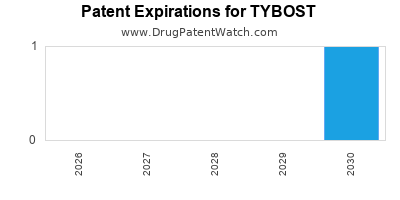

DrugPatentWatch® Estimated Loss of Exclusivity (LOE) Date for TYBOST
Generic Entry Date for TYBOST*:
Constraining patent/regulatory exclusivity:
NEW STRENGTH NDA:
Dosage:
TABLET;ORAL |
*The generic entry opportunity date is the latter of the last compound-claiming patent and the last regulatory exclusivity protection. Many factors can influence early or later generic entry. This date is provided as a rough estimate of generic entry potential and should not be used as an independent source.
Recent Clinical Trials for TYBOST
Identify potential brand extensions & 505(b)(2) entrants
| Sponsor | Phase |
|---|---|
| Maastricht University Medical Center | Phase 4 |
| Pyramid Biosciences | Phase 1 |
| Bristol-Myers Squibb | Phase 1 |
Pharmacology for TYBOST
Paragraph IV (Patent) Challenges for TYBOST
| Tradename | Dosage | Ingredient | Strength | NDA | ANDAs Submitted | Submissiondate |
|---|---|---|---|---|---|---|
| TYBOST | Tablets | cobicistat | 150 mg | 203094 | 1 | 2016-11-14 |
US Patents and Regulatory Information for TYBOST
TYBOST is protected by two US patents and three FDA Regulatory Exclusivities.
Based on analysis by DrugPatentWatch, the earliest date for a generic version of TYBOST is ⤷ Start Trial.
This potential generic entry date is based on NEW STRENGTH.
Generics may enter earlier, or later, based on new patent filings, patent extensions, patent invalidation, early generic licensing, generic entry preferences, and other factors.
| Applicant | Tradename | Generic Name | Dosage | NDA | Approval Date | TE | Type | RLD | RS | Patent No. | Patent Expiration | Product | Substance | Delist Req. | Exclusivity Expiration |
|---|---|---|---|---|---|---|---|---|---|---|---|---|---|---|---|
| Gilead Sciences Inc | TYBOST | cobicistat | TABLET;ORAL | 203094-002 | Jun 20, 2025 | DISCN | Yes | No | ⤷ Start Trial | ⤷ Start Trial | Y | ⤷ Start Trial | |||
| Gilead Sciences Inc | TYBOST | cobicistat | TABLET;ORAL | 203094-001 | Sep 24, 2014 | DISCN | Yes | No | ⤷ Start Trial | ⤷ Start Trial | ⤷ Start Trial | ||||
| Gilead Sciences Inc | TYBOST | cobicistat | TABLET;ORAL | 203094-001 | Sep 24, 2014 | DISCN | Yes | No | ⤷ Start Trial | ⤷ Start Trial | Y | ⤷ Start Trial | |||
| Gilead Sciences Inc | TYBOST | cobicistat | TABLET;ORAL | 203094-002 | Jun 20, 2025 | DISCN | Yes | No | ⤷ Start Trial | ⤷ Start Trial | Y | ⤷ Start Trial | |||
| Gilead Sciences Inc | TYBOST | cobicistat | TABLET;ORAL | 203094-002 | Jun 20, 2025 | DISCN | Yes | No | ⤷ Start Trial | ⤷ Start Trial | ⤷ Start Trial | ||||
| >Applicant | >Tradename | >Generic Name | >Dosage | >NDA | >Approval Date | >TE | >Type | >RLD | >RS | >Patent No. | >Patent Expiration | >Product | >Substance | >Delist Req. | >Exclusivity Expiration |
EU/EMA Drug Approvals for TYBOST
| Company | Drugname | Inn | Product Number / Indication | Status | Generic | Biosimilar | Orphan | Marketing Authorisation | Marketing Refusal |
|---|---|---|---|---|---|---|---|---|---|
| Gilead Sciences Ireland UC | Tybost | cobicistat | EMEA/H/C/002572Tybost is indicated as a pharmacokinetic enhancer of atazanavir 300 mg once daily or darunavir 800 mg once daily as part of antiretroviral combination therapy in human immunodeficiency virus-1 (HIV-1) infected adults and adolescents aged 12 years and older:weighing at least 35 kg co‑administered with atazanavir orweighing at least 40 kg co‑administered with darunavir. | Authorised | no | no | no | 2013-09-19 | |
| >Company | >Drugname | >Inn | >Product Number / Indication | >Status | >Generic | >Biosimilar | >Orphan | >Marketing Authorisation | >Marketing Refusal |
International Patents for TYBOST
When does loss-of-exclusivity occur for TYBOST?
Based on analysis by DrugPatentWatch, the following patents block generic entry in the countries listed below:
African Regional IP Organization (ARIPO)
Patent: 89
Estimated Expiration: ⤷ Start Trial
Patent: 50
Estimated Expiration: ⤷ Start Trial
Argentina
Patent: 5369
Estimated Expiration: ⤷ Start Trial
Australia
Patent: 09242451
Estimated Expiration: ⤷ Start Trial
Patent: 10210598
Estimated Expiration: ⤷ Start Trial
Patent: 14221210
Estimated Expiration: ⤷ Start Trial
Patent: 15200637
Estimated Expiration: ⤷ Start Trial
Patent: 16250470
Estimated Expiration: ⤷ Start Trial
Patent: 17201473
Estimated Expiration: ⤷ Start Trial
Patent: 18267573
Estimated Expiration: ⤷ Start Trial
Brazil
Patent: 0911871
Estimated Expiration: ⤷ Start Trial
Patent: 1008664
Estimated Expiration: ⤷ Start Trial
Canada
Patent: 20856
Estimated Expiration: ⤷ Start Trial
Patent: 50521
Estimated Expiration: ⤷ Start Trial
Chile
Patent: 11001885
Estimated Expiration: ⤷ Start Trial
China
Patent: 2123700
Estimated Expiration: ⤷ Start Trial
Patent: 2307573
Estimated Expiration: ⤷ Start Trial
Patent: 3479584
Estimated Expiration: ⤷ Start Trial
Patent: 4940937
Estimated Expiration: ⤷ Start Trial
Colombia
Patent: 21225
Estimated Expiration: ⤷ Start Trial
Patent: 00187
Estimated Expiration: ⤷ Start Trial
Croatia
Patent: 0151009
Estimated Expiration: ⤷ Start Trial
Patent: 0151357
Estimated Expiration: ⤷ Start Trial
Cyprus
Patent: 16852
Estimated Expiration: ⤷ Start Trial
Patent: 17067
Estimated Expiration: ⤷ Start Trial
Denmark
Patent: 96633
Estimated Expiration: ⤷ Start Trial
Patent: 93485
Estimated Expiration: ⤷ Start Trial
Ecuador
Patent: 10010636
Estimated Expiration: ⤷ Start Trial
Patent: 11011307
Estimated Expiration: ⤷ Start Trial
Eurasian Patent Organization
Patent: 1313
Estimated Expiration: ⤷ Start Trial
Patent: 2950
Estimated Expiration: ⤷ Start Trial
Patent: 0123
Estimated Expiration: ⤷ Start Trial
Patent: 1071173
Estimated Expiration: ⤷ Start Trial
Patent: 1190125
Estimated Expiration: ⤷ Start Trial
Patent: 1491658
Estimated Expiration: ⤷ Start Trial
Patent: 1591353
Estimated Expiration: ⤷ Start Trial
European Patent Office
Patent: 96633
Estimated Expiration: ⤷ Start Trial
Patent: 93485
Estimated Expiration: ⤷ Start Trial
Patent: 06032
Estimated Expiration: ⤷ Start Trial
Hong Kong
Patent: 53670
Estimated Expiration: ⤷ Start Trial
Patent: 64737
Estimated Expiration: ⤷ Start Trial
Patent: 15679
Estimated Expiration: ⤷ Start Trial
Hungary
Patent: 25822
Estimated Expiration: ⤷ Start Trial
Patent: 26380
Estimated Expiration: ⤷ Start Trial
Israel
Patent: 8614
Estimated Expiration: ⤷ Start Trial
Patent: 4227
Estimated Expiration: ⤷ Start Trial
Japan
Patent: 11242
Estimated Expiration: ⤷ Start Trial
Patent: 22213
Estimated Expiration: ⤷ Start Trial
Patent: 11927
Estimated Expiration: ⤷ Start Trial
Patent: 25171
Estimated Expiration: ⤷ Start Trial
Patent: 11522790
Estimated Expiration: ⤷ Start Trial
Patent: 12517432
Estimated Expiration: ⤷ Start Trial
Patent: 14012741
Estimated Expiration: ⤷ Start Trial
Patent: 14221845
Estimated Expiration: ⤷ Start Trial
Mexico
Patent: 2377
Estimated Expiration: ⤷ Start Trial
Patent: 10011963
Estimated Expiration: ⤷ Start Trial
Patent: 11008289
Estimated Expiration: ⤷ Start Trial
New Zealand
Patent: 8978
Estimated Expiration: ⤷ Start Trial
Patent: 4214
Patent: TABLETS COMPRISING COBICISTAT, ELVITEGRAVIR, EMTRICITABINE AND TENOFOVIR DISOPROXIL FUMARATE FOR COMBINATION THERAPY
Estimated Expiration: ⤷ Start Trial
Peru
Patent: 110994
Patent: COMPRIMIDOS ANTIVIRALES QUE COMPRENDEN ELVITEGRAVIR, EMTRICITABINA, DISOPROXIL FUMARATO DE TENOFOVIR Y UN DERIVADO DE TIAZOL
Estimated Expiration: ⤷ Start Trial
Poland
Patent: 96633
Estimated Expiration: ⤷ Start Trial
Patent: 93485
Estimated Expiration: ⤷ Start Trial
Portugal
Patent: 96633
Estimated Expiration: ⤷ Start Trial
Patent: 93485
Estimated Expiration: ⤷ Start Trial
San Marino
Patent: 01500266
Estimated Expiration: ⤷ Start Trial
Singapore
Patent: 201609006W
Patent: THE USE OF SOLID CARRIER PARTICLES TO IMPROVE THE PROCESSABILITY OF A PHARMACEUTICAL AGENT
Estimated Expiration: ⤷ Start Trial
Patent: 201706215U
Patent: Tablets for combination therapy
Estimated Expiration: ⤷ Start Trial
Patent: 3544
Patent: TABLETS FOR COMBINATION THERAPY
Estimated Expiration: ⤷ Start Trial
Patent: 0618
Patent: THE USE OF SOLID CARRIER PARTICLES TO IMPROVE THE PROCESSABILITY OF A PHARMACEUTICAL AGENT
Estimated Expiration: ⤷ Start Trial
Patent: 14007744
Patent: TABLETS FOR COMBINATION THERAPY
Estimated Expiration: ⤷ Start Trial
Slovenia
Patent: 96633
Estimated Expiration: ⤷ Start Trial
Patent: 93485
Estimated Expiration: ⤷ Start Trial
South Africa
Patent: 1008007
Patent: THE USE OF SOLID CARRIER PARTICLES TO IMPROVE THE PROCESSABILITY OF A PHARMACEUTICAL AGENT
Estimated Expiration: ⤷ Start Trial
South Korea
Patent: 1645759
Estimated Expiration: ⤷ Start Trial
Patent: 1659971
Estimated Expiration: ⤷ Start Trial
Patent: 1738325
Estimated Expiration: ⤷ Start Trial
Patent: 1784647
Estimated Expiration: ⤷ Start Trial
Patent: 110015581
Estimated Expiration: ⤷ Start Trial
Patent: 110122729
Estimated Expiration: ⤷ Start Trial
Patent: 160093100
Estimated Expiration: ⤷ Start Trial
Patent: 160114728
Estimated Expiration: ⤷ Start Trial
Spain
Patent: 48886
Estimated Expiration: ⤷ Start Trial
Patent: 53897
Estimated Expiration: ⤷ Start Trial
Taiwan
Patent: 1040142
Patent: Tablets for combination therapy
Estimated Expiration: ⤷ Start Trial
Patent: 44367
Estimated Expiration: ⤷ Start Trial
Ukraine
Patent: 1193
Patent: ЗАСТОСУВАННЯ ЧАСТИНОК ТВЕРДОГО НОСІЯ ДЛЯ ПОЛІПШЕННЯ ТЕХНОЛОГІЧНИХ ХАРАКТЕРИСТИК ФАРМАЦЕВТИЧНОГО АГЕНТА (THE USE OF SOLID CARRIER PARTICLES TO IMPROVE THE PROCESSABILITY OF A PHARMACEUTICAL AGENT)
Estimated Expiration: ⤷ Start Trial
Patent: 3224
Patent: ТАБЛЕТКИ ДЛЯ КОМБІНОВАНОЇ ТЕРАПІЇ (Normal;heading 1;heading 2;heading 3;TABLETS FOR COMBINATION THERAPY)
Estimated Expiration: ⤷ Start Trial
Uruguay
Patent: 424
Patent: COMPRIMIDOS CONTENIENDO ELIVITEGRAVIR PARA TRATAMIENTO DE INFECCIONES VIRALES
Estimated Expiration: ⤷ Start Trial
Generics may enter earlier, or later, based on new patent filings, patent extensions, patent invalidation, early generic licensing, generic entry preferences, and other factors.
See the table below for additional patents covering TYBOST around the world.
| Country | Patent Number | Title | Estimated Expiration |
|---|---|---|---|
| African Regional IP Organization (ARIPO) | 3089 | ⤷ Start Trial | |
| African Regional IP Organization (ARIPO) | 3250 | ⤷ Start Trial | |
| Argentina | 075369 | ⤷ Start Trial | |
| Australia | 2009242451 | ⤷ Start Trial | |
| Australia | 2010210598 | ⤷ Start Trial | |
| >Country | >Patent Number | >Title | >Estimated Expiration |
Supplementary Protection Certificates for TYBOST
| Patent Number | Supplementary Protection Certificate | SPC Country | SPC Expiration | SPC Description |
|---|---|---|---|---|
| 2049506 | CA 2015 00060 | Denmark | ⤷ Start Trial | PRODUCT NAME: COBICISTAT ELLER ET FARMACEUTISK ACCEPTABELT SALT DERAF; REG. NO/DATE: EU/1/13/830/001-002 20130527 |
| 2049506 | PA2015040 | Lithuania | ⤷ Start Trial | PRODUCT NAME: COBICISTATUM; REGISTRATION NO/DATE: EU/1/13/830/001 - 002 20130524 |
| 2049506 | 92864 | Luxembourg | ⤷ Start Trial | PRODUCT NAME: COBICISTAT OU UN DE SES SELS PHARMACEUTIQUEMENT ACCEPTABLES; AUTHORISATION NUMBER AND DATE: EU/1/13/830/001-002 20130527 |
| 2049506 | 15C0078 | France | ⤷ Start Trial | PRODUCT NAME: COBICISTAT OU UN SEL PHARMACEUTIQUEMENT ACCEPTABLE DE COBICISTAT; REGISTRATION NO/DATE: EU/1/13/830/001-002 20130527 |
| 2049506 | 300780 | Netherlands | ⤷ Start Trial | PRODUCT NAME: COBICISTAT OF EEN FARMACEUTISCH AANVAARDBAAR ZOUT DAARVAN; REGISTRATION NO/DATE: EU/1/13/830/001-002 20130527 |
| >Patent Number | >Supplementary Protection Certificate | >SPC Country | >SPC Expiration | >SPC Description |
More… ↓
DrugChatter Q&A for TYBOST
Make Better Decisions: Try a trial or see plans & pricing
Drugs may be covered by multiple patents or regulatory protections. All trademarks and applicant names are the property of their respective owners or licensors. Although great care is taken in the proper and correct provision of this service, thinkBiotech LLC does not accept any responsibility for possible consequences of errors or omissions in the provided data. The data presented herein is for information purposes only. There is no warranty that the data contained herein is error free. We do not provide individual investment advice. This service is not registered with any financial regulatory agency. The information we publish is educational only and based on our opinions plus our models. By using DrugPatentWatch you acknowledge that we do not provide personalized recommendations or advice. thinkBiotech performs no independent verification of facts as provided by public sources nor are attempts made to provide legal or investing advice. Any reliance on data provided herein is done solely at the discretion of the user. Users of this service are advised to seek professional advice and independent confirmation before considering acting on any of the provided information. thinkBiotech LLC reserves the right to amend, extend or withdraw any part or all of the offered service without notice.
ISSN: 2162-2639

Privacy and Cookies
Terms & Conditions
Site Map
DrugPatentWatch Alternatives
LOE / Major Patent Expirations 2026 - 2027
NCE-1 Patent Challenge Dates 2026 - 2027
Friedman, Yali. "DrugPatentWatch" DrugPatentWatch, thinkBiotech, 2026, www.DrugPatentWatch.com.
See Primary Research Papers Citing DrugPatentWatch