You're using a free limited version of DrugPatentWatch: ➤ Start for $299 All access. No Commitment.

Last Updated: December 28, 2025

TREXIMET Drug Patent Profile


✉ Email this page to a colleague

« Back to Dashboard


Which patents cover Treximet, and what generic alternatives are available?

Treximet is a drug marketed by Currax and is included in one NDA. There is one patent protecting this drug and one Paragraph IV challenge.

This drug has sixteen patent family members in fourteen countries.

The generic ingredient in TREXIMET is naproxen sodium; sumatriptan succinate. There are forty-two drug master file entries for this compound. Five suppliers are listed for this compound. Additional details are available on the naproxen sodium; sumatriptan succinate profile page.

DrugPatentWatch® Generic Entry Outlook for Treximet

There have been three patent litigation cases involving the patents protecting this drug, indicating strong interest in generic launch. Recent data indicate that 63% of patent challenges are decided in favor of the generic patent challenger and that 54% of successful patent challengers promptly launch generic drugs.

Indicators of Generic Entry

< Available with Subscription >

  Get Started Free

AI Deep Research
Questions you can ask:
  • What is the 5 year forecast for TREXIMET?
  • What are the global sales for TREXIMET?
  • What is Average Wholesale Price for TREXIMET?
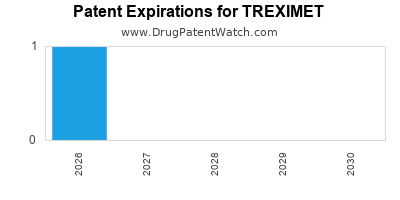
Drug patent expirations by year for TREXIMET
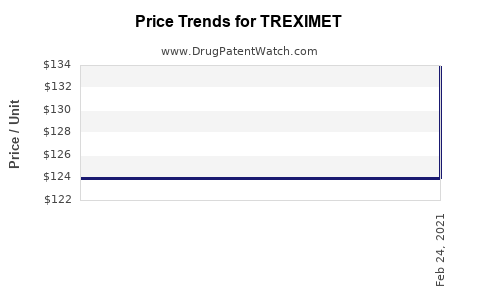
Drug Prices for TREXIMET

See drug prices for TREXIMET

Recent Clinical Trials for TREXIMET

Identify potential brand extensions & 505(b)(2) entrants

SponsorPhase
Dent Neurologic InstituteN/A
Premiere Research InstitutePhase 2/Phase 3
GlaxoSmithKlinePhase 2/Phase 3

See all TREXIMET clinical trials

Paragraph IV (Patent) Challenges for TREXIMET
Tradename Dosage Ingredient Strength NDA ANDAs Submitted Submissiondate
TREXIMET Tablets naproxen sodium; sumatriptan succinate 500 mg/85 mg 021926 1 2008-07-23

US Patents and Regulatory Information for TREXIMET

TREXIMET is protected by one US patents.

Applicant Tradename Generic Name Dosage NDA Approval Date TE Type RLD RS Patent No. Patent Expiration Product Substance Delist Req. Exclusivity Expiration
Currax TREXIMET naproxen sodium; sumatriptan succinate TABLET;ORAL 021926-002 May 14, 2015 DISCN Yes No 7,332,183*PED ⤷  Get Started Free Y ⤷  Get Started Free
Currax TREXIMET naproxen sodium; sumatriptan succinate TABLET;ORAL 021926-001 Apr 15, 2008 AB RX Yes Yes 7,332,183*PED ⤷  Get Started Free Y ⤷  Get Started Free
>Applicant >Tradename >Generic Name >Dosage >NDA >Approval Date >TE >Type >RLD >RS >Patent No. >Patent Expiration >Product >Substance >Delist Req. >Exclusivity Expiration

Expired US Patents for TREXIMET

International Patents for TREXIMET

See the table below for patents covering TREXIMET around the world.

Country Patent Number Title Estimated Expiration
Canada 1241004 DERIVE DE L'INDOLE (INDOLE DERIVATIVE) ⤷  Get Started Free
France 2568571 DERIVE D'INDOLE ⤷  Get Started Free
Kenya 3858 AN INDOLE DERIVATIVE ⤷  Get Started Free
Hungary 201738 PROCESS FOR PRODUCING N-METHYL-3-[2-(DIMETHYL-AMINO)-ETHIL]-1H-INDOL-5-METANSULFONAMID DERIVATIVES AND PHARMACEUTICAL PREPARATIONS CONTAINING THE COMPOUNDS ⤷  Get Started Free
Norway 853046 ⤷  Get Started Free
Austria 286393 ⤷  Get Started Free
Denmark 351185 ⤷  Get Started Free
>Country >Patent Number >Title >Estimated Expiration

Supplementary Protection Certificates for TREXIMET

Patent Number Supplementary Protection Certificate SPC Country SPC Expiration SPC Description
0984957 PA2011005,C0984957 Lithuania ⤷  Get Started Free PRODUCT NAME: NAPROXENUM + ESOMEPRAZOLUM; REGISTRATION NO/DATE: LT/1/10/2302/001-LT/1/10/2302/012 20110126
1411900 C300481 Netherlands ⤷  Get Started Free PRODUCT NAME: NAPROXEN EN ESOMEPRAZOL; NAT. REGISTRATION NO/DATE: RVG 106235 20101118; FIRST REGISTRATION: PL 17901/0263-001 20101105
1411900 1190013-1 Sweden ⤷  Get Started Free PRODUCT NAME: NAPROXEN OCH ESOMEPRAZOL; NAT. REG. NO/DATE: MTNR 43248 20101203; FIRST REG.: GB PL 17901/0263 20101105
1411900 18/2011 Austria ⤷  Get Started Free PRODUCT NAME: NAPROXEN UND ESOMEPRAZOL SOWIE DEREN PHARMAZEUTISCH ANNEHMBARE SALZE; NAT. REGISTRATION NO/DATE: 1-29937 20110105; FIRST REGISTRATION: GB PL 17901/0263-0001 20101105
0984957 PA2011005 Lithuania ⤷  Get Started Free PRODUCT NAME: NAPROXENUM + ESOMEPRAZOLUM; REGISTRATION NO/DATE: LT/1/10/2302/001-LT/1/10/2302/012 20110126
0984957 122012000051 Germany ⤷  Get Started Free PRODUCT NAME: KOMBINATIONSPRODUKT UMFASSEND NAPROXEN UND ESOMEPRAZOL-MAGNESIUM-TRIHYDRAT; NAT. REGISTRATION NO/DATE: 85145.00.00 20120202; FIRST REGISTRATION: GROSSBRITANNIEN PL 17901/0263 - 0001 20101105
1411900 2011C/016 Belgium ⤷  Get Started Free PRODUCT NAME: NAPROXENE ET ESOMEPRAZOLE (SOUS LA FORME D'ESOMEPRAZOLE MAGNESIUM TRIHYDRATE); AUTHORISATION NUMBER AND DATE: BE382505 20101214
>Patent Number >Supplementary Protection Certificate >SPC Country >SPC Expiration >SPC Description

Market Dynamics and Financial Trajectory for TREXIMET

Last updated: July 28, 2025

Introduction

TREXIMET, a combination medication comprising sumatriptan and naproxen, is primarily prescribed for acute migraine treatment. Since its approval by the FDA in 2002, TREXIMET has established a distinctive position within the migraine therapeutics market. This analysis explores the evolving market dynamics and financial trajectory of TREXIMET, considering competitive landscape, regulatory factors, healthcare trends, and commercial performance to inform stakeholders' strategic decisions.

Market Overview

Migraine represents a significant global health burden, estimated to affect over 1 billion individuals worldwide, with the globally prevalent population expected to grow annually. The United States alone reports approximately 39 million adults suffering from migraines, translating into substantial market potential for effective acute treatments like TREXIMET.

The migraine medication market has historically been characterized by a diversification of drug classes, including triptans, gepants, ditans, NSAIDs, and combination therapies. TREXIMET distinguishes itself through its dual mechanism—anti-migraine vasoconstriction via sumatriptan and anti-inflammatory effects via naproxen—offering rapid symptom relief.

Market Dynamics

Competitive Landscape

Historically, TREXIMET has faced mounting competition from various prescription and over-the-counter (OTC) treatments. Triptans (e.g., sumatriptan monotherapy), NSAIDs, and newer agents like gepants (ubrogepant, rimegepant) and ditans (lasmiditan) serve as alternatives. The emergence of gepants, with improved safety profiles and oral administration, challenges TREXIMET’s market share, especially among patients with contraindications to triptans.

Brand differentiation remains limited as generics of sumatriptan and naproxen are widely available, exerting downward pressure on TREXIMET’s pricing. Pharmaceutical companies are also exploring novel formulations, such as nasal sprays and injectables, to enhance convenience and efficacy, further intensifying competition.

Regulatory and Reimbursement Factors

The regulatory landscape strongly influences TREXIMET’s market trajectory. While the initial FDA approval solidified its market entry, recent regulatory shifts favor newer agents demonstrating superior safety and tolerability profiles. Reimbursement policies and formulary placements significantly impact prescription patterns; higher copays and restrictive formularies diminish TREXIMET’s accessibility, especially against generics and cheaper alternatives.

Healthcare Trends

A key trend propelling TREXIMET’s demand is the increasing awareness of early intervention in migraine management, emphasizing the need for fast-acting treatments. Patient preferences shift towards oral, combination therapies that simplify dosing. However, concerns over cardiovascular risks associated with triptans may deter some clinicians and patients from using TREXIMET, especially in populations with comorbid cardiovascular disease.

Market Penetration and Adoption

Despite competition, TREXIMET remains a viable option owing to its proven efficacy and rapid relief. Its prescribing persists primarily in established patient populations and areas with limited access to newer agents. Nonetheless, market penetration is gradually plateauing as newer medications enter the scene, necessitating strategic repositioning.

Financial Trajectory

Sales Performance

Over the past decade, TREXIMET’s global sales trajectory has experienced fluctuations influenced by patent expirations, evolving competitive dynamics, and healthcare policies. While initially a high-revenue product, sales growth has decelerated, and in some regions, declined due to the proliferation of alternative therapies.

In the US, TREXIMET’s peak sales reached approximately USD 200 million annually; recent figures indicate a downward trend nearing USD 120-150 million, partly driven by increased availability of generics and declining prescriptions among younger populations seeking newer options.

Patent and Market Exclusivity

The combination patent for TREXIMET has long expired, and generic versions significantly eroded the brand’s market exclusivity. As patent challenges or generic launches become imminent or happen, revenue streams are expected to diminish further, compelling the originating manufacturer to innovate or reposition.

R&D and Pipeline Developments

To sustain growth, pharmaceutical companies are investing in adjunct therapies, reformulations, and targeted delivery systems. Although TREXIMET itself faces limited development prospects, the broader landscape of migraine treatment industry investments indicates a focus on novel agents with improved safety, rapid onset, and convenience, which can indirectly influence TREXIMET’s market share.

Market Forecast

Given current trends, the global migraine drug market is projected to grow at a compound annual growth rate (CAGR) of approximately 4-6% over the next five years, driven by increasing prevalence and healthcare integration. However, TREXIMET's share within this expanding market is expected to decrease modestly due to competition and patent expiration effects, with projected revenues declining by approximately 10-20% over the next five years unless strategic repositioning occurs.

The potential for combination therapies or reformulations to extend lifecycle profits exists; yet, the prevailing shift towards newer agents suggests that TREXIMET’s financial trajectory will flatten or decline unless significant innovation or market expansion is achieved.

Factors Impacting Long-Term Sustainability

  1. Emergence of Newer Therapeutics: Gepants and ditans are gaining FDA approval and widespread acceptance, offering alternatives with better safety profiles for certain patient subsets. Their rapid adoption threatens TREXIMET’s market dominance.

  2. Pricing and Generic Competition: The expiration of key patents results in aggressive generic entry, reducing prices and margins for TREXIMET.

  3. Regulatory and Clinical Shift: Increasing emphasis on cardiovascular safety profiles influences prescribing behaviors away from triptan-based combination therapies.

  4. Patient Preferences: Growing demand for oral, fast-acting, and non-contraindicating treatments restrict TREXIMET's appeal in certain populations.

Conclusion

TREXIMET remains a relevant, effective intervention for acute migraine episodes, but its market dynamics face mounting challenges. The compound's mature status, expiration of patents, and rise of innovative therapies collectively suggest an impending decline in sales unless accompanied by strategic repositioning or innovation.

Pharmaceutical stakeholders should focus on leveraging its established efficacy while exploring reformulations or combination strategies that align with emerging healthcare trends. The future of TREXIMET hinges on adaptation within a rapidly evolving migraine therapeutic landscape.


Key Takeaways

  • TREXIMET's market presence has plateaued due to patent expirations, generic competition, and emerging alternatives.
  • The global migraine market is expanding, but TREXIMET’s share will likely decline unless repositioned or innovated.
  • New agents like gepants and ditans challenge the safety and convenience advantages of TREXIMET, impacting sales and market penetration.
  • Strategic focus should include exploring reformulations, broader patient targeting, and incorporating digital health solutions.
  • Stakeholders must anticipate regulatory trends emphasizing safety profiles to inform future product development and marketing strategies.

FAQs

1. How does TREXIMET compare to newer migraine therapies like gepants?
Gepants, such as ubrogepant and rimegepant, offer comparable efficacy with improved cardiovascular safety profiles and fewer contraindications. While TREXIMET provides rapid relief, newer agents address safety concerns, especially for patients with cardiovascular risks.

2. What is the impact of patent expirations on TREXIMET’s sales?
Patent expirations facilitate generic entry, significantly reducing prices and margins, leading to declining revenue for the branded product and increased market share for generics.

3. Are there ongoing developments to extend TREXIMET’s market lifespan?
Typically, companies pursue reformulations, combination strategies, or digital health integrations. However, specific efforts for TREXIMET are limited, with focus shifting toward newer treatments.

4. How might healthcare policy influence TREXIMET’s future?
Policy shifts favoring safer, cost-effective therapies, and stricter guidelines around triptan use for high cardiovascular risk patients, could reduce TREXIMET’s prescriptions, impacting its financial trajectory.

5. What strategies can pharmaceutical companies adopt to maintain relevance for TREXIMET?
Innovative reformulations, targeted marketing to specific patient groups, enhancing clinical evidence, and exploring combination therapies are key strategies to extend product viability.


References

[1] Global Burden of Disease Study. (2021). Migraine prevalence estimates and impacts.
[2] U.S. Food and Drug Administration. (2002). FDA approval of TREXIMET.
[3] MarketResearch.com. (2022). Migraine therapeutics market forecast.
[4] IMS Health. (2021). Prescription trends in migraine medications.
[5] FDA. (2023). Approval and safety updates on gepants and ditans.

More… ↓

⤷  Get Started Free

Make Better Decisions: Try a trial or see plans & pricing

Drugs may be covered by multiple patents or regulatory protections. All trademarks and applicant names are the property of their respective owners or licensors. Although great care is taken in the proper and correct provision of this service, thinkBiotech LLC does not accept any responsibility for possible consequences of errors or omissions in the provided data. The data presented herein is for information purposes only. There is no warranty that the data contained herein is error free. We do not provide individual investment advice. This service is not registered with any financial regulatory agency. The information we publish is educational only and based on our opinions plus our models. By using DrugPatentWatch you acknowledge that we do not provide personalized recommendations or advice. thinkBiotech performs no independent verification of facts as provided by public sources nor are attempts made to provide legal or investing advice. Any reliance on data provided herein is done solely at the discretion of the user. Users of this service are advised to seek professional advice and independent confirmation before considering acting on any of the provided information. thinkBiotech LLC reserves the right to amend, extend or withdraw any part or all of the offered service without notice.