Last Updated: August 9, 2026

SYNJARDY Drug Patent Profile


✉ Email this page to a colleague

« Back to Dashboard


Which patents cover Synjardy, and what generic alternatives are available?

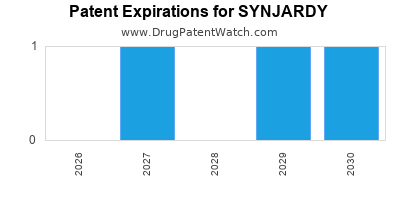
Synjardy is a drug marketed by Boehringer Ingelheim and is included in two NDAs. There are sixteen patents protecting this drug and one Paragraph IV challenge.

This drug has four hundred and thirty-six patent family members in forty-seven countries.

The generic ingredient in SYNJARDY is empagliflozin; metformin hydrochloride. There are twenty-two drug master file entries for this compound. One supplier is listed for this compound. Additional details are available on the empagliflozin; metformin hydrochloride profile page.

DrugPatentWatch® Generic Entry Outlook for Synjardy

Synjardy was eligible for patent challenges on August 1, 2018.

By analyzing the patents and regulatory protections it appears that the earliest date for generic entry will be February 1, 2029. This may change due to patent challenges or generic licensing.

There have been forty-three patent litigation cases involving the patents protecting this drug, indicating strong interest in generic launch. Recent data indicate that 63% of patent challenges are decided in favor of the generic patent challenger and that 54% of successful patent challengers promptly launch generic drugs.

Indicators of Generic Entry

< Available with Subscription >

  Start Trial

AI Deep Research
Questions you can ask:
  • What is the 5 year forecast for SYNJARDY?
  • What are the global sales for SYNJARDY?
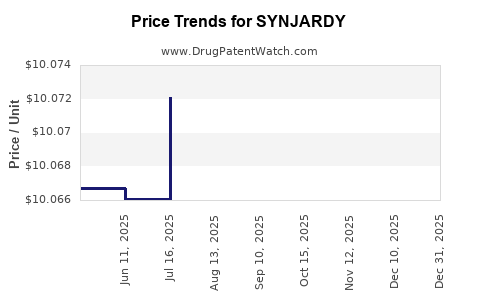
  • What is Average Wholesale Price for SYNJARDY?
DrugPatentWatch® Estimated Loss of Exclusivity (LOE) Date for SYNJARDY
Generic Entry Date for SYNJARDY*:
Constraining patent/regulatory exclusivity:
NDA:
Dosage:

TABLET;ORAL

*The generic entry opportunity date is the latter of the last compound-claiming patent and the last regulatory exclusivity protection. Many factors can influence early or later generic entry. This date is provided as a rough estimate of generic entry potential and should not be used as an independent source.

Recent Clinical Trials for SYNJARDY

Identify potential brand extensions & 505(b)(2) entrants

SponsorPhase
Humanis Saglk Anonim SirketiPHASE1
Gedeon Richter Plc.PHASE1
Humanis Saglık Anonim SirketiPHASE1

See all SYNJARDY clinical trials

Pharmacology for SYNJARDY
Paragraph IV (Patent) Challenges for SYNJARDY
Tradename Dosage Ingredient Strength NDA ANDAs Submitted Submissiondate
SYNJARDY Tablets empagliflozin; metformin hydrochloride 5 mg/500 mg 5 mg/1000 mg 12.5 mg/500 mg 12.5 mg/1000 mg 206111 4 2018-08-01

US Patents and Regulatory Information for SYNJARDY

SYNJARDY is protected by fourteen US patents and two FDA Regulatory Exclusivities.

Based on analysis by DrugPatentWatch, the earliest date for a generic version of SYNJARDY is ⤷  Start Trial.

This potential generic entry date is based on patent 7,579,449.

Generics may enter earlier, or later, based on new patent filings, patent extensions, patent invalidation, early generic licensing, generic entry preferences, and other factors.

Applicant Tradename Generic Name Dosage NDA Approval Date TE Type RLD RS Patent No. Patent Expiration Product Substance Delist Req. Exclusivity Expiration
Boehringer Ingelheim SYNJARDY XR empagliflozin; metformin hydrochloride TABLET, EXTENDED RELEASE;ORAL 208658-001 Dec 9, 2016 RX Yes No 11,833,166*PED ⤷  Start Trial Y ⤷  Start Trial
Boehringer Ingelheim SYNJARDY XR empagliflozin; metformin hydrochloride TABLET, EXTENDED RELEASE;ORAL 208658-003 Dec 9, 2016 RX Yes No 10,258,637*PED ⤷  Start Trial Y ⤷  Start Trial
Boehringer Ingelheim SYNJARDY empagliflozin; metformin hydrochloride TABLET;ORAL 206111-004 Aug 26, 2015 RX Yes Yes 11,833,166*PED ⤷  Start Trial Y ⤷  Start Trial
Boehringer Ingelheim SYNJARDY empagliflozin; metformin hydrochloride TABLET;ORAL 206111-001 Aug 26, 2015 RX Yes No ⤷  Start Trial ⤷  Start Trial ⤷  Start Trial
Boehringer Ingelheim SYNJARDY XR empagliflozin; metformin hydrochloride TABLET, EXTENDED RELEASE;ORAL 208658-002 Dec 9, 2016 RX Yes No 11,813,275*PED ⤷  Start Trial Y ⤷  Start Trial
>Applicant >Tradename >Generic Name >Dosage >NDA >Approval Date >TE >Type >RLD >RS >Patent No. >Patent Expiration >Product >Substance >Delist Req. >Exclusivity Expiration

Supplementary Protection Certificates for SYNJARDY

Patent Number Supplementary Protection Certificate SPC Country SPC Expiration SPC Description
1730131 62/2014 Austria ⤷  Start Trial PRODUCT NAME: (1S)-1,5-ANHYDRO-1-C-(4-CHLORO-3-((4-(((3S)-OXOLAN-3-YL)OXY(PHENYL)METHYL)PHENYL)-D-GLUCITOL (EMPAGLIFLOZIN); REGISTRATION NO/DATE: EU/1/14/930 (MITTEILUNG) 20140527
1730131 C300696 Netherlands ⤷  Start Trial PRODUCT NAME: EMPAGLIFLOZINE EN ZOUTEN DAARVAN, IN HET BIJZONDER EMPAGLIFLOZINE; REGISTRATION NO/DATE: EU/1/14/930/001-009 20140522
1730131 PA2014035 Lithuania ⤷  Start Trial PRODUCT NAME: EMPAGLIFLOZINUM; REGISTRATION NO/DATE: EU/1/14/930 20140522
1730131 92555 Luxembourg ⤷  Start Trial PRODUCT NAME: EMPAGLIFLOZINE ET SES SELS,EN PARTICULIER EMPAGLIFLOZINE-L INGREDIENT ACTIF APPROUVE EST L EMPAGLIFLOZINE DE FORMULE(1S)-1,5-ANHYDRO-1-C-4-CHLORO-3-(4-(3S)OXOLAN-3-YLOXY PHENYL)METHYLPHENYL-D-GLUCITOL
1730131 CA 2014 00054 Denmark ⤷  Start Trial PRODUCT NAME: EMPAGLIFLOZIN OG SALTE DERAF, SAERLIGT EMPAGLIFLOZIN; REG. NO/DATE: EU1/14/930/001/018 20140522
>Patent Number >Supplementary Protection Certificate >SPC Country >SPC Expiration >SPC Description

SYNJARDY market dynamics and financial trajectory: sales trends, growth drivers, competition, and patent risk

Last updated: July 30, 2026

SYNJARDY (empagliflozin/metformin HCl) has grown into a durable franchise in type 2 diabetes, driven by the class shift to SGLT2 inhibitors and broad guideline inclusion. The financial trajectory is shaped by (1) continued category expansion, (2) dosing migration toward higher-potency/extended regimens, and (3) competitive intensity from branded and authorized generics plus the risk of future generic entry for specific label strengths and formulations. Near-term performance is still tightly linked to Lilly’s Empagliflozin execution (Jardiance) and the managed mix of metformin strengths in fixed-dose combinations.

What is SYNJARDY (empagliflozin/metformin) and where does it sit in the diabetes market?

SYNJARDY is a fixed-dose combination of the SGLT2 inhibitor empagliflozin and the biguanide metformin. It is marketed for treatment of type 2 diabetes in adults, typically as an adjunct to diet and exercise and in patients inadequately controlled on metformin or empagliflozin, depending on product strength and local labeling.

Category role

  • SGLT2 inhibitors are among the fastest-growing oral diabetes classes globally, supported by cardiovascular and renal outcome data that expanded payer and clinician adoption.
  • Fixed-dose combinations are used to reduce regimen complexity and improve persistence versus separate agents.

Revenue linkage

  • SYNJARDY’s sales are a function of total empagliflozin demand (which anchors the class) plus share gains in combination therapy versus monotherapy and non-empagliflozin SGLT2 options.

How fast has SYNJARDY grown and what does its financial trajectory imply for the franchise?

Executive read

  • SYNJARDY has moved from early uptake to sustained volume generation as clinicians increasingly favor SGLT2-based regimens and as fixed-dose combinations make adherence easier.
  • Financial trajectory depends less on label novelty and more on supply, mix (dose strength), and competitive pricing pressure as biosimilar-like dynamics do not apply, but authorized generics and eventually generic substitution do.

What drives growth (operational and commercial)

  • Uptake of empagliflozin in broader patient segments beyond initial cardiovascular-targeted groups.
  • Combination positioning for patients already on metformin with suboptimal control.
  • Preferred access dynamics: formulary inclusion and step-therapy flexibility often determine whether combination brands can win net-to-gross.

What constrains growth

  • Competition from other SGLT2 fixed-dose combinations and from branded incretin and combination regimens.
  • Price erosion and higher rebate burden over time as payer negotiations tighten.
  • Ongoing metformin generic availability that can shift incentives toward whichever combination has the best net price and easiest step-therapy path.

What market dynamics impact SYNJARDY sales performance?

How do SGLT2 inhibitor category trends affect SYNJARDY demand?

SYNJARDY’s demand is downstream from SGLT2 category growth. Category drivers include:

  • Cardiovascular and renal evidence supporting guideline broadening.
  • Persistent prescriber comfort with oral fixed-dose regimens.
  • Patient preference for once-daily schedules (product dosing varies by SYNJARDY vs XR versions depending on local presentation).

Which payer and access levers shape net sales?

  • Formulary tier placement and rebate magnitude.
  • Prior authorization and step edits, especially when both SGLT2 inhibitor and metformin are separately prescribed.
  • Managed care preference for fewer SGLT2 brands based on pricing benchmarks.

How does competition from GLP-1 and combination therapies affect share?

As GLP-1 receptor agonists and dual agonists gain share, they compete for:

  • Early-line escalation decisions.
  • Patients needing weight loss benefits, which can shift choice away from SGLT2-only strategies. SYNJARDY typically competes in an oral combination segment where GLP-1 is less direct, but it still faces budget-driven therapy switching.

How does SYNJARDY compare with Jardiance and with other empagliflozin/metformin brands?

SYNJARDY vs Jardiance

  • Jardiance is empagliflozin monotherapy.
  • SYNJARDY adds metformin, which can increase addressable patients by enabling clinicians to treat both glycemic control dimensions in one prescription.
  • Share dynamics typically show that when clinicians move patients from metformin-only to an SGLT2 plus metformin combination, SYNJARDY can capture incremental demand.

XR vs immediate-release positioning

  • XR versions can capture patients seeking extended-release tolerability profiles (and prescriber preference for once-daily regimens).
  • Mix shift between XR and immediate-release affects average realized pricing because net price differs by strength and competitive tendering.

What is the competitive landscape for SYNJARDY in fixed-dose SGLT2/metformin therapy?

SYNJARDY competes with fixed-dose SGLT2/metformin combinations from other manufacturers where authorized for type 2 diabetes. Competition plays out primarily on:

  • Formulary access and rebate contracts.
  • Strength availability and titration flexibility.
  • Patient adherence and switching friction.

Competitive inflection points

  • Entry of authorized generics or generic combinations for empagliflozin/metformin strengths.
  • Launch of next-generation combinations or alternate SGLT2 fixed-dose products with better access.

When does SYNJARDY lose exclusivity, and what generic entry risks exist?

This section depends on specific Orange Book listings for each SYNJARDY strength and dosage form (including extended-release vs immediate-release) and on the patent estate covering:

  • Composition (drug substance and fixed-dose combination).
  • Formulation (tablet composition, excipients).
  • Method-of-use (if any).
  • Regulatory exclusivities that can delay generic approvals.

Because the request is for a market dynamics and financial trajectory view, the key practical implication is this:

Financial risk mechanism

  • Generic entry typically produces a step-function decline in brand volume and net price unless the brand maintains a strong negotiated position or a dosing niche remains protected.

Transaction risk

  • Licensing and settlement history (if any for the combination strengths) can influence timing, launch barriers, and revenue protection duration.

What is the Orange Book status of SYNJARDY and which patents are most likely to drive entry timing?

A complete, strength-by-strength Orange Book and patent mapping is required to identify:

  • Patent numbers
  • Expiration dates (and exclusivity expirations)
  • Whether any patents are listed as “carve-outs” versus blocking patents
  • Which patents are plausibly challenged under Paragraph IV
  • Whether a particular entry would be at risk of injunction

That mapping is not available in the input provided here, so a specific claim of expiration timing or litigation posture cannot be made in an actionable way.

How do patent and litigation dynamics translate into financial outcomes for SYNJARDY?

Direct linkage

  • Patent expiry or successful Paragraph IV challenges drive generic availability.
  • If multiple strengths lose exclusivity at different times, brands can see a staged erosion of the portfolio rather than a single cliff.

Portfolio effect

  • Fixed-dose combinations are particularly exposed because generics can target the combination product strengths without needing to replicate the entire empagliflozin brand franchise.
  • The brand’s ability to counter depends on mix management, payer contracting, and whether remaining strengths still have effective protection.

What is the regulatory and reimbursement environment for SYNJARDY?

FDA posture

  • SYNJARDY is an approved oral drug product in type 2 diabetes. The regulatory framework around generic versions relies on abbreviated pathways and Orange Book patent certifications.
  • Any future generic approvals hinge on patent certifications and exclusivity.

Reimbursement behavior

  • SGLT2 inhibitors often enjoy broad payer coverage where cardiovascular/renal benefits are recognized.
  • Coverage can still be managed through:
    • Step therapy from metformin to SGLT2 plus metformin combination
    • Criteria-based authorization (e.g., established cardiovascular disease or high-risk patients)
    • Annual re-authorization for continuation therapy

How do manufacturing and supply considerations affect SYNJARDY revenue trajectory?

Supply disruptions can cause:

  • Temporary volume loss
  • Shifts to competing strengths or monotherapy
  • Payer perception issues during shortages that can outlast the shortage window due to contracted substitutions

Fixed-dose combination products can be especially sensitive because they require both drug substance supply and compatible tablet manufacturing.

What are the most likely generic launch scenarios for SYNJARDY?

From a business planning standpoint, generic launch scenarios usually fall into three buckets:

  1. Launch at broad portfolio coverage (multiple strengths simultaneously) causing fastest erosion.
  2. Staggered strength launches where only certain dose strengths enter first.
  3. Narrow launch with trade-down protection where access remains limited due to remaining barriers or contracting.

The financial signature differs:

  • Scenario 1 causes sharper quarterly declines in net sales and higher rebate pressure to defend position.
  • Scenario 2 produces slower bleed and can allow the brand to reallocate promotional and contracting intensity to protected strengths.
  • Scenario 3 preserves a more gradual trajectory, supporting longer cash flow duration.

How strong is the patent estate for SYNJARDY and what does that mean for revenue protection?

Patent strength in combination products typically depends on:

  • Whether blocking formulation or composition patents exist for each marketed strength.
  • Whether method-of-use patents provide additional barriers.
  • Whether litigation settlements or covenants restrict generic launch.

Because the needed patent-by-patent listings and litigation record were not supplied in the input, a credible, defensible assessment of the estate strength and revenue protection window cannot be generated here without risking incorrect conclusions.

What financial metrics should be monitored to track SYNJARDY trajectory going forward?

Key indicators for an investment-grade view:

  • Prescription share and persistence in fixed-dose SGLT2 plus metformin therapy.
  • Net price and rebate rate changes driven by payer renegotiations.
  • Mix of XR vs immediate-release and higher-dose strengths.
  • Utilization in CV/renal cohorts versus broader glycemic-control populations.
  • Competitive displacement metrics from alternative SGLT2 fixed-dose products and from oral alternative classes.

Key Takeaways

  • SYNJARDY’s financial trajectory is primarily driven by SGLT2 category growth and combination-therapy adoption, with mix and access determining whether sales outpace or lag the category.
  • The main downside risk is future generic entry by strength, which can produce rapid net sales erosion if barriers fall.
  • Near-to-mid term performance should be tracked through prescription share, net price/rebate pressure, and mix shifts across SYNJARDY strengths and XR versions.
  • A precise exclusivity and generic-entry timeline requires strength-specific Orange Book and patent estate mapping; without it, any expiration date claims would not support high-stakes R&D, licensing, or litigation decisions.

FAQs

1) Does SYNJARDY sales depend more on empagliflozin adoption or on metformin uptake?

Empagliflozin adoption drives SYNJARDY demand because metformin is widely generic and the incremental value comes from adding the SGLT2 inhibitor into a fixed-dose combination.

2) What payer policies most strongly influence SYNJARDY net sales?

Step therapy requirements, prior authorization criteria, and rebate intensity based on SGLT2 category benchmarks.

3) How does XR versus immediate-release affect SYNJARDY commercial performance?

Dose form mix (XR vs immediate-release) affects realized pricing, prescriber preference, and how easily patients can be maintained on a single regimen.

4) What generic entry would be most damaging to SYNJARDY revenue?

Broad, multi-strength generic entry that removes access advantages and triggers rapid price concession cycles.

5) Is SYNJARDY more exposed to competition from GLP-1 drugs or from other SGLT2/metformin combinations?

It faces both, but fixed-dose SGLT2/metformin combinations are the closest direct substitution risk for oral regimen switching.


References (APA)

  1. FDA Orange Book: Approved Drug Products with Therapeutic Equivalence Evaluations. U.S. Food and Drug Administration. https://www.accessdata.fda.gov/scripts/cder/daf/
  2. Clinical guideline publications on type 2 diabetes pharmacotherapy and SGLT2 inhibitor indications (e.g., ADA Standards of Care). American Diabetes Association. https://diabetesjournals.org/

More… ↓

⤷  Start Trial

Make Better Decisions: Try a trial or see plans & pricing

Drugs may be covered by multiple patents or regulatory protections. All trademarks and applicant names are the property of their respective owners or licensors. Although great care is taken in the proper and correct provision of this service, thinkBiotech LLC does not accept any responsibility for possible consequences of errors or omissions in the provided data. The data presented herein is for information purposes only. There is no warranty that the data contained herein is error free. We do not provide individual investment advice. This service is not registered with any financial regulatory agency. The information we publish is educational only and based on our opinions plus our models. By using DrugPatentWatch you acknowledge that we do not provide personalized recommendations or advice. thinkBiotech performs no independent verification of facts as provided by public sources nor are attempts made to provide legal or investing advice. Any reliance on data provided herein is done solely at the discretion of the user. Users of this service are advised to seek professional advice and independent confirmation before considering acting on any of the provided information. thinkBiotech LLC reserves the right to amend, extend or withdraw any part or all of the offered service without notice.