SKYCLARYS Drug Patent Profile
✉ Email this page to a colleague
Which patents cover Skyclarys, and what generic alternatives are available?
Skyclarys is a drug marketed by Biogen Us and is included in one NDA. There are seven patents protecting this drug.
The generic ingredient in SKYCLARYS is omaveloxolone. There is one drug master file entry for this compound. One supplier is listed for this compound. Additional details are available on the omaveloxolone profile page.
DrugPatentWatch® Generic Entry Outlook for Skyclarys
Skyclarys will be eligible for patent challenges on February 28, 2027. This date may extended up to six months if a pediatric exclusivity extension is applied to the drug's patents.
By analyzing the patents and regulatory protections it appears that the earliest date
for generic entry will be February 28, 2030. This may change due to patent challenges or generic licensing.
Indicators of Generic Entry
AI Deep Research
Questions you can ask:
- What is the 5 year forecast for SKYCLARYS?
- What are the global sales for SKYCLARYS?
- What is Average Wholesale Price for SKYCLARYS?
Summary for SKYCLARYS
| US Patents: | 7 |
| Applicants: | 1 |
| NDAs: | 1 |
| Finished Product Suppliers / Packagers: | 1 |
| Raw Ingredient (Bulk) Api Vendors: | 37 |
| Clinical Trials: | 6 |
| Patent Applications: | 176 |
| Drug Prices: | Drug price information for SKYCLARYS |
| What excipients (inactive ingredients) are in SKYCLARYS? | SKYCLARYS excipients list |
| DailyMed Link: | SKYCLARYS at DailyMed |
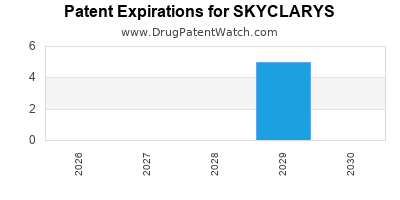

DrugPatentWatch® Estimated Loss of Exclusivity (LOE) Date for SKYCLARYS
Generic Entry Date for SKYCLARYS*:
Constraining patent/regulatory exclusivity:
TREATMENT OF FRIEDREICH'S ATAXIA IN ADULTS AND ADOLESCENTS AGED 16 YEARS AND OLDER NDA:
Dosage:
CAPSULE;ORAL |
*The generic entry opportunity date is the latter of the last compound-claiming patent and the last regulatory exclusivity protection. Many factors can influence early or later generic entry. This date is provided as a rough estimate of generic entry potential and should not be used as an independent source.
Recent Clinical Trials for SKYCLARYS
Identify potential brand extensions & 505(b)(2) entrants
| Sponsor | Phase |
|---|---|
| Biogen | PHASE3 |
| Biogen | PHASE1 |
| Biogen | Phase 1 |
Pharmacology for SKYCLARYS
| Mechanism of Action | Cytochrome P450 2C8 Inducers Cytochrome P450 3A4 Inducers |
US Patents and Regulatory Information for SKYCLARYS
SKYCLARYS is protected by eight US patents and three FDA Regulatory Exclusivities.
Based on analysis by DrugPatentWatch, the earliest date for a generic version of SKYCLARYS is ⤷ Start Trial.
This potential generic entry date is based on TREATMENT OF FRIEDREICH'S ATAXIA IN ADULTS AND ADOLESCENTS AGED 16 YEARS AND OLDER.
Generics may enter earlier, or later, based on new patent filings, patent extensions, patent invalidation, early generic licensing, generic entry preferences, and other factors.
| Applicant | Tradename | Generic Name | Dosage | NDA | Approval Date | TE | Type | RLD | RS | Patent No. | Patent Expiration | Product | Substance | Delist Req. | Exclusivity Expiration |
|---|---|---|---|---|---|---|---|---|---|---|---|---|---|---|---|
| Biogen Us | SKYCLARYS | omaveloxolone | CAPSULE;ORAL | 216718-001 | Feb 28, 2023 | RX | Yes | Yes | ⤷ Start Trial | ⤷ Start Trial | ⤷ Start Trial | ||||
| Biogen Us | SKYCLARYS | omaveloxolone | CAPSULE;ORAL | 216718-001 | Feb 28, 2023 | RX | Yes | Yes | ⤷ Start Trial | ⤷ Start Trial | Y | Y | ⤷ Start Trial | ||
| Biogen Us | SKYCLARYS | omaveloxolone | CAPSULE;ORAL | 216718-001 | Feb 28, 2023 | RX | Yes | Yes | ⤷ Start Trial | ⤷ Start Trial | Y | Y | ⤷ Start Trial | ||
| Biogen Us | SKYCLARYS | omaveloxolone | CAPSULE;ORAL | 216718-001 | Feb 28, 2023 | RX | Yes | Yes | ⤷ Start Trial | ⤷ Start Trial | Y | ⤷ Start Trial | |||
| Biogen Us | SKYCLARYS | omaveloxolone | CAPSULE;ORAL | 216718-001 | Feb 28, 2023 | RX | Yes | Yes | ⤷ Start Trial | ⤷ Start Trial | ⤷ Start Trial | ||||
| Biogen Us | SKYCLARYS | omaveloxolone | CAPSULE;ORAL | 216718-001 | Feb 28, 2023 | RX | Yes | Yes | ⤷ Start Trial | ⤷ Start Trial | Y | ⤷ Start Trial | |||
| Biogen Us | SKYCLARYS | omaveloxolone | CAPSULE;ORAL | 216718-001 | Feb 28, 2023 | RX | Yes | Yes | ⤷ Start Trial | ⤷ Start Trial | Y | ⤷ Start Trial | |||
| >Applicant | >Tradename | >Generic Name | >Dosage | >NDA | >Approval Date | >TE | >Type | >RLD | >RS | >Patent No. | >Patent Expiration | >Product | >Substance | >Delist Req. | >Exclusivity Expiration |
International Patents for SKYCLARYS
When does loss-of-exclusivity occur for SKYCLARYS?
Based on analysis by DrugPatentWatch, the following patents block generic entry in the countries listed below:
Australia
Patent: 09237579
Patent: Antioxidant inflammation modulators: oleanolic acid derivatives with amino and other modifications at C-17
Estimated Expiration: ⤷ Start Trial
Brazil
Patent: 0911457
Patent: moduladores inflamatórios antioxidantes; ácido oleanólico derivados com amina e outras modificações em c-17
Estimated Expiration: ⤷ Start Trial
Canada
Patent: 21838
Patent: MODULATEURS D'INFLAMMATION ANTIOXYDANTS: DERIVES D'ACIDE OLEANOLIQUE PRESENTANT UNE MODIFICATION DU GROUPE AMINO ET D'AUTRES MODIFICATIONS EN C-17 (ANTIOXIDANT INFLAMMATION MODULATORS: OLEANOLIC ACID DERIVATIVES WITH AMINO AND OTHER MODIFICATIONS AT C-17)
Estimated Expiration: ⤷ Start Trial
China
Patent: 2083442
Patent: Antioxidant inflammation modulators: oleanolic acid derivatives with amino and other modifications at C-17
Estimated Expiration: ⤷ Start Trial
Patent: 4177468
Patent: ANTIOXIDANT INFLAMMATION MODULATORS: OLEANOLIC ACID DERIVATIVES WITH AMINO AND OTHER MODIFICATIONS AT C-17
Estimated Expiration: ⤷ Start Trial
Colombia
Patent: 11071
Patent: ANTIOXIDANTES MODULADORES DE LA INFLAMACION DERIVADOS DEL ACIDO OLEANOLICO CON ANIMO Y OTRAS MODIFICACIONES EN C-17
Estimated Expiration: ⤷ Start Trial
Croatia
Patent: 0182060
Estimated Expiration: ⤷ Start Trial
Cyprus
Patent: 21586
Estimated Expiration: ⤷ Start Trial
Denmark
Patent: 76493
Estimated Expiration: ⤷ Start Trial
Eurasian Patent Organization
Patent: 9263
Patent: АНТИОКСИДАТИВНЫЕ МОДУЛЯТОРЫ ВОСПАЛЕНИЯ: ПРОИЗВОДНЫЕ ОЛЕАНОЛЕВОЙ КИСЛОТЫ С АМИНОВЫМИ И ДРУГИМИ МОДИФИКАЦИЯМИ НА С-17 (ANTIOXIDANT INFLAMMATION MODULATORS: OLEANOLIC ACID DERIVATIVES WITH AMINO AND OTHER MODIFICATIONS AT C-17)
Estimated Expiration: ⤷ Start Trial
Patent: 1001555
Patent: АНТИОКСИДАТИВНЫЕ МОДУЛЯТОРЫ ВОСПАЛЕНИЯ: ПРОИЗВОДНЫЕ ОЛЕАНОЛЕВОЙ КИСЛОТЫ С АМИНОВЫМИ И ДРУГИМИ МОДИФИКАЦИЯМИ НА С-17
Estimated Expiration: ⤷ Start Trial
European Patent Office
Patent: 76493
Patent: MODULATEURS D'INFLAMMATION ANTIOXYDANTS: DÉRIVÉS D'ACIDE OLÉANOLIQUE PRÉSENTANT UNE MODIFICATION DU GROUPE AMINO ET D'AUTRES MODIFICATIONS EN C-17 (ANTIOXIDANT INFLAMMATION MODULATORS: OLEANOLIC ACID DERIVATIVES WITH AMINO AND OTHER MODIFICATIONS AT C-17)
Estimated Expiration: ⤷ Start Trial
Hong Kong
Patent: 52483
Patent: 抗氧化劑炎症調節劑﹕在 具有氨基和其它修飾的齊墩果酸衍生物 (ANTIOXIDANT INFLAMMATION MODULATORS: OLEANOLIC ACID DERIVATIVES WITH AMINO AND OTHER MODIFICATIONS AT C-17 C-17)
Estimated Expiration: ⤷ Start Trial
Patent: 02552
Patent: 抗氧化劑炎症調節劑:在 具有氨基和其它修飾的齊墩果酸衍生物 (ANTIOXIDANT INFLAMMATION MODULATORS: OLEANOLIC ACID DERIVATIVES WITH AMINO AND OTHER MODIFICATIONS AT C-17 C-17)
Estimated Expiration: ⤷ Start Trial
Hungary
Patent: 41221
Estimated Expiration: ⤷ Start Trial
Israel
Patent: 8758
Patent: מאפנני דלקת מונעי חמצון: תולדות חומצה אוליאנולית עם אמינו ושינויים נוספים ב-17-c (Antioxidant inflammation modulators: oleanolic acid derivatives with amino and other modifications at c-17)
Estimated Expiration: ⤷ Start Trial
Japan
Patent: 29851
Estimated Expiration: ⤷ Start Trial
Patent: 11518191
Estimated Expiration: ⤷ Start Trial
Lithuania
Patent: 76493
Estimated Expiration: ⤷ Start Trial
Mexico
Patent: 10011438
Patent: ANTIOXIDANTES MODULADORES DE LA INFLAMACION: DERIVADOS DEL ACIDO OLEANÓLICO CON AMINO Y OTRAS MODIFICACIONES EN C-17. (ANTIOXIDANT INFLAMMATION MODULATORS: OLEANOLIC ACID DERIVATIVES WITH AMINO AND OTHER MODIFICATIONS AT C-17.)
Estimated Expiration: ⤷ Start Trial
New Zealand
Patent: 8710
Patent: Antioxidant inflammation modulators: oleanolic acid derivatives with amino and other modifications at C-17
Estimated Expiration: ⤷ Start Trial
Poland
Patent: 76493
Estimated Expiration: ⤷ Start Trial
Portugal
Patent: 76493
Estimated Expiration: ⤷ Start Trial
Serbia
Patent: 392
Patent: ANTIOKSIDANTNI MODULATORI INFLAMACIJE: DERIVATI OLEANOLIČKE KISELINE SA AMINO I DRUGIM MODIFIKACIJAMA NA C-17 (ANTIOXIDANT INFLAMMATION MODULATORS: OLEANOLIC ACID DERIVATIVES WITH AMINO AND OTHER MODIFICATIONS AT C-17)
Estimated Expiration: ⤷ Start Trial
Slovenia
Patent: 76493
Estimated Expiration: ⤷ Start Trial
South Africa
Patent: 1007586
Patent: ANTIOXIDANT INFLAMMATION MODULATORS: OLEANOLIC ACID DERIVATIVES WITH AMINO AND OTHER MODIFICATIONS AT C-17
Estimated Expiration: ⤷ Start Trial
South Korea
Patent: 1735807
Estimated Expiration: ⤷ Start Trial
Patent: 110010612
Patent: ANTIOXIDANT INFLAMMATION MODULATORS: OLEANOLIC ACID DERIVATIVES WITH AMINO AND OTHER MODIFICATIONS AT C-17
Estimated Expiration: ⤷ Start Trial
Spain
Patent: 03274
Estimated Expiration: ⤷ Start Trial
Taiwan
Patent: 1004628
Patent: Antioxidant inflammation modulators: oleanolic acid derivatives with amino and other modifications at C-17
Estimated Expiration: ⤷ Start Trial
Patent: 53023
Estimated Expiration: ⤷ Start Trial
Generics may enter earlier, or later, based on new patent filings, patent extensions, patent invalidation, early generic licensing, generic entry preferences, and other factors.
See the table below for additional patents covering SKYCLARYS around the world.
| Country | Patent Number | Title | Estimated Expiration |
|---|---|---|---|
| Australia | 2009237579 | ⤷ Start Trial | |
| Brazil | PI0911457 | ⤷ Start Trial | |
| Canada | 2721838 | ⤷ Start Trial | |
| China | 102083442 | ⤷ Start Trial | |
| China | 104177468 | ⤷ Start Trial | |
| Colombia | 6311071 | ⤷ Start Trial | |
| Cyprus | 1121586 | ⤷ Start Trial | |
| >Country | >Patent Number | >Title | >Estimated Expiration |
Supplementary Protection Certificates for SKYCLARYS
| Patent Number | Supplementary Protection Certificate | SPC Country | SPC Expiration | SPC Description |
|---|---|---|---|---|
| 2841445 | CA 2024 00015 | Denmark | ⤷ Start Trial | PRODUCT NAME: OMAVELOXOLON ELLER ET FARMACEUTISK ACCEPTABELT SALT HERAF; REG. NO/DATE: EU/1/23/1786 20240212 |
| 2841445 | PA2024511 | Lithuania | ⤷ Start Trial | PRODUCT NAME: OMAVELOKSOLONAS ARBA FARMACINIU POZIURIU PRIIMTINA JO DRUSKA; REGISTRATION NO/DATE: EU/1/23/1786 20240209 |
| 2841445 | LUC00340 | Luxembourg | ⤷ Start Trial | PRODUCT NAME: OMAVELOXOLONE OU UN DE SES SELS PHARMACEUTIQUEMENT ACCEPTABLES; AUTHORISATION NUMBER AND DATE: EU/1/23/1786 20240412 |
| 2841445 | 301276 | Netherlands | ⤷ Start Trial | PRODUCT NAME: OMAVELOXOLON OF EEN FARMACEUTISCH AANVAARDBAAR ZOUT DAARVAN; REGISTRATION NO/DATE: EU/1/23/1786 20240212 |
| 2841445 | 12/2024 | Austria | ⤷ Start Trial | PRODUCT NAME: OMAVELOXOLON ODER EIN PHARMAZEUTISCH VERTRAEGLICHES SALZ DAVON; REGISTRATION NO/DATE: EU/1/23/1786 ( MITTEILUNG) 20240212 |
| 2841445 | 2024C/519 | Belgium | ⤷ Start Trial | PRODUCT NAME: OMAVELOXOLON OF EEN FARMACEUTISCH AANVAARDBAAR ZOUT ERVAN; AUTHORISATION NUMBER AND DATE: EU/1/23/1786 20240212 |
| 2841445 | 122024000017 | Germany | ⤷ Start Trial | PRODUCT NAME: OMAVELOXOLON ODER EIN PHARMAZEUTISCH VERTRAEGLICHES SALZ DAVON; REGISTRATION NO/DATE: EU/1/23/1786 20240209 |
| >Patent Number | >Supplementary Protection Certificate | >SPC Country | >SPC Expiration | >SPC Description |
SKYCLARYS (skyclarys) market dynamics and financial trajectory: pricing, demand drivers, competitor pressure, and loss-of-exclusivity exposure
More… ↓
Make Better Decisions: Try a trial or see plans & pricing
Drugs may be covered by multiple patents or regulatory protections. All trademarks and applicant names are the property of their respective owners or licensors. Although great care is taken in the proper and correct provision of this service, thinkBiotech LLC does not accept any responsibility for possible consequences of errors or omissions in the provided data. The data presented herein is for information purposes only. There is no warranty that the data contained herein is error free. We do not provide individual investment advice. This service is not registered with any financial regulatory agency. The information we publish is educational only and based on our opinions plus our models. By using DrugPatentWatch you acknowledge that we do not provide personalized recommendations or advice. thinkBiotech performs no independent verification of facts as provided by public sources nor are attempts made to provide legal or investing advice. Any reliance on data provided herein is done solely at the discretion of the user. Users of this service are advised to seek professional advice and independent confirmation before considering acting on any of the provided information. thinkBiotech LLC reserves the right to amend, extend or withdraw any part or all of the offered service without notice.
ISSN: 2162-2639

Privacy and Cookies
Terms & Conditions
Site Map
DrugPatentWatch Alternatives
LOE / Major Patent Expirations 2026 - 2027
NCE-1 Patent Challenge Dates 2026 - 2027
Friedman, Yali. "DrugPatentWatch" DrugPatentWatch, thinkBiotech, 2026, www.DrugPatentWatch.com.
See Primary Research Papers Citing DrugPatentWatch