SIMBRINZA Drug Patent Profile
✉ Email this page to a colleague
Which patents cover Simbrinza, and when can generic versions of Simbrinza launch?
Simbrinza is a drug marketed by Alcon Labs Inc and is included in one NDA. There are two patents protecting this drug and one Paragraph IV challenge.
The generic ingredient in SIMBRINZA is brimonidine tartrate; brinzolamide. There is one drug master file entry for this compound. One supplier is listed for this compound. Additional details are available on the brimonidine tartrate; brinzolamide profile page.
DrugPatentWatch® Generic Entry Outlook for Simbrinza
By analyzing the patents and regulatory protections it appears that the earliest date
for generic entry will be October 30, 2030. This may change due to patent challenges or generic licensing.
There has been one patent litigation case involving the patents protecting this drug, indicating strong interest in generic launch. Recent data indicate that 63% of patent challenges are decided in favor of the generic patent challenger and that 54% of successful patent challengers promptly launch generic drugs.
Indicators of Generic Entry
AI Deep Research
Questions you can ask:
- What is the 5 year forecast for SIMBRINZA?
- What are the global sales for SIMBRINZA?
- What is Average Wholesale Price for SIMBRINZA?
Summary for SIMBRINZA
| US Patents: | 2 |
| Applicants: | 1 |
| NDAs: | 1 |
| Finished Product Suppliers / Packagers: | 1 |
| Raw Ingredient (Bulk) Api Vendors: | 2 |
| Clinical Trials: | 10 |
| Patent Applications: | 38 |
| Drug Prices: | Drug price information for SIMBRINZA |
| Patent Litigation and PTAB cases: | See patent lawsuits and PTAB cases for SIMBRINZA |
| What excipients (inactive ingredients) are in SIMBRINZA? | SIMBRINZA excipients list |
| DailyMed Link: | SIMBRINZA at DailyMed |
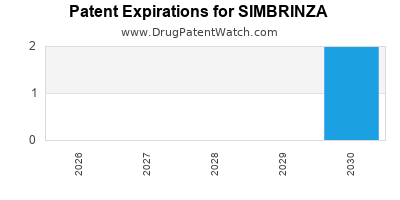
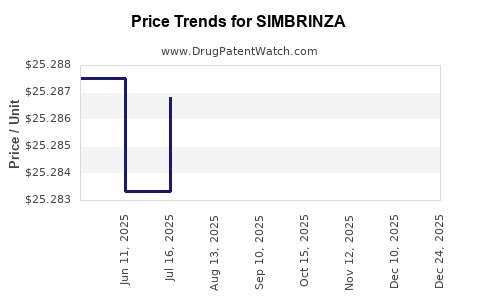
DrugPatentWatch® Estimated Loss of Exclusivity (LOE) Date for SIMBRINZA
Generic Entry Date for SIMBRINZA*:
Constraining patent/regulatory exclusivity:
NDA:
Dosage:
SUSPENSION/DROPS;OPHTHALMIC |
*The generic entry opportunity date is the latter of the last compound-claiming patent and the last regulatory exclusivity protection. Many factors can influence early or later generic entry. This date is provided as a rough estimate of generic entry potential and should not be used as an independent source.
Recent Clinical Trials for SIMBRINZA
Identify potential brand extensions & 505(b)(2) entrants
| Sponsor | Phase |
|---|---|
| Prairie Eye Center | PHASE4 |
| Sengi | PHASE4 |
| Perrigo Company | Phase 3 |
Pharmacology for SIMBRINZA
| Drug Class | Carbonic Anhydrase Inhibitor alpha-Adrenergic Agonist |
| Mechanism of Action | Adrenergic alpha-Agonists Carbonic Anhydrase Inhibitors |
Paragraph IV (Patent) Challenges for SIMBRINZA
| Tradename | Dosage | Ingredient | Strength | NDA | ANDAs Submitted | Submissiondate |
|---|---|---|---|---|---|---|
| SIMBRINZA | Ophthalmic Suspension | brimonidine tartrate; brinzolamide | 1%/0.2% | 204251 | 1 | 2022-08-01 |
US Patents and Regulatory Information for SIMBRINZA
SIMBRINZA is protected by two US patents.
Based on analysis by DrugPatentWatch, the earliest date for a generic version of SIMBRINZA is ⤷ Start Trial.
This potential generic entry date is based on patent ⤷ Start Trial.
Generics may enter earlier, or later, based on new patent filings, patent extensions, patent invalidation, early generic licensing, generic entry preferences, and other factors.
| Applicant | Tradename | Generic Name | Dosage | NDA | Approval Date | TE | Type | RLD | RS | Patent No. | Patent Expiration | Product | Substance | Delist Req. | Exclusivity Expiration |
|---|---|---|---|---|---|---|---|---|---|---|---|---|---|---|---|
| Alcon Labs Inc | SIMBRINZA | brimonidine tartrate; brinzolamide | SUSPENSION/DROPS;OPHTHALMIC | 204251-001 | Apr 19, 2013 | RX | Yes | Yes | ⤷ Start Trial | ⤷ Start Trial | Y | ⤷ Start Trial | |||
| Alcon Labs Inc | SIMBRINZA | brimonidine tartrate; brinzolamide | SUSPENSION/DROPS;OPHTHALMIC | 204251-001 | Apr 19, 2013 | RX | Yes | Yes | ⤷ Start Trial | ⤷ Start Trial | Y | ⤷ Start Trial | |||
| >Applicant | >Tradename | >Generic Name | >Dosage | >NDA | >Approval Date | >TE | >Type | >RLD | >RS | >Patent No. | >Patent Expiration | >Product | >Substance | >Delist Req. | >Exclusivity Expiration |
Expired US Patents for SIMBRINZA
| Applicant | Tradename | Generic Name | Dosage | NDA | Approval Date | Patent No. | Patent Expiration |
|---|---|---|---|---|---|---|---|
| Alcon Labs Inc | SIMBRINZA | brimonidine tartrate; brinzolamide | SUSPENSION/DROPS;OPHTHALMIC | 204251-001 | Apr 19, 2013 | ⤷ Start Trial | ⤷ Start Trial |
| >Applicant | >Tradename | >Generic Name | >Dosage | >NDA | >Approval Date | >Patent No. | >Patent Expiration |
EU/EMA Drug Approvals for SIMBRINZA
| Company | Drugname | Inn | Product Number / Indication | Status | Generic | Biosimilar | Orphan | Marketing Authorisation | Marketing Refusal |
|---|---|---|---|---|---|---|---|---|---|
| Novartis Europharm Limited | Simbrinza | brinzolamide, brimonidine tartrate | EMEA/H/C/003698Decrease of elevated intraocular pressure (IOP) in adult patients with open-angle glaucoma or ocular hypertension for whom monotherapy provides insufficient IOP reduction. | Authorised | no | no | no | 2014-07-18 | |
| >Company | >Drugname | >Inn | >Product Number / Indication | >Status | >Generic | >Biosimilar | >Orphan | >Marketing Authorisation | >Marketing Refusal |
International Patents for SIMBRINZA
When does loss-of-exclusivity occur for SIMBRINZA?
Based on analysis by DrugPatentWatch, the following patents block generic entry in the countries listed below:
Argentina
Patent: 7126
Estimated Expiration: ⤷ Start Trial
Patent: 2017
Estimated Expiration: ⤷ Start Trial
Australia
Patent: 10262898
Estimated Expiration: ⤷ Start Trial
Brazil
Patent: 1015996
Estimated Expiration: ⤷ Start Trial
Canada
Patent: 63778
Estimated Expiration: ⤷ Start Trial
Chile
Patent: 10000634
Estimated Expiration: ⤷ Start Trial
China
Patent: 2802604
Estimated Expiration: ⤷ Start Trial
Patent: 4707145
Estimated Expiration: ⤷ Start Trial
Croatia
Patent: 0160953
Estimated Expiration: ⤷ Start Trial
Patent: 0200979
Estimated Expiration: ⤷ Start Trial
Cyprus
Patent: 17835
Estimated Expiration: ⤷ Start Trial
Patent: 23120
Estimated Expiration: ⤷ Start Trial
Denmark
Patent: 42790
Estimated Expiration: ⤷ Start Trial
Patent: 22035
Estimated Expiration: ⤷ Start Trial
Patent: 45164
Estimated Expiration: ⤷ Start Trial
European Patent Office
Patent: 42790
Estimated Expiration: ⤷ Start Trial
Patent: 22035
Estimated Expiration: ⤷ Start Trial
Patent: 45164
Estimated Expiration: ⤷ Start Trial
Patent: 37634
Estimated Expiration: ⤷ Start Trial
Hong Kong
Patent: 63521
Estimated Expiration: ⤷ Start Trial
Patent: 94007
Estimated Expiration: ⤷ Start Trial
Hungary
Patent: 30435
Estimated Expiration: ⤷ Start Trial
Patent: 49477
Estimated Expiration: ⤷ Start Trial
Japan
Patent: 17956
Estimated Expiration: ⤷ Start Trial
Patent: 12530712
Estimated Expiration: ⤷ Start Trial
Patent: 14198729
Patent: ボレート−ポリオール複合体を含む水性薬学的組成物 (AQUEOUS PHARMACEUTICAL COMPOSITIONS CONTAINING BORATE-POLYOL COMPLEXES)
Estimated Expiration: ⤷ Start Trial
Patent: 16183198
Patent: ボレート−ポリオール複合体を含む水性薬学的組成物 (AQUEOUS PHARMACEUTICAL COMPOSITIONS CONTAINING BORATE-POLYOL COMPLEXES)
Estimated Expiration: ⤷ Start Trial
Lithuania
Patent: 45164
Estimated Expiration: ⤷ Start Trial
Mexico
Patent: 11013107
Patent: COMPOSICIONES FARMACEUTICAS ACUOSAS QUE CONTIENEN COMPLEJOS DE BORATO - POLIOL. (AQUEOUS PHARMACEUTICAL COMPOSITIONS CONTAINING BORATE-POLYOL COMPLEXES.)
Estimated Expiration: ⤷ Start Trial
Poland
Patent: 42790
Estimated Expiration: ⤷ Start Trial
Patent: 22035
Estimated Expiration: ⤷ Start Trial
Patent: 45164
Estimated Expiration: ⤷ Start Trial
Portugal
Patent: 42790
Estimated Expiration: ⤷ Start Trial
Patent: 22035
Estimated Expiration: ⤷ Start Trial
Patent: 45164
Estimated Expiration: ⤷ Start Trial
Russian Federation
Patent: 63125
Patent: ВОДНЫЕ ФАРМАЦЕВТИЧЕСКИЕ КОМПОЗИЦИИ, СОДЕРЖАЩИЕ КОМПЛЕКСЫ БОРАТПОЛИОЛ (AQUEOUS PHARMACEUTICAL COMPOSITIONS, CONTAINING BORATE-POLYOL COMPLEXES)
Estimated Expiration: ⤷ Start Trial
Patent: 12101782
Patent: ВОДНЫЕ ФАРМАЦЕВТИЧЕСКИЕ КОМПОЗИЦИИ, СОДЕРЖАЩИЕ КОМПЛЕКСЫ БОРАТПОЛИОЛ (AQUEOUS PHARMACEUTICAL COMPOSITIONS, CONTAINING BORATE-POLYOL COMPLEXES)
Estimated Expiration: ⤷ Start Trial
San Marino
Patent: 01600249
Estimated Expiration: ⤷ Start Trial
Slovenia
Patent: 42790
Estimated Expiration: ⤷ Start Trial
Patent: 22035
Estimated Expiration: ⤷ Start Trial
Patent: 45164
Estimated Expiration: ⤷ Start Trial
South Africa
Patent: 1108384
Patent: AQUEOUS PHARMACEUTICAL COMPOSITIONS CONTAINING BORATE-POLYOL COMPLEX
Estimated Expiration: ⤷ Start Trial
South Korea
Patent: 1738502
Estimated Expiration: ⤷ Start Trial
Patent: 120028390
Patent: 보레이트-폴리올 복합체를 함유하는 수성 약학 조성물 (- AQUEOUS PHARMACEUTICAL COMPOSITIONS CONTAINING BORATE-POLYOL COMPLEXES)
Estimated Expiration: ⤷ Start Trial
Spain
Patent: 61617
Estimated Expiration: ⤷ Start Trial
Patent: 84858
Estimated Expiration: ⤷ Start Trial
Patent: 03648
Estimated Expiration: ⤷ Start Trial
Taiwan
Patent: 1100103
Patent: Aqueous pharmaceutical compositions containing borate-polyol complexes
Estimated Expiration: ⤷ Start Trial
Patent: 89997
Estimated Expiration: ⤷ Start Trial
Uruguay
Patent: 709
Patent: COMPOSICIONES FARMACÉUTICAS ACUOSAS QUE CONTIENEN COMPLEJOS BORATO-POLIOL
Estimated Expiration: ⤷ Start Trial
Generics may enter earlier, or later, based on new patent filings, patent extensions, patent invalidation, early generic licensing, generic entry preferences, and other factors.
See the table below for additional patents covering SIMBRINZA around the world.
| Country | Patent Number | Title | Estimated Expiration |
|---|---|---|---|
| World Intellectual Property Organization (WIPO) | 2004073708 | ⤷ Start Trial | |
| Argentina | 077126 | ⤷ Start Trial | |
| Argentina | 122017 | ⤷ Start Trial | |
| Australia | 2010262898 | ⤷ Start Trial | |
| >Country | >Patent Number | >Title | >Estimated Expiration |
Supplementary Protection Certificates for SIMBRINZA
| Patent Number | Supplementary Protection Certificate | SPC Country | SPC Expiration | SPC Description |
|---|---|---|---|---|
| 1631293 | C300683 | Netherlands | ⤷ Start Trial | PRODUCT NAME: BRIMONIDINE EN FARMACEUTISCH AANVAARDBARE ZOUTEN DAARVAN VOOR TOEPASSING ALS GENEESMIDDEL VOOR DE BEHANDELING VAN DOOR ROSACEA GEINDUCEERDE ROODHEID; REGISTRATION NO/DATE: EU/1/13/904 20140225 |
| 1631293 | 92462 | Luxembourg | ⤷ Start Trial | PRODUCT NAME: BRIMONIDINE ET SES SELS PHARMACEUTIQUES POUR L UTILISATION COMME MEDICAMENT POUR LE TRAITEMENT DES ROUGEURS INDUITES PAR LA ROSACEA.FIRST REGISTRATION: 20140225 |
| 1631293 | 2014/041 | Ireland | ⤷ Start Trial | PRODUCT NAME: BRIMONIDINE AND PHARMACEUTICALLY ACCEPTABLE SALTS THEREOF; REGISTRATION NO/DATE: EU/1/13/904 20140221 |
| 1631293 | 300683 | Netherlands | ⤷ Start Trial | PRODUCT NAME: BRIMONIDINE EN FARMACEUTISCH AANVAARDBARE ZOUTEN DAARVAN VOOR TOEPASSING ALS GENEESMIDDEL VOOR DE BEHANDELING VAN DOOR ROSACEA GEINDUCEERDE ROODHEID; REGISTRATION NO/DATE: EU/1/13/904 20140225 |
| >Patent Number | >Supplementary Protection Certificate | >SPC Country | >SPC Expiration | >SPC Description |
More… ↓
DrugChatter Q&A for SIMBRINZA
Make Better Decisions: Try a trial or see plans & pricing
Drugs may be covered by multiple patents or regulatory protections. All trademarks and applicant names are the property of their respective owners or licensors. Although great care is taken in the proper and correct provision of this service, thinkBiotech LLC does not accept any responsibility for possible consequences of errors or omissions in the provided data. The data presented herein is for information purposes only. There is no warranty that the data contained herein is error free. We do not provide individual investment advice. This service is not registered with any financial regulatory agency. The information we publish is educational only and based on our opinions plus our models. By using DrugPatentWatch you acknowledge that we do not provide personalized recommendations or advice. thinkBiotech performs no independent verification of facts as provided by public sources nor are attempts made to provide legal or investing advice. Any reliance on data provided herein is done solely at the discretion of the user. Users of this service are advised to seek professional advice and independent confirmation before considering acting on any of the provided information. thinkBiotech LLC reserves the right to amend, extend or withdraw any part or all of the offered service without notice.
ISSN: 2162-2639

Privacy and Cookies
Terms & Conditions
Site Map
DrugPatentWatch Alternatives
LOE / Major Patent Expirations 2026 - 2027
NCE-1 Patent Challenge Dates 2026 - 2027
Friedman, Yali. "DrugPatentWatch" DrugPatentWatch, thinkBiotech, 2026, www.DrugPatentWatch.com.
See Primary Research Papers Citing DrugPatentWatch