Last updated: August 15, 2026
Saxenda, Novo Nordisk's liraglutide injection for chronic weight management, is transitioning from a growth product to a mature and declining franchise. Its commercial position has weakened as Wegovy, Zepbound and Mounjaro capture obesity-treatment demand with once-weekly dosing and greater average weight loss. Saxenda retains value through pediatric use, brand recognition, global registrations and physician familiarity, but its daily administration and older GLP-1 profile limit future pricing power.
Novo Nordisk's obesity portfolio remains highly profitable, yet Saxenda's contribution is expected to continue falling as patients and prescribers move to higher-potency weekly products. The key near-term risks are generic liraglutide entry, loss of practical exclusivity, payer preference for newer agents and supply allocation toward Wegovy.
How large is the Saxenda market?
Saxenda competes in the chronic anti-obesity medicine market, which has expanded rapidly because of rising obesity prevalence, broader reimbursement discussions and demand for pharmacologic weight management.
Saxenda contains liraglutide, a glucagon-like peptide-1 receptor agonist administered once daily. The FDA-approved maintenance dose for adults is 3 mg daily. Its principal commercial differentiators are:
- Long market history following the 2014 FDA approval.
- Established efficacy and safety experience.
- Pediatric obesity indications.
- Availability across a broad international market.
- Lower clinical differentiation than newer weekly GLP-1 and dual GIP/GLP-1 products.
In the United States, Saxenda competes with Wegovy, Zepbound, Qsymia, Contrave, Xenical and, in some clinical settings, off-label semaglutide or tirzepatide products. Zepbound and Wegovy are the most important branded competitors because they combine weekly dosing with substantially stronger demand.
The obesity market is growing faster than Saxenda sales. This distinction is central to the asset's trajectory: industry expansion is being captured by newer products rather than by the older daily liraglutide franchise.
What are Saxenda's sales and financial trajectory?
Novo Nordisk reports Saxenda within its obesity-care portfolio rather than as a separate public-company segment with full product-level profitability. Public disclosures show a sharp divergence between total obesity-care growth and Saxenda's product-level momentum.
| Period |
Novo Nordisk obesity-care sales |
Saxenda trajectory |
Primary commercial driver |
| 2021 |
Approximately DKK 8 billion |
Growth product |
Saxenda was the primary branded obesity GLP-1 |
| 2022 |
Approximately DKK 17 billion |
Near peak or peak-period performance |
Saxenda plus early Wegovy expansion |
| 2023 |
Approximately DKK 42 billion |
Declining share of obesity sales |
Wegovy supply expansion |
| 2024 |
Approximately DKK 65 billion |
Continued decline |
Wegovy and broader obesity demand |
Sources: Novo Nordisk annual reports for 2021-2024.[1-4]
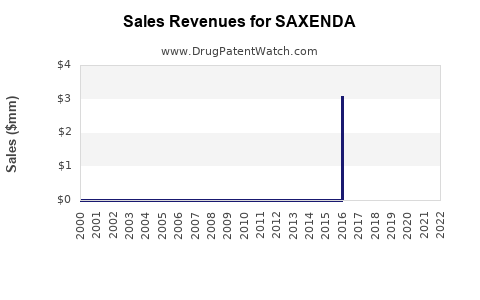
Novo does not consistently disclose a complete, directly comparable annual Saxenda revenue series in its headline financial releases. The financial pattern is nevertheless clear:
- Saxenda generated substantial revenue before Wegovy achieved broad commercial scale.
- Wegovy rapidly absorbed demand within Novo's obesity portfolio.
- Novo's obesity sales increased while Saxenda's strategic importance declined.
- Product-mix migration is reducing Saxenda's share of revenue and likely its long-term gross-profit contribution.
Saxenda remains financially relevant because manufacturing infrastructure, clinical familiarity and established market access reduce incremental commercialization costs. Its economic profile is weaker than Wegovy's because daily dosing creates higher injection burden and limits premium positioning.
What is the revenue exposure to generic liraglutide?
Generic liraglutide creates a two-stage risk.
The first stage affects Victoza, Novo's liraglutide product for type 2 diabetes. Generic Victoza entry can reduce liraglutide manufacturing scale, increase payer pressure and establish a lower-priced substitute in the same molecule family.
The second stage affects Saxenda directly. A generic product with the approved 3 mg obesity regimen can pressure Saxenda's price, formulary position and patient retention. The timing depends on listed patents, ANDA certifications, settlements, regulatory approval and the scope of any generic label.
A generic approved only for diabetes may initially avoid direct substitution for obesity treatment, but pharmacy and payer dynamics can still affect the branded franchise. The commercial distinction between the two indications is less durable when the active ingredient and injection platform are the same.
When does Saxenda lose exclusivity?
Saxenda's regulatory exclusivity has already expired. Its remaining protection is primarily patent-based.
FDA regulatory exclusivity
Saxenda was approved by the FDA in December 2014 for chronic weight management in adults with obesity or overweight plus a weight-related condition.[5] The product later received pediatric use expansions.
The original new-drug exclusivity period has ended. Saxenda therefore depends on patents, labeling restrictions, manufacturing know-how and commercial differentiation rather than current FDA exclusivity.
Patent expiration
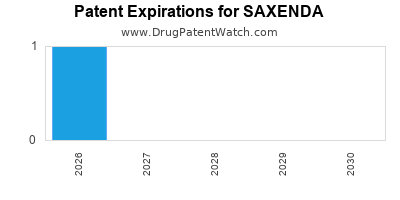
The core liraglutide patent estate has included U.S. patents covering the peptide, acylation and related pharmaceutical compositions. Public Orange Book records identify listed Saxenda patents, including U.S. Patent No. 8,129,343, with expiration extending into 2026.[6]
The effective loss-of-exclusivity analysis requires separate treatment of:
- Core compound and peptide patents.
- Formulation and composition patents.
- Injection-device patents.
- Method-of-use patents.
- Pediatric exclusivity and patent-term adjustments.
- ANDA certifications and litigation outcomes.
- Product-specific labeling and dosage limitations.
The commercially important U.S. risk window is therefore the period beginning with approved generic liraglutide entry and intensifying around the 2026 core-patent expiration period. International loss-of-exclusivity timing varies by jurisdiction because supplementary protection certificates, national patent prosecution and settlement terms differ.
What patents protect Saxenda?
Saxenda's protection is layered rather than dependent on a single patent.
| Protection category |
Subject matter |
Commercial relevance |
| Active ingredient |
Liraglutide peptide and chemical modifications |
Protects the molecule and core use of liraglutide |
| Pharmaceutical composition |
Stabilized injectable formulations |
Can delay substitution if valid and enforceable |
| Dosage and administration |
Weight-management dosing and titration |
May restrict labeling but is vulnerable to carve-outs |
| Delivery system |
Pen injector and dose-delivery components |
More relevant to device competition than molecule entry |
| Manufacturing |
Peptide production, purification and formulation processes |
Can increase entry cost and support process litigation |
| Pediatric use |
Weight management in younger patients |
Potentially relevant to label strategy and market segmentation |
The most durable commercial barriers are usually core molecule and formulation patents. Method-of-use patents can support litigation but may not block an ANDA if the generic sponsor uses a skinny label that omits patented indications.
Patent strength is therefore moderate rather than absolute. Novo has a sophisticated peptide and injection-device estate, but the oldest core patents are approaching expiry, and liraglutide is a well-characterized peptide with established manufacturing precedent.
Which companies are challenging Saxenda or liraglutide patents?
Generic-drug manufacturers have focused first on liraglutide's diabetes product, Victoza. Teva became the first company to receive FDA approval for a generic liraglutide injection in 2024, according to FDA and company disclosures.[7,8]
The main competitive groups are:
- Teva Pharmaceuticals, with approved generic liraglutide for the Victoza pathway.
- Hikma Pharmaceuticals, which has pursued injectable diabetes products and remains a relevant generic competitor.
- Other ANDA applicants that can enter after patent litigation, settlement or expiration.
- Contract manufacturers with peptide-injection capabilities.
A generic Victoza approval does not automatically establish unrestricted Saxenda substitution. Indication-specific patents, dosage differences and labeling carve-outs matter. The competitive threat becomes materially stronger when a generic can market the 3 mg obesity regimen or when payers treat generic liraglutide as a lower-cost alternative for weight management.
What is the Orange Book status of Saxenda?
Saxenda is listed in the FDA Orange Book as a prescription drug product with patent information submitted by Novo Nordisk.[6] The Orange Book is the controlling public source for listed patents, expiration dates, pediatric exclusivity and patent-related approval restrictions.
The relevant regulatory questions are:
- Which Saxenda patents remain listed?
- Which patents are certified in an ANDA?
- Has Novo filed a timely infringement action?
- Does litigation trigger a 30-month stay?
- Is the ANDA approval limited by a section viii statement?
- Does the generic label omit the obesity indication?
- Has a settlement established an agreed launch date?
Orange Book listing does not guarantee that a patent will survive validity or infringement challenges. Conversely, a patent not listed in the Orange Book can still affect commercial conduct through traditional patent litigation, although it generally has less effect on ANDA approval timing.
How does Saxenda compare with Wegovy and Zepbound?
| Product |
Active ingredient |
Dosing |
Manufacturer |
Commercial position |
| Saxenda |
Liraglutide |
Daily |
Novo Nordisk |
Mature, declining obesity brand |
| Wegovy |
Semaglutide |
Weekly |
Novo Nordisk |
Novo's primary obesity growth product |
| Zepbound |
Tirzepatide |
Weekly |
Eli Lilly |
High-growth direct competitor |
| Mounjaro |
Tirzepatide |
Weekly |
Eli Lilly |
Diabetes product with major off-label and obesity-market relevance |
Wegovy has a stronger dosing proposition than Saxenda because patients use it weekly. Zepbound has added further pressure through high demand and strong clinical positioning. Saxenda's remaining advantages are its long safety record, pediatric access, established reimbursement history and availability where newer products face supply constraints.
The products also compete for the same manufacturing resources, prescriber attention and payer budgets. Novo has a financial incentive to prioritize Wegovy capacity because the newer product commands greater growth and strategic value.
What regulatory status and indications support Saxenda?
The FDA approved Saxenda for chronic weight management in adults with obesity or overweight plus at least one weight-related comorbidity, used with a reduced-calorie diet and increased physical activity.[5]
The FDA subsequently expanded use to adolescents aged 12 years and older with obesity. Novo has also pursued use in younger pediatric patients, creating a more differentiated regulatory position than a simple adult obesity indication.[9]
Saxenda's label requires dose escalation to improve tolerability. Common adverse reactions include nausea, diarrhea, constipation and vomiting. The safety profile includes class warnings and precautions associated with GLP-1 receptor agonists.
The pediatric indication may reduce the speed of revenue erosion in selected markets, but it is unlikely to offset adult-market migration to weekly semaglutide and tirzepatide products.
What generic launch scenarios exist for Saxenda?
Scenario 1: Delayed direct launch
A generic sponsor receives approval for liraglutide but cannot immediately market the Saxenda indication because of listed patents or settlement restrictions. Saxenda loses some negotiating power but retains practical protection for obesity use.
Scenario 2: Diabetes-first erosion
Generic Victoza gains broad payer coverage and lowers the reference price for liraglutide. Saxenda remains branded, but payers use generic liraglutide to pressure Novo's net price.
Scenario 3: Direct obesity generic entry
A generic product enters with a 3 mg obesity label after patent expiry or settlement. Saxenda experiences rapid price compression, formulary displacement and lower patient retention.
Scenario 4: Multi-generic competition
Several manufacturers enter after the principal patents expire. Price erosion accelerates, and Saxenda becomes a residual brand used where pediatric access, physician preference or device familiarity matters.
What manufacturing and intellectual-property barriers remain?
Liraglutide is a peptide, so manufacturing is more complex than manufacturing a conventional small-molecule tablet. Entrants must reproduce:
- Peptide sequence and acylation.
- Purity and impurity profile.
- Injectable formulation stability.
- Pen-device performance.
- Sterility and container-closure controls.
- Commercial-scale batch consistency.
These requirements create technical barriers, but they do not provide durable exclusivity once regulatory and patent barriers fall. Generic peptide manufacturers with established injectable infrastructure can reduce the significance of those barriers.
Novo's manufacturing scale remains a commercial advantage. The company has established liraglutide production, quality systems and global distribution. That advantage supports continued supply reliability but does not prevent lower-priced entrants.
What litigation and settlement issues affect Saxenda?
The central litigation risks concern ANDA patent challenges to liraglutide products. Important case outcomes can establish:
- The earliest permissible generic launch date.
- Whether a 30-month stay delays approval.
- Whether patent claims covering formulation or dosing survive.
- Whether a settlement permits entry before patent expiration.
- Whether a generic can use a label excluding obesity treatment.
The generic Victoza pathway demonstrates that liraglutide litigation and regulatory review have moved beyond a purely theoretical challenge. Saxenda's direct exposure depends on the remaining patent claims and the final labels approved by FDA.
No biosimilar pathway applies to Saxenda because liraglutide is regulated as a drug rather than as a biologic under the biosimilar framework. The relevant competitor category is generic or follow-on liraglutide, not biosimilars.
How strong is Saxenda's patent estate?
Saxenda's patent estate is commercially meaningful but weakening.
Its strengths are the molecule's complex peptide structure, formulation know-how, injector technology and multiple patent categories. Its weaknesses are the age of the product, approaching core-patent expiry, completed regulatory exclusivity and the availability of a substantial reference-product history.
The estate is strongest against premature direct substitution and weakest against post-expiry price competition. Method-of-use patents may preserve selected indications, but they are less effective when generic companies use label carve-outs.
Key Takeaways
- Saxenda is a mature obesity product in a rapidly expanding market.
- Novo Nordisk's obesity revenue growth is being driven by Wegovy, not Saxenda.
- Daily dosing and lower clinical differentiation have weakened Saxenda's competitive position.
- FDA regulatory exclusivity has expired.
- Core U.S. patent protection extends into the 2026 period, subject to the specific listed patent and any applicable extensions.
- Teva's generic liraglutide approval confirms that the molecule is entering a generic-competition phase.
- Victoza generic entry can pressure Saxenda indirectly before direct obesity-label competition emerges.
- No biosimilar pathway applies; the main threat is generic liraglutide.
- Pediatric use, established safety data and global registrations may slow, but not reverse, revenue erosion.
- The most likely long-term outcome is declining Saxenda sales, lower net pricing and continued migration to Wegovy, Zepbound and Mounjaro.
FAQs
Does Saxenda still have patent protection in the United States?
Yes. Listed U.S. patents cover liraglutide-related subject matter into the 2026 period, although the practical barrier to generic entry depends on the patent claims, ANDA certifications and litigation outcomes.
Can a generic liraglutide product be substituted automatically for Saxenda?
Not necessarily. Automatic substitution depends on the approved indication, dosage, product rating, state pharmacy law and payer policy. A generic approved only for diabetes may not be therapeutically interchangeable with Saxenda for obesity treatment.
Is Saxenda being discontinued?
Novo Nordisk's public disclosures indicate commercial decline, not a general discontinuation. Saxenda remains a marketed product in multiple jurisdictions, although manufacturing and commercial priority have shifted toward newer obesity medicines.
Does Saxenda have a market advantage in children?
Saxenda has pediatric obesity approvals that can provide a differentiated niche. That advantage is limited by competition from newer agents and by the evolving regulatory status of pediatric obesity therapies.
Will generic Saxenda be cheaper than Wegovy?
A generic liraglutide product would normally create substantial price pressure relative to Saxenda. The price relationship with Wegovy will depend on payer contracting, dosage, supply, reimbursement and whether the generic receives an obesity indication.
References
- Novo Nordisk A/S. (2022). Annual report 2021. Novo Nordisk.
- Novo Nordisk A/S. (2023). Annual report 2022. Novo Nordisk.
- Novo Nordisk A/S. (2024). Annual report 2023. Novo Nordisk.
- Novo Nordisk A/S. (2025). Annual report 2024. Novo Nordisk.
- U.S. Food and Drug Administration. (2014). FDA approves Saxenda for chronic weight management. FDA.
- U.S. Food and Drug Administration. (2025). Approved drug products with therapeutic equivalence evaluations: Orange Book. FDA.
- U.S. Food and Drug Administration. (2024). FDA approves first generic liraglutide injection. FDA.
- Teva Pharmaceuticals. (2024). Teva announces U.S. launch of generic liraglutide injection. Teva Pharmaceuticals.
- U.S. Food and Drug Administration. (2020). Saxenda prescribing information. FDA.