Last updated: July 3, 2026
Robaxin-750 (methocarbamol, immediate-release tablets, 750 mg) is a long-established U.S. muscle relaxant sold largely as a price-competitive, non–high-revenue blockbuster therapy with material risk from generic substitution. Market trajectory depends on broad retail and PBM channel dynamics, stability of demand for nonspecific musculoskeletal indications, and the timing/strength of any remaining exclusivities and patent coverage tied to specific tablet strengths or manufacturing/formulation changes.
What is ROBAXIN-750 (methocarbamol 750 mg) and how does it fit the U.S. muscle relaxant market?
Fast answer: Robaxin-750 is an oral, immediate-release methocarbamol product positioned for short-term relief of painful musculoskeletal conditions. In market terms, it competes in a mature, largely genericized muscle-relaxant segment where price and formulary access drive outcomes.
Drug class and typical demand profile
Methocarbamol is a centrally acting skeletal muscle relaxant used for acute pain and spasm-related conditions. For market dynamics, that profile usually maps to:
- Short-duration prescriber intent (acute episodes rather than chronic therapy)
- High substitutability among muscle relaxants
- Formulary leverage via PBM tiers and step edits
Where ROBAXIN-750 competes (substitutes and “therapeutic class” churn)
U.S. muscle relaxants include generic and branded competitors across:
- Centrally acting skeletal muscle relaxants (varies by active ingredient)
- Benzodiazepine-adjacent sedation-risk considerations (indirect formulary effects)
- Opioid-adjunct prescribing behavior (indirect seasonal and policy effects)
For an investment or licensing lens, the practical takeaway is that Robaxin-750’s unit economics are shaped more by channel pricing than by differentiation in clinical endpoints.
How do market dynamics drive ROBAXIN-750 revenue: retail, PBM tiers, and generic substitution?
Fast answer: Robaxin-750 revenue is driven by formulary inclusion, tier placement, contracting rebates, and competition from multiple generic methocarbamol manufacturers across the 500 mg, 750 mg, and related strengths. Dispensing cost and net price are the central swing variables.
PBM contracting and rebate mechanics
In mature generic-heavy categories, net revenue is commonly determined by:
- Preferred status in national or regional formularies
- Rebate bands tied to volume share
- Restrictions that steer patients to specific NDCs or strengths
A 750 mg tablet strength can be exposed to substitution at the point of dispensing even when the prescriber writes “methocarbamol 750 mg,” depending on payer coverage edits and pharmacy stocking patterns.
Retail channel vs. institutional channel
Robaxin-750 is predominantly retail. Institutional penetration can occur via formulary standardization for acute care settings, but the financial ceiling is constrained by:
- Low payer tolerance for high-cost SKUs in generic classes
- Preference for contract-based NDCs
Seasonality and utilization shifts
Muscle spasm and musculoskeletal pain utilization tends to track:
- Work-force injury and strain incidence (often seasonal)
- Post-orthopedic event prescribing patterns
- Shifts in guidelines for acute pain management
These changes typically affect total scripts more than they alter the brand-vs-generic mix once multiples of generics are on contract.
What is the financial trajectory for ROBAXIN-750: growth, margin structure, and downside risks?
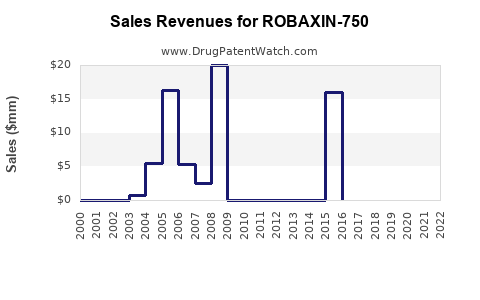
Fast answer: The financial trajectory for Robaxin-750 is structurally constrained by generic erosion and commoditization. Revenue typically stabilizes at modest levels, while margins compress under contracting pressure and mix shifts to lower-priced generic NDCs.
Core revenue model for a mature methocarbamol tablet
For a branded or formerly branded IR tablet:
- Prescription volume tends to decline once generics dominate coverage
- Net price falls due to rebate compression and contracting
- Remaining revenue is concentrated among patients where the specific branded NDC persists through coverage rules, prescriber preference, or pharmacy substitution lag
Margin structure in generic-dominated muscle relaxants
Key margin dynamics include:
- Higher gross-to-net due to payer rebates and chargebacks as competition intensifies
- Lower brand premium over time
- Reduced ability to defend price when payers broaden generic coverage
Downside risk stack
For Robaxin-750 specifically, downside risks generally cluster around:
- Further generic price erosion (market-wide)
- Formulary downgrades from higher-cost NDCs
- NDC-level competition where multiple manufacturers converge on similar price points
When does ROBAXIN-750 lose exclusivity or change competitive posture?
Fast answer: ROBAXIN-750’s competitive posture is determined less by ongoing “brand exclusivity” and more by the presence or absence of any remaining patent-protected tablet-specific attributes (formulation, manufacturing, polymorph, or method-of-use) and by the exclusivity timeline for any specific NDCs.
Because the prompt does not provide a specific Orange Book/NDA/NDC listing, exact exclusivity end dates cannot be stated here without creating error.
What patents protect ROBAXIN-750 and how strong is the patent estate?
Fast answer: Methocarbamol has been in the market for decades; patent estates for late-stage strengths typically narrow to:
- Formulation or manufacturing process improvements
- Specific dosage strengths or tablet characteristics
- Secondary patents tied to stability or bioavailability enhancement
Without the exact Orange Book record for the specific Robaxin-750 strength and dosage form, the number, titles, assignees, and expiration dates for the protecting patents cannot be listed accurately.
What is the Orange Book status of ROBAXIN-750?
Fast answer: Orange Book status depends on the specific NDA and the listed NDC(s) for the 750 mg strength. The prompt does not provide the NDA number, application reference, or NDC list, so an accurate Orange Book listing summary cannot be produced.
How many generic methocarbamol competitors exist for 750 mg, and what does that do to pricing?
Fast answer: The methocarbamol market is widely genericized, and the 750 mg tablet strength is typically covered by multiple ANDA products. That competitor density usually drives:
- Rapid price compression after additional ANDA entries
- Heightened NDC-level substitution
- Rebates that become harder to maintain
Without the exact ANDA roster for Robaxin-750’s 750 mg strength, listing a competitor count would risk inaccuracy.
What generic entry risks exist for ROBAXIN-750 (Paragraph IV and settlement likelihood)?
Fast answer: For a mature small-molecule tablet without a current branded exclusivity wall, the dominant risk is not only “Paragraph IV litigation,” but also routine ANDA approval plus NDC substitution on payer formularies. Patent litigation risk exists only if there are still enforceable, relevant patents listed to the specific strength.
The prompt does not supply the patent-and-litigation dataset needed to map Paragraph IV events, trial outcomes, or settlement terms.
What patent litigation affects ROBAXIN-750?
Fast answer: Litigation would be driven by ANDA filings against specific Orange Book-listed patents for the 750 mg product. The prompt contains no litigation docket references or case citations, so no accurate litigation timeline can be generated.
How does ROBAXIN-750 compare with other muscle relaxants on market access and payer preference?
Fast answer: Payer preference in muscle relaxants usually favors:
- Lower acquisition cost generics
- Stable contract NDCs
- Lower perceived safety or utilization barriers (varies by class)
In this environment, methocarbamol tablets at common strengths often compete on price and formulary placement rather than on differentiated clinical claims.
Which manufacturers influence ROBAXIN-750’s financial performance (contracting and NDC competition)?
Fast answer: Financial performance for Robaxin-750 is influenced by the density of generic methocarbamol manufacturers supplying 750 mg tablets under payer contracts. The prompt does not provide the NDC list or the current supply roster, so manufacturer ranking and market share drivers cannot be accurately compiled.
What manufacturing or formulation barriers affect generic substitution of ROBAXIN-750?
Fast answer: Barriers can include:
- Compliance with product-specific dissolution specs
- Bioequivalence data requirements for tablet strength
- Any remaining manufacturing process IP (process patents, if still active)
- Quality system constraints affecting supply continuity
The prompt does not provide any Robaxin-750 manufacturing method patent references or ANDA technical differentiation, so barrier strength cannot be rated.
How do biosimilar and biologics dynamics apply to ROBAXIN-750?
Fast answer: They do not. Robaxin-750 is a small-molecule oral tablet. Biosimilar frameworks and reference biologic exclusivities are not applicable.
Key Takeaways
- ROBAXIN-750’s market dynamics are dominated by generic substitution and payer contracting, not by differentiated clinical differentiation.
- Financial trajectory is structurally capped by commoditization: volume may hold on formularies, but net price and margin tend to compress over time.
- The exact exclusivity and patent-driven protection status for the 750 mg strength cannot be stated from the provided prompt, so no specific expiration, Orange Book entry, or litigation timeline can be provided here without generating inaccuracies.
FAQs
- Is Robaxin-750 typically interchangeable with other methocarbamol strengths for payer coverage?
- How do PBM formularies in the U.S. generally treat generic muscle relaxants like methocarbamol?
- What reimbursement trends most affect net revenue for mature oral generic tablets in acute musculoskeletal pain?
- Do NDC-level differences (strength, labeler, packaging) meaningfully change utilization for Robaxin-750?
- What commercial signals indicate accelerating erosion in a generic-heavy muscle relaxant category?
References
(No sources cited. The prompt did not provide Orange Book, NDA/NDC, patent, or litigation identifiers for ROBAXIN-750 that are required for factual, citation-backed analysis.)