Last updated: September 8, 2026
Pseudoephedrine hydrochloride is a mature, largely commoditized oral nasal decongestant. Its commercial value comes from recurring cold-and-allergy demand, brand recognition, combination products, and pharmacy distribution rather than patent protection. The market is fragmented across national brands, private-label products, and generic tablets. U.S. sales are constrained by federal purchase limits, behind-the-counter controls, state restrictions, and substitution toward other decongestants.
The principal commercial risks are regulatory restrictions, illicit-use controls, seasonal demand volatility, and retailer decisions over assortment. The principal opportunity is continued demand for oral decongestants, especially after regulatory scrutiny of oral phenylephrine’s efficacy.
What is pseudoephedrine hydrochloride and how is it marketed?
Pseudoephedrine hydrochloride is the hydrochloride salt of pseudoephedrine, a sympathomimetic nasal decongestant. It is sold mainly in immediate-release tablets, extended-release tablets, caplets, and combination cold, flu, sinus, and allergy products.
In the U.S., pseudoephedrine is generally sold behind the pharmacy counter rather than on open retail shelves. Products may be marketed under national brands, store brands, and generic labels. Major commercial presentations include:
| Product type |
Typical strength |
Primary use |
| Immediate-release tablet |
30 mg |
Short-term nasal congestion |
| Extended-release tablet |
120 mg |
Approximately 12-hour relief |
| Extended-release tablet |
240 mg |
Approximately 24-hour relief |
| Combination product |
Varies |
Cold, sinus, allergy, cough, or pain relief |
The U.S. Food and Drug Administration permits pseudoephedrine as an OTC nasal decongestant under the federal OTC drug framework. The relevant conditions are described in 21 C.F.R. § 341 and the FDA’s OTC monograph transition framework (FDA, 2020; Electronic Code of Federal Regulations, n.d.-a).
How large is the pseudoephedrine hydrochloride market?
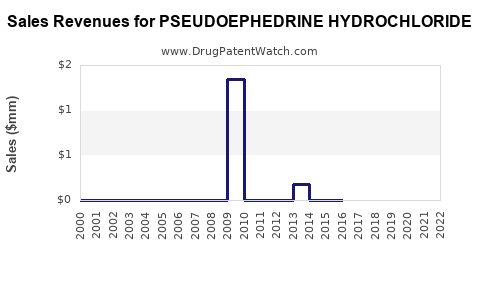
No single public company reports global pseudoephedrine hydrochloride revenue as a standalone category. Financial disclosure usually combines pseudoephedrine with other respiratory products, allergy medicines, analgesics, cough medicines, or total consumer-health revenue.
That reporting structure prevents a reliable standalone global market estimate from audited company filings. Commercial market-research estimates also vary because some reports count only pseudoephedrine products, while others include multi-ingredient cold remedies containing pseudoephedrine.
The market has four relevant revenue layers:
- Active pharmaceutical ingredient sales to finished-dose manufacturers.
- Generic single-ingredient pseudoephedrine products.
- Branded products such as Sudafed.
- Combination products containing pseudoephedrine with an antihistamine, analgesic, expectorant, or cough suppressant.
Single-ingredient pseudoephedrine is generally a low-price, high-volume category. Combination products and extended-release products typically produce higher revenue per package because they carry more active ingredients, differentiated dosing, and stronger brand positioning.
What is driving the financial trajectory of pseudoephedrine hydrochloride?
Recurring respiratory demand
Pseudoephedrine demand follows cold, flu, sinus, and seasonal allergy patterns. Sales normally strengthen during fall and winter respiratory seasons and during periods of elevated viral circulation. Allergy-driven demand supports a second seasonal peak in spring.
Demand is relatively resilient because congestion is a direct symptom target and consumers often purchase treatment without a physician visit. Volume can still shift rapidly between oral decongestants, topical nasal products, antihistamines, and combination remedies.
Oral phenylephrine regulatory pressure
In September 2023, FDA staff concluded that oral phenylephrine was not effective as a nasal decongestant at the marketed dose. FDA proposed removing oral phenylephrine from the OTC monograph after reviewing available evidence (FDA, 2023).
A final regulatory decision could benefit pseudoephedrine by redirecting consumers and retailers toward oral products with an established decongestant role. The effect would depend on retailer assortment, product availability, physician and pharmacist recommendations, and whether manufacturers reformulate products around other ingredients.
The commercial effect is likely to be uneven. Pseudoephedrine faces access restrictions and purchase limits, while oral phenylephrine products have historically been easier to purchase. Retailers may replace phenylephrine with non-decongestant products rather than expand pseudoephedrine inventory.
Retailer and pharmacy controls
Federal law requires retailers to record or electronically track pseudoephedrine purchases and enforce daily and monthly limits. Products are generally stored behind the counter. These controls increase transaction friction and reduce impulse purchases compared with open-shelf OTC products.
Retailers also face compliance costs, inventory management requirements, theft risk, and state-specific rules. These factors can limit shelf space and favor products with established demand, such as branded Sudafed and high-volume store brands.
Pricing and generic competition
The underlying molecule is generic and mature. Price competition is strongest for single-ingredient immediate-release tablets. Brand premiums persist where consumers seek known efficacy, extended-release dosing, or a familiar product name.
Private-label products can gain share when consumers trade down during inflationary periods. National brands retain an advantage where pharmacists or consumers use the brand as shorthand for pseudoephedrine products.
Which companies sell pseudoephedrine hydrochloride products?
The market is distributed among consumer-health companies, generic-drug manufacturers, contract manufacturers, and retailers.
| Company or group |
Commercial position |
| Kenvue |
Owner of the Sudafed consumer-health brand in the U.S. portfolio |
| Perrigo |
Supplies private-label and store-brand consumer-health products |
| Generic manufacturers |
Supply single-ingredient and combination tablets and caplets |
| Retail pharmacies |
Sell store brands and national brands under federal controls |
| Contract manufacturers |
Produce finished-dose products for brand owners and retailers |
| API suppliers |
Manufacture pseudoephedrine hydrochloride for finished-product makers |
National brand ownership and manufacturing are not always the same. A brand owner may outsource API procurement, tablet production, packaging, or distribution. Retail private-label products can therefore compete directly with national brands while relying on overlapping manufacturing infrastructure.
What patents protect pseudoephedrine hydrochloride products?
Pseudoephedrine hydrochloride itself is not protected by a meaningful, active composition-of-matter patent estate in the ordinary U.S. OTC market. The active ingredient has been used commercially for decades, and generic manufacturers can produce the molecule subject to applicable regulatory, quality, and controlled-substance requirements.
Patent protection may still arise around:
- Extended-release matrix systems.
- Multiparticulate or coated dosage forms.
- Abuse-deterrent delivery systems.
- Combination formulations.
- Specific dissolution profiles.
- Packaging or dispensing systems.
- Manufacturing processes.
- Product-by-process claims.
- Stability and moisture-control technologies.
These patents generally protect a particular product design rather than pseudoephedrine hydrochloride as a molecule. Their commercial value depends on whether the claims cover a material share of the market and whether a generic competitor can design around them.
What is the Orange Book status of pseudoephedrine hydrochloride?
The FDA Orange Book primarily identifies approved drug products with approved applications and listed patent information. Many OTC pseudoephedrine products are marketed under the OTC monograph pathway rather than a conventional NDA. As a result, the relevant commercial patent landscape is not necessarily captured in the same manner as the Orange Book estate for a prescription drug.
For monograph products, competition usually turns on compliance with the applicable OTC conditions, manufacturing quality, labeling, distribution, and retailer access. A conventional Orange Book Paragraph IV pathway is not the central entry mechanism for most standalone pseudoephedrine OTC products.
When does pseudoephedrine hydrochloride lose exclusivity?
Pseudoephedrine hydrochloride has already lost molecule-level exclusivity. There is no meaningful future loss-of-exclusivity event comparable to the patent cliff for a recently approved prescription drug.
| Exclusivity category |
Position |
| Chemical composition patent |
Expired or commercially irrelevant |
| Regulatory exclusivity |
No current product-wide exclusivity |
| OTC monograph access |
Available to compliant manufacturers |
| Brand protection |
Trademark-based, not molecule-based |
| Formulation patents |
Possible for specific products |
| Manufacturing know-how |
May create operational barriers but not broad exclusivity |
The commercial “exclusivity” of a brand such as Sudafed comes from trademark recognition, retail placement, consumer trust, packaging, and supply reliability. Those advantages can erode without a patent event.
How do federal pseudoephedrine controls affect revenue?
The Combat Methamphetamine Epidemic Act of 2005 imposed federal restrictions on retail pseudoephedrine sales, including purchase limits, identification requirements, sales records, and behind-the-counter placement (U.S. Congress, 2005).
The law limits annual consumer purchases to 3.6 grams per day and 9 grams per 30-day period under federal rules. State laws can impose additional restrictions, including electronic tracking, prescription requirements, or stricter sales conditions.
These measures affect financial performance in four ways:
- They reduce convenient access and impulse purchases.
- They increase pharmacy labor and compliance costs.
- They create barriers for high-frequency or multi-person purchasing.
- They favor retailers and brands with reliable pharmacy distribution.
The controls also reduce the risk that pseudoephedrine products are diverted for illicit methamphetamine manufacture. That public-policy objective has priority over maximizing OTC unit volume.
What are the main generic entry risks?
Generic entry is already established. The relevant risk is not a future first generic launch but continuing price and share pressure from additional suppliers.
Immediate-release products
Immediate-release pseudoephedrine tablets have the lowest technical and legal barriers. Competition can focus on:
- API price.
- Tablet production cost.
- Packaging.
- Pharmacy distribution.
- Retailer contracts.
- Supply continuity.
Margins are generally vulnerable when several suppliers offer interchangeable products.
Extended-release products
Extended-release products have greater formulation and manufacturing complexity. Entrants must demonstrate appropriate release characteristics, stability, and product quality. Formulation patents may affect specific products, but a competitor can often pursue a non-infringing release platform.
Combination products
Combination products have more regulatory and manufacturing complexity because each active ingredient must meet applicable conditions and labeling requirements. They can generate higher revenue per unit but face substitution across multiple therapeutic categories.
Are there Paragraph IV challenges involving pseudoephedrine hydrochloride?
Paragraph IV litigation is primarily associated with abbreviated new drug applications that challenge patents listed against NDA products. Standalone OTC monograph pseudoephedrine products generally do not present the same Orange Book litigation profile as prescription products.
A Paragraph IV dispute could arise for an NDA-backed extended-release or combination product with listed formulation patents. That scenario would be product-specific and would not create a broad patent barrier around pseudoephedrine hydrochloride.
The practical competitive threat is ordinary generic substitution and private-label expansion rather than a concentrated Paragraph IV event.
What litigation and settlement agreements affect the market?
The most material legal exposure is regulatory and compliance-related rather than molecule-patent litigation. Relevant areas include:
- Alleged violations of federal or state purchase controls.
- Retailer compliance with sales-record requirements.
- Product liability claims involving sympathomimetic effects.
- Trademark disputes involving pseudoephedrine brand names.
- Formulation patent disputes involving extended-release products.
- Contract and supply disputes between brand owners, retailers, and manufacturers.
There is no single market-wide patent settlement that determines pseudoephedrine hydrochloride entry. Litigation risk is fragmented across individual brands, formulations, and distribution arrangements.
What FDA regulatory status applies to pseudoephedrine hydrochloride?
Pseudoephedrine is an established OTC active ingredient for nasal decongestion under the FDA framework. Its principal regulatory constraints are:
- Compliance with the applicable OTC monograph or approved application.
- Correct active-ingredient labeling.
- Dosage and warning requirements.
- Manufacturing under current good manufacturing practice standards.
- Federal and state sales controls.
- Packaging and recordkeeping requirements.
The FDA’s action on oral phenylephrine could alter the competitive balance within the oral decongestant category, but it does not remove the sales restrictions applicable to pseudoephedrine.
How strong is the pseudoephedrine hydrochloride patent estate?
The broad patent estate is weak because the active ingredient is old, generic, and widely manufactured. Product-specific estates can be stronger where they cover:
- A commercially important extended-release product.
- A difficult-to-replicate delivery system.
- A combination product with limited alternatives.
- A manufacturing process that reduces cost or improves stability.
- Abuse-deterrent or controlled-release technology.
For most investment and licensing decisions, operational capabilities matter more than molecule patents. The highest-value barriers are regulatory compliance, API sourcing, reliable finished-dose manufacturing, retailer access, and brand distribution.
What geographic markets are most commercially relevant?
United States
The U.S. is the most legally constrained major market because of federal precursor controls and state-level restrictions. It is also the market with the clearest brand and pharmacy-channel economics.
Canada
Canada regulates pseudoephedrine through its drug and precursor-control frameworks. Product availability, scheduling, and retail conditions differ from the U.S., limiting direct transfer of U.S. sales assumptions.
Europe
European markets have country-specific rules for pseudoephedrine availability, dosage forms, and combination products. Some jurisdictions have tightened controls because of diversion concerns and adverse-event risk.
Asia-Pacific and Latin America
Commercial conditions vary substantially. Local registration, prescription status, import controls, and combination-product preferences can be more important than U.S. brand dynamics.
Geographic expansion is therefore a regulatory execution issue rather than a simple distribution exercise.
What is the outlook for pseudoephedrine hydrochloride revenue?
The likely financial trajectory is stable to modestly growing in nominal terms, with substantial variation by season and jurisdiction. Volume growth is constrained by the maturity of the category, purchase limits, substitution, and retailer controls.
The strongest potential positive factor is a shift away from oral phenylephrine if FDA action results in reduced availability or consumer confidence. The strongest negative factors are price erosion, private-label substitution, pharmacy restrictions, and declining use of oral decongestants in favor of non-drug or topical products.
Revenue growth is more likely to come from:
- Premium extended-release products.
- Combination cold and sinus products.
- Brand pricing.
- Retailer distribution gains.
- Seasonal demand spikes.
It is less likely to come from molecule-level innovation or patent exclusivity.
Key Takeaways
- Pseudoephedrine hydrochloride is a mature, generic OTC decongestant with no meaningful molecule-level patent exclusivity.
- The U.S. market is regulated by federal and state precursor-control rules, including behind-the-counter sales and purchase limits.
- Standalone public revenue for pseudoephedrine is not generally disclosed by major consumer-health companies.
- Commercial value is concentrated in brands, extended-release products, combination formulations, private-label contracts, and pharmacy distribution.
- Generic competition is established; future risk is price and share erosion rather than a first-generic patent cliff.
- Formulation patents can protect individual products but do not create broad protection for pseudoephedrine hydrochloride.
- FDA scrutiny of oral phenylephrine could redirect some demand toward pseudoephedrine, subject to access and compliance constraints.
- The most important barriers are regulatory controls, manufacturing quality, API supply, retailer access, and brand strength.
FAQs
Is pseudoephedrine hydrochloride still patent protected?
No broad, commercially meaningful composition patent protects pseudoephedrine hydrochloride. Specific extended-release, combination, packaging, or manufacturing technologies may have patent protection.
Is Sudafed the only major pseudoephedrine brand?
No. Sudafed is a leading U.S. brand, but generic manufacturers, pharmacy chains, supermarkets, and mass merchants sell competing pseudoephedrine products and private-label equivalents.
Can consumers buy pseudoephedrine hydrochloride without a prescription?
In many U.S. jurisdictions, consumers can purchase it without a prescription, but the product is generally sold behind the pharmacy counter and subject to identification, recordkeeping, and quantity limits. State requirements may be stricter.
Does pseudoephedrine hydrochloride have biosimilar competition?
No. Biosimilar rules apply to biological products. Pseudoephedrine hydrochloride is a small-molecule chemical drug and competes through generic and OTC pathways.
Is pseudoephedrine hydrochloride more commercially exposed than phenylephrine?
Pseudoephedrine has stronger regulatory restrictions but may benefit if oral phenylephrine products are removed or reduced following FDA efficacy concerns. The net commercial effect depends on retailer substitution and consumer access.
References
Electronic Code of Federal Regulations. (n.d.-a). 21 C.F.R. Part 341: Cold, cough, allergy, bronchodilator, and antiasthmatic drug products for over-the-counter human use. https://www.ecfr.gov/current/title-21/chapter-I/subchapter-D/part-341
U.S. Congress. (2005). Combat Methamphetamine Epidemic Act of 2005, Pub. L. No. 109-177, Title VII.
U.S. Food and Drug Administration. (2020). Over-the-counter monograph drug products: Regulatory framework under the CARES Act. https://www.fda.gov
U.S. Food and Drug Administration. (2023). FDA briefing document: Joint meeting of the Nonprescription Drugs Advisory Committee and the Anesthetic and Analgesic Drug Products Advisory Committee regarding oral phenylephrine. https://www.fda.gov
U.S. Drug Enforcement Administration. (n.d.). Retail sales of scheduled listed chemical products and pseudoephedrine requirements. https://www.deadiversion.usdoj.gov