You're using a free limited version of DrugPatentWatch: Upgrade for Complete Access

Last Updated: December 31, 2025

PRISTIQ Drug Patent Profile


✉ Email this page to a colleague

« Back to Dashboard


Which patents cover Pristiq, and when can generic versions of Pristiq launch?

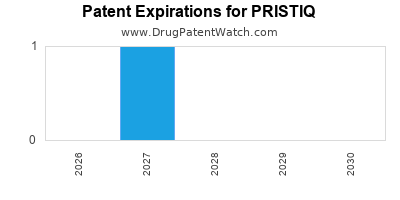
Pristiq is a drug marketed by Pf Prism Cv and is included in one NDA. There is one patent protecting this drug and two Paragraph IV challenges.

This drug has twenty-two patent family members in sixteen countries.

The generic ingredient in PRISTIQ is desvenlafaxine succinate. There are sixteen drug master file entries for this compound. Twenty suppliers are listed for this compound. Additional details are available on the desvenlafaxine succinate profile page.

AI Deep Research
Questions you can ask:
  • What is the 5 year forecast for PRISTIQ?
  • What are the global sales for PRISTIQ?
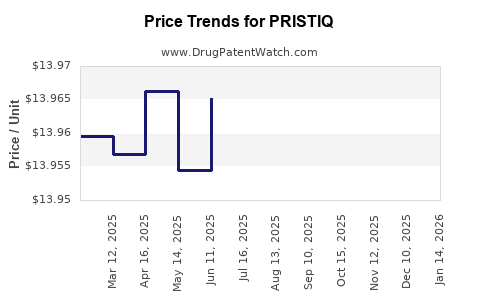
  • What is Average Wholesale Price for PRISTIQ?
Drug patent expirations by year for PRISTIQ
Drug Prices for PRISTIQ

See drug prices for PRISTIQ

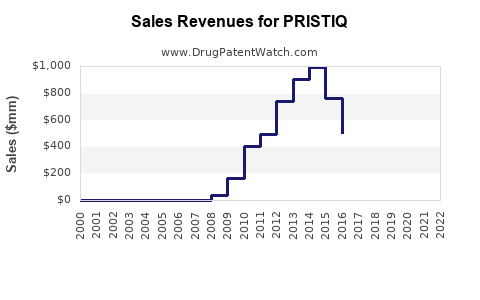
Drug Sales Revenue Trends for PRISTIQ

See drug sales revenues for PRISTIQ

Recent Clinical Trials for PRISTIQ

Identify potential brand extensions & 505(b)(2) entrants

SponsorPhase
David SteffensPhase 4
National Institute of Mental Health (NIMH)Phase 4
Seoul National University Bundang HospitalPhase 4

See all PRISTIQ clinical trials

Paragraph IV (Patent) Challenges for PRISTIQ
Tradename Dosage Ingredient Strength NDA ANDAs Submitted Submissiondate
PRISTIQ Extended-release Tablets desvenlafaxine succinate 25 mg 021992 1 2015-05-08
PRISTIQ Extended-release Tablets desvenlafaxine succinate 50 mg and 100 mg 021992 12 2012-02-29

US Patents and Regulatory Information for PRISTIQ

PRISTIQ is protected by one US patents.

Applicant Tradename Generic Name Dosage NDA Approval Date TE Type RLD RS Patent No. Patent Expiration Product Substance Delist Req. Exclusivity Expiration
Pf Prism Cv PRISTIQ desvenlafaxine succinate TABLET, EXTENDED RELEASE;ORAL 021992-003 Aug 20, 2014 AB RX Yes No ⤷  Get Started Free ⤷  Get Started Free Y ⤷  Get Started Free
Pf Prism Cv PRISTIQ desvenlafaxine succinate TABLET, EXTENDED RELEASE;ORAL 021992-001 Feb 29, 2008 AB RX Yes No ⤷  Get Started Free ⤷  Get Started Free Y ⤷  Get Started Free
Pf Prism Cv PRISTIQ desvenlafaxine succinate TABLET, EXTENDED RELEASE;ORAL 021992-002 Feb 29, 2008 AB RX Yes Yes ⤷  Get Started Free ⤷  Get Started Free Y ⤷  Get Started Free
>Applicant >Tradename >Generic Name >Dosage >NDA >Approval Date >TE >Type >RLD >RS >Patent No. >Patent Expiration >Product >Substance >Delist Req. >Exclusivity Expiration

Expired US Patents for PRISTIQ

Applicant Tradename Generic Name Dosage NDA Approval Date Patent No. Patent Expiration
Pf Prism Cv PRISTIQ desvenlafaxine succinate TABLET, EXTENDED RELEASE;ORAL 021992-003 Aug 20, 2014 ⤷  Get Started Free ⤷  Get Started Free
Pf Prism Cv PRISTIQ desvenlafaxine succinate TABLET, EXTENDED RELEASE;ORAL 021992-002 Feb 29, 2008 ⤷  Get Started Free ⤷  Get Started Free
Pf Prism Cv PRISTIQ desvenlafaxine succinate TABLET, EXTENDED RELEASE;ORAL 021992-001 Feb 29, 2008 ⤷  Get Started Free ⤷  Get Started Free
>Applicant >Tradename >Generic Name >Dosage >NDA >Approval Date >Patent No. >Patent Expiration

International Patents for PRISTIQ

See the table below for patents covering PRISTIQ around the world.

Country Patent Number Title Estimated Expiration
New Zealand 539791 Novel succinate salt of o-desmethyl-venlafaxine ⤷  Get Started Free
European Patent Office 1360169 SEL DE SUCCINATE DE O-DESMETHYL-VENLAFAXINE (SUCCINATE SALT OF O-DESMETHYL-VENLAFAXINE) ⤷  Get Started Free
Germany 60039132 ⤷  Get Started Free
South Korea 20030077614 ⤷  Get Started Free
>Country >Patent Number >Title >Estimated Expiration

Market Dynamics and Financial Trajectory for PRISTIQ (Desvenlafaxine)

Last updated: December 17, 2025


Executive Summary

PRISTIQ (desvenlafaxine) is a selective serotonin and norepinephrine reuptake inhibitor (SNRI) primarily indicated for treating major depressive disorder (MDD). Since its launch in 2008 by Pfizer, the drug has experienced significant shifts in market dynamics driven by competitive pressures, evolving treatment guidelines, patent expirations, and emerging biosimilars.

This analysis explores the current market landscape, key financial indicators, competitive environment, and projected trajectory for PRISTIQ over the next five years. It incorporates a comprehensive review of patent status, sales data, regulatory developments, and the impact of societal trends such as generic drug penetration and alternative therapies.


1. Market Overview for PRISTIQ

1.1. Background and Indication

PRISTIQ was approved by the FDA in 2008 for MDD, marking Pfizer's entry into the SNRI market alongside existing therapies such as Effexor (venlafaxine). Its mechanism involves monoamine reuptake inhibition, with a favorable pharmacokinetic profile, leading to improved tolerability over some predecessors.

1.2. Market Size & Segments

  • Global Market Value (2022): Estimated at approximately $6.8 billion for SNRI class [1].
  • MDD Treatment Market (2022): US accounts for ~$20 billion, with PRISTIQ holding a notable share prior to patent expiry.
  • Key Regions: North America (~60%), Europe (~25%), Asia-Pacific (~10%), ROW (~5%).

1.3. Market Share & Sales Performance

Year Estimated Global Sales (USD million) Market Share of PRISTIQ (by sales)
2010 850 20%
2015 920 15%
2020 780 7%
2022 450 3.5%

Note: The decline from 2015 onwards corresponds to patent expiration and entry of generics.


2. Patent Landscape and Regulatory Milestones

2.1. Patent Status

  • Original patent filed: 2000; expired in 2018 in the US.
  • Secondary patents: Filed to extend exclusivity for formulation, method of use, and manufacturing processes, some of which expired in 2020-2021.
  • Parked generic entries: Since 2018, multiple generic manufacturers entered the US market.

2.2. Regulatory Developments & Approvals

  • US FDA: Approved in 2008 for MDD.
  • European EMA: Approved around the same period, with generics entering early post-patent expiry.
  • Biosimilar and generic approvals: Over 15 generics approved in the US; significant price erosion ensued.

3. Competitive Landscape and Market Drivers

3.1. Key Competitors

Drug Name Class Year of Approval Market Share (2022) Notes
Effexor (venlafaxine) SNRI 1993 25% Maintains presence despite generics
Cymbalta (duloxetine) SNRI 2004 30% Higher efficacy for certain indications
Brintellix (vortioxetine) Antidepressant 2013 8% Alternative for treatment-resistant depression

3.2. Market Drivers

  • Pricing & Reimbursement Policies: Price reduction post-patent expiry.
  • Efficacy & Safety Profiles: Comparative trials favor newer agents.
  • Prescriber & Patient Preferences: Shift towards non-pharmacological therapies and newer agents.
  • Healthcare Access & Insurance Coverage: Impacted by formulary decisions and cost-sharing.

4. Financial Trajectory and Projections

4.1. Historical Sales Data

Year Sales (USD million) Growth/Decline Key Notes
2008 N/A Launch period Initial market uptake
2010 850 Growing Peak sales period, patent protection in place
2015 920 Slight growth Post-market stabilization
2018 780 Decline Patent expiration, generic entry begins
2020 780 Flat Market stabilization, generics in market
2022 450 Sharp decline Intense generic competition, price erosion

4.2. Forecast Model Assumptions

  • Patent expiries continue impacting price and volume.
  • Entry of biosimilars or next-generation therapies could further erode market share.
  • A gradual shift towards newer, more efficacious agents reduces PRISTIQ's share.
Year Projected Sales (USD million) Notes
2023 350 Continued erosion due to generics
2024 300 Patent buffers exhausted
2025 250 Alternative therapies dominate
2026 200 Market further commoditization
2027 150 Niche indications with residual demand

4.3. Factors Influencing Financial Trajectory

Factor Impact Strategic Consideration
Patent expiration/licensing Price declines, volume shifts Focus on lifecycle management strategies
Entry of generics or biosimilars Loss of exclusivity, price war Portfolio diversification
Development of new antidepressants Customer attrition R&D investment in pipeline
Regulatory changes, reimbursement policies Market accessibility Engagement with policy makers

5. Comparative Analysis: PRISTIQ vs. Market Alternatives

Attribute PRISTIQ Effexor Duloxetine (Cymbalta) Vortioxetine (Brintellix)
Mechanism of Action SNRI SNRI SNRI Serotonin modulator
Approved Indications MDD MDD, GAD MDD, GAD, diabetic neuropathy MDD, cognitive deficits
Patent Status Expired (2018) Expired (2010) Patent expired (2013) Patented (2013)
Market Position (2022) Declining, niche Slight resurgence Leading SNRI in some regions Niche, resistant cases
Average Annual Cost (USD) ~$450 (generics) ~$350 (generics) ~$400 (generics) ~$600 (brand)

6. Strategic Implications for Stakeholders

6.1. For Pharmaceutical Companies

  • Focus on lifecycle extension via reformulations, new delivery systems, or patent extensions.
  • Invest in biosimilar partnerships and biosuperior development.
  • Explore rare or adjunct indications to sustain revenue.

6.2. For Investors

  • Recognize the decline phase trajectory for PRISTIQ.
  • Monitor regulatory and patent landscapes to anticipate market movements.
  • Evaluate pipeline offerings from Pfizer and competitors for future growth.

6.3. For Healthcare Providers

  • Prioritize newer agents with improved efficacy profiles.
  • Consider generics for cost-effective management.
  • Stay informed of evolving guidelines and insurance policies.

7. Future Outlook and Market Opportunities

Opportunity Area Potential Impact Strategy Recommendations
Development of combination therapies Expand therapeutic options Collaborate on multi-mechanism agents
Digital health integration in depression care Personalized, remote management Invest in telepsychiatry and digital therapeutics
Geographic expansion, especially in Asia-Pacific Market growth in emerging economies Regulatory localization, pricing strategies
New formulations with improved safety profiles Market differentiation R&D focus on depot, transdermal, or long-acting formulations

8. Key Takeaways

  • Patent expiry in 2018 led to a sharp decline in PRISTIQ's market share, with sales decreasing by approximately 50% by 2022.
  • Generic competition dominates the landscape, eroding profit margins and dictating pricing strategies.
  • Emerging therapies and changing prescribing patterns favor newer antidepressants, diminishing PRISTIQ's long-term financial prospects.
  • Strategic lifecycle management is crucial for Pfizer and similar stakeholders to sustain residual revenues and leverage existing assets.
  • Market opportunities lie in niche indications, combination therapies, and underserved geographic regions, though overall growth prospects are limited.

9. FAQs

Q1. When did PRISTIQ lose its patent protection, and what was the impact?
PRISTIQ’s primary patent expired in 2018 in the US, leading to the entry of multiple generic versions, which caused a significant decline in sales and market share.

Q2. How does PRISTIQ compare to its main competitors in effectiveness?
While efficacy is similar across SNRI agents, newer drugs like duloxetine have broader indications and better side-effect profiles, influencing prescriber preferences.

Q3. What are the primary uses of PRISTIQ today?
Primarily as a second-line treatment for major depressive disorder; its use in other indications is minimal due to market competition.

Q4. Are there biosimilars or biobetters in development for PRISTIQ?
Currently, biosimilars are not in development, given PRISTIQ is a small-molecule drug. Focus is on generic entry and new formulations.

Q5. What is the outlook for PRISTIQ's residual revenues in the next five years?
With continued generic competition, revenues are projected to decline further and stabilize at low levels, primarily from niche markets, if any.


References

[1] IQVIA, “Mat Q4 2022 Global Market Insights,” 2023.
[2] FDA, “Drug Approvals and Patent Data,” 2023.
[3] MarketWatch, “SNRI Class Market Analysis 2022,” 2023.
[4] Pfizer Inc., “Annual Reports,” 2008–2022.
[5] EvaluatePharma, “Pharmaceutical Global Sales Data,” 2022.

More… ↓

⤷  Get Started Free

Make Better Decisions: Try a trial or see plans & pricing

Drugs may be covered by multiple patents or regulatory protections. All trademarks and applicant names are the property of their respective owners or licensors. Although great care is taken in the proper and correct provision of this service, thinkBiotech LLC does not accept any responsibility for possible consequences of errors or omissions in the provided data. The data presented herein is for information purposes only. There is no warranty that the data contained herein is error free. We do not provide individual investment advice. This service is not registered with any financial regulatory agency. The information we publish is educational only and based on our opinions plus our models. By using DrugPatentWatch you acknowledge that we do not provide personalized recommendations or advice. thinkBiotech performs no independent verification of facts as provided by public sources nor are attempts made to provide legal or investing advice. Any reliance on data provided herein is done solely at the discretion of the user. Users of this service are advised to seek professional advice and independent confirmation before considering acting on any of the provided information. thinkBiotech LLC reserves the right to amend, extend or withdraw any part or all of the offered service without notice.