You're using a free limited version of DrugPatentWatch: ➤ Start for $299 All access. No Commitment.

Last Updated: March 26, 2026

PREPOPIK Drug Patent Profile


✉ Email this page to a colleague

« Back to Dashboard


Which patents cover Prepopik, and when can generic versions of Prepopik launch?

Prepopik is a drug marketed by Ferring Pharms Inc and is included in one NDA. There are two patents protecting this drug and one Paragraph IV challenge.

This drug has thirty-two patent family members in twenty-five countries.

The generic ingredient in PREPOPIK is citric acid; magnesium oxide; sodium picosulfate. There are five drug master file entries for this compound. One supplier is listed for this compound. Additional details are available on the citric acid; magnesium oxide; sodium picosulfate profile page.

DrugPatentWatch® Generic Entry Outlook for Prepopik

There have been seven patent litigation cases involving the patents protecting this drug, indicating strong interest in generic launch. Recent data indicate that 63% of patent challenges are decided in favor of the generic patent challenger and that 54% of successful patent challengers promptly launch generic drugs.

There is one tentative approval for the generic drug (citric acid; magnesium oxide; sodium picosulfate), which indicates the potential for near-term generic launch.

Indicators of Generic Entry

< Available with Subscription >

  Start Trial

AI Deep Research
Questions you can ask:
  • What is the 5 year forecast for PREPOPIK?
  • What are the global sales for PREPOPIK?
  • What is Average Wholesale Price for PREPOPIK?
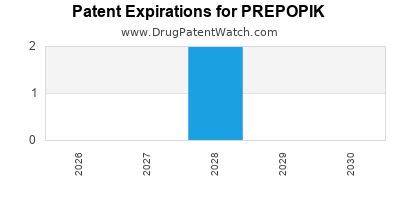
Drug patent expirations by year for PREPOPIK
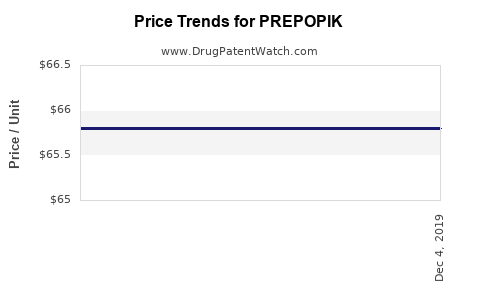
Drug Prices for PREPOPIK

See drug prices for PREPOPIK

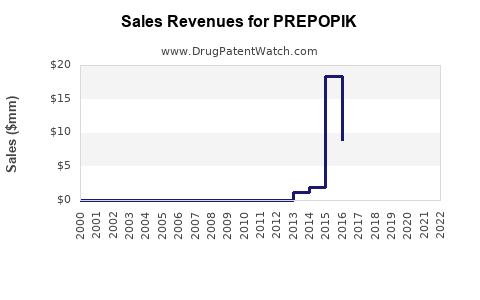
Drug Sales Revenue Trends for PREPOPIK

See drug sales revenues for PREPOPIK

Recent Clinical Trials for PREPOPIK

Identify potential brand extensions & 505(b)(2) entrants

SponsorPhase
Ferring PharmaceuticalsPhase 4
The Cleveland ClinicPhase 4
Ferring PharmaceuticalsPhase 3

See all PREPOPIK clinical trials

Paragraph IV (Patent) Challenges for PREPOPIK
Tradename Dosage Ingredient Strength NDA ANDAs Submitted Submissiondate
PREPOPIK Oral Solution citric acid; magnesium oxide; sodium picosulfate 10 mg, 3.5 g, and 12 g 202535 1 2014-05-21

US Patents and Regulatory Information for PREPOPIK

PREPOPIK is protected by two US patents.

Applicant Tradename Generic Name Dosage NDA Approval Date TE Type RLD RS Patent No. Patent Expiration Product Substance Delist Req. Exclusivity Expiration
Ferring Pharms Inc PREPOPIK citric acid; magnesium oxide; sodium picosulfate FOR SOLUTION;ORAL 202535-001 Jul 16, 2012 DISCN Yes No 8,450,338 ⤷  Start Trial Y ⤷  Start Trial
Ferring Pharms Inc PREPOPIK citric acid; magnesium oxide; sodium picosulfate FOR SOLUTION;ORAL 202535-001 Jul 16, 2012 DISCN Yes No 8,481,083 ⤷  Start Trial Y ⤷  Start Trial
>Applicant >Tradename >Generic Name >Dosage >NDA >Approval Date >TE >Type >RLD >RS >Patent No. >Patent Expiration >Product >Substance >Delist Req. >Exclusivity Expiration

International Patents for PREPOPIK

When does loss-of-exclusivity occur for PREPOPIK?

Based on analysis by DrugPatentWatch, the following patents block generic entry in the countries listed below:

Australia

Patent: 08309287
Estimated Expiration: ⤷  Start Trial

Brazil

Patent: 0818541
Estimated Expiration: ⤷  Start Trial

Canada

Patent: 02152
Estimated Expiration: ⤷  Start Trial

China

Patent: 1406457
Estimated Expiration: ⤷  Start Trial

Patent: 1820859
Estimated Expiration: ⤷  Start Trial

Croatia

Patent: 0180215
Estimated Expiration: ⤷  Start Trial

Denmark

Patent: 07526
Estimated Expiration: ⤷  Start Trial

European Patent Office

Patent: 07526
Estimated Expiration: ⤷  Start Trial

Hungary

Patent: 38174
Estimated Expiration: ⤷  Start Trial

Israel

Patent: 4500
Patent: תהליך לייצור הרכב או הרכב רוקחי על ידי ריסוס ציפוי של שכבת נתרן פיקוסולפאט על גרעין של אשלגן ביקרבונאט (Process for the manufacture of a composition or pharmaceutical composition comprising spray coating a layer of sodium picosulphate on a core of potassium bicarbonate)
Estimated Expiration: ⤷  Start Trial

Japan

Patent: 54873
Estimated Expiration: ⤷  Start Trial

Patent: 11500549
Estimated Expiration: ⤷  Start Trial

Jordan

Patent: 06
Patent: عملية لتصنيع منتج صيدلاني يشتمل على حمض الستريك ،أكسيد ماغنسيوم، بيكربونات بوتاسيوم وبيكو كبريتات صوديوم، تركيبة صيدلانية تشتمل على حبيبات متحصل عليها بواسطة هذه العملية ومنتجات وسيطة منها (PROCESS FOR THE MANUFACURE OF A PHARMACEUTICAL PRODUCT COMPRISING CITRIC ACID, MAGNESIUM OXIDE, POTASSIUM BICARBONATE AND SODIUM PICOSULFATE, PHARMACEUTICAL COMPOSITION COMPRISING GRANULES OBTAINED BY SUCH PROCESS AND INTERMEDIATE PRODUCTS THEREOF)
Estimated Expiration: ⤷  Start Trial

Lithuania

Patent: 07526
Estimated Expiration: ⤷  Start Trial

Mexico

Patent: 10003588
Patent: PROCESO PARA LA MANUFACTURA DE UN PRODUCTO FARMACEUTICO. (PROCESS FOR THE MANUFACTURE OF A PHARMACEUTICAL PRODUCT.)
Estimated Expiration: ⤷  Start Trial

New Zealand

Patent: 3899
Patent: PROCESS FOR THE MANUFACURE OF A PHARMACEUTICAL PRODUCT COMPRISING CITRIC ACID, MAGNESIUM OXIDE, POTASSIUM BICARBONATE AND SODIUM PICOSULFATE, PHARMACEUTICAL COMPOSITION COMPRISING GRANULES OBTAINED BY SUCH PROCESS AND INTERMEDIATE
Estimated Expiration: ⤷  Start Trial

Poland

Patent: 07526
Estimated Expiration: ⤷  Start Trial

Portugal

Patent: 07526
Estimated Expiration: ⤷  Start Trial

Russian Federation

Patent: 73332
Patent: СПОСОБ ИЗГОТОВЛЕНИЯ ФАРМАЦЕВТИЧЕСКОГО ПРОДУКТА, СОДЕРЖАЩЕГО ЛИМОННУЮ КИСЛОТУ, ОКСИД МАГНИЯ, БИКАРБОНАТ КАЛИЯ И ПИКОСУЛЬФАТ НАТРИЯ, ФАРМАЦЕВТИЧЕСКИЕ КОМПОЗИЦИИ, СОДЕРЖАЩИЕ ГРАНУЛЫ, ПОЛУЧЕННЫЕ ТАКИМ СПОСОБОМ, И ПРОМЕЖУТОЧНОЕ СОЕДИНЕНИЕ (METHOD OF MANUFACTURING PHARMACEUTICAL PRODUCT, CONTAINING CITRIC ACID, MAGNESIUM OXIDE, POTASSIUM BICARBONATE AND SODIUM PICOSULFATE, PHARMACEUTICAL COMPOSITIONS, CONTAINING THUS OBTAINED GRANULES AND INTERMEDIATE COMPOUND)
Estimated Expiration: ⤷  Start Trial

Patent: 10112483
Patent: СПОСОБ ИЗГОТОВЛЕНИЯ ФАРМАЦЕВТИЧЕСКОГО ПРОДУКТА, СОДЕРЖАЩЕГО ЛИМОННУЮ КИСЛОТУ, ОКСИД МАГНИЯ, БИКАРБОНАТ КАЛИЯ И ПИКОСУЛЬФАТ НАТРИЯ, ФАРМАЦЕВТИЧЕСКИЕ КОМПОЗИЦИИ, СОДЕРЖАЩИЕ ГРАНУЛЫ, ПОЛУЧЕННЫЕ ТАКИМ СПОСОБОМ, И ПРОМЕЖУТОЧНОЕ СОЕДИНЕНИЕ
Estimated Expiration: ⤷  Start Trial

Saudi Arabia

Patent: 290670
Patent: عملية تصنيع خاصة بمنتج صيدلاني من بيكوكبريتات الصوديوم (Manufacturing Process for a Pharmaceutical Sodium Picosulphate Product)
Estimated Expiration: ⤷  Start Trial

Slovenia

Patent: 07526
Estimated Expiration: ⤷  Start Trial

South Africa

Patent: 1002131
Patent: PROCESS FOR THE MANUFACTURE OF A PHARMACEUTICAL PRODUCT COMPRISING CITRIC ACID,MAGNESIUM OXIDE,POTASSIUM BICARBONATE AND SODIUM PICOSULFATE,PHARMACEUTICAL COMPOSITION COMPRISING GRANULES OBTAINED BY SUCH PROCESS AND INTERMEDIATE
Estimated Expiration: ⤷  Start Trial

South Korea

Patent: 1330096
Estimated Expiration: ⤷  Start Trial

Patent: 1381263
Estimated Expiration: ⤷  Start Trial

Patent: 100072020
Patent: PROCESS FOR THE MANUFACTURE OF A PHARMACEUTICAL PRODUCT COMPRISING CITRIC ACID, MAGNESIUM OXIDE, POTASSIUM BICARBONATE AND SODIUM PICOSULFATE, PHARMACEUTICAL COMPOSITION COMPRISING GRANULES OBTAINED BY SUCH PROCESS AND INTERMEDIATE
Estimated Expiration: ⤷  Start Trial

Patent: 130105757
Patent: PROCESS FOR THE MANUFACTURE OF A PHARMACEUTICAL PRODUCT COMPRISING CITRIC ACID, MAGNESIUM OXIDE, POTASSIUM BICARBONATE AND SODIUM PICOSULFATE, PHARMACEUTICAL COMPOSITION COMPRISING GRANULES OBTAINED BY SUCH PROCESS AND INTERMEDIATE
Estimated Expiration: ⤷  Start Trial

Spain

Patent: 59716
Estimated Expiration: ⤷  Start Trial

Taiwan

Patent: 18352
Estimated Expiration: ⤷  Start Trial

Patent: 0924759
Patent: Process for the manufacture of a pharmaceutical product
Estimated Expiration: ⤷  Start Trial

United Kingdom

Patent: 05953
Estimated Expiration: ⤷  Start Trial

Generics may enter earlier, or later, based on new patent filings, patent extensions, patent invalidation, early generic licensing, generic entry preferences, and other factors.

See the table below for additional patents covering PREPOPIK around the world.

Country Patent Number Title Estimated Expiration
South Korea 101330096 ⤷  Start Trial
Israel 204500 תהליך לייצור הרכב או הרכב רוקחי על ידי ריסוס ציפוי של שכבת נתרן פיקוסולפאט על גרעין של אשלגן ביקרבונאט (Process for the manufacture of a composition or pharmaceutical composition comprising spray coating a layer of sodium picosulphate on a core of potassium bicarbonate) ⤷  Start Trial
Slovenia 2207526 ⤷  Start Trial
China 101820859 ⤷  Start Trial
World Intellectual Property Organization (WIPO) 2009047633 ⤷  Start Trial
>Country >Patent Number >Title >Estimated Expiration

PREPOPIK: Market Dynamics and Financial Trajectory Analysis

Last updated: February 19, 2026

PREPOPIK (Alosetron Hydrochloride) is a selective serotonin 5-HT3 receptor antagonist approved for the treatment of severe diarrhea-predominant irritable bowel syndrome (IBS-D) in women. Market entry and subsequent performance are shaped by regulatory restrictions, therapeutic competition, and patient access.

What is PREPOPIK's Regulatory History and Current Status?

Alosetron hydrochloride, the active pharmaceutical ingredient in PREPOPIK, was initially approved by the U.S. Food and Drug Administration (FDA) in June 2000 for severe IBS-D. Its marketing was voluntarily withdrawn by GlaxoSmithKline (GSK) in November 2000 due to concerns regarding serious gastrointestinal adverse events, including ischemic colitis and severe constipation.

Following a comprehensive review, including data from observational studies and post-marketing surveillance, the FDA re-approved alosetron hydrochloride in June 2002 under a strict Risk Management Program (RMP) known as the Risk Evaluation and Mitigation Strategy (REMS). This REMS program is a critical factor defining PREPOPIK's market access and prescribing practices.

The REMS program mandates that healthcare providers prescribing alosetron hydrochloride must be certified. Patients initiating treatment must also acknowledge the risks and sign a patient-physician agreement. This controlled access limits the prescriber base and patient population, impacting market penetration compared to less restricted medications.

Key REMS Program Components:

  • Healthcare Provider Certification: Prescribers must complete a training program and be certified by the manufacturer.
  • Patient-Physician Agreement: Patients must be informed of the risks and benefits and sign an agreement confirming understanding.
  • Limited Distribution: The drug is available only through pharmacies participating in the REMS program.
  • Contraindications: The drug is contraindicated in patients with constipation or evidence of intestinal obstruction.

Source: FDA [1]

Who are PREPOPIK's Primary Competitors?

The therapeutic landscape for IBS-D is characterized by a multi-faceted approach, with PREPOPIK competing against drugs with different mechanisms of action and risk profiles.

Direct Competitors (Serotonin Receptor Antagonists):

  • Ondansetron: While not specifically approved for IBS-D, ondansetron is a 5-HT3 antagonist sometimes used off-label. However, its broader applications and different safety profile differentiate it from PREPOPIK's targeted indication and REMS.

Indirect Competitors (Other IBS-D Treatments):

  • Antispasmodics: Medications like dicyclomine and hyoscyamine are used to alleviate abdominal pain and cramping associated with IBS.
  • Antidiarrheals: Loperamide, an opioid agonist, is commonly used for symptomatic relief of diarrhea. Its over-the-counter availability and different mechanism of action position it as a competitor for less severe cases or as a first-line option.
  • Bile Acid Sequestrants: Cholestyramine and colestipol can be effective in some patients with IBS-D, particularly those with malabsorption of bile acids.
  • Antidepressants (Low-Dose TCAs and SSRIs): Tricyclic antidepressants (TCAs) and selective serotonin reuptake inhibitors (SSRIs), when used at low doses, can modulate gut-brain signaling and influence gut motility and pain perception in IBS patients.
  • Newer Agents:
    • Rifaximin (Xifaxan): Approved for IBS-D associated with prior diarrhea caused by traveler's diarrhea and for reducing the risk of overt hepatic encephalopathy. Its mechanism involves altering gut microbiota.
    • Eluxadoline (Viberzi): A mixed mu-opioid receptor agonist and delta-opioid receptor antagonist, approved for IBS-D. It directly impacts gut motility and secretion.
    • Diphenoxylate/Atropine (Lomotil): Another opioid-based antidiarrheal, subject to prescription requirements.

The presence of these diverse therapeutic options, each with varying efficacy, safety profiles, and accessibility, means PREPOPIK competes not only based on its direct pharmacological effects but also on the strict REMS program that limits its use.

What is PREPOPIK's Market Performance and Financial Trajectory?

PREPOPIK's market performance has been constrained by its REMS program. Sales figures reflect a niche market segment for patients with severe IBS-D who have not responded to other treatments and can tolerate the associated risks under strict medical supervision.

Sales Data and Trends:

Data on PREPOPIK's specific sales are often aggregated within broader GlaxoSmithKline (GSK) gastrointestinal portfolios or listed under "other" revenue streams in financial reports, making precise, independent revenue figures challenging to isolate. However, general market observations and available reports indicate:

  • Limited Market Share: Due to the REMS, PREPOPIK has a significantly smaller market share compared to more broadly accessible IBS-D treatments.
  • Niche Patient Population: The drug targets a subset of patients with severe, refractory IBS-D, indicating a controlled and specific demand.
  • Consistent, Low-Volume Sales: Prescription data and market analyses suggest a consistent, albeit low-volume, prescription rate, driven by the established, certified prescriber base.
  • No Significant Growth Surge Expected: The REMS program inherently limits significant market expansion. Future financial trajectory is likely to be characterized by stability rather than aggressive growth, barring any changes to the regulatory framework or significant breakthroughs in alternative IBS-D treatments that might indirectly affect PREPOPIK's positioning.

Financial Impact Considerations:

  • Revenue Generation: Revenue is directly tied to the number of patients eligible for and prescribed PREPOPIK under the REMS. Pricing strategies aim to optimize revenue within this limited patient pool.
  • Manufacturing and Distribution Costs: Maintaining compliance with the REMS program incurs ongoing costs for manufacturing, distribution, training, and monitoring.
  • R&D Investment: Further significant investment in the development of PREPOPIK itself is unlikely, given its mature stage in the product lifecycle and the established regulatory hurdles. Future R&D within the IBS space for GSK would likely focus on new molecular entities or different therapeutic approaches.

Precise revenue figures for PREPOPIK are not publicly broken out by GSK in their annual financial reports. However, it is understood to be a small contributor to the company's overall gastrointestinal segment revenue. For instance, in GSK's 2022 annual report, the gastrointestinal category accounted for £3.0 billion in revenue, with specific drug contributions not individually itemized for PREPOPIK. [2]

What are the Key Challenges and Opportunities for PREPOPIK?

PREPOPIK operates within a challenging regulatory environment, presenting both significant limitations and specific market opportunities.

Key Challenges:

  • REMS Program Burden: The stringent REMS program creates a substantial barrier to access for both prescribers and patients, limiting its potential market size and ease of use. This complexity discourages broader adoption and requires significant logistical effort for compliance.
  • Serious Adverse Event Profile: The history of serious gastrointestinal side effects, including ischemic colitis and severe constipation, necessitates careful patient selection and continuous monitoring, contributing to the restrictive prescribing practices.
  • Therapeutic Alternatives: The availability of a wide range of alternative treatments for IBS-D, including both established and newer agents with potentially more favorable safety profiles or simpler administration, provides patients and physicians with choices that do not involve the REMS program.
  • Physician Education and Awareness: Ensuring that the limited pool of certified physicians remains aware of PREPOPIK's role and appropriate patient selection criteria is an ongoing challenge.

Key Opportunities:

  • Unmet Need in Severe IBS-D: For a specific sub-population of patients with severe IBS-D who have failed multiple other therapies and can be managed within the REMS framework, PREPOPIK offers a targeted treatment option that may provide significant symptom relief where others have not.
  • Physician Loyalty within Niche: Certified prescribers who have successfully used PREPOPIK and understand its risk-benefit profile for their patients may exhibit strong loyalty, ensuring a stable, albeit small, prescription base.
  • Potential for Lifecycle Management: While significant R&D is unlikely, opportunities might exist in exploring improved formulations or combination therapies, provided they can navigate regulatory pathways without exacerbating the existing risk profile. However, this is a low-probability scenario.
  • Market Stability: In its current niche, PREPOPIK offers a degree of market stability due to its unique position as a restricted, highly targeted therapy. It is less susceptible to the rapid shifts in market share seen with drugs facing direct, broad competition.

What is the Outlook for PREPOPIK?

The future outlook for PREPOPIK is characterized by a stable, albeit limited, market presence. Its trajectory is intrinsically linked to the continued necessity of its specific therapeutic action within the severe IBS-D patient population that can be managed under its REMS program.

Factors Influencing Future Outlook:

  • Regulatory Oversight: Any future changes to the FDA's REMS requirements for alosetron hydrochloride would fundamentally alter its market access and trajectory. However, given the drug's history, significant relaxation of these controls is improbable without substantial new safety data or evolving regulatory paradigms.
  • Competitive Landscape Evolution: The development of novel IBS-D treatments with superior efficacy, improved safety profiles, or simpler administration could further diminish PREPOPIK's market share. Conversely, a lack of innovation in severe IBS-D refractory cases could maintain its niche utility.
  • Patient Demographics and Disease Prevalence: Changes in the prevalence of severe IBS-D and the demographic characteristics of affected individuals could indirectly influence demand, but PREPOPIK’s access limitations will remain the primary determinant.
  • Manufacturer Strategy: GlaxoSmithKline’s strategic decisions regarding the commercialization and support of PREPOPIK, including marketing to the certified prescriber base, will impact its ongoing market performance.

Projected Trajectory:

PREPOPIK is projected to maintain its position as a niche therapy for severe IBS-D. Its financial trajectory will likely remain stable, reflecting consistent demand from a carefully managed patient population. Significant growth is not anticipated. The drug's long-term viability is dependent on its continued effectiveness for its targeted patient group and the sustained regulatory framework that permits its restricted use.

Key Takeaways

  • PREPOPIK (Alosetron Hydrochloride) is approved for severe diarrhea-predominant irritable bowel syndrome (IBS-D) in women.
  • Its market access is strictly controlled by a U.S. Food and Drug Administration (FDA) Risk Management Program (REMS), mandating prescriber certification and patient agreements due to serious gastrointestinal side effect concerns.
  • PREPOPIK faces competition from a range of IBS-D treatments, including antispasmodics, antidiarrheals, bile acid sequestrants, antidepressants, rifaximin, and eluxadoline.
  • Precise sales data for PREPOPIK is not publicly disclosed by its manufacturer, GlaxoSmithKline (GSK), but it represents a niche market segment.
  • The REMS program poses a significant challenge by limiting market size and accessibility, while its targeted efficacy for severe, refractory IBS-D represents a key opportunity for its defined patient population.
  • The future outlook for PREPOPIK is one of market stability, with significant growth unlikely unless regulatory controls are altered or the competitive landscape shifts dramatically.

Frequently Asked Questions

  1. What are the primary contraindications for PREPOPIK? PREPOPIK is contraindicated in patients who are constipated or have any evidence of intestinal obstruction. [1]

  2. Does PREPOPIK require a special prescription process? Yes, PREPOPIK can only be prescribed by healthcare providers who are certified under the drug's REMS program. Patients must also sign a patient-physician agreement. [1]

  3. What are the most serious adverse events associated with PREPOPIK? The most serious adverse events associated with PREPOPIK include ischemic colitis and severe, potentially life-threatening constipation. [1]

  4. Can PREPOPIK be used for all types of Irritable Bowel Syndrome? No, PREPOPIK is specifically approved for the treatment of severe diarrhea-predominant IBS (IBS-D) in women for whom inadequate symptom control has been achieved with conventional therapy.

  5. How is PREPOPIK's market performance measured given its limited access? PREPOPIK's market performance is measured by its prescription volume within the certified prescriber and patient population, which is tracked through pharmaceutical data providers and internal manufacturer sales reports. Its value is derived from serving a specific, unmet need in a tightly controlled segment.

Citations

[1] U.S. Food & Drug Administration. (n.d.). Alosetron hydrochloride. Retrieved from [FDA's Alosetron Hydrochloride Information Page - specific URL may vary, access via FDA.gov search for "alosetron hydrochloride REMS"]

[2] GlaxoSmithKline. (2023). Annual Report and Accounts 2022. Retrieved from [GSK's Investor Relations website - specific URL for 2022 Annual Report]

More… ↓

⤷  Start Trial

Make Better Decisions: Try a trial or see plans & pricing

Drugs may be covered by multiple patents or regulatory protections. All trademarks and applicant names are the property of their respective owners or licensors. Although great care is taken in the proper and correct provision of this service, thinkBiotech LLC does not accept any responsibility for possible consequences of errors or omissions in the provided data. The data presented herein is for information purposes only. There is no warranty that the data contained herein is error free. We do not provide individual investment advice. This service is not registered with any financial regulatory agency. The information we publish is educational only and based on our opinions plus our models. By using DrugPatentWatch you acknowledge that we do not provide personalized recommendations or advice. thinkBiotech performs no independent verification of facts as provided by public sources nor are attempts made to provide legal or investing advice. Any reliance on data provided herein is done solely at the discretion of the user. Users of this service are advised to seek professional advice and independent confirmation before considering acting on any of the provided information. thinkBiotech LLC reserves the right to amend, extend or withdraw any part or all of the offered service without notice.