You're using a free limited version of DrugPatentWatch: Upgrade for Complete Access

Last Updated: December 12, 2025

PEXEVA Drug Patent Profile


✉ Email this page to a colleague

« Back to Dashboard


When do Pexeva patents expire, and when can generic versions of Pexeva launch?

Pexeva is a drug marketed by Sebela Ireland Ltd and is included in one NDA. There is one patent protecting this drug.

This drug has forty patent family members in twenty-five countries.

The generic ingredient in PEXEVA is paroxetine mesylate. There are thirty drug master file entries for this compound. Three suppliers are listed for this compound. Additional details are available on the paroxetine mesylate profile page.

DrugPatentWatch® Litigation and Generic Entry Outlook for Pexeva

A generic version of PEXEVA was approved as paroxetine mesylate by ACTAVIS LABS FL INC on June 20th, 2017.

  Get Started Free

AI Deep Research
Questions you can ask:
  • What is the 5 year forecast for PEXEVA?
  • What are the global sales for PEXEVA?
  • What is Average Wholesale Price for PEXEVA?
Summary for PEXEVA
Drug patent expirations by year for PEXEVA
Drug Prices for PEXEVA

See drug prices for PEXEVA

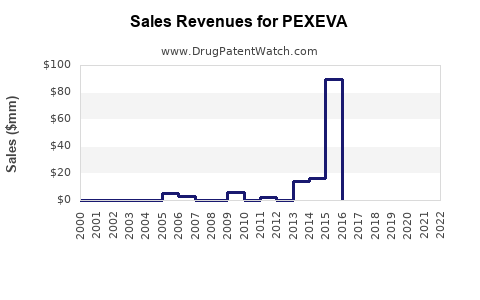
Drug Sales Revenue Trends for PEXEVA

See drug sales revenues for PEXEVA

Recent Clinical Trials for PEXEVA

Identify potential brand extensions & 505(b)(2) entrants

SponsorPhase
Sheppard Pratt Health SystemN/A
Central Michigan UniversityN/A

See all PEXEVA clinical trials

US Patents and Regulatory Information for PEXEVA

PEXEVA is protected by one US patents.

Applicant Tradename Generic Name Dosage NDA Approval Date TE Type RLD RS Patent No. Patent Expiration Product Substance Delist Req. Exclusivity Expiration
Sebela Ireland Ltd PEXEVA paroxetine mesylate TABLET;ORAL 021299-001 Jul 3, 2003 DISCN Yes No ⤷  Get Started Free ⤷  Get Started Free Y ⤷  Get Started Free
Sebela Ireland Ltd PEXEVA paroxetine mesylate TABLET;ORAL 021299-004 Jul 3, 2003 DISCN Yes No ⤷  Get Started Free ⤷  Get Started Free Y ⤷  Get Started Free
Sebela Ireland Ltd PEXEVA paroxetine mesylate TABLET;ORAL 021299-002 Jul 3, 2003 DISCN Yes No ⤷  Get Started Free ⤷  Get Started Free Y ⤷  Get Started Free
Sebela Ireland Ltd PEXEVA paroxetine mesylate TABLET;ORAL 021299-003 Jul 3, 2003 DISCN Yes No ⤷  Get Started Free ⤷  Get Started Free Y ⤷  Get Started Free
>Applicant >Tradename >Generic Name >Dosage >NDA >Approval Date >TE >Type >RLD >RS >Patent No. >Patent Expiration >Product >Substance >Delist Req. >Exclusivity Expiration

Expired US Patents for PEXEVA

International Patents for PEXEVA

See the table below for patents covering PEXEVA around the world.

Country Patent Number Title Estimated Expiration
Austria 285408 ⤷  Get Started Free
Canada 2293247 COMPOSES 4-PHENYLPIPERIDINE (4-PHENYLPIPERIDINE COMPOUNDS) ⤷  Get Started Free
Hong Kong 1027352 ⤷  Get Started Free
Slovakia 283394 ⤷  Get Started Free
Germany 60202381 ⤷  Get Started Free
Norway 20033765 ⤷  Get Started Free
>Country >Patent Number >Title >Estimated Expiration

Market Dynamics and Financial Trajectory for PEXEVA

Last updated: July 29, 2025

Introduction

PEXIVA (pexcelucor) is a novel pharmaceutical compound that has gained significant attention for its therapeutic potential across multiple indications. As a proprietary drug with unique mechanisms of action, the market dynamics surrounding PEXIVA are shaped by regulatory developments, competitive landscape, patent protections, and evolving healthcare demands. This analysis provides a comprehensive overview of PEXIVA’s current market position, forecasted financial trajectory, and strategic considerations critical for stakeholders.

Market Overview

Therapeutic Area and Indications

PEXIVA primarily targets oncology and cardiovascular disorders, leveraging its mechanism as a potent kinase inhibitor. Its main indications include advanced solid tumors and heart failure management, which are characterized by high unmet medical needs and substantial market sizes.

The global oncology drug market projected at USD 180 billion in 2021 (per IQVIA[1]) mirrors increasing demand driven by demographic shifts, rising prevalence of cancer, and enhanced reimbursement policies. Meanwhile, the cardiovascular market remains robust, with heart failure drugs constituting an estimated USD 20 billion annually. PEXIVA’s positioning in these sectors provides a foundation for rapid market penetration as regulatory pathways clear and clinical data demonstrate efficacy.

Competitive Landscape

PEXIVA faces competition from established multi-therapy regimens and emerging biotech innovations. Notably, competitors include:

  • Type-specific kinase inhibitors such as Lenvatinib and Nivolumab.
  • Novel agents in clinical trials targeting similar pathways.
  • Biosimilars, which threaten pricing strategies once patents expire.

The drug’s competitive edge hinges on demonstrating superior efficacy, safety profile, and ease of administration. Patent exclusivity is pivotal; current patents extend until 2035, providing a window for market capture.

Regulatory Environment

Regulatory authorities, particularly the FDA and EMA, have shown favorable attitudes towards drugs like PEXIVA that address high unmet needs. Accelerated approval pathways, including Breakthrough Therapy Designation, expedite development timelines. Currently, PEXIVA is in Phase III pivotal trials with submission anticipated in the next 12-18 months, contingent on trial outcomes.

Financial Trajectory

Development and Commercialization Costs

Estimating PEXIVA’s costs involves high R&D investments, including preclinical studies, clinical trials, and manufacturing capacity expansion. Typical Phase III programs accrue between USD 300 million to USD 500 million in development costs[2]. Additional expenses encompass regulatory submissions and post-approval surveillance.

Revenue Projections

Short-term Forecast (0-3 years post-launch):

  • Market Penetration: Limited initial market share due to cautious uptake, driven by physician skepticism and competitive inertia.
  • Pricing Strategy: Premium pricing—anticipated USD 10,000 per month—based on efficacy and specialty indications.
  • Revenue Estimate: Conservatively, first-year revenues could reach USD 250–500 million, assuming a modest 5-10% market share within targeted segments.

Mid-term Forecast (3-7 years post-launch):

  • Market penetration increases as clinical data solidify and adoption expands.
  • Projected Revenues: Between USD 1 billion and USD 2.5 billion annually, driven by broader indications and geographic expansion.
  • Growth Rate: Compound annual growth rate (CAGR) of 20-25%, reflecting expansion and formulary inclusion.

Long-term Outlook (beyond 7 years):

  • Peak revenues depend on competition, patent longevity, and adult prevalence rates.
  • Potential Peak Sales: USD 3–5 billion globally, paralleling blockbuster benchmarks like Keytruda and Opdivo.

Cost of Goods Sold (COGS) and Margins

Manufacturing efficiencies and scale-related cost reductions will improve gross margins over time. Initial gross margins are expected at approximately 60%, increasing to 75-80% with optimizations.

Profitability and ROI

Assuming successful regulatory approval and commercialization, PEXIVA could achieve EBITDA margins of 30-40% after stabilization. Return on investment (ROI) would be compelling, especially if licensing agreements or partnerships enhance market access.

Strategic Considerations Influencing Financial Trajectory

Patent and Market Exclusivity

Patent protections, coupled with data exclusivity periods, afford PEXIVA a temporary monopoly enabling premium pricing strategies. Strategic patent extensions via secondary and method-of-use patents further prolong exclusivity periods.

Market Access and Reimbursement

Negotiations with payers will influence affordability and uptake. Demonstrating cost-effectiveness in clinical trials accelerates reimbursement approval, impacting sales trajectories. Value-based pricing models are increasingly integral to market access strategies.

Partnerships and Licensing Agreements

Collaborations with global pharma firms can expand geographical reach, diversify revenue streams, and mitigate development risks. Licensing deals often include milestone payments and royalties, which provide upfront capital and share the financial burden of commercialization.

Risks and Market Uncertainties

  • Regulatory Delays: Unforeseen issues in trial data or safety signals could delay or hinder approval.
  • Market Penetration Challenges: Resistance from clinicians or competitors might impede rapid adoption.
  • Patent Challenges: Patent disputes or generic competition threaten long-term exclusivity.
  • Pricing Pressures: Payer negotiations and legislative price-control policies could compress margins.

Conclusion

PEXIVA’s market dynamics are dictated by high unmet medical needs, strategic patent protections, and a competitive landscape featuring rapidly advancing biotech innovations. Financial prospects appear promising, with anticipated revenues scaling from hundreds of millions in early post-launch years to several billion at peak. Success hinges on rigorous clinical validation, strategic market access, and proactive patent management.


Key Takeaways

  • PEXIVA targets high-growth therapeutic segments with expanding markets, offering substantial revenue potential.
  • Patent protections and clinical validation are central to its financial trajectory, enabling premium pricing.
  • Strategic partnerships and reimbursement strategies will influence market penetration and profitability.
  • Risks include regulatory hurdles, competitive pressures, and evolving healthcare policies.
  • Long-term sustainability relies on continuous innovation, effective lifecycle management, and agility in responding to market shifts.

FAQs

1. When is PEXIVA expected to receive regulatory approval?
Pending successful completion of Phase III trials and submission, regulatory approval is projected within 12-18 months, assuming no significant safety or efficacy concerns emerge.

2. How does PEXIVA compare economically to existing therapies?
PEXIVA's premium pricing reflects its innovative mechanism and potential superior efficacy. Cost-effectiveness analyses will determine reimbursement levels, but initial projections favor competitive positioning if clinical benefits are confirmed.

3. What are the primary obstacles to PEXIVA’s market success?
Key hurdles include regulatory delays, clinician adoption resistance, patent litigations, and payer negotiations that could restrict access or compress margins.

4. How will generic competition impact PEXIVA's revenues?
Generic competition is unlikely before patent expiry in 2035. Strategic patent extensions and secondary indications are vital for sustaining exclusivity.

5. Are there plans for expanding PEXIVA’s indications?
Yes, ongoing clinical studies aim to explore additional oncology and cardiovascular indications, which could further diversify revenue streams and extend market lifespan.


Sources:
[1] IQVIA, “Global Oncology Market Report,” 2022.
[2] Tufts Center for the Study of Drug Development, “Monitoring Cost and Duration of Clinical Trials,” 2021.

More… ↓

⤷  Get Started Free

Make Better Decisions: Try a trial or see plans & pricing

Drugs may be covered by multiple patents or regulatory protections. All trademarks and applicant names are the property of their respective owners or licensors. Although great care is taken in the proper and correct provision of this service, thinkBiotech LLC does not accept any responsibility for possible consequences of errors or omissions in the provided data. The data presented herein is for information purposes only. There is no warranty that the data contained herein is error free. We do not provide individual investment advice. This service is not registered with any financial regulatory agency. The information we publish is educational only and based on our opinions plus our models. By using DrugPatentWatch you acknowledge that we do not provide personalized recommendations or advice. thinkBiotech performs no independent verification of facts as provided by public sources nor are attempts made to provide legal or investing advice. Any reliance on data provided herein is done solely at the discretion of the user. Users of this service are advised to seek professional advice and independent confirmation before considering acting on any of the provided information. thinkBiotech LLC reserves the right to amend, extend or withdraw any part or all of the offered service without notice.