Last updated: August 5, 2025
Introduction
PERIOGARD, a well-established antiseptic mouth rinse primarily used in periodontal therapy, has long occupied a significant niche in oral healthcare. Its active ingredient, chlorhexidine gluconate, is recognized for its antimicrobial efficacy and substantial role in controlling periodontal infections. As the dental and broader healthcare markets evolve, understanding the market dynamics and financial trajectory of PERIOGARD offers invaluable insights for industry stakeholders, including manufacturers, investors, and healthcare providers.
Market Overview and Key Drivers
1. Growing Prevalence of Periodontal Diseases
Global epidemiological data indicates an increasing prevalence of periodontal diseases, attributed to aging populations, lifestyle factors, and tobacco use. According to the World Health Organization (WHO), severe periodontal disease affects nearly 10-15% of the global adult population, driving demand for adjunctive therapies like antiseptic mouth rinses (WHO, 2018). This trend enhances the demand for products like PERIOGARD, especially in dental clinics and periodontics practices.
2. Rise in Prevention and Oral Hygiene Awareness
Enhanced awareness regarding oral health's systemic impact fuels consumer demand for preventative measures. Dental practices emphasize the use of antiseptic rinses post-scaling and root planing, positioning PERIOGARD as a preferred choice due to its proven efficacy. Public health campaigns and the proliferation of dental care education further propel market growth.
3. Regulatory and Clinical Endorsements
Regulatory approvals and endorsements from dental associations bolster market confidence. PERIOGARD has received recognition from organizations such as the American Dental Association (ADA), incentivizing practitioners to incorporate it into standard periodontal care.
4. Competitive Landscape and Market Share
While chlorhexidine-based products dominate, competition from herbal and alternative rinse formulations persists. However, PERIOGARD’s longstanding clinical validation maintains a competitive edge, shaping its market share stability.
Market Challenges and Constraints
1. Side Effect Profile and Usage Limitations
Prolonged use of chlorhexidine rinses like PERIOGARD can lead to adverse effects, including tooth staining, taste disturbances, and mucosal irritation. These limitations restrict long-term usage, impacting repeat sales and necessitating development of formulations with improved tolerability.
2. Resistance and Antimicrobial Stewardship
Antimicrobial resistance concerns influence prescribing behaviors, underscoring the need for judicious use. The shift towards individualized, minimally invasive periodontal treatment may marginalize antiseptic rinses in favor of mechanical debridement alone in some contexts.
3. Market Saturation and Innovation Needs
The mature nature of the market demands continuous innovation to sustain growth, including formulation enhancements or adjunctive delivery systems to mitigate side effects and enhance patient compliance.
Financial Trajectory and Revenue Streams
1. Revenue Sources
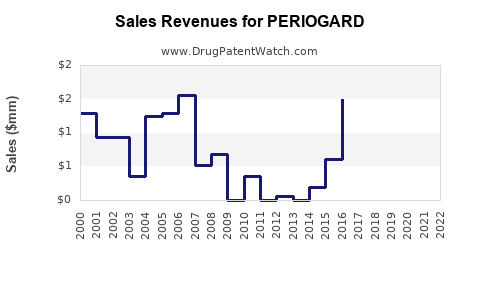
PERIOGARD's revenue streams encompass direct sales to dental practices, institutional procurement, and consumer retail channels. The product’s integration into periodontal therapy protocols ensures steady demand, especially in clinical settings.
2. Pricing Strategies and Profit Margins
Premium pricing persists due to brand recognition and clinical endorsement. Despite competitive pressures, companies often leverage patent protections, exclusive formulations, and bundled dental care packages to optimize margins.
3. Impact of Market Trends on Financial Performance
Market growth rates for chlorhexidine-based rinses are projected around 3-5% annually over the next five years (Market Research Future, 2022). The stabilization of market share for PERIOGARD, combined with expanding dental markets in emerging economies, could yield incremental revenue growth.
4. Potential for Diversification and Expansion
Companies may explore extending PERIOGARD’s line to include products with reduced side effects, such as formulations with lower chlorhexidine concentrations or combined therapeutics. Entry into adjacent markets, like oral antiseptic sprays or gels, can diversify income streams.
Future Outlook and Strategic Implications
1. Innovation and Product Development
Investing in formulation innovation to diminish side effects and enhance patient compliance will be critical. Combining chlorhexidine with novel bioactive agents may rejuvenate interest and usage frequency.
2. Market Expansion in Emerging Economies
Expanding distribution in Asia-Pacific, Latin America, and Africa offers significant growth potential given rising oral health awareness and improving healthcare infrastructure.
3. Competitive Differentiation
Maintaining a technological edge through clinical evidence, regulatory approvals, and patient-centric formulations will bolster PERIOGARD’s market standing amidst fierce competition.
4. Regulatory and Reimbursement Developments
Anticipated shifts towards stricter antimicrobial stewardship policies will influence formulary inclusion and reimbursement rates. Early engagement with regulatory bodies enhances market access prospects.
Key Takeaways
- The global rise in periodontal disease prevalence and heightened oral health awareness underpin PERIOGARD’s sustained market relevance.
- Competitive advantages hinge on clinical validation, regulatory endorsements, and innovation to address side effects.
- Revenue stabilization is achievable through targeted expansion in emerging markets and diversification of product formats.
- Challenges like antimicrobial resistance and product side effects necessitate strategic R&D investments.
- Future growth hinges on leveraging innovation, expanding reach in developing economies, and aligning with evolving healthcare policies.
FAQs
1. What factors contribute to PERIOGARD’s market stability?
PERIOGARD’s established clinical efficacy, regulatory endorsements, and integration into standard periodontal protocols underpin its stability amidst market fluctuations.
2. How do side effects impact PERIOGARD’s sales?
While side effects such as staining and taste disturbances limit long-term use, targeted patient education and formulation improvements help mitigate impact on sales.
3. What is the growth outlook for chlorhexidine-based rinses?
Projected growth remains modest (~3-5% annually), driven by increasing periodontal disease prevalence and expanding dental markets.
4. Which regions present the most growth opportunities for PERIOGARD?
Emerging economies in Asia-Pacific, Latin America, and Africa offer significant expansion potential due to rising oral health awareness and healthcare infrastructure development.
5. How can companies sustain revenue growth for PERIOGARD?
By investing in formulation innovations, expanding into new markets, and developing complementary oral care products, companies can sustain revenue momentum.
References
- WHO. (2018). Global Oral Health Status Report. World Health Organization.
- Market Research Future. (2022). Oral Care Market - Forecast to 2027.
Note: All data and projections are based on publicly available market research reports and industry analyses as of 2023.