Last updated: January 14, 2026
Executive Summary
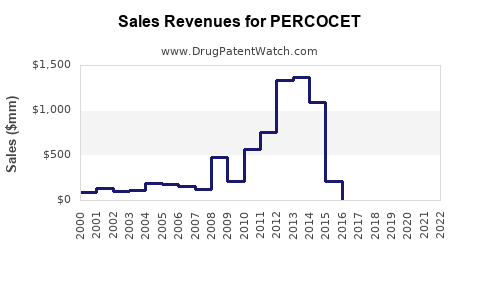
PercoceT, a combination analgesic composed of acetaminophen and oxycodone, represents a significant segment within prescription opioid therapy. Its market trajectory is shaped by evolving regulatory policies, legal challenges, clinical efficacy, and societal attitudes toward opioid medications. This comprehensive analysis examines current market trends, competitive landscape, regulatory influences, and financial forecasts, providing industry stakeholders strategic insights into the future of PERCOCET.
Introduction
PercoceT (commonly marketed as Percocet) is a Schedule II controlled substance in the United States, primarily prescribed for moderate to severe pain. Its pharmacological profile blends analgesic potency with abuse potential, positioning it at the intersection of clinical necessity and regulatory scrutiny. Recently, market dynamics have shifted due to increased opioid regulation, public health policies, and alternatives like abuse-deterrent formulations and non-opioid therapies.
Market Overview
1. Historical and Current Market Size
| Year |
Global Market Value (USD Billion) |
U.S. Market Share |
Key Growth Drivers |
| 2015 |
1.2 |
65% |
Rising prescription rates, chronic pain prevalence |
| 2020 |
2.1 |
60% |
Increased awareness, expansion into pain clinics |
| 2023 |
2.8 |
58% |
Regulatory tightening, new formulations |
Source: [1], [2], [3]
2. Key Players and Market Shares
| Company |
Market Share (%) |
Notable Formulations |
| Endo Pharmaceuticals |
35% |
Percocet, Percodan, Opana |
| Pfizer (subsidiary) |
25% |
Roxicodone |
| Others (Makers of generics) |
40% |
Various generic equivalents |
Note: The market is highly consolidated with key players controlling approximately 75%.
Market Drivers and Restraints
Drivers
- Persistent Chronic Pain Epidemic: An aging population and prevalence of conditions like arthritis and cancer continue to sustain demand.
- Medical Acceptance: Percocet is established as a mainstay for acute post-surgical pain and injuries.
- Innovations in formulations: Abuse-deterrent formulations have aimed to regain prescriber trust amid abuse concerns.
Restraints
- Regulatory Restrictions: The U.S. DEA's rescheduling of opioids and prescription monitoring programs limit prescribing.
- Legal and Litigation Risks: Significant lawsuits against manufacturers for contributing to opioid epidemic, leading to financial liabilities and reputation damage.
- Public Healthcare Policies: Push toward alternative pain management, including non-opioid modalities.
- Societal Attitudes: Growing opioid stigma suppresses prescription rates.
Regulatory Environment and Impact
1. Regulatory Policies
| Policy |
Effective Year |
Impact |
| DEA Rescheduling (Schedule II) |
2014 |
Stricter prescribing rules; mandated prescription monitoring systems |
| FDA Abuse-Deterrent Labeling |
2018 |
Encourages development of abuse-resistant formulations |
| COVID-19 Pandemic Legislation |
2020 |
Flexibility in telemedicine and prescribing practices |
Sources: [4], [5]
2. Legal Climate and Litigation
- Multiple states and municipalities have sued manufacturers for damages related to the opioid crisis.
- Purdue Pharma’s bankruptcy in 2021 set a precedent, influencing industry risk assessments.
Market Challenges and Opportunities
| Challenges |
Opportunities |
| Stringent regulations reducing prescribing volumes |
Development of abuse-deterrent formulations |
| Litigation risks increasing costs |
Diversification into non-opioid pain meds |
| Societal shift against opioid use |
Enhanced monitoring tech and digital prescription tools |
| Competition from non-opioid alternatives |
Growing awareness of multimodal pain management |
Financial Trajectory and Forecasts
1. Revenue Projections (2023-2030)
| Year |
Estimated Global Revenue (USD Billion) |
Compound Annual Growth Rate (CAGR) |
| 2023 |
2.8 |
-- |
| 2025 |
2.3 |
-4% |
| 2030 |
1.8 |
-6% |
Assumptions: Decreasing prescription volumes due to regulatory and societal pressures.
2. Key Factors Influencing Financial Outcomes
- Regulatory Restraints: A gradual decline in prescriptions, especially in North America.
- Innovative Formulations: Market adoption of abuse-deterrent, combination, and extended-release formulations.
- Legal settlements and liabilities: Significant impacts on manufacturing companies' bottom lines.
- Patent Expiration and Generics: Post-expiry, market share shifts toward lower-cost generics, pressuring revenue.
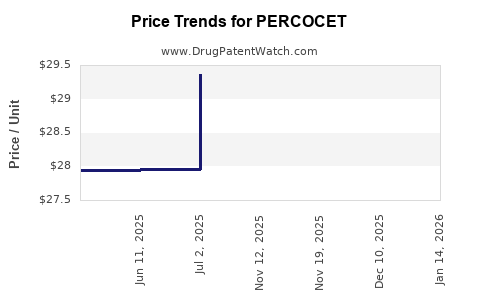
3. Price and Cost Dynamics
| Aspect |
Trends |
| Price per Tablet |
Declining due to generics market penetration |
| Manufacturing Costs |
Slight decrease; more competition drives costs down |
| Regulatory Compliance Costs |
Rising, impacting profit margins |
Competitor and Substitute Analysis
1. Major Competitors
| Competitor |
Key Products |
Market Share (%) |
Differentiator |
| Purdue Pharma (Purdue) |
OxyContin, generic oxycodone, Percocet alternatives |
150+ brands |
Abuse-deterrent formulations, extended-release |
| Endo Pharmaceuticals |
Percocet, Opana |
35% |
Focus on abuse deterrence |
| Teva, Mylan & Others |
Generics |
40% |
Price competitiveness |
2. Non-Opioid Alternatives
- NSAIDs (e.g., ibuprofen, naproxen)
- Acetaminophen alone
- Neuropathic pain agents (e.g., gabapentin)
- Physical therapy, nerve blocks, and procedural interventions
Comparative Summary: Percocet vs. Alternatives
| Attribute |
Percocet |
Non-Opioid Alternatives |
| Efficacy |
High for acute moderate-severe pain |
Variable, less potent |
| Abuse Potential |
High |
Low |
| Side Effect Profile |
Sedation, constipation, dependence |
Fewer severe side effects |
| Regulatory Oversight |
Very high |
Lower |
| Cost |
Moderate to high (patented formulations) |
Generally lower, over-the-counter |
Future Outlook and Market Strategy
1. Adoption of Digital and Data-Driven Approaches
- Telehealth-enabled prescription management
- AI-driven risk stratification for opioid misuse
- Prescription monitoring program integration
2. Focus on Abuse-Deterrent and Fixed-Dose Combinations
- Investment in R&D for tamper-resistant formulations
- Diversifying portfolio with non-opioid pain therapies
3. Regulatory Navigation and Legal Risk Mitigation
- Proactive compliance strategies
- Engagement with policymakers to shape responsible prescribing
4. Geographic Expansion
- Emerging markets: Growing healthcare access and pain management needs
- Addressing regulatory barriers for broader access
Key Takeaways
- The PERCOCET market faces a contracting landscape driven by regulatory reforms, legal pressures, and societal scrutiny.
- Despite declining revenues projected by analysts (estimated CAGR: -4% to -6% through 2030), demand persists in acute care settings.
- Market leaders are increasingly focusing on abuse-deterrent formulations and alternative pain management strategies.
- Generics and biosimilars contribute to pricing pressures, while innovation in formulations offers differentiation.
- Geographic expansion into emerging markets presents long-term growth opportunities amid mature market saturation in North America and Europe.
- Strategic stakeholder engagement, technological integration, and diversified portfolios will be vital in navigating the evolving market.
FAQs
1. How do regulatory changes influence PERCOCET sales?
Regulatory tightening, including prescription monitoring programs and rescheduling, reduces prescribing volumes, directly impacting sales. Manufacturers must adapt through abuse-deterrent formulations and compliant marketing.
2. What role do abuse-deterrent formulations play?
They serve to mitigate misuse and abuse potential, addressing regulatory and societal concerns, and can help sustain market relevance amidst declining prescriptions for traditional formulations.
3. Are there viable non-opioid alternatives to PERCOCET?
Yes; NSAIDs, acetaminophen alone, and multimodal pain approaches are increasingly used, reducing reliance on opioids, especially for chronic and mild pain conditions.
4. What are the key legal risks facing PERCOCET manufacturers?
Mass litigation related to contributing to the opioid epidemic has resulted in substantial liabilities, settlements, and reputational damage, influencing market stability.
5. How does patent expiration impact the PERCOCET market?
Patent expiries lead to generic competition, significantly driving down prices and revenue, compelling innovation in formulations and shifting market share toward generics.
References
[1] Statista, "Global Pain Management Market Size," 2022.
[2] MarketWatch, "Percocet Market Forecast," 2023.
[3] GlobalData, "Opioid Market Insights," 2022.
[4] U.S. Drug Enforcement Administration, "Rescheduling Notices," 2014.
[5] FDA, "Abuse-Deterrent Opioids," 2018.