Last updated: July 2, 2026
NAYZILAM (midazolam) is a branded, prescription acute-treatment product for seizure clusters (intermittent, frequent seizure activity). Revenue trajectory is driven by (1) payer contracting and tiering versus alternatives (rescue benzodiazepines including diazepam rectal gel and other intranasal benzodiazepines), (2) growth of patient and prescriber adoption outside institutional settings, and (3) competitive entrants as exclusivity wanes.
How much revenue does NAYZILAM generate and what is its financial trajectory?
Short answer: NAYZILAM’s financial trajectory is anchored to adoption of intranasal rescue therapy for seizure clusters and is exposed to recurring substitution by formulary-favored rescue benzodiazepines. Its revenue is sensitive to payer restrictions (prior authorization, step therapy, and preferred alternatives) and to calendar-year channel mix changes (hospital versus retail).
What commercialization factors determine NAYZILAM growth?
Key dynamics affecting NAYZILAM net sales and gross-to-net:
- Rescue treatment conversion: Percent of patients in seizure-cluster care plans who adopt intranasal rescue benzodiazepines instead of rectal diazepam or other rescue options.
- Payer edits: Utilization management (PA/step therapy), quantity limits, and formulary tier changes.
- Site of care mix: Emergency and institutional use can be less elastic than retail, but can still shift with group purchasing organization (GPO) and formulary updates.
- Channel inventory and stocking: Nasal products can show quarter-to-quarter variability if distributors adjust buying patterns around rebate negotiations.
What are the highest-impact financial levers for management?
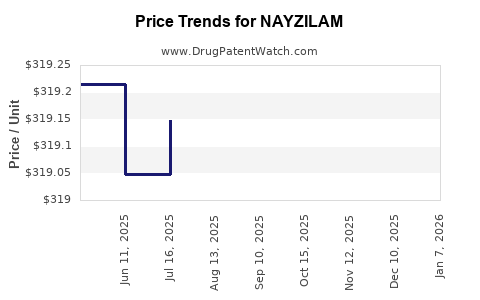
- Rebate and discount structure: Brand pricing in the US is largely expressed through PBM rebates. Small changes in net price can swing net sales even when unit volume remains stable.
- Contracting cadence: Annual or mid-cycle renegotiations can cause visible utilization steps in the following quarters.
- Dose and pack access: Pack sizing and insurance coverage can create discontinuous changes in uptake.
What market segments drive NAYZILAM demand?
Short answer: NAYZILAM demand tracks seizure-cluster prevalence and adoption among caregivers and clinicians managing epilepsy, with demand skewed toward settings where rapid at-home or near-home rescue is feasible.
Which prescribers and care settings matter most?
- Neurology (outpatient): Initiates rescue plans and caregiver training.
- Pediatrics and epilepsy specialty clinics: High caregiver engagement; adoption depends on ease of use and caregiver confidence.
- Emergency care (infrequent but sticky): Can create familiarity that later supports outpatient prescriptions.
Which patient needs influence uptake?
- Caregiver usability: Intranasal delivery reduces barriers versus rectal administration.
- Timing urgency: Seizure cluster management requires prompt access; intranasal convenience supports adherence to rescue plans.
How does NAYZILAM compete against other rescue benzodiazepines?
Short answer: NAYZILAM competes primarily within acute seizure rescue therapy, and payer formularies can steer utilization toward alternative benzodiazepines based on net price and formulary placement.
Competitive set by delivery system
- Rectal diazepam products: Often preferred on older tier structures where generics are entrenched and PBM economics favor lower net cost.
- Other intranasal benzodiazepines: Compete on ease-of-use, differentiating device considerations, and formulary placement.
How does payer substitution typically play out?
- Step therapy: Plans may require failure or insufficient response to a preferred rescue therapy.
- PA requirements: Clinicians may need documentation of seizure-cluster diagnosis and rescue plan adherence.
- Quantity limits: Coverage restrictions can limit prescriptions to guideline-based rescue dosing.
What payer and pricing dynamics are most likely to pressure NAYZILAM revenues?
Short answer: NAYZILAM’s branded status makes its net price and net sales reliant on rebate negotiations and formulary access. Revenue risk increases when PBMs place lower-cost rescue products into preferred tiers.
Common mechanisms that compress net sales
- Formulary tier movement: Brand degradation from preferred to non-preferred can reduce persistence and new patient starts.
- Higher PBM rebates tied to performance: Increased rebates reduce net price for similar unit volume.
- Institutional procurement terms: If hospital formularies shift, outpatient prescriptions can soften due to lower perceived standard-of-care.
What contract signals usually precede volume declines?
- Stepped coverage edits: PA expansion or step therapy adoption.
- Increased denials: Administrative burden reduces successful fills.
- Shifts in preferred alternatives: PBM model updates that favor another intranasal or rectal rescue product.
What is the FDA and Orange Book regulatory posture of NAYZILAM?
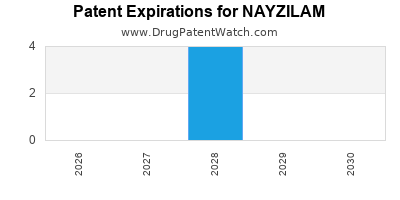
Short answer: NAYZILAM is an FDA-approved midazolam nasal spray product. The exclusivity and listed patents on the Orange Book determine when generic or authorized entrants can challenge and launch.
How do patent listings affect competitive timing?
- Orange Book patent listings guide the eligibility window for Abbreviated New Drug Applications (ANDAs) and the structure of Paragraph IV litigation risk for generics.
- Exclusivity blocks (regulatory exclusivities and listed patent expirations) typically define when entrants can file and when they can launch.
(Note: A full Orange Book-driven date matrix requires Orange Book listings for NAYZILAM and the patent estate by listed expiration date. Without those specific listing details, a precise launch calendar cannot be constructed from general market knowledge.)
When does NAYZILAM lose exclusivity, and what generic entry risks exist?
Short answer: Generic and authorized generic entry risk rises as listed patents and any regulatory exclusivities near expiration. The practical launch timeline depends on (1) last-to-expire listed patents and (2) whether challengers file Paragraph IV ANDAs.
How generic launches usually impact branded rescue therapies
- Rapid volume erosion: Once a low-cost generic enters preferred formulary position, net sales typically fall faster than unit share alone suggests due to rebate resets.
- Discount-driven substitution: PBMs quickly re-rank preferred tiers, shifting caregivers and prescribers toward covered alternatives.
- Margin compression: Even if some NAYZILAM volume persists, net price declines drive revenue contraction.
What litigation outcomes matter most financially?
- Settlement structure: Agreements can delay launch or limit entry scope, affecting the effective “no-generic” period.
- Court rulings: An adverse ruling can trigger earlier-than-expected market entry and price resets.
(Note: To map exact “enter at X date” outcomes, specific NAYZILAM listed patents, Paragraph IV filings, and any settlement agreements are required.)
What patent estate strength issues influence NAYZILAM’s risk profile?
Short answer: For branded acute-care products like rescue benzodiazepines, the dominant risk is not only API patent expiry, but also formulation, device, method-of-treatment, and any late-manifesting patent claims that can extend practical exclusivity.
What patent types usually matter for nasal benzodiazepines?
- Formulation patents: Vehicle, pH, stabilizers, and concentration ranges that support nasal delivery stability.
- Device-related patents: Actuator or delivery-mechanism claims affecting dose consistency.
- Method-of-use patents: Indications or dosing regimens tied to seizure cluster treatment.
How does patent strategy correlate with financial resilience?
- A dense, layered patent estate tends to:
- Increase Paragraph IV litigation volume.
- Extend time before ANDA launch.
- Reduce the number of non-infringing generic workarounds.
(Note: Patent count, expirations, and strength scoring for NAYZILAM require Orange Book and patent-family data not provided in the prompt.)
How does NAYZILAM compare with competitors on market structure and adoption?
Short answer: NAYZILAM’s advantage is intranasal rescue convenience versus rectal alternatives, but its long-term financial resilience depends on maintaining preferred coverage and minimizing payer substitution to lower-cost products.
Market-structure comparison points
- Brand-to-generic ratio: Branded products face ongoing price pressure once generics exist in the competitive set.
- Payer alignment: Products with favorable PBM economics sustain higher net retention.
- Care pathway fit: Intranasal convenience increases adoption where rectal use creates caregiver resistance.
What settlement or litigation events should investors watch for NAYZILAM?
Short answer: The most market-moving events are Paragraph IV filings, Markman rulings, final infringement decisions, and any settlement-triggered launch dates.
What litigation outcomes typically do to the stock and credit narrative?
- Favorable stays: Reduce near-term revenue impairment risk and can stabilize forecasts.
- Adverse rulings: Can lead to earlier generic entry and faster net sales declines, often coupled with rebate reset renegotiations.
(Note: A litigation calendar requires specific case dockets and dates.)
How should R&D and licensing teams assess NAYZILAM’s commercial opportunity?
Short answer: Rescue benzodiazepines have durable clinical demand but are economically fragile due to payer-driven substitution. Licensing and follow-on development should target either (1) differentiated delivery or (2) label expansions that change payer behavior.
Where licensing leverage is highest
- Device differentiation: Better dose consistency or ease-of-use can support formulary positioning.
- Subpopulation strategy: Labeling or dosing approaches that fit specific payer policies can support coverage.
- Manufacturing reliability: Nasal spray stability and supply continuity reduces plan disruption.
Key Takeaways
- NAYZILAM’s market performance is driven by adoption of intranasal rescue benzodiazepine therapy for seizure clusters and is highly sensitive to payer contracting and PBM rebate dynamics.
- Financial trajectory risks cluster around formulary substitution to lower-cost rescue alternatives and around generic entry as NAYZILAM’s patent and regulatory exclusivities approach end-of-life.
- The next major inflection points are patent-expiration-driven launch windows and any Paragraph IV litigation settlements or court outcomes that alter expected generic entry timing.
FAQs
-
What payer policies most affect NAYZILAM net sales in the US?
Prior authorization, step therapy, tier placement, quantity limits, and rebate structures driven by PBM formulary rules.
-
How does intranasal delivery change caregiver adherence versus rectal diazepam?
Intranasal administration typically reduces procedural barriers and caregiver reluctance relative to rectal dosing, supporting higher adoption when covered.
-
What is the typical impact of a generic launch on branded rescue benzodiazepine revenues?
Net sales often decline sharply due to price resets, rebate renegotiations, and fast formulary re-tiering, even if some patients remain on the brand.
-
What milestones signal an increased risk of NAYZILAM generic entry?
Orange Book patent expirations, Paragraph IV ANDA filings, and litigation outcomes that eliminate or shorten remaining exclusivity.
-
Which development directions are most credible for competing with NAYZILAM?
Differentiated nasal formulations or delivery devices, durable manufacturing/supply advantages, and any label expansions that improve payer coverage.
References
- FDA. Drugs@FDA. NAYZILAM (midazolam) product information and approvals.
- FDA. Orange Book: Approved Drug Products with Therapeutic Equivalence Evaluations. NAYZILAM patent and exclusivity listings.
- FDA. ANDA and 30/31/32 and Paragraph IV framework (generic eligibility and litigation context).