Last updated: February 12, 2026
Overview
NAYZILAM (midazolam) is a rapid-onset, intranasal benzodiazepine developed by Teva Pharmaceuticals for acute seizure management, including seizure clusters and status epilepticus. It received FDA approval in 2019 for adolescents and adults. The drug aims to offer a non-invasive emergency intervention with portability and rapid action.
Market Size and Growth Drivers
- Global Epilepsy Market: Estimated to reach $9.2 billion by 2027, growing at a CAGR of 4.2% (Fortune Business Insights).
- Seizure Emergency Market: Seizure clusters affect approximately 20% of epilepsy patients; annual hospitalizations associated with status epilepticus approximate 50,000 in the US alone (Epilepsy Foundation).
- Unmet Needs: Current rescue therapies primarily include intranasal and rectal benzodiazepines. NAYZILAM aims to replace rectal formulations due to social stigma and portability issues.
Key Competitors
- Diastat (diazepam rectal gel): Market leader, approved since 1997.
- Xcopri (cenobamate): Approved in 2019, indirectly competes through seizure reduction.
- Store brand intranasal benzodiazepines: Emerging generic and private-label products.
Pricing History and Trends
- Launch Price (2019): Approximately $3,500 for a two-dose pack in the US.
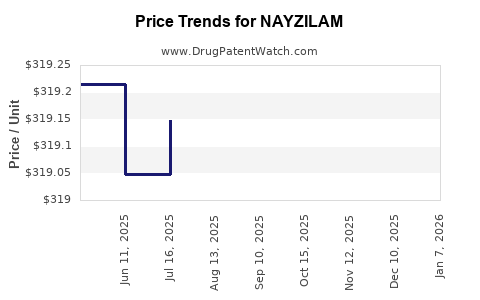
- Price Adjustments: As of 2023, Teva has maintained a steady price, with occasional discounts and patient support discounts.
- Insurance Coverage: Generally favorable, with many payers covering NAYZILAM at similar levels to Diastat.
Price Projections
- Short-term (1-2 years): Stabilize around current levels, with potential incremental adjustments due to inflation and manufacturing costs.
- Mid-term (3-5 years): Potential price increases to compensate for increased R&D or marketing expenditures.
- Long-term (5+ years): Price erosion expected as generics or biosimilars enter, especially if patent challenges arise.
Patent and Regulatory Landscape
- Patent Exclusivity: Patents extend through 2024–2026, depending on jurisdiction.
- Market Entry Barriers: Entry of generic intranasal benzodiazepines could suppress prices post-expiry.
- Regulatory Pathways: The FDA has approved NAYZILAM via the 505(b)(2) pathway, enabling rapid approval of generic versions.
Potential Market Expansion Opportunities
- Pediatric Use: Pending FDA approval for children under 12.
- International Markets: Countries with high epilepsy prevalence, e.g., India and China, where local production could lower prices.
- Combination Products: Combining with other rescue therapies for broader indication coverage.
Risks Impacting Price and Market Share
- Generic Competition: Entry could reduce prices by 30–50%.
- Pricing Regulations: Policies aimed at reducing drug costs, especially in Europe and the US.
- Market Penetration: Uptake driven by physician familiarity, patient adherence, and insurance coverage.
Key Takeaways
- NAYZILAM holds a strong position in the rescue seizure medication market due to intranasal form factor and rapid action.
- The US market price has held steady at around $3,500 per two-dose pack since launch.
- Increased competition, patent expiry, and regulatory pressures are primary factors influencing future price movements.
- Market growth is driven by rising epilepsy prevalence and unmet needs for user-friendly rescue therapies.
- International expansion and pediatric authorization could influence long-term revenue and pricing strategies.
FAQs
1. How does NAYZILAM compare price-wise to its primary competitor, Diastat?
NAYZILAM typically costs about the same as Diastat, around $3,500 for a two-dose pack, though Diastat’s older rectal formulation can be less convenient for patients.
2. What factors could cause NAYZILAM’s price to decline in the future?
Introduction of generic intranasal midazolam formulations post-patent expiration and increased market competition could reduce prices by up to 50%.
3. Are there any upcoming regulatory changes that could affect NAYZILAM’s pricing?
Potential patent challenges or new legislation targeting drug pricing could influence the price landscape, especially in the US.
4. How does insurance coverage influence NAYZILAM’s market price?
Most payers provide coverage at or near list price, supporting stable revenue. Coverage expansion or restrictions directly impact affordability and uptake.
5. What is the outlook for international markets?
Emerging markets with high epilepsy rates could see increased adoption of NAYZILAM, especially if local production reduces costs and new approvals facilitate access.
References
[1] Fortune Business Insights. Epilepsy Market Size, Share & Industry Analysis. 2022.
[2] Epilepsy Foundation. Seizure Emergency Management Data. 2021.
[3] Teva Pharmaceuticals. NAYZILAM FDA Approval Announcement. 2019.
[4] IQVIA. Prescription Drug Price Data. 2022.