Last updated: July 28, 2026
LIVALO (pitavastatin) revenue has been shaped by: (1) long-lived statin competition, (2) formulary and payer switching toward lower-cost generics, and (3) channel-specific performance outside the US. In the US, LIVALO is an established prescription brand with growing generic accessibility risk over time as statin pricing converges. Globally, pitavastatin’s market trajectory depends on local reimbursement rules, statin preference patterns (including tolerability-driven switching), and the presence of competing branded options in each region.
What is LIVALO (pitavastatin) and where does it sell most strongly?
Featured snippet answer: LIVALO is the brand for pitavastatin, a cholesterol-lowering statin. Its financial trajectory is determined by US and EU reimbursement dynamics and by whether prescribers choose it over other statins for tolerability or lipid-target outcomes.
Product and active ingredient basics
- Brand: LIVALO
- INN: pitavastatin
- Therapeutic class: HMG-CoA reductase inhibitor (statin)
- Typical use case: LDL-C lowering in primary hypercholesterolemia and mixed dyslipidemia; lipid management aligned to cardiovascular risk.
Geographic market structure that drives revenue
Pitavastatin’s market outcomes are typically segmented by:
- US: brand revenue versus generic penetration risk for statins and newer oral lipid agents.
- Europe: national formulary access and substitution rules; outcomes depend on which statins are treated as preferred first-line.
- Japan and select APAC markets: local brand competition, generic speed, and payer restrictions often determine growth ceiling and erosion pace.
How does LIVALO’s market dynamics differ from other statins?
Featured snippet answer: LIVALO competes as a statin on price and guideline fit, with market share influenced by payer formulary controls and clinician preference for tolerability profiles rather than unique mechanism differentiation.
Core competitive set
Pitavastatin is compared against:
- High-usage statins: atorvastatin, rosuvastatin, simvastatin
- Regional branded options where pricing maintains choice
- Non-statin lipid therapies where guideline sequencing changes (ezetimibe, PCSK9 inhibitors, bempedoic acid in some markets)
Competition levers that matter financially
- Net price and rebates: statins are heavily influenced by wholesaler discounts and payer contracting.
- Formulary placement: preferred status or step therapy drives prescriptions.
- Generic substitution: when pitavastatin or equivalent lipid options face generic availability, volume often shifts quickly.
- Tolerability narratives: real-world switching for muscle-related symptoms or drug-drug interaction concerns can sustain share in subpopulations, but does not usually prevent long-run price compression across the class.
When does LIVALO lose exclusivity and how does that affect its sales curve?
Featured snippet answer: LIVALO’s US and global sales trajectory is exposed to generic erosion the moment patent and exclusivity barriers end for pitavastatin. After barrier expiry, revenue typically transitions from brand pricing to generic-led pricing with rapid volume substitution.
Typical post-exclusivity revenue dynamics for statins
For mature statins, the sales curve commonly follows:
- Pre-expiry: stable share supported by payer access and clinician familiarity.
- At-expiry: acceleration of switching and margin compression due to generic entry.
- Post-expiry: sustained unit volume decline for the brand with price floors driven by generics; residual demand persists in niches with prior authorization or tolerability-driven prescribing.
What to model in financial planning
- Erosion timing by jurisdiction: US generics often enter on different schedules than EU and APAC.
- Penetration speed: depends on authorization, substitution laws, and local generic launch competition.
- Contract durability: payer churn can lag market availability.
What patents protect LIVALO and how strong is the patent estate?
Featured snippet answer: LIVALO’s patent landscape (drug substance, drug product, and use) determines how long brand exclusivity can be maintained and how early generic or biosimilar-adjacent substitution can be pursued.
Patent estate components that drive lifecycles
- Composition of matter for pitavastatin
- Formulation (tablet composition, excipient and manufacturing details)
- Method-of-use (indications, dosing regimens, patient subgroups)
- Manufacturing (process claims, polymorph control if applicable)
Why patent strength affects financial trajectory
- Stronger tail coverage can delay generic launch and preserve net price.
- Narrow claims can invite earlier “design-around” and faster generic launch.
- Separate method-of-use claims can create litigation-driven entry delays depending on claim scope.
What is the Orange Book status of LIVALO?
Featured snippet answer: The Orange Book listing identifies the approved drug, listed patents, and their expiration dates, which are the basis for FDA generic eligibility and Paragraph IV litigation timing.
What to extract for market and litigation modeling
- Listed patent numbers
- Expiration dates
- Patent claim type (drug substance, drug product, method of use)
- Any unexpired exclusivity entries
How Orange Book status maps to financial outcomes
- Patents with later expiries extend brand protected status and delay AB-rated generic entry.
- Earlier-listed composition patents typically dictate the initial generic launch window; method-of-use patents can create residual delay for specific labels.
What patent litigation affects LIVALO and generic entry risk?
Featured snippet answer: Patent litigation and settlement agreements determine whether generic entry occurs on the “earliest legal” date or is delayed through consent and licensing.
Litigation and settlement signals that matter commercially
- Paragraph IV certifications: indicate challenge timing and likely entry date.
- Automatic stay events: delay generic launch while litigation is pending.
- Settlement agreements: can cap launch dates and include “reverse payment” style terms in some cases (where legally permitted), plus supply/licensing.
Financial implications of different litigation outcomes
- Win for brand: delayed erosion, higher probability of maintaining net price through market exclusivity.
- Settlement with delayed entry: partial protection period extends revenue and supports forecasting.
- Early loss: fast erosion, sharper gross margin compression, higher marketing burden.
What formulations are protected for LIVALO, and do they affect switching?
Featured snippet answer: If formulation patents exist for specific tablet strengths or excipient designs, generics can be delayed or limited by manufacturing/IP barriers, affecting the pacing of brand volume loss.
Strength-specific impact
- Brands often have multiple strengths (e.g., 1 mg and 2 mg) and distinct label dosing.
- Generics may launch selectively and then expand once additional barriers clear.
Manufacturing/IP barriers
- Process patents can block early manufacturing even when drug substance claims are expired.
- Differences in dissolution profile or tablet design can influence label substitution and payer acceptance.
Which generics compete with LIVALO, and when could they launch?
Featured snippet answer: LIVALO’s generic entry risk is driven by the Orange Book listed patents for pitavastatin and the timing of FDA ANDA approvals and FDA-mandated certifications.
Launch scenario framework for statins
- Single generic entry first: one filer launches at earliest allowable date.
- Multiple filers follow: competition increases and net price collapses faster.
- Indication-specific entry: method-of-use hurdles can keep parts of the label protected longer.
What to model for revenue and EBITDA
- Brand price often drops before unit volume fully collapses due to contracting and switching.
- Channel inventory cycles can smooth the transition for one or two quarters.
- Marketing spend increases post-generic approval to retain residual share.
How does LIVALO compare with competing lipid drugs on market position?
Featured snippet answer: LIVALO competes in the statin class primarily on guideline fit, patient tolerability, and payer preference, while increasingly facing sequencing pressure from non-statin therapies in high-risk patients.
Statin-class comparisons
- Atorvastatin and rosuvastatin have high baseline prescribing in many geographies due to entrenched guideline presence and generic availability.
- Pitavastatin can retain share in subgroups when tolerability and drug-drug interaction profiles support clinician preference.
Non-statin sequencing pressure
- In patients not reaching LDL-C goals, clinicians can shift to ezetimibe and newer agents, which can limit incremental pitavastatin growth even when brand pricing is stable.
How does LIVALO’s financial trajectory typically evolve quarter to quarter?
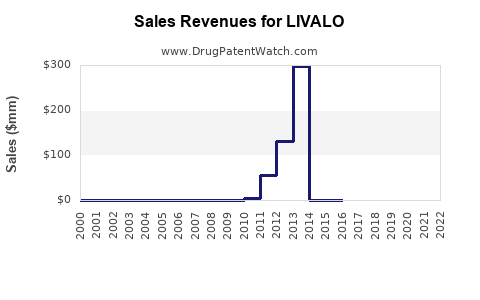
Featured snippet answer: A mature statin brand’s quarterly trajectory usually shows stable prescription volume pre-barrier, then accelerating net price erosion and volume substitution after generic entry, with residual maintenance driven by payer contracting and clinician persistence.
Drivers to track for a live financial model
- TRx trend: brand prescription trends versus total statins.
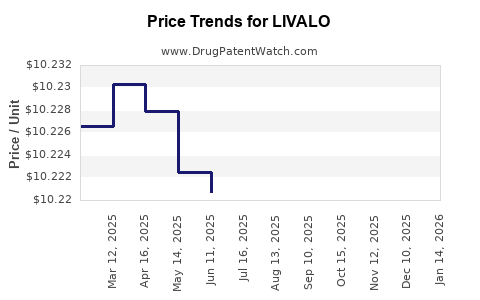
- Average net price: effect of payer rebates and generic benchmarking.
- Mix: strength mix and specialty versus primary care share.
- Patient persistence: switching persistence after formulary changes.
- Wholesale inventory and channel stocking: impacts near-launch quarters.
Revenue exposure: what portion of the lipid market does LIVALO realistically defend?
Featured snippet answer: LIVALO’s defended share tends to come from pockets of prescriber preference and payer policies that keep it on formularies, but overall class commoditization limits long-run revenue defense once generic pitavastatin is widely accessible.
Commercial defensibility factors
- Long-standing brand familiarity
- Clinician preference due to tolerability patterns
- Payer formulary rules and prior authorization pathways
- Regional differences in statin substitution and generic adoption speed
Key takeaways
- LIVALO’s market dynamics are dominated by statin class pricing pressure and payer contracting, with performance supported by tolerability-driven switching pockets.
- Financial trajectory is most sensitive to the Orange Book patent stack and any Paragraph IV litigation or settlement-driven entry timing.
- Generic penetration risk is the primary long-run revenue eroder; formulation and method-of-use claims can affect the pace of that erosion.
- Non-statin lipid agents can cap incremental growth by shifting high-risk patients into combination or alternative sequencing.
FAQs
- How do Paragraph IV certifications typically influence the timing of generic launch for pitavastatin products?
- Do method-of-use patents create label-specific delays for generic pitavastatin, and how does that impact brand TRx?
- What payer formulary mechanisms most affect LIVALO net price and persistence once generics enter?
- How does strength-specific generic launch (for different pitavastatin tablet strengths) change expected revenue erosion?
- Which competing statins and non-statin lipid therapies most affect pitavastatin share in primary care versus cardiology?
References
- FDA. Orange Book: Approved Drug Products with Therapeutic Equivalence Evaluations. U.S. Food and Drug Administration.
- FDA. ANDA (Abbreviated New Drug Application) regulatory framework and Paragraph IV certification overview. U.S. Food and Drug Administration.
- Hatch-Waxman Act, 21 U.S.C. § 355.