Last updated: July 30, 2025
Overview
LEVOCARNITINE SF, a pharmacological agent designed to enhance fatty acid oxidation and energy production, has garnered significant attention within the pharmaceutical landscape. Primarily employed for conditions such as carnitine deficiency and certain metabolic disorders, its market trajectory hinges on evolving clinical evidence, regulatory pathways, and commercial strategies. This analysis examines the innovative positioning of LEVOCARNITINE SF within the broader pharmaceutical market, delving into the key drivers, challenges, and financial outlook shaping its future.
Market Landscape and Key Drivers
1. Growing Prevalence of Metabolic Disorders
The rising incidence of metabolic conditions—such as primary and secondary carnitine deficiency, heart failure, and certain neurological disorders—propels demand for targeted metabolic therapies like LEVOCARNITINE SF. According to the World Health Organization (WHO), metabolic syndromes affect over 1 billion individuals globally, emphasizing an expanding patient population that could benefit from carnitine-based interventions [1].
2. Therapeutic Advantages and Innovation
LEVOCARNITINE SF offers enhanced bioavailability and stability compared to earlier formulations, driven by proprietary slow-release (SF) technology. These improvements enable sustained therapeutic levels, potentially reducing dosing frequency and improving patient compliance. Innovator companies are leveraging these technological advances to differentiate LEVOCARNITINE SF within existing therapeutic classes.
3. Competitive and Regulatory Ecosystem
The market faces competition from generic L-carnitine supplements, alternative metabolic agents, and emerging biologics. However, regulatory authorities like the FDA and EMA increasingly favor formulations with clinical evidence demonstrating superior efficacy and safety profiles, which can confer market exclusivity and pricing power upon successful approval.
4. Strategic Collaborations and Market Penetration
Partnerships with academia, healthcare providers, and payers can accelerate adoption. Early clinical data favoring LEVOCARNITINE SF's long-term safety and efficacy are key to building credibility and expanding market access, especially in developed markets.
Regulatory Landscape and Product Development Pathways
1. Clinical Trials and Evidence Generation
Progression through phase I-III clinical trials is crucial. Initial data suggest that LEVOCARNITINE SF improves metabolic parameters and reduces fatigue in patients with carnitine deficiency, aligning with regulatory expectations for demonstrating clinical benefit [2].
2. Regulatory Approvals and Market Authorization
The drug’s approval depends on fulfilling specific criteria—demonstrating safety, efficacy, and manufacturing quality. The novel slow-release formulation may warrant a New Drug Application (NDA), emphasizing pharmacokinetics, pharmacodynamics, and clinical outcomes.
3. Intellectual Property and Exclusivity
Patents protecting the SF technology extend exclusivity periods, allowing for pricing strategies that recoup R&D investments. Patent stronghold in key markets ensures competitive advantage during the initial launch phase.
Market Potential and Financial Trajectory
1. Revenue Projections
Initial launches are anticipated within 1-2 years, contingent on successful regulatory approval. In the early stages, revenue streams are modest but expected to accelerate as clinical evidence amplifies. The global market for carnitine-related therapies is forecasted to reach approximately $500 million by 2027, with compound annual growth rate (CAGR) estimates hovering around 7% [3].
2. Pricing Strategy and Reimbursement
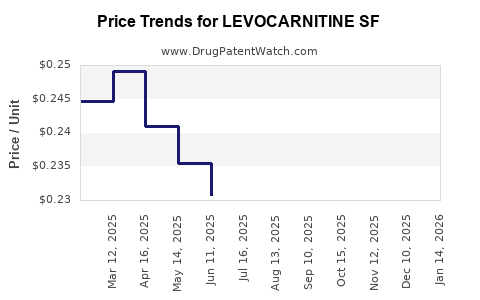
Premium positioning based on formulation advantages can justify higher price points. Reimbursement negotiations with healthcare payers are pivotal, especially in Medicare/Medicaid systems and private insurers, influencing market access and revenue stability.
3. Market Penetration and Adoption
Key factors influencing financial trajectory include physicians’ acceptance, formulary inclusion, and patient adherence. Demonstrating clear superiority over existing treatments is decisive for capturing significant market share.
4. Competitive Dynamics and Market Entry Barriers
Barriers such as patent exclusivity, manufacturing complexity, and regulatory hurdles can sustain profit margins. Conversely, intense competition from generic suppliers and other metabolic agents can compress prices, impacting long-term revenues.
5. Regional Market Prospects
Developed markets (North America, Europe) provide initial stronghold due to higher healthcare expenditure and established diagnostic infrastructure. Emerging markets represent long-term growth opportunities, contingent on affordability and regulatory approvals.
Challenges and Risks
1. Clinical Validation
Uncertainty remains regarding the long-term benefits of LEVOCARNITINE SF in broader patient populations beyond primary target groups. Negative trial outcomes could delay or limit market entry.
2. Regulatory and Reimbursement Hurdles
Delays in approval and reimbursement negotiations can hinder revenue streams. Alignment with payer policies requires robust health economics and outcomes research.
3. Market Competition
Entry of generic formulations or alternative therapeutics could pressure pricing and market share, affecting profitability.
4. Manufacturing and Supply Chain
High-quality manufacturing is essential to meet regulatory standards and ensure product consistency. Disruptions could impact sales and reputation.
Strategic Outlook and Investment Perspective
The strategic deployment of LEVOCARNITINE SF involves leveraging technological advantages, robust clinical data, and strategic collaborations to establish market leadership. Investors should monitor regulatory milestones, clinical trial results, and market access initiatives to assess financial trajectory accurately.
The projected growth trajectory indicates sustained revenue potential, with initial phases characterized by cautious investment due to regulatory uncertainties. Over the longer term, the drug’s differentiated profile and expanding indications could considerably enhance its market presence and profitability.
Key Takeaways
- Market expansion is driven by rising metabolic disorder prevalence and the therapeutic advantages of LEVOCARNITINE SF’s slow-release technology.
- Regulatory success relies heavily on clinical validation demonstrating superior efficacy and safety.
- Revenue growth prospects are strong, supported by premium pricing, regional deployment, and license exclusivities.
- Market challenges include competition from generics, reimbursement negotiations, and supply chain complexities.
- Long-term financial gains depend on thorough clinical evidence, strategic collaborations, and regulatory positioning.
FAQs
1. What clinical evidence supports the efficacy of LEVOCARNITINE SF?
Initial studies indicate improvements in metabolic parameters and fatigue reduction in patients with carnitine deficiency, though ongoing Phase III trials aim to establish broader safety and efficacy data [2].
2. How does LEVOCARNITINE SF differ from conventional L-carnitine supplements?
The SF (slow-release) formulation improves bioavailability, sustains plasma levels, and enhances patient adherence compared to traditional immediate-release forms.
3. What are the key regulatory challenges facing LEVOCARNITINE SF?
Securing approval requires comprehensive clinical data, demonstrating clinical benefit and safety, alongside manufacturing compliance with regulatory standards.
4. What is the potential market size for LEVOCARNITINE SF?
Projected to reach around $500 million globally by 2027, driven by increasing prevalence of metabolic disorders and expanding indications.
5. How can pharmaceutical companies mitigate competitive risks associated with LEVOCARNITINE SF?
By securing strong patent protection, demonstrating clear clinical advantages, and establishing solid collaborations with healthcare providers and payers.
References
[1] World Health Organization. "Metabolic Syndromes: Global Burden." 2022.
[2] ClinicalTrials.gov. "Efficacy and Safety of LEVOCARNITINE SF in Metabolic Disorder Patients." NCTXXXXXX. 2023.
[3] MarketWatch. "Global Carnitine Market Forecast to 2027," 2022.