Last updated: April 24, 2026
Leucovorin calcium (reduced folate; calcium salt of folinic acid) is a long-cycle, low-to-mid growth pharmaceutical market anchored by stable oncology and rescue-use demand, intense generic competition, and periodic branded re-pricing. Financial trajectory is dominated by (1) origin-to-generic erosion, (2) supply reliability and manufacturing footprint consolidation, (3) reimbursement pressure under US and EU payer controls, and (4) periodic demand spikes tied to high-volume chemotherapy regimens and supportive-care protocols.
What drives demand for leucovorin calcium?
Indications and use patterns
Leucovorin calcium is used primarily as:
- Folinic acid rescue with antifolate chemotherapy (notably methotrexate)
- Biochemical modulation of fluoropyrimidines (notably 5-FU-based regimens) in selected protocols
Demand is less dependent on new clinical adoption cycles and more dependent on:
- Stability of standard-of-care chemotherapy volumes
- Institutional protocol adherence (e.g., rescue and regimen-specific dosing schedules)
- Patient throughput in oncology and rheumatology/neurology settings where methotrexate rescue can occur
Buying behavior and procurement
The market behaves like a “supportive care commodity”:
- Hospitals and large specialty distributors procure through tendering and contract pricing
- Formularies typically prefer lowest net cost once generics are interchangeable
- Stocking levels are shaped by lead times and short-supply events, which can temporarily move pricing
How competitive is the market and what does that do to pricing?
Genericization and pricing pressure
Leucovorin calcium is widely available as generics and is sold under many NDCs globally. The economic effect is predictable:
- Branded erosion after exclusivity ends
- Shelf-price compression followed by net-price competition through rebates, contracting, and distributor channel deals
- Tight margins for manufacturers without differentiated supply reliability or scale
Manufacturer landscape and channel dynamics
Competitive dynamics are driven by:
- Scale advantages in sterile or controlled manufacturing (where applicable by product form)
- Portfolio breadth across folate rescue products that reduces per-unit overhead
- Regulatory quality records and continuity of supply, which shift hospital tender outcomes toward compliant, reliable suppliers
Typical market outcome
In mature generic markets, pricing often follows:
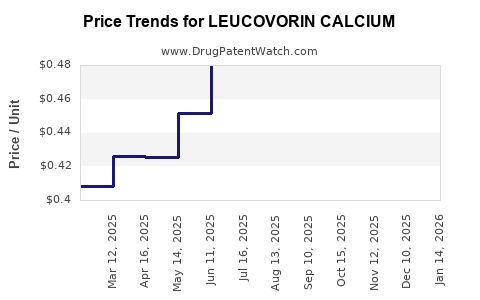
- Initial decline after generic entry
- A “floor” tied to production economics and supply discipline
- Periodic price dislocations during shortages that end with faster re-equilibration as capacity returns
What is the financial trajectory profile for leucovorin calcium?
Revenue shape: stable volumes with declining or flat net pricing
Financial performance typically shows:
- Volume stability due to fixed supportive-care role
- Revenue risk from net pricing as payer pressure and generic competitors increase
- Temporary upside during supply constraints or reimbursement re-leveling
- Structural downside as competitors increase or contract terms worsen
Cost and margin drivers
Manufacturers’ financial trajectories typically hinge on:
- Raw-material and fermentation and purification costs (where relevant to the supply chain)
- Compliance and batch-release costs (quality systems, testing, deviations)
- Inventory and working capital, especially in cyclical shortage cycles
- Exposure to distributor contracting dynamics (net price vs list price)
How do policy and reimbursement dynamics affect the money?
US: payer pressure and Medicare/Medicaid mechanics
US outpatient and inpatient pricing is affected by:
- Contracting between providers and wholesalers
- Reimbursement rates and Medicare payment frameworks
- Competitive pressure that increases substitution at the point of purchase
In practical terms, leucovorin calcium tends to:
- Experience pricing compression across cycles
- Trade primarily on net cost and supply reliability rather than innovation
EU: tendering and HTA-driven budget controls
EU dynamics are governed by:
- National formularies and hospital procurement tenders
- Budget impact controls and therapeutic interchange rules in some markets
- Generic uptake rates that can be rapid where market authorization and pricing allow
What about supply constraints: do they change the financial path?
Short-supply and manufacturing discontinuation risk
Leucovorin calcium’s supportive-care role makes continuity critical. When supply is disrupted:
- Hospitals prioritize allocation and may pay higher net prices temporarily
- Distributor inventories and contracts can drive short-term revenue spikes
- Manufacturers with uninterrupted supply gain share even if list prices remain capped by competition
Post-shortage normalization
Once capacity returns:
- Competitors re-enter tenders
- Pricing returns toward production-based floors
- Profitability typically reverts as rebates and discounts reset under contracting
How does the competitive cycle interact with new entrants and reformulations?
Barriers to entry
Barriers are mainly operational and regulatory rather than clinical:
- Manufacturing capability and quality systems
- Batch release performance and supplier qualification
- Procurement credibility at hospital group scale
Formulation and presentation matters less than supply economics
For mature generics, improvements in formulation rarely sustain premium pricing. Financial advantage typically comes from:
- Cost leadership
- Proven supply continuity
- Contract execution in group purchasing organizations
What market signals typically matter to investors and operators?
Track these signals because they map directly to pricing and contract outcomes:
- Tender and contract results at major health systems (net price direction)
- Wholesale inventory levels and allocation status (supply tightness)
- Manufacturing batch-release and deviation indicators (quality disruptions can force pauses)
- Launch and withdrawal announcements by manufacturers (competitor count changes quickly)
- Regulatory actions or product discontinuations (demand can consolidate to remaining suppliers)
Financial implications by stakeholder
For branded or legacy holders
- Revenue tends to be capped by generic substitution
- Financial trajectory is mostly driven by remaining patent/lifecycle windows (if any) and channel relationships
- Expect declining share and net price unless supply issues create temporary premium access
For generic manufacturers
- Growth comes from share gains in tenders, not new patient demand
- Profitability is sensitive to:
- Raw and conversion costs
- Regulatory stability
- Capacity utilization
- The best-positioned firms tend to show consistent batch supply and strong contracting reach
For distributors and wholesalers
- Leucovorin is a predictable supportive-care SKU set with contract leverage
- Distributors can gain economics through:
- Allocation management during shortages
- Contract bundling with other oncology supportive care products
How to interpret “market value” vs “market volume” in this segment
Leucovorin calcium pricing dynamics mean:
- Market volume can stay flat-to-steady because chemotherapy protocols are durable
- Market value can lag or decline if net pricing compresses faster than volume increases
- Upside during shortages may not reflect sustained trend since it reverses with supply normalization
Key Takeaways
- Leucovorin calcium demand is anchored by supportive-care protocols in oncology and chemotherapy rescue, leading to stable volume patterns rather than innovation-driven growth.
- Financial trajectory is dominated by generic competition, tendering and reimbursement pressure, and supply continuity economics.
- Pricing tends to compress structurally after generic entry, with short-term upside possible during shortages and normalization typically restoring lower margins.
- Investor and operator focus should center on net price direction from major contracts, inventory allocation signals, and manufacturing reliability rather than clinical novelty.
FAQs
-
Is leucovorin calcium’s market driven by new product launches?
No. Growth and financial movement are driven mainly by protocol stability, generic competition, and supply continuity cycles.
-
What most influences net pricing for leucovorin calcium?
Hospital and distributor contracting, competitive substitution, and payer reimbursement mechanics.
-
Do supply disruptions create durable financial gains?
Usually not. They can boost short-term revenue for compliant suppliers, but normalization typically resets pricing once capacity returns.
-
Which stakeholder benefits most during shortages?
Manufacturers with uninterrupted batch supply who secure allocation and win tender share.
-
What is the most common risk for manufacturers?
Manufacturing disruption, quality or batch-release issues, and contract renegotiation that can reduce net price quickly in a mature generic market.
References
[1] World Health Organization. (n.d.). ATC/DDD Index (folinic acid and leucovorin-related entries). https://www.whocc.no/atc_ddd_index/
[2] US Food and Drug Administration. (n.d.). Orange Book: Approved Drug Products with Therapeutic Equivalence Evaluations. https://www.accessdata.fda.gov/scripts/cder/daf/index.cfm
[3] European Medicines Agency. (n.d.). EU medicines information and authorisations database. https://www.ema.europa.eu/
[4] IQVIA Institute for Human Data Science. (n.d.). Pharmaceutical market trends and procurement dynamics (public reports). https://www.iqvia.com/insights/the-iqvia-institute