You're using a free limited version of DrugPatentWatch: Upgrade for Complete Access

Last Updated: December 19, 2025

LESCOL Drug Patent Profile


✉ Email this page to a colleague

« Back to Dashboard


When do Lescol patents expire, and when can generic versions of Lescol launch?

Lescol is a drug marketed by Novartis and Sandoz and is included in two NDAs.

The generic ingredient in LESCOL is fluvastatin sodium. There are eleven drug master file entries for this compound. Five suppliers are listed for this compound. Additional details are available on the fluvastatin sodium profile page.

DrugPatentWatch® Litigation and Generic Entry Outlook for Lescol

A generic version of LESCOL was approved as fluvastatin sodium by MYLAN PHARMS INC on April 11th, 2012.

  Get Started Free

AI Deep Research
Questions you can ask:
  • What is the 5 year forecast for LESCOL?
  • What are the global sales for LESCOL?
  • What is Average Wholesale Price for LESCOL?
Summary for LESCOL
US Patents:0
Applicants:2
NDAs:2
Raw Ingredient (Bulk) Api Vendors: 71
Clinical Trials: 11
Patent Applications: 1,110
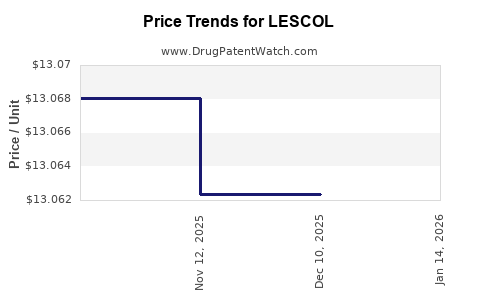
Drug Prices: Drug price information for LESCOL
What excipients (inactive ingredients) are in LESCOL?LESCOL excipients list
DailyMed Link:LESCOL at DailyMed
Drug patent expirations by year for LESCOL
Drug Prices for LESCOL

See drug prices for LESCOL

Recent Clinical Trials for LESCOL

Identify potential brand extensions & 505(b)(2) entrants

SponsorPhase
AmgenPhase 4
Brigham and Women's HospitalPhase 4
University of California, San FranciscoPhase 4

See all LESCOL clinical trials

Paragraph IV (Patent) Challenges for LESCOL
Tradename Dosage Ingredient Strength NDA ANDAs Submitted Submissiondate
LESCOL Capsules fluvastatin sodium 20 mg and 40 mg 020261 1 2008-06-04

US Patents and Regulatory Information for LESCOL

Applicant Tradename Generic Name Dosage NDA Approval Date TE Type RLD RS Patent No. Patent Expiration Product Substance Delist Req. Exclusivity Expiration
Novartis LESCOL fluvastatin sodium CAPSULE;ORAL 020261-001 Dec 31, 1993 DISCN Yes No ⤷  Get Started Free ⤷  Get Started Free ⤷  Get Started Free
Novartis LESCOL fluvastatin sodium CAPSULE;ORAL 020261-002 Dec 31, 1993 DISCN Yes No ⤷  Get Started Free ⤷  Get Started Free ⤷  Get Started Free
Sandoz LESCOL XL fluvastatin sodium TABLET, EXTENDED RELEASE;ORAL 021192-001 Oct 6, 2000 AB RX Yes Yes ⤷  Get Started Free ⤷  Get Started Free ⤷  Get Started Free
>Applicant >Tradename >Generic Name >Dosage >NDA >Approval Date >TE >Type >RLD >RS >Patent No. >Patent Expiration >Product >Substance >Delist Req. >Exclusivity Expiration

Expired US Patents for LESCOL

Applicant Tradename Generic Name Dosage NDA Approval Date Patent No. Patent Expiration
Novartis LESCOL fluvastatin sodium CAPSULE;ORAL 020261-001 Dec 31, 1993 ⤷  Get Started Free ⤷  Get Started Free
Novartis LESCOL fluvastatin sodium CAPSULE;ORAL 020261-002 Dec 31, 1993 ⤷  Get Started Free ⤷  Get Started Free
Novartis LESCOL fluvastatin sodium CAPSULE;ORAL 020261-001 Dec 31, 1993 ⤷  Get Started Free ⤷  Get Started Free
>Applicant >Tradename >Generic Name >Dosage >NDA >Approval Date >Patent No. >Patent Expiration

International Patents for LESCOL

See the table below for patents covering LESCOL around the world.

Country Patent Number Title Estimated Expiration
Netherlands 950022 ⤷  Get Started Free
Mexico 9207152 COMPOSICIONES FARMACEUTICAS ESTABILIZADAS QUE COMPRENDEN UN COMPUESTO INHIBIDOR DE LA HMG-COA REDUCTASA Y METODO PARA SU PREPARACION. ⤷  Get Started Free
Canada 1210405 ANALOGUES DE MEVALOLACTONES, ET LEURS DERIVES (ANALOGS OF MEVALOLACTONE AND DERIVATIVES THEREOF) ⤷  Get Started Free
Japan H0440343 ⤷  Get Started Free
>Country >Patent Number >Title >Estimated Expiration

Supplementary Protection Certificates for LESCOL

Patent Number Supplementary Protection Certificate SPC Country SPC Expiration SPC Description
0114027 SPC/GB93/173 United Kingdom ⤷  Get Started Free SPC/GB93/173: 20031122, EXPIRES: 20080822
0114027 96C0022 Belgium ⤷  Get Started Free PRODUCT NAME: FLUVASTATINE SODIQUE; NAT. REGISTRATION NO/DATE: 151 IS 207 F 4 19960409; FIRST REGISTRATION: GB 0101/0360 19930823
>Patent Number >Supplementary Protection Certificate >SPC Country >SPC Expiration >SPC Description

Market Dynamics and Financial Trajectory for the Pharmaceutical Drug: LESCOL

Last updated: July 27, 2025


Introduction

LESCOL, the brand name for fluvastatin, is a cholesterol-lowering agent marketed primarily for managing hyperlipidemia and reducing cardiovascular risk. As a member of the statin class, LESCOL has experienced significant market shifts driven by evolving clinical guidelines, competitive landscape, and regulatory policies. This analysis explores the nuanced market dynamics and projects the financial trajectory of LESCOL, providing actionable insights for stakeholders.


Market Overview of Statins and LESCOL

Statins remain the cornerstone of hyperlipidemia management. As of 2022, the global statin market valued approximately $21 billion, with growth projected at 3-5% annually, driven by increasing cardiovascular disease (CVD) prevalence and refined treatment guidelines (1). LESCOL, with its favorable pharmacokinetic profile—such as once-daily dosing—and proven efficacy, captures a significant segment within the generic and branded statin markets.

LESCOL’s distinguishing characteristics include its potent LDL cholesterol reduction and tolerability, which contributes to its sustained use. Its patent expiry in several markets has led to increased availability of generic versions, further influencing market dynamics.


Key Market Drivers

1. Rising Cardiovascular Disease Burden

CVD remains the leading cause of death globally, with an estimated 17.9 million deaths annually (2). This surge elevates statin utilization, including LESCOL, especially in emerging markets where healthcare infrastructure improves. The increased emphasis on primary prevention heightens demand.

2. Evolving Clinical Guidelines

Guideline updates, notably from the American College of Cardiology/American Heart Association (ACC/AHA), emphasize statin therapy for a broader patient profile, including those with moderate risk (3). The inclusion of moderate-intensity statins like LESCOL aligns with these shifts, expanding its use case.

3. Patent Expirations and Market Entry of Generics

Patent cliffs in the US and Europe facilitated the entry of generics, reducing LESCOL's price point. While this expands access, it constrains branded revenue growth and shifts revenue focus toward volume-driven sales.

4. Competitive Landscape

Lipid-lowering medications include other statins, PCSK9 inhibitors, ezetimibe, and novel agents. The competitive pressure from high-potency statins like atorvastatin and rosuvastatin impacts LESCOL’s market share, especially where cost considerations dominate.

5. Regulatory and Reimbursement Policies

Stringent regulatory environments and payor constraints favor cost-effective therapies. Reimbursement policies favor generic utilization, pressuring branded LESCOL revenues in certain geographies.


Market Challenges Impacting LESCOL

  • Generic Competition: The entrance of generics significantly compresses margins and share, requiring strategic repositioning or differentiation.
  • Patient Preference & Adherence: Easy dosing and tolerability influence adherence, but side effect profiles can hamper long-term use.
  • Emerging Therapies: Novel lipid-lowering agents, such as PCSK9 inhibitors, threaten the traditional statin market, especially for high-risk patients.

Financial Trajectory Projections

1. Revenue Forecast

Post patent-expiry, LESCOL’s revenues are expected to decline globally, aligned with the typical 40-50% drop in brand-name statin sales following generic entry (4). However, growth in emerging markets, driven by increased diagnostic rates and expanding healthcare access, may offset declines elsewhere.

  • North America and Europe: Anticipated decline of 10-15% annually over the next five years, owing to intense generic competition.
  • Emerging Markets: Potential growth of 8-12% annually, fueled by infrastructure improvements, urbanization, and rising awareness.

2. Profitability Outlook

Branded LESCOL's profit margins will narrow as generic competition intensifies. Strategic cost optimization, along with value-added services and patient adherence programs, will be critical to maintaining profitability.

3. Market Share Evolution

As generics account for >80% of sales in many markets, LESCOL’s remaining revenue will largely depend on brand loyalty and physician prescribing patterns. Innovative formulations or combination therapies may sustain its market presence.

4. Potential for Lifecycle Extension

Developments such as fixed-dose combinations (e.g., LESCOL with ezetimibe) could extend patent life and create new revenue streams. Additionally, repositioning within personalized medicine frameworks offers future growth avenues.


Strategic Implications

  • Diversification: Investment in new formulations and fixed-dose combinations can buffer revenue declines.
  • Geographic Expansion: Capitalizing on burgeoning healthcare systems in Asia-Pacific and Africa could offset stagnation in mature markets.
  • Clinical Evidence: Ongoing real-world studies demonstrating cardiovascular outcomes will bolster LESCOL’s positioning, particularly in competitive markets.
  • Partnerships: Collaborations with biotech firms developing adjunct therapies or biomarker-based diagnostics can unlock new opportunities.

Regulatory and Competitive Outlook

Regulatory agencies are increasingly emphasizing post-marketing surveillance and enhanced safety profiles. For LESCOL, maintaining a robust safety profile will be imperative to sustain trust and compliance. Meanwhile, the competitive landscape is shifting toward personalized lipid management, integrating genetic testing and risk stratification, potentially challenging traditional statin monotherapy models.


Key Takeaways

  • The global statin market, including LESCOL, faces revenue compression due to generic competition but offers growth opportunities in emerging markets.
  • Shifts in clinical guidelines and increasing prevalence of CVD sustain long-term demand, particularly in developing regions.
  • Lifecycle strategies, such as fixed-dose combinations and geographical expansion, are vital for financial stability.
  • The rise of innovative lipid-lowering options necessitates continuous clinical and market differentiation for LESCOL.
  • Cost-effective utilization and adherence remain critical for maximizing revenue in commoditized environments.

Conclusion

LESCOL’s market trajectory reflects broader pharmaceutical dynamics characterized by patent expiries, generics proliferation, and evolving therapeutic landscapes. While current projections suggest declining brand revenues in mature markets, strategic diversification and regional expansion can mitigate declines. Continued innovation, combined with adherence to clinical guidelines, will determine LESCOL’s capacity to sustain its financial outlook amidst the competitive and regulatory pressures.


FAQs

Q1: How does patent expiration affect LESCOL’s sales?
A1: Patent expiration permits generic manufacturers to enter the market, significantly reducing prices and branded sales, typically leading to a 40-50% decrease in revenue shortly after generic entry.

Q2: Can LESCOL’s brand value be preserved through formulation innovations?
A2: Yes. Developing fixed-dose combinations or extended-release formulations can create lifecycle extensions, prolong patent protection, and improve patient adherence.

Q3: What role do emerging markets play in LESCOL’s future growth?
A3: Emerging markets are critical, as rising healthcare access, increasing CVD prevalence, and favorable economic trends can drive significant growth, offsetting declines elsewhere.

Q4: How does competition from newer lipid-lowering agents impact LESCOL?
A4: Newer agents like PCSK9 inhibitors serve niche markets for high-risk patients. However, their high costs limit widespread use, maintaining a role for statins like LESCOL in broad populations.

Q5: What strategies can pharmaceutical companies adopt to sustain LESCOL’s market position?
A5: Companies can diversify offerings through combination therapies, expand geographically, invest in clinical research to demonstrate cardiovascular outcomes, and optimize pricing strategies to maintain competitiveness.


References

  1. Global Market Insights. (2022). Statins Market Size and Industry Growth Analysis.
  2. World Health Organization. (2022). Cardiovascular Diseases Fact Sheet.
  3. American College of Cardiology/American Heart Association. (2018). Guideline on the Management of Blood Cholesterol.
  4. IMS Health Data. (2019). Impact of Patent Expiries on Statin Market Dynamics.

More… ↓

⤷  Get Started Free

Make Better Decisions: Try a trial or see plans & pricing

Drugs may be covered by multiple patents or regulatory protections. All trademarks and applicant names are the property of their respective owners or licensors. Although great care is taken in the proper and correct provision of this service, thinkBiotech LLC does not accept any responsibility for possible consequences of errors or omissions in the provided data. The data presented herein is for information purposes only. There is no warranty that the data contained herein is error free. We do not provide individual investment advice. This service is not registered with any financial regulatory agency. The information we publish is educational only and based on our opinions plus our models. By using DrugPatentWatch you acknowledge that we do not provide personalized recommendations or advice. thinkBiotech performs no independent verification of facts as provided by public sources nor are attempts made to provide legal or investing advice. Any reliance on data provided herein is done solely at the discretion of the user. Users of this service are advised to seek professional advice and independent confirmation before considering acting on any of the provided information. thinkBiotech LLC reserves the right to amend, extend or withdraw any part or all of the offered service without notice.