Last updated: June 17, 2026
LASIX is the long-established U.S. brand for the loop diuretic furosemide. Because furosemide is off-patent in most major markets, the financial trajectory is dominated by (1) generic volume share, (2) wholesaler and payer pricing pressure, (3) formulary positioning, and (4) parallel product mix across oral, IV, and injection-only supply chains. In the U.S., LASIX’s revenue is typically constrained by generic substitution and by historical manufacturer-specific sourcing and procurement dynamics rather than by remaining patent exclusivity.
How big is the LASIX market, and what drives demand in furosemide?
Short answer: Demand is stable with medical need for volume management in heart failure and edema, but sales value is structurally pressured by generic penetration and benchmark pricing.
Primary indications and volume drivers
Furosemide is used in:
- Congestive heart failure and edema states (chronic and acute decompensation)
- Renal impairment–associated fluid overload (dose titration drives usage)
- Cirrhosis and nephrotic syndrome edema (off-label and guideline-dependent)
- Hypertension as an adjunct in selected patients
Sales dynamics track:
- Heart failure hospitalization rates and length-of-stay patterns
- Seasonal dehydration variability (impacting inpatient diuretic adjustments)
- Guideline adherence cycles and hospital formulary updates
- Substitution toward lower-cost generics and multi-source products during procurement resets
Formulation and channel mix
LASIX’s commercial footprint typically depends on:
- Oral tablets for maintenance and outpatient management
- IV/injectable forms for inpatient decompensation and emergency use
- Hospital purchasing behavior (tendering, group purchasing organization contracts, and conversion to lowest-cost suppliers)
Value mix matters because generics can price-displace oral and injection differently depending on supply constraints and product availability.
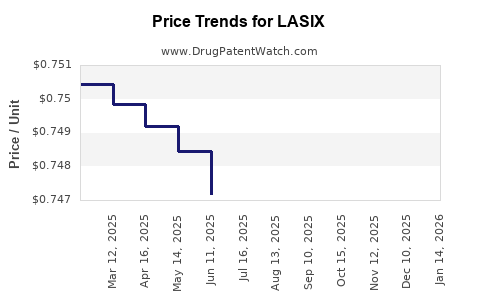
What is the pricing trajectory for LASIX versus generic furosemide?
Short answer: Prices compress over time through generic competition; brand pricing power is limited to contract differentiation, supply constraints, and brand-specific contracting.
Mechanisms of brand-to-generic price compression
- Wholesale acquisition cost (WAC) declines relative to generic benchmarks as market share erodes
- Payer preferred drug lists (PDLs) shift net reimbursement toward generic furosemide
- Hospital tendering favors suppliers with multi-lot reliability for injection products
- Competitive mix affects average realized price more than demand elasticity
Net revenue sensitivity
Even when unit volumes are stable, LASIX’s net revenue can decline due to:
- Contract-level rebates and chargebacks that favor generics
- Shifts in NDC-level pricing (e.g., tablet strength versus injection concentration)
- Conversion from brand to generic at the pharmacy counter
How does LASIX’s financial trajectory typically evolve over time?
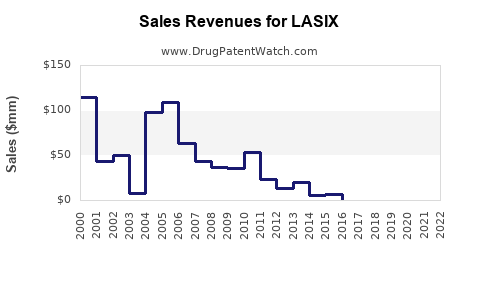
Short answer: Near-term revenue stability is usually followed by gradual declines as generic share increases, with occasional step-changes tied to supply disruptions, tender cycles, or product availability.
What “trajectory” looks like for off-patent, high-volume generics
For off-patent molecules with brand remnants:
- Unit demand is less variable than revenue
- Pricing and reimbursement are the main drivers
- Competition keeps margins thin unless there is a supply reliability advantage or a niche contracting position
Common inflection points
- Inpatient formulary refresh cycles
- National or regional tender awards for injectable furosemide
- Temporary supply constraints affecting specific NDCs or pack sizes
- Patent/litigation-driven category switching (rare for an established molecule once off-patent)
Which companies compete with LASIX in the U.S. furosemide market?
Short answer: Competition is primarily multi-source generic manufacturers; LASIX competes on supply reliability and contracting rather than on patent-protected exclusivity.
Competitive categories
- Generic oral furosemide tablets (multiple manufacturers)
- Generic furosemide injection (multi-source; tender-driven)
- Alternative loop diuretics (shorter list effect, not a full substitute)
- Bumetanide
- Torsemide
- Ethacrynic acid (limited use)
How substitution typically happens
- Pharmacy-level substitution for oral furosemide is driven by AWP/WAC spreads, formulary status, and plan rules
- Hospital-level substitution for injection depends on procurement cycles and product equivalency acceptance
What patents protect LASIX today, and how does that affect market exclusivity?
Short answer: For furosemide products, remaining protection in most markets is usually limited to method-of-use, formulation, or specific product/packaging, and does not materially block generic entry in major jurisdictions for standard furosemide unless a specific patent is still active for a given formulation or NDC.
Why patent-driven exclusivity is usually not the main variable
- Furosemide’s original chemical matter is long expired
- Commercial outcomes mainly reflect generic saturation
- Remaining patents typically do not prevent category-level generic availability unless they tie to a specific dosage form, delivery system, or manufacturing method
What is the Orange Book status of LASIX (furosemide) and what listings matter for generics?
Short answer: The practical Orange Book relevance is whether any unexpired patents are listed for LASIX-specific dosage forms and whether generic applicants must navigate them via Paragraph IV certifications.
Orange Book-driven risk points (when they exist)
- Patent codes tied to a specific NDC can determine whether a generic can launch immediately
- Settlement agreements can shift launch timing
- Use and formulation patents can trigger “carve-outs” if a generic tries to avoid infringement
For LASIX, the commercial impact is typically smaller than for newer molecules, but Orange Book listings still affect launch sequencing for specific product presentations.
How many ANDA and generic entry risks exist for LASIX?
Short answer: The generic entry risk is structurally high because ANDA pathways for furosemide oral and injectable forms are mature and multi-source. The risk shifts from “whether entry happens” to “which supplier wins and what pricing results.”
Practical entry risk drivers
- Availability of qualified manufacturing lines and lot stability
- FDA inspection history and facility clearance
- Bioavailability or sameness requirements (more relevant when formulation details differ)
- Contract awards based on reliability and total cost of ownership
What Paragraph IV litigation and settlements have affected LASIX generic entry?
Short answer: For long-established furosemide brands, large-scale Paragraph IV activity is typically historical; current market structure is mainly shaped by generic saturation rather than ongoing brand-specific exclusivity disputes.
Where litigation still matters
- Residual brand protection for specific NDCs or strengths, if still listed
- Settlement agreements that affect one supplier’s timing or market share capture in specific SKUs
How does FDA approval status influence LASIX supply and switching?
Short answer: For a mature drug, FDA status influences switching mostly through manufacturing capability and product availability rather than through new therapeutic innovation.
Key regulatory mechanics
- ANDA approvals increase the supplier pool
- Changes to manufacturing sites or packaging can temporarily affect market availability
- Shortages can increase brand share if generics are constrained, even without legal barriers
How do biosimilars factor into LASIX competition?
Short answer: Biosimilars are not applicable because furosemide is a small-molecule drug, not a biologic.
How does LASIX compare with alternative loop diuretics for formulary placement?
Short answer: Torsemide and bumetanide sometimes take share depending on patient profile, bioavailability considerations, and clinician preference, but cost and reimbursement typically keep furosemide as a default for many settings.
Formulary and clinical preference drivers
- Pharmacokinetic consistency for chronic use
- Oral absorption differences that may favor torsemide in some patients
- Inpatient practice patterns for acute decompensation
What are the biggest commercial risks to LASIX revenue?
Short answer: Generic price compression and substitution are the dominant risks; supply disruptions and contracting cycles can also swing revenue.
Revenue risk map
- Category pricing pressure from lowest-cost generics
- Wholesaler discounting and payer formulary status
- Injection supply chain reliability for specific presentations
- Intake shifts away from LASIX SKUs to alternative strengths or multi-source NDCs
- Tender cycle outcomes in hospital channels
How do procurement and hospital tender cycles affect LASIX injection sales?
Short answer: Injectable furosemide is tender-driven; outcomes depend on pricing competitiveness, fill-finish capacity, and lot availability.
Tender cycle mechanics
- Contract awards based on unit cost plus logistics and reliability metrics
- Preferred supplier status can last through contract windows
- When an awarded supplier has shortages, hospitals can flex to alternatives, briefly lifting non-shortage brands or other suppliers
What is the likely financial trajectory if generic pricing continues to fall?
Short answer: LASIX revenue value declines unless compensated by (1) share retention via contracts, (2) shortage-driven switching, or (3) SKU-specific advantages that preserve higher realized pricing.
Mathematical effect (category logic)
- If unit demand is flat but net price declines, revenue declines proportionally
- If units decline due to stronger switching, revenue declines faster than pricing alone
LASIX vs. competing brands: how does competitive landscape shape revenue?
Short answer: Within loop diuretics, competition is more about total loop-diuretic use and patient selection than about brand-to-brand patent exclusivity.
Competitive comparison framework
- Furosemide (LASIX): highest generic saturation, strongest cost positioning
- Torsemide: sometimes favored for oral bioavailability and chronic control in selected patients
- Bumetanide: niche use relative to furosemide
- Alternative adjuncts: thiazide-type diuretics or combination regimens in refractory edema
Key Takeaways
- LASIX’s financial trajectory is driven by generic substitution and pricing compression, not by remaining patent exclusivity.
- Demand is comparatively stable because furosemide use tracks chronic and acute volume overload care; revenue is more volatile to net pricing and contracting.
- The most material dynamics are hospital tendering and injectable supply reliability, alongside pharmacy-level generic substitution rules.
- Competitive outcomes are supplier-and-contract driven: the category is multi-source, and market share is awarded through cost and availability rather than legal barriers.
FAQs
-
Why does LASIX revenue change even when overall heart failure admissions stay stable?
Because net realized pricing and contract rebates move with generic benchmark pricing and tender outcomes, while unit utilization can remain steady.
-
Do Orange Book patents on LASIX still delay generic launches?
They can at the level of specific NDC presentations if any unexpired listings remain, but category-level access is typically already available for standard furosemide forms due to broad generic penetration.
-
Which LASIX dosage forms are most exposed to substitution risk?
Oral strengths generally face the highest pharmacy substitution pressure; injectable forms are more driven by hospital tendering and supply reliability.
-
How do supply shortages affect LASIX market share?
Shortages in specific generic NDCs can temporarily shift inpatient or institutional purchasing toward alternative suppliers, including brand or other non-shortage sources.
-
What regulatory pathway dominates competition for furosemide versus newer drugs?
ANDA-based competition by generics dominates because furosemide is a small molecule; biosimilar pathways do not apply.
References
- FDA. Drugs@FDA. Accessed via Drugs@FDA database entries for furosemide and LASIX.
- FDA. Orange Book: Approved Drug Products with Therapeutic Equivalence Evaluations. Accessed via Orange Book database entries for LASIX (furosemide).