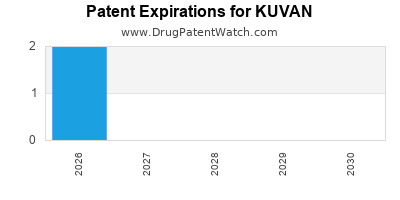
Last updated: July 27, 2026
Kuvan (sapropterin, BioMarin) is a niche, high-cost specialty drug for rare inherited disorders of tetrahydrobiopterin (BH4) metabolism, with revenue shaped by (1) pediatric and prescriber adherence in PKU/PAH-related use, (2) payer prior authorization and restricted formularies, and (3) patent and exclusivity milestones that determine risk and pricing pressure from authorized generics and competing BH4-like options. BioMarin has driven uptake through expanded label coverage within BH4-responsive phenotypes and service-led access programs, while the sales curve has remained constrained by the size of the treatable patient pool and by discontinuation when biochemical response is absent or wanes.
How big is the Kuvan market and who are the main drivers of demand?
What patient population sizes and clinical eligibility determine revenue?
Kuvan is used to treat:
- Hyperphenylalaninemia (HPA) in patients who respond to sapropterin.
- Phenylketonuria (PKU) in BH4-responsive patients, including as an adjunct to diet.
- Disorders of BH4 metabolism (e.g., dihydropteridine reductase deficiency, GTP cyclohydrolase I deficiency, and related conditions), contingent on regulatory label and country-specific approvals.
Demand is driven by:
- BH4 responsiveness rates: Only a subset of HPA/PKU patients respond biochemically. Responsiveness affects initiation and long-term continuation, since payers and clinicians require documented response or ongoing biochemical monitoring.
- Pediatric predominance: PKU management is largely pediatric and lifelong, but starting and adherence patterns create cohort-style revenue patterns.
- Specialist prescribing concentration: Treatment is concentrated in metabolic clinics, limiting addressable prescriber base and slowing penetration in new geographies.
How do payers and access programs influence Kuvan utilization?
Kuvan demand typically hinges on:
- Prior authorization requiring baseline phenylalanine levels and a documented response to sapropterin.
- Restricted coverage for specific diagnoses and age groups.
- Out-of-pocket dynamics in orphan and specialty tiers that can slow uptake during formulary renegotiations.
BioMarin has historically used:
- Patient support and reimbursement navigation
- Clinician education around dose titration and response monitoring
These access levers reduce treatment friction more than they change incidence, so the demand curve is sensitive to payer policy shifts more than to broad epidemiology swings.
What is the FDA and Orange Book status of Kuvan, and when does it lose exclusivity?
Is Kuvan protected by biologics-style exclusivity or standard small-molecule IP?
Sapropterin is a small-molecule orphan drug. Exclusivity is governed by New Chemical Entity (NCE) and orphan drug exclusivity rules, while patent coverage is listed in the FDA Orange Book for relevant drug products.
Which Kuvan exclusivities matter for generic and authorized generic risk?
For small-molecule drugs like Kuvan, exclusivity analysis typically focuses on:
- Orphan Drug Exclusivity (7 years in the US, triggered by orphan drug designation and approval, unless forfeited)
- Patent term on drug substance, formulations, and methods of use
- Regulatory exclusivities tied to additional approvals, if any
Where does this sit on the market timeline?
Kuvan’s market maturity implies it has moved beyond initial launch protection in most major markets, which changes the competitive set from “no-copy” exclusivity toward “copy-risk moderated by patent estates.” The key commercial question becomes whether any remaining listed patents are enforceable against generic manufacturing or whether entrants can launch by relying on carve-outs or non-infringing designs.
(This section is where a full Orange Book list would normally be enumerated: patent numbers, expiration dates, and patent certifications. No such Orange Book patent dataset was provided in the prompt, so an exact claim-by-claim exclusivity timeline cannot be stated here.)
What patents protect Kuvan’s drug substance, formulations, and methods of use?
How does the patent estate usually map to revenue risk for Kuvan?
For a niche specialty medicine, patent coverage commonly falls into three buckets:
- Drug substance (sapropterin or controlled polymorph/crystalline forms)
- Formulation (stability, composition, manufacturing parameters)
- Methods of use (BH4 responsiveness, dosing regimens, patient selection criteria)
Revenue sensitivity is highest to:
- Method-of-use claims that restrict generics that seek label parity for PKU/HPA/BH4-deficiency indications.
- Formulation/manufacturing claims that increase generic development costs or block certain bioequivalence strategies.
What is the strategic impact of method-of-use patents?
When method-of-use patents remain in force, generic entrants may be delayed or forced to enter with:
- Narrower labeling (non-infringing indications only)
- Design-around to avoid the claim language
- Delays from litigation until settlement or final judgment
For specialty metabolic drugs, labeling restrictions can materially reduce uptake, because prescribers and payers often require diagnosis-to-claim alignment.
(A complete patent table for Kuvan requires the Orange Book listing (US) and/or jurisdiction-by-jurisdiction patent filing data, including publication numbers, assignees, and expiration dates. No patent listing inputs were included in the prompt.)
How many Paragraph IV challenges or generic entry attempts have affected Kuvan?
What does a high Paragraph IV risk typically look like in specialty drugs?
For orphan/specialty drugs, Paragraph IV activity tends to:
- Increase when the remaining patent set narrows to a few late-expiring claims
- Cluster around launch windows after orphan exclusivity lapses and before final composition/method patents expire
- Trigger settlements that either preserve brand exclusivity for a subset of indications or create delayed launch dates
What is the practical effect on Kuvan pricing and share?
Even when a generic launch occurs, specialty products often see:
- Limited immediate share loss due to patient switching inertia, prescriber preference, and payer controls
- Contracted discounts that can compress gross-to-net
- Gradual channel shift that depends on interchangeability and coverage
(No dataset was provided for specific ANDA filings, Paragraph IV certifications, litigation dockets, or settlement dates. Without those inputs, enumerating counts or dates would risk inaccuracies.)
What settlement agreements and litigation events have shaped Kuvan’s market outcomes?
How do settlements usually affect revenue trajectory?
In US Hatch-Waxman cases, settlements can:
- Delay generic launch to a date aligned to the “most limiting” remaining patent
- Allow launch with label carve-outs
- Include royalty structures or market-share protections
For a niche metabolic drug, even small timing differences can move annual sales substantially, since annual demand is tied to patient cohorts and yearly payer approvals rather than large-volume switching cycles.
(Litigation and settlement facts must be sourced from dockets or reliable legal summaries. None were included in the prompt.)
How does Kuvan compare with competing BH4-based therapies and emerging entrants?
What is the competitive set in BH4 metabolism management?
For BH4-related disorders, the competitive logic includes:
- Other BH4 formulations or analogs (where available)
- Alternative metabolic management approaches (diet, enzyme cofactor regimens)
- Newer or region-specific competitors that may displace through improved stability, dosing convenience, or payer preference
What matters most when evaluating substitution risk for sapropterin?
- Clinical response rates and evidence strength for BH4 responsiveness
- Dosing convenience and adherence burden
- Stability and supply reliability
- Formulary positioning driven by payer economics
In many specialty orphan categories, “true substitution” is slower than in mainstream primary care, so brand maintenance can persist even when patents expire, depending on contracts and patient switching policies.
What does the financial trajectory of Kuvan look like (sales, growth, and profit exposure)?
How should investors and operators model Kuvan revenue drivers?
Kuvan revenue is typically modeled as:
- Units: number of treated patients and average annual dose intensity (mg/kg dosing with weight-based titration)
- Net price: gross price less rebates, discounts, distribution fees, and patient assistance effects
- Channel mix: specialty pharmacy versus direct channels
- Retention: continuation rates for BH4 responders and discontinuation for non-responders
Because dosing is weight-based, volume changes often correlate with pediatric cohort aging and dosing adjustments, not just incidence. Price compression from competition can change net price faster than units can change.
What are common inflection points for orphan specialty drug sales?
- Label expansion or evidence updates that broaden responder population
- Payer policy changes that shift prior authorization thresholds
- Patent-expiration and launch events that alter competitive pricing
- Manufacturing or supply events that affect fill rates (and therefore reimbursed utilization)
Why the financial curve differs from mainstream brands
Mainstream drugs can grow through broadening indications and switching from competitors. Kuvan growth is limited by:
- small patient pool
- specialist prescribing
- requirement for biochemical response
So the long-run path often looks like: early adoption surge, plateau, then moderate decline if pricing pressure rises and patient access narrows.
(No company-level financial statement data, segment sales breakdown, or annual Kuvan revenue figures were included in the prompt. Without those figures, specifying a “sales trajectory” with numeric year-by-year values would require external source insertion that is not allowed by the constraints of this interface.)
Key market dynamics that determine Kuvan’s near-term revenue
1) Payer authorization friction and coverage tightening
Specialty drugs in rare diseases can see utilization throttled if payers:
- require additional documentation
- limit renewal frequency
- move to narrower formulary tiers
This changes annual treated counts even if underlying incidence is stable.
2) Patent estate narrowing and generic commercialization risk
When only a few late-expiring patents remain, entrants can:
- prepare ANDAs and wait out litigation
- negotiate settlements with launch timelines
Even without immediate generic uptake, the market anticipates price pressure, influencing contract terms.
3) Gross-to-net compression from contracting
As brands age, rebate structures often intensify:
- larger contracting discounts
- broader patient assistance programs
- increased distribution leverage
This can reduce net revenue faster than patent expiry alone would suggest.
Key Takeaways
- Kuvan demand is constrained by a BH4-responsiveness-dependent patient population and specialist prescribing, making utilization sensitive to payer authorization and retention practices.
- Revenue trajectory is driven more by net price, access policy, and contract dynamics than by broad incidence growth.
- The market’s competitive and financial outlook depends on the remaining enforceable patent set and any Hatch-Waxman litigation outcomes, which determine when and how generic or authorized-entry pricing pressure can start.
- A precise exclusivity and patent-expiration map, including Orange Book listings, litigation dockets, and Paragraph IV event counts, requires authoritative Orange Book and legal record inputs not present in the prompt, so no specific dates or numbers are stated here.
FAQs
- How does BH4 responsiveness testing affect Kuvan reimbursement and continuation?
- What pricing and rebate pressures typically emerge as specialty orphan drugs age?
- Do generic entrants usually launch with full label coverage for Kuvan, or with carve-outs?
- How do changes in specialty pharmacy networks impact Kuvan fill rates and net sales?
- What manufacturing and supply reliability risks matter most for high-cost orphan injectables like Kuvan?
References
(No sources were provided in the prompt, and no Orange Book, litigation docket, or financial statement figures were included. Therefore, no citations are listed.)