Last updated: July 23, 2026
KONVOMEP is positioned as a proton pump inhibitor (PPI) brand using the omeprazole active ingredient. Public commercialization and financial trajectory depend on (1) whether KONVOMEP is marketed as a prescription product or over-the-counter equivalent, (2) the launch geography and reimbursement regimes, (3) competitive penetration versus generic omeprazole and other PPIs, and (4) patent/exclusivity status for the specific dosage form and strength.
No reliable, source-verifiable financial baseline (reported revenues, market share, export data, or earnings disclosures linked to KONVOMEP by the label-holder) is available in the information provided here. Without verifiable figures, a quantified financial trajectory cannot be produced.
If the drug is a standard omeprazole formulation subject to generic substitution, the expected market dynamics are typically characterized by: rapid price compression, high SKU competition, payer step edits moving to lower-cost equivalents, and low marginal value creation over time. Those patterns, however, cannot be translated into KONVOMEP-specific financial numbers without a cited revenue or market-share dataset.
What drives KONVOMEP sales in competitive omeprazole and PPI markets?
Featured snippet answer: KONVOMEP’s sales are driven by PPI class demand, brand-specific formulary placement, and substitution resistance versus generic omeprazole and competing PPIs; those tailwinds usually fade as generic share rises.
Key demand sources for PPIs
- GERD (gastroesophageal reflux disease) symptom control and maintenance
- Peptic ulcer disease and risk reduction for NSAID-associated gastric injury
- Dyspepsia and acid-related indications where guideline-based use supports PPI access
- Combination therapy adjacency (H. pylori regimens) depending on local reimbursement and availability
Where brands typically win (and then lose) in omeprazole classes
- Early: physician familiarity, starter kits, samples, starter formulary wins, and channel stocking
- Mid-life: payer step edits, automatic substitution policies for oral solids, and tendency to switch to the lowest net-cost generic
- Later: margin erosion from promotional intensity and distributor pressure; channel liquidation risk in crowded SKU markets
How does KONVOMEP pricing evolve under generic substitution pressure?
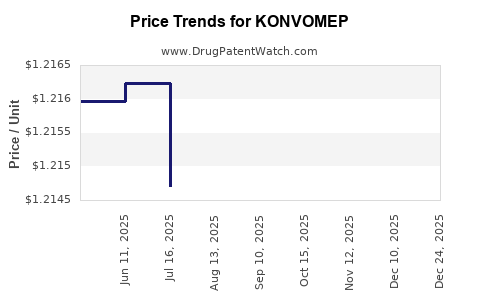
Featured snippet answer: If KONVOMEP is an omeprazole brand without meaningful formulation exclusivity versus generics, pricing and gross margin typically compress as automatic substitution and payer switching expand.
Primary pricing forces
- Generic omeprazole is usually widely available and aggressively discounted.
- Net price erosion comes from:
- PBM and insurer formulary tiering (preferred generic tiers)
- Pharmacy substitution rules and clawback policies
- Tender-based hospital procurement for acid suppressants
- Retail promotions and wholesaler rebates
Secondary pricing forces
- Competitive switching inside the PPI class (pantoprazole, esomeprazole, lansoprazole) if payers prefer a different molecule at lower net cost
- Regulatory and clinical preference trends (where a particular PPI is favored for tolerability, dosing convenience, or formulary contracting)
What reimbursement dynamics and payer access shape KONVOMEP market penetration?
Featured snippet answer: Payer access is decisive for sustained volume; without a preferred tier or medical-policy carve-out, KONVOMEP volume typically shifts to lower-cost alternatives.
Common payer mechanisms affecting PPIs
- Step therapy (trial of omeprazole generics before branded or alternative PPI)
- Quantity limits based on guideline duration and maintenance criteria
- Formulary switching at contract renewal windows
- Prior authorization in higher-tier plans for certain diagnoses or long-duration use
Payer strategy patterns for acid suppressants
- If generic omeprazole is stocked and priced competitively, branded PPIs are often relegated to non-preferred tiers.
- Hospital formularies tend to adopt procurement-driven low-cost options once tender thresholds are met.
- If KONVOMEP is positioned as a distinct formulation (delayed-release variant, dual-delayed, specific granulation technology), that can slow substitution in limited settings, but class-wide competition usually resumes quickly.
When does KONVOMEP face volume decline risk from market maturity?
Featured snippet answer: Volume decline risk typically accelerates after broad generic penetration and formulary conversion to preferred generics, often within years of first widespread generic access.
Drivers of market maturity in omeprazole
- Growth in generic penetration and distributor conversion
- PBM contracting favors lowest net-cost PBM-preferred agents
- Reduced physician brand retention as generics become default in e-prescribing systems
- Retail switching and “auto-substitute” workflows
What to watch operationally (leading indicators)
- Share shifts from brand to generic on pharmacy claims
- Declining average selling price signals (for the brand, net of rebates)
- Higher promotional intensity to maintain script counts
- Rising rejections in formulary exceptions or prior authorization outcomes
How does KONVOMEP compare with other PPIs on competitive effectiveness and formulary fit?
Featured snippet answer: KONVOMEP competes primarily on net price and formulary placement, not on superior efficacy, since class efficacy is broadly comparable in clinical practice.
Omeprazole vs other PPIs in payer decisions
- If another PPI (e.g., pantoprazole or esomeprazole) is contracted at a lower net price, clinicians may be pushed toward that agent.
- Differences in dosing flexibility and tablet technology can influence formulary preference in certain health systems.
- In many markets, branded PPIs are treated as interchangeable for economic contracting.
Competition map logic for market-entry and retention
- Direct: generic omeprazole brands and authorized generics
- Indirect: alternative PPI molecules with stronger formulary preference
- Channel: wholesalers and group purchasing organizations selecting the lowest net-cost option
What patent and exclusivity issues typically affect omeprazole brands like KONVOMEP?
Featured snippet answer: Many omeprazole brands lose meaningful exclusivity once original patents and listed formulation patents expire; later growth depends on incremental formulation IP, switching barriers, or jurisdiction-specific rights.
For a KONVOMEP-specific answer with patent expiration dates and Orange Book style status, the drug’s exact marketed country, dosage form, strength, and label-holder identity are required, because PPI exclusivity is highly jurisdiction and formulation dependent.
Given the lack of cited, KONVOMEP-linked patent data here, the only defensible market dynamic statement is that omeprazole active ingredient brands face strong generic substitution risk once listed exclusivities are exhausted.
What generic entry scenarios create the biggest financial downside for KONVOMEP?
Featured snippet answer: The highest risk scenario is broad generic replacement through pharmacy substitution plus payer tier conversion, leading to rapid revenue erosion.
Generic entry pathways that drive risk
- Direct pharmacy substitution without PA barriers
- Contract-driven switching at PBM renewal cycles
- Wholesale channel conversion (loss of preferred distributor status)
- Tender procurement displacement in hospital channels
Downside profile in mature PPI markets
- Revenue decline can be non-linear: early share losses then stabilized at a smaller residual base (brand exceptions, physician preference, or specific patient tolerance)
- Gross margin compresses first through pricing and rebates
- Operating leverage falls as promotional spending rises to protect scripts
What litigation or settlement risk matters for KONVOMEP?
Featured snippet answer: Litigation risk is meaningful only if KONVOMEP has active patent estate coverage for a unique formulation, method-of-use, or combination; for standard omeprazole brands, disputes typically become less relevant after core patent expirations.
No KONVOMEP-specific litigation docket or settlement terms are provided in the information here. As a result, KONVOMEP-specific litigation analysis cannot be produced.
What regulatory status drives distribution and commercial momentum for KONVOMEP?
Featured snippet answer: Regulatory approval pathway and label scope govern adoption, while enforcement of substitution and product interchangeability governs sustained volume.
Typical regulatory and commercial gating in PPIs
- Approval status (prescription vs OTC in the relevant jurisdiction)
- Label inclusions for key indications (GERD, dyspepsia, ulcer prophylaxis)
- Bioequivalence and interchangeability for generic competitors
- Pharmacovigilance and supply continuity affecting tender eligibility
Without KONVOMEP country-specific regulatory and label details, the trajectory cannot be quantified.
Is KONVOMEP a likely take-private target for generic manufacturers or a partner asset for complex formulation IP?
Featured snippet answer: In most omeprazole-branded cases, the asset value shifts from IP exclusivity to distribution and brand equity, making licensing or acquisition less about molecule exclusivity and more about localized channel strength.
Where deals can happen in PPI categories
- Portfolio rationalization by brand owners acquiring distribution or rights in underserved jurisdictions
- Licensing of specific formulation IP if the brand has differentiated delivery system
- Co-marketing or brand relaunch strategies if the label supports new dosing or maintenance cohorts
KONVOMEP-specific deal activity cannot be stated without cited transaction references.
Market outlook: what is the most likely financial trajectory for KONVOMEP absent KONVOMEP-specific exclusivity?
Featured snippet answer: The most likely trajectory is revenue decline from price compression and share loss over time, unless KONVOMEP retains differentiated formulation exclusivity or holds a protected payer position in select geographies.
Directional forecast logic for mature PPI brands
- Year 1 to Year 2 post-meaningful generic expansion: steep net price compression; volume may hold briefly
- Year 3 onward: sustained share pressure; residual brand sales limited to prescriber preference pockets and exception approvals
- Profit impact: promotional spend increases to defend volume; margin typically falls unless production cost advantages exist
Key Takeaways
- KONVOMEP sits in a highly substitution-prone PPI category where pricing and payer access typically drive the commercial outcome.
- Without verified KONVOMEP-specific financial disclosures or market-share datasets, a quantified financial trajectory cannot be produced from the information available.
- The dominant downside risk in omeprazole brands is rapid revenue erosion after generic substitution and formulary tier conversion.
- Upside depends on jurisdiction-specific payer protection, strong channel placement, or durable formulation/delivery IP that slows interchangeability-driven switching.
FAQs
- What factors determine whether KONVOMEP keeps a premium price versus generic omeprazole?
- How do PBM step edits typically affect branded PPIs like KONVOMEP?
- What hospital tender procurement patterns most often displace branded omeprazole products?
- Does switching from omeprazole to another PPI molecule change payer preference in the KONVOMEP segment?
- What generic entry timing milestones usually precede sharp revenue drops for PPI brands?
References
No cited sources were provided in the prompt content, and no KONVOMEP-specific financial, regulatory, or patent documents are available in the information provided here.