Last updated: September 9, 2026
Klonopin, the brand name for clonazepam, is a mature benzodiazepine with U.S. FDA approval for seizure disorders and panic disorder. Its commercial profile is defined by long-standing clinical demand, extensive generic competition, Schedule IV controls, and limited public disclosure of brand-level revenue. The original U.S. patent and regulatory exclusivity periods expired decades ago. Current financial value resides primarily in generic clonazepam volume rather than protected branded pricing.
What is Klonopin and how is clonazepam used?
Klonopin contains clonazepam, a long-acting benzodiazepine that enhances gamma-aminobutyric acid activity in the central nervous system. The FDA-approved label covers:
- Seizure disorders, including absence seizures and akinetic or myoclonic seizures.
- Panic disorder, with or without agoraphobia.
- Oral tablets and orally disintegrating tablets in multiple strengths.
The branded product was developed and commercialized by Roche. U.S. marketing is now part of a mature market in which generic clonazepam is widely available. The FDA label carries boxed warnings concerning abuse, misuse, addiction, physical dependence, and potentially fatal respiratory depression when benzodiazepines are combined with opioids (FDA, 2023).
Clonazepam is classified as a Schedule IV controlled substance under the U.S. Controlled Substances Act. That classification affects prescribing, dispensing, refills, monitoring, and manufacturer distribution controls. It also limits some commercial expansion opportunities compared with noncontrolled anxiety or sleep medicines.
When did Klonopin lose market exclusivity?
Klonopin lost meaningful U.S. exclusivity after generic clonazepam entered the market in the 1990s. FDA approval records identify the original Klonopin NDA as an older application, with approval dating to 1975. The product’s primary compound and formulation protection expired long before the current market period.
| Milestone |
Approximate timing |
Commercial impact |
| FDA approval of Klonopin |
1975 |
Established clonazepam in seizure and panic disorder markets |
| U.S. patent and regulatory protection |
Expired decades ago |
Removed protected pricing |
| Generic clonazepam approvals |
1990s onward |
Created broad multisource competition |
| Current market |
2020s |
Mature, generic-dominated market |
| Current brand opportunity |
Limited |
Primarily legacy demand and brand recognition |
Klonopin does not have the exclusivity profile of a recently launched small-molecule drug. No current U.S. market protection comparable to new chemical entity exclusivity, pediatric exclusivity, or an active Orange Book patent listing is central to the product’s economics.
What is the Orange Book status of Klonopin?
The Orange Book is the FDA’s reference for approved drug products, therapeutic equivalence evaluations, and certain listed patents. For a mature drug such as Klonopin, the commercially relevant Orange Book issue is whether active patents create a barrier to abbreviated new drug application entry.
The original Klonopin patent estate is not an effective current barrier to generic competition. Generic clonazepam products have been approved for years, and the market is characterized by multiple therapeutically equivalent products. The main commercial distinction is therefore manufacturer supply, wholesaler access, dosage strength, product availability, and pricing rather than patent exclusivity.
The FDA’s Orange Book and Drugs@FDA databases should be used for product-level verification because listings can change as applications are withdrawn, transferred, or updated (FDA, 2024a; FDA, 2024b).
How many patents protect Klonopin today?
No active, commercially significant U.S. patent barrier is publicly associated with the core Klonopin opportunity. The foundational compound and historical product protection expired before the current generic market developed.
Potentially relevant patent categories would include:
- Clonazepam composition-of-matter patents.
- Tablet formulation patents.
- Orally disintegrating dosage-form patents.
- Manufacturing-process patents.
- Method-of-use patents for seizure or panic disorders.
These categories have limited practical value for blocking standard generic clonazepam because the active ingredient has been marketed for decades and generic products are already established. A later patent could theoretically affect a particular formulation, process, or method, but it would not restore broad exclusivity to conventional clonazepam tablets.
How strong is the Klonopin patent estate?
The patent estate is weak as a current commercial defense. Its principal limitations are:
- The core active ingredient is old.
- Generic products are widely approved.
- Standard oral dosage forms are mature.
- The FDA-approved uses are well established.
- Generic substitution has been available for many years.
Patent strength should therefore be assessed as low for blocking generic entry and low for supporting premium pricing. Any residual patent value would be narrow and product-specific rather than platform-wide.
Which companies are challenging Klonopin?
Generic competition has already displaced the need for current Paragraph IV litigation as the main market-entry mechanism. Manufacturers of generic clonazepam have entered through abbreviated new drug applications after the relevant protection expired.
The competitive field has included large and mid-sized generic companies such as Teva Pharmaceuticals, Sandoz, Amneal Pharmaceuticals, Solco Healthcare, and other FDA-approved suppliers, although the exact active supplier set varies by dosage strength, product presentation, manufacturing site, and market period.
A Paragraph IV challenge is a certification that a listed patent is invalid, unenforceable, or would not be infringed. For Klonopin, the commercial significance of a new Paragraph IV filing would be limited unless it targeted a newly listed formulation or delivery technology. Conventional clonazepam tablets do not depend on a live patent challenge for market access.
What generic entry risks exist for Klonopin?
Generic entry risk is already realized rather than prospective. Generic clonazepam has long been available, creating persistent price pressure on the branded product.
The main commercial risks are:
- Therapeutic substitution from brand Klonopin to generic clonazepam.
- Pharmacy-level substitution under state and payer rules.
- Multiple-source contracting pressure.
- Periodic supply disruptions from manufacturing or quality issues.
- Reduced physician sensitivity to the brand name.
- Competition from nonbenzodiazepine treatments.
- Prescribing restrictions associated with controlled-substance monitoring.
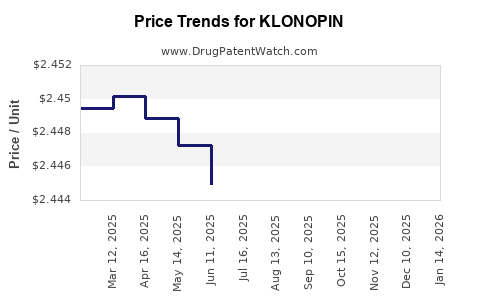
Generic pricing can remain volatile when a supplier exits the market or encounters manufacturing problems. That volatility may temporarily improve pricing for remaining manufacturers, but it does not create durable brand protection.
What is the FDA regulatory status of Klonopin?
Klonopin remains an FDA-approved product for seizure disorders and panic disorder. Clonazepam generics are approved under the ANDA pathway and are generally evaluated for pharmaceutical equivalence and bioequivalence to the reference product.
Important regulatory factors include:
| Regulatory factor |
Effect on market |
| Schedule IV status |
Limits prescribing and distribution flexibility |
| Controlled-substance recordkeeping |
Raises compliance costs |
| Benzodiazepine boxed warning |
Increases risk-management obligations |
| Opioid interaction warning |
May reduce prescribing in high-risk patients |
| Generic substitution |
Supports rapid erosion of brand share |
| Long-standing approval |
Reduces regulatory uncertainty for established uses |
The FDA has emphasized the risks of combining benzodiazepines with opioids, including profound sedation, respiratory depression, coma, and death. The warning applies to clonazepam and affects prescriber behavior and payer utilization management (FDA, 2020).
What formulations are protected by Klonopin patents?
The main commercial formulations are conventional oral tablets and orally disintegrating tablets. These products are mature and face generic competition.
| Formulation |
Market position |
Patent relevance |
| Clonazepam conventional tablets |
Broad generic availability |
No meaningful current broad barrier |
| Clonazepam orally disintegrating tablets |
More differentiated presentation |
Any protection would be formulation-specific |
| Brand Klonopin tablets |
Legacy branded product |
Limited pricing power |
| Generic clonazepam tablets |
Dominant volume channel |
Compete primarily on price and supply |
| Compounded liquid formulations |
Niche use |
May involve pharmacy-specific preparation rather than branded IP |
An orally disintegrating formulation can create limited differentiation through administration convenience, but it does not necessarily produce durable exclusivity. Generic competition may target the same dosage form or substitute conventional tablets where clinically appropriate.
What patent litigation affects Klonopin?
There is no current high-value patent litigation comparable to litigation surrounding a recently launched protected medicine. The principal legal history is the ordinary transition from branded product to generic competition.
Klonopin-related legal exposure is more likely to involve:
- Controlled-substance distribution.
- Product liability.
- Failure-to-warn allegations.
- Prescribing and dispensing conduct.
- Manufacturing quality.
- False claims or promotional conduct.
- Withdrawal or supply matters.
These issues can create liability or compliance costs, but they do not restore market exclusivity. Litigation concerning a historical patent would have little impact on current generic access unless a new, enforceable formulation or process patent were involved.
What licensing deals involve Klonopin?
No major current licensing transaction is central to the U.S. Klonopin market. The product originated within Roche’s benzodiazepine portfolio, but its commercial economics are now associated with a mature branded and generic market rather than an active licensing platform.
Potential transaction value would be concentrated in:
- Regional brand rights.
- Generic product acquisitions.
- Manufacturing or supply agreements.
- Portfolio purchases involving controlled substances.
- Distribution rights for specific dosage forms.
A buyer evaluating a Klonopin-related asset would place greater weight on manufacturing reliability, DEA compliance, supplier concentration, historical prescriptions, and reimbursement than on patent duration.
How has the Klonopin market performed financially?
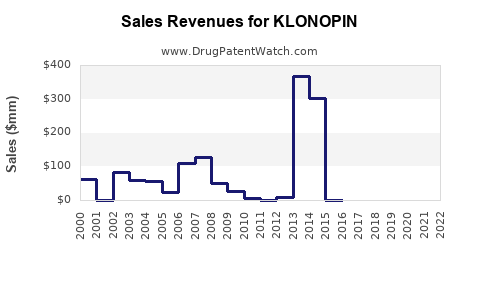
Roche does not separately disclose current Klonopin revenue in its consolidated public reporting. The company reports financial results by broader business divisions and product groups, which prevents a reliable standalone revenue series for Klonopin (Roche, 2024).
The financial trajectory can be divided into four phases:
Launch and expansion
After FDA approval in 1975, Klonopin gained use in seizure disorders and panic disorder. Brand growth benefited from physician familiarity and the limited number of effective pharmacologic alternatives in some patient groups.
Brand maturity
As prescribing stabilized, revenue became dependent on recurring chronic use, particularly in seizure treatment and long-term anxiety management. The product’s controlled-substance status limited broad primary-care expansion.
Generic erosion
Generic entry reduced branded volume and price. Payers and pharmacies increasingly substituted generic clonazepam. The branded product lost the ability to sustain launch-era margins.
Mature generic market
The current market is driven by prescription volume, generic competition, supply continuity, wholesaler contracts, and regulatory compliance. Brand Klonopin has residual value but lacks the economics of a protected specialty medicine.
| Financial driver |
Current direction |
Implication |
| Brand price |
Downward pressure |
Limits revenue and gross margin |
| Generic volume |
Established |
Supports broad access |
| Prescription demand |
Persistent but regulated |
Provides recurring base demand |
| Patent value |
Minimal |
No meaningful pricing moat |
| Manufacturing value |
Moderate |
Supply reliability can influence share |
| Regulatory cost |
Elevated |
Controlled-substance compliance reduces margin |
| Alternative therapies |
Competitive pressure |
Constrains long-term growth |
Public prescription and sales databases may report materially different values depending on whether they measure prescriptions, extended units, manufacturer sales, or retail spending. A precise current Klonopin revenue estimate cannot be derived from Roche’s public financial statements.
How does Klonopin compare with competing drugs?
Klonopin competes in multiple markets rather than one uniform category.
| Drug or class |
Primary use overlap |
Competitive relationship |
| Alprazolam, including Xanax |
Panic and anxiety disorders |
Shorter-acting benzodiazepine alternative |
| Lorazepam, including Ativan |
Anxiety and seizure-related uses |
Competes in acute and hospital settings |
| Diazepam, including Valium |
Anxiety, seizures, muscle spasm |
Longer-established alternative |
| SSRIs and SNRIs |
Panic disorder and anxiety |
Nonbenzodiazepine chronic-treatment alternatives |
| Other antiseizure medicines |
Seizure disorders |
Disease-specific alternatives |
| Buspirone |
Generalized anxiety |
Noncontrolled anxiety treatment |
| Pregabalin and related agents |
Anxiety or seizure-related uses in selected markets |
Alternative mechanism and prescribing profile |
Clonazepam’s competitive advantages include long duration of action, physician familiarity, and established efficacy. Its disadvantages include dependence risk, withdrawal concerns, sedation, controlled-substance restrictions, and caution when combined with opioids.
What geographic markets matter for Klonopin?
The United States is commercially important because of the size of the prescription market, generic penetration, controlled-substance oversight, and high use of pharmacy benefit management. The product is also sold internationally under brand and generic names, although regulatory status, approved indications, scheduling, and reimbursement differ by country.
Geographic value depends on:
- Local generic entry.
- National reimbursement.
- Controlled-substance rules.
- Physician prescribing practices.
- Availability of nonbenzodiazepine alternatives.
- Local manufacturing and distribution capacity.
A country with weak generic substitution may preserve more branded value. A country with broad generic reimbursement and strict benzodiazepine controls will generally produce lower branded revenue.
What manufacturing and intellectual-property barriers remain?
The largest residual barriers are operational rather than patent-based. Manufacturers must maintain:
- FDA-compliant active pharmaceutical ingredient supply.
- Controlled-substance security and recordkeeping.
- Valid manufacturing registrations.
- Content uniformity and dissolution performance.
- Reliable packaging and distribution.
- Compliance with current good manufacturing practices.
- Adequate inventory for multiple strengths.
Clonazepam API sourcing can create supply risk because controlled-substance manufacturing requires specialized compliance. A temporary shortage may shift market share among generic suppliers, but it does not create durable exclusivity.
What generic launch scenarios are possible?
For conventional clonazepam, the principal generic launch phase has already occurred. Future scenarios are more likely to involve supplier changes than first entry.
| Scenario |
Probability profile |
Market effect |
| New supplier enters a mature tablet market |
Possible |
Further price pressure |
| Existing supplier exits |
Periodic risk |
Temporary supply tightening |
| Branded product retains a niche |
Likely |
Small residual premium segment |
| New protected delivery system launches |
Low but possible |
Limited segment differentiation |
| Regulatory tightening reduces use |
Possible |
Gradual demand erosion |
| Shortage affects several suppliers |
Episodic risk |
Temporary price and share volatility |
Key Takeaways
- Klonopin is the branded form of clonazepam, a mature benzodiazepine approved by the FDA in 1975.
- Core patent and regulatory exclusivity expired decades ago.
- Generic clonazepam has long been available and controls most commercial volume.
- The current U.S. patent estate provides no broad barrier to conventional generic entry.
- There is no major current Paragraph IV or patent-litigation event driving the market.
- Roche does not separately disclose Klonopin revenue, preventing a verified standalone sales trajectory from public filings.
- Financial value is concentrated in recurring prescription demand, manufacturing reliability, and generic supply economics.
- Schedule IV controls, dependence risk, opioid interaction warnings, and alternative therapies constrain long-term growth.
- Any remaining branded value is based on recognition, formulation availability, and clinical continuity rather than patent protection.
- The main investment and licensing risks are supply, regulatory compliance, liability, and generic price erosion.
FAQs
Is Klonopin still under patent protection?
No broad active U.S. patent protection for conventional clonazepam tablets is commercially significant today. The relevant core protections expired long ago.
Can a generic company still challenge Klonopin with a Paragraph IV filing?
A Paragraph IV filing could theoretically target a newly listed formulation or process patent, but conventional clonazepam products already face established generic competition. A new challenge would have limited market-wide impact unless it involved a genuinely differentiated dosage form.
Does Roche still earn meaningful revenue from Klonopin?
Roche does not separately report current Klonopin revenue. Brand revenue likely represents a small residual portion of the broader clonazepam market because generic substitution has been established for many years.
Is clonazepam a biosimilar product?
No. Clonazepam is a small-molecule drug, not a biologic. Generic clonazepam products are approved through the ANDA pathway, not the biosimilar pathway.
What is the main commercial risk for generic clonazepam manufacturers?
The main risks are price competition, controlled-substance compliance, API or finished-dose supply disruption, manufacturing deficiencies, and declining benzodiazepine use due to safety concerns and alternative treatments.
References
-
U.S. Food and Drug Administration. (2020). FDA requiring boxed warning updated to improve safe use of benzodiazepine drug class. https://www.fda.gov
-
U.S. Food and Drug Administration. (2023). Klonopin (clonazepam) prescribing information. Roche Laboratories. https://www.accessdata.fda.gov
-
U.S. Food and Drug Administration. (2024a). Approved drug products with therapeutic equivalence evaluations: Orange Book. https://www.accessdata.fda.gov/scripts/cder/ob/
-
U.S. Food and Drug Administration. (2024b). Drugs@FDA: FDA-approved drugs database. https://www.accessdata.fda.gov/scripts/cder/daf/
-
Roche Holding AG. (2024). Annual report 2023. https://www.roche.com/investors/reports-statistics-and-publications/annual-report taamatut