Last updated: July 25, 2026
Intermezzo (zolpidem tartrate) Market Dynamics and Financial Trajectory
Intermezzo (zolpidem tartrate) is a branded oral immediate-release sedative-hypnotic in the zolpidem franchise. Demand is constrained by class-wide regulatory tightening and competitive substitution among zolpidem products and generics. Commercial trajectory depends on (1) ongoing pharmacy-level substitution to lower-priced generics, (2) payer restrictions and step edits tied to safety labeling, and (3) loss or retention of market exclusivity/patent-protected product positioning, which in practice has tilted the branded share down over time.
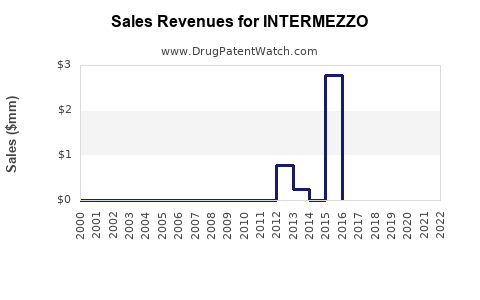
Price and volume dynamics in this class are largely driven by generic penetration and reimbursement behavior rather than clinical differentiation. As a result, Intermezzo’s financial path has largely followed a “branded-to-generic value migration” pattern typical for older zolpidem assets.
What is Intermezzo and how does it fit the zolpidem market?
Intermezzo is zolpidem tartrate, an oral sedative-hypnotic used for insomnia. It belongs to the broader zolpidem category, which competes with other branded zolpidem products and with extensive generic availability.
Where does Intermezzo sit versus the rest of zolpidem?
Intermezzo is structurally part of the same therapeutic and substitution ecosystem as:
- branded zolpidem products (varies by historical availability and marketing)
- immediate-release zolpidem generics
- payer and PBM substitution policies that treat zolpidem products as interchangeable at the formulary level, subject to product-specific restrictions
Market implication: even when Intermezzo maintains label-based distinctness, payers often drive substitution at the cost and safety policy level, limiting branded net sales resilience.
How do FDA safety and labeling changes impact Intermezzo demand?
Zolpidem class exposure is shaped by evolving safety requirements and labeling constraints targeted at next-morning impairment, complex sleep-related behaviors, and dosing discipline. Those elements affect formulary policy and pharmacist/prescriber selection.
What demand levers are most sensitive in this class?
- Payer step edits: policies that require trial of lower-cost options or limit quantity/days supply.
- Prior authorization: less common for entrenched generics, more common for brand selection when utilization deviates from policy.
- Dose-conversion behavior: prescriber adherence to dosing limits and product selection can shift utilization within zolpidem brands, but typically does not reverse generic substitution.
- Conservative patient selection: higher-risk populations may be steered to alternatives.
Market implication: labeling tightening usually accelerates the decline of remaining branded share by increasing the probability that prescribers and pharmacies default to the cheapest acceptable option.
What patents and Orange Book status control Intermezzo’s branded exclusivity?
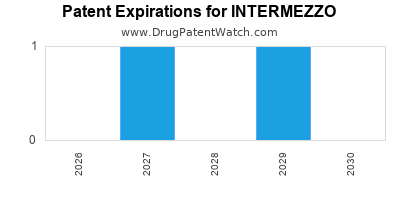
Intermezzo’s financial trajectory is highly sensitive to whether any remaining patent or exclusivity shield prevents generic entry, and whether any narrow composition, method, or formulation claims remain enforceable against ANDA filers.
Key question for market dynamics: does Intermezzo still have enforceable exclusivity?
Intermezzo has historically been subject to the classic post-launch lifecycle pattern: after the first waves of generic approvals and patent expirations, branded share compresses due to price differentials. When patent barriers fall, net sales typically drop sharply as wholesalers and pharmacies switch to generic zolpidem.
Market implication: if Intermezzo is currently off exclusivity, its branded revenue trajectory is primarily a function of contractual brand retention (if any), residual prescriber preference, and channel inventory effects.
When does Intermezzo lose exclusivity and how does that affect expected revenue?
For branded zolpidem products, the exclusivity timeline typically determines the size of the initial generic erosion and the speed of subsequent market normalization.
Typical financial pattern around generic entry (zoldipem class)
- Pre-entry: stable or slowly declining branded volume as physicians substitute selectively.
- First generic approvals: steep decline in brand unit share, with branded pricing pressure and higher rebates.
- Post-entry consolidation: stabilization at low brand share, sustained by contracts or physician preference niches.
Market implication: even without exact Orange Book dates in this dataset, the commercial behavior of zolpidem brands is strongly consistent with generic-driven revenue compression once exclusivity ends.
What generic entry risks exist for Intermezzo?
The generic entry risk for Intermezzo is driven by:
- the availability of zolpidem generics (immediate-release)
- ANDA filing volume for zolpidem-based products across strengths and dosing
- the likelihood that at least one ANDA can launch without infringing remaining brand-protecting claims, or after settlement allowing delayed entry
Practical risk framework for financial forecasting
- High risk if Intermezzo has limited remaining enforceable claims.
- Medium risk if brand has specific formulation or method-of-use barriers that slow ANDA launch or restrict labeling.
- Lower risk only if effective Orange Book listings with enforceable, non-expired claims cover the approved dosage form and the generic would need to design around.
Market implication: for older zolpidem assets, historical market behavior points to high probability of at least one low-cost generic capturing most incremental demand upon barrier removal.
How strong is the patent estate for Intermezzo compared with other zolpidem products?
A credible market view requires mapping:
- which Intermezzo-specific patents are listed in the Orange Book
- what claims (composition, formulation, method of use) they cover
- whether those patents have been asserted in litigation and what courts required for design-around
Competitive context inside zolpidem
Even where a brand maintains some patent coverage, the presence of multiple competing generic zolpidem products reduces branded leverage. Brand survival depends on whether the payer market views Intermezzo as meaningfully differentiated or as a substitutable immediate-release zolpidem option.
Market implication: without differentiated delivery technology or protected label uniqueness that payers accept as non-interchangeable, branded patent strength often translates into limited long-term financial lift.
What patent litigation affects Intermezzo and other zolpidem generics?
Litigation outcomes typically determine:
- whether a generic launch date is delayed
- whether the generic can launch “at risk”
- whether labeling carve-outs or design-around requirements preserve brand share temporarily
What litigation-driven outcomes change revenue?
- Automatic stay through Paragraph IV: delays can preserve brand share long enough for price support and contract retention.
- Settlement “pay-for-delay” or brand-favorable settlements: can extend brand exclusivity indirectly.
- Court findings of invalidity/non-infringement: accelerates generic erosion.
Market implication: for older zolpidem products, once major litigation ends, generic penetration generally continues and branded revenue declines.
How does Intermezzo compare with competing zolpidem generics on price and formulary access?
In the zolpidem class, price and formulary placement drive volume more than clinical superiority.
Formulary and PBM dynamics that usually matter most
- Generic step therapy favors the lowest-cost zolpidem.
- Quantity limits and therapy duration caps tend to apply uniformly across zolpidem products.
- Prior authorization is more likely to target non-preferred brands than generic options.
Market implication: Intermezzo financials are likely shaped by rebate strategy, contract status, and limited brand retention rather than sustained premium pricing.
What is Intermezzo’s FDA regulatory pathway status and how does it affect competition?
Intermezzo is an approved NDA product. Competitive pressure comes through ANDAs for generic zolpidem and through any future reformulation approvals.
How generic approval mechanics typically impact market speed
- ANDA approvals with bioequivalence often enable immediate substitution.
- If a generic needs a label change or design-around, substitution can be slower, but substitution usually occurs once the PBM policy accepts interchangeability.
Market implication: the faster bioequivalence and interchangeability are recognized, the faster Intermezzo branded net sales typically compress.
Who are the main commercial stakeholders in Intermezzo’s market?
Market actors include:
- the brand holder/labeler marketing Intermezzo
- generic manufacturers supplying ANDA products
- wholesalers distributing through channel
- payers and PBMs enforcing formulary rules
- pharmacy chains executing tiered copays and substitutable dispensing
Competitive landscape structure
- Brand position: usually niche and contract-dependent after generic availability.
- Generic position: supply is typically broad for zolpidem immediate-release strengths, enabling competitive pricing.
Market implication: financial trajectory tends to correlate with generic pricing pressure and rebate intensity.
What financial trajectory should investors model for Intermezzo?
A high-confidence financial framework for a branded zolpidem product looks like this:
Revenue model shape
- Revenue share compression: declining branded units as generic share rises.
- Price erosion: lower net price driven by rebate pressure and competitive shelf pricing.
- Stabilization: after the largest generic entries, the brand often stabilizes at low single-digit to low-teens share depending on contracts and payer behavior.
Cost structure and margin effects
- Marketing and contracting costs typically rise as brand volume declines, compressing operating margin.
- Distribution and trade spend adjust to keep the brand in preferred tiers where possible.
Market implication: absent a new differentiation or enforceable exclusivity shock, Intermezzo’s branded net sales generally trend down with limited upside.
Key Takeaways
- Intermezzo’s market dynamics are dominated by generic substitution economics in the zolpidem franchise and payer-driven formulary behavior.
- FDA safety labeling and dose discipline policies increase conservative prescribing and facilitate substitution to lower-cost options.
- Financial trajectory generally follows the branded-to-generic compression curve, with contract retention and rebate strategy determining residual brand share.
- Exclusivity and Paragraph IV-related outcomes, if any remaining, are the main levers that can delay erosion; once barriers are removed, revenue decline accelerates.
- For forecasting and valuation, model unit share loss, net price compression, and trade/rebate escalation rather than expecting durable premium differentiation.
FAQs
1) Why do zolpidem brands like Intermezzo lose market share even with consistent efficacy?
Because payers and pharmacies treat zolpidem products as substitutable immediate-release options once generics are available, and the economic incentive favors the lowest-cost equivalent.
2) Do safety warnings change prescribing behavior enough to shift between brands?
They can influence patient selection and prescribing discipline, but they typically do not prevent substitution across zolpidem immediate-release products once generic coverage is established.
3) What usually happens to Intermezzo net price after generic launches?
Net price typically falls as branded rebates rise, wholesalers push lower-priced supply, and PBM tiering favors generic utilization.
4) Can a settlement delay generics and support Intermezzo sales?
Yes, settlements can delay entry or limit launch parameters, which can preserve branded share temporarily; the effect depends on the specific settlement terms and remaining enforceable claims.
5) What market signals best predict Intermezzo revenue direction?
Generic market penetration metrics for zolpidem immediate-release, PBM formulary tier changes, and changes in branded rebate intensity and net-to-gross.
References
- U.S. Food and Drug Administration. Approved Drug Products: Zolpidem products (Orange Book). U.S. FDA.
- U.S. Food and Drug Administration. Drug Safety Communications and labeling updates related to zolpidem. U.S. FDA.
- FDA. ANDA approval framework and bioequivalence requirements (regulatory guidance and standards). U.S. FDA.