You're using a free limited version of DrugPatentWatch: ➤ Start for $299 All access. No Commitment.

Last Updated: April 1, 2026

INGREZZA Drug Patent Profile


✉ Email this page to a colleague

« Back to Dashboard


Which patents cover Ingrezza, and when can generic versions of Ingrezza launch?

Ingrezza is a drug marketed by Neurocrine and is included in two NDAs. There are twenty-two patents protecting this drug and two Paragraph IV challenges.

This drug has two hundred and seventy-three patent family members in thirty-six countries.

The generic ingredient in INGREZZA is valbenazine tosylate. One supplier is listed for this compound. Additional details are available on the valbenazine tosylate profile page.

DrugPatentWatch® Litigation and Generic Entry Outlook for Ingrezza

A generic version of INGREZZA was approved as valbenazine tosylate by LUPIN LTD on April 5th, 2024.

  Start Trial

AI Deep Research
Questions you can ask:
  • What is the 5 year forecast for INGREZZA?
  • What are the global sales for INGREZZA?
  • What is Average Wholesale Price for INGREZZA?
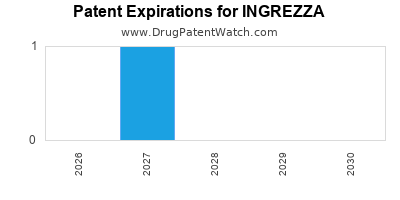
Drug patent expirations by year for INGREZZA
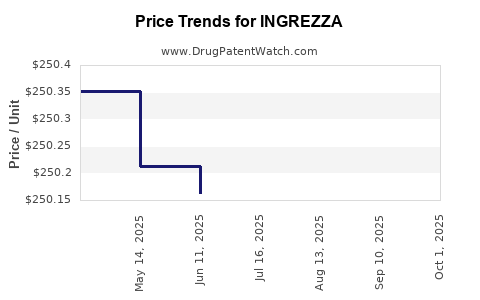
Drug Prices for INGREZZA

See drug prices for INGREZZA

Recent Clinical Trials for INGREZZA

Identify potential brand extensions & 505(b)(2) entrants

SponsorPhase
Stephen RuedrichPhase 4
Neurocrine BiosciencesPhase 4
Michael BlochPhase 2

See all INGREZZA clinical trials

Pharmacology for INGREZZA
Paragraph IV (Patent) Challenges for INGREZZA
Tradename Dosage Ingredient Strength NDA ANDAs Submitted Submissiondate
INGREZZA Capsules valbenazine tosylate 60 mg 209241 1 2022-02-14
INGREZZA Capsules valbenazine tosylate 40 mg and 80 mg 209241 4 2021-04-12

US Patents and Regulatory Information for INGREZZA

INGREZZA is protected by thirty-three US patents and two FDA Regulatory Exclusivities.

Applicant Tradename Generic Name Dosage NDA Approval Date TE Type RLD RS Patent No. Patent Expiration Product Substance Delist Req. Exclusivity Expiration
Neurocrine INGREZZA valbenazine tosylate CAPSULE;ORAL 209241-002 Oct 4, 2017 AB RX Yes Yes ⤷  Start Trial ⤷  Start Trial ⤷  Start Trial
Neurocrine INGREZZA valbenazine tosylate CAPSULE;ORAL 209241-002 Oct 4, 2017 AB RX Yes Yes ⤷  Start Trial ⤷  Start Trial Y Y ⤷  Start Trial
Neurocrine INGREZZA valbenazine tosylate CAPSULE;ORAL 209241-003 Apr 23, 2021 RX Yes No ⤷  Start Trial ⤷  Start Trial ⤷  Start Trial
Neurocrine INGREZZA valbenazine tosylate CAPSULE;ORAL 209241-001 Apr 11, 2017 AB RX Yes No ⤷  Start Trial ⤷  Start Trial Y Y ⤷  Start Trial
Neurocrine INGREZZA SPRINKLE valbenazine tosylate CAPSULE;ORAL 218390-002 Apr 30, 2024 RX Yes No ⤷  Start Trial ⤷  Start Trial ⤷  Start Trial
Neurocrine INGREZZA valbenazine tosylate CAPSULE;ORAL 209241-002 Oct 4, 2017 AB RX Yes Yes ⤷  Start Trial ⤷  Start Trial Y ⤷  Start Trial
Neurocrine INGREZZA SPRINKLE valbenazine tosylate CAPSULE;ORAL 218390-001 Apr 30, 2024 RX Yes No ⤷  Start Trial ⤷  Start Trial ⤷  Start Trial
>Applicant >Tradename >Generic Name >Dosage >NDA >Approval Date >TE >Type >RLD >RS >Patent No. >Patent Expiration >Product >Substance >Delist Req. >Exclusivity Expiration

International Patents for INGREZZA

When does loss-of-exclusivity occur for INGREZZA?

Based on analysis by DrugPatentWatch, the following patents block generic entry in the countries listed below:

Argentina

Patent: 2819
Estimated Expiration: ⤷  Start Trial

Australia

Patent: 18335259
Estimated Expiration: ⤷  Start Trial

Brazil

Patent: 2020005373
Estimated Expiration: ⤷  Start Trial

Canada

Patent: 76000
Estimated Expiration: ⤷  Start Trial

China

Patent: 1372567
Estimated Expiration: ⤷  Start Trial

Croatia

Patent: 0250561
Estimated Expiration: ⤷  Start Trial

Denmark

Patent: 84333
Estimated Expiration: ⤷  Start Trial

Eurasian Patent Organization

Patent: 2090809
Estimated Expiration: ⤷  Start Trial

European Patent Office

Patent: 84333
Estimated Expiration: ⤷  Start Trial

Finland

Patent: 84333
Estimated Expiration: ⤷  Start Trial

Hungary

Patent: 71873
Estimated Expiration: ⤷  Start Trial

Israel

Patent: 3300
Patent: פורמולציית ולבנאזין במינון גבוה ותכשירים, שיטות וערכות קשורות להן (High dosage valbenazine formulation and compositions, methods, and kits related thereto)
Estimated Expiration: ⤷  Start Trial

Patent: 1770
Patent: פורמולציית ולבנאזין במינון גבוה ותכשירים, שיטות וערכות קשורות להן (High dosage valbenazine formulation and compositions, methods, and kits related thereto)
Estimated Expiration: ⤷  Start Trial

Patent: 9802
Patent: פורמולציית ולבנאזין במינון גבוה ותכשירים, שיטות וערכות קשורות להן (High dosage valbenazine formulation and compositions, methods, and kits related thereto)
Estimated Expiration: ⤷  Start Trial

Japan

Patent: 50006
Estimated Expiration: ⤷  Start Trial

Patent: 20534305
Patent: 高投与量バルベナジン製剤ならびにそれに関連する組成物、方法およびキット
Estimated Expiration: ⤷  Start Trial

Lithuania

Patent: 84333
Estimated Expiration: ⤷  Start Trial

Mexico

Patent: 20002841
Patent: FORMULACION DE VALBENAZINA DE ALTA DOSIS Y COMPOSICIONES, METODOS Y KITS RELACIONADOS CON LA MISMA. (HIGH DOSAGE VALBENAZINE FORMULATION AND COMPOSITIONS, METHODS, AND KITS RELATED THERETO.)
Estimated Expiration: ⤷  Start Trial

Moldova, Republic of

Patent: 84333
Estimated Expiration: ⤷  Start Trial

Morocco

Patent: 175
Patent: FORMULATION DE VALBENAZINE À DOSAGE ÉLEVÉ ET COMPOSITIONS, PROCÉDÉS ET KITS ASSOCIÉS
Estimated Expiration: ⤷  Start Trial

Poland

Patent: 84333
Estimated Expiration: ⤷  Start Trial

Portugal

Patent: 84333
Estimated Expiration: ⤷  Start Trial

San Marino

Patent: 02500305
Estimated Expiration: ⤷  Start Trial

Serbia

Patent: 714
Patent: FORMULACIJA VISOKE DOZE VALBENAZINA I SASTAVI, POSTUPCI I KOMPLETI POVEZANI SA NJIM (HIGH DOSAGE VALBENAZINE FORMULATION AND COMPOSITIONS, METHODS, AND KITS RELATED THERETO)
Estimated Expiration: ⤷  Start Trial

Slovenia

Patent: 84333
Estimated Expiration: ⤷  Start Trial

Spain

Patent: 24958
Estimated Expiration: ⤷  Start Trial

Taiwan

Patent: 75681
Estimated Expiration: ⤷  Start Trial

Patent: 1919622
Patent: High dosage VALBENAZINE formulation and compositions, methods, and kits related thereto
Estimated Expiration: ⤷  Start Trial

Generics may enter earlier, or later, based on new patent filings, patent extensions, patent invalidation, early generic licensing, generic entry preferences, and other factors.

See the table below for additional patents covering INGREZZA around the world.

Country Patent Number Title Estimated Expiration
Japan 2020514317 ⤷  Start Trial
New Zealand 742006 Valbenazine salts and polymorphs thereof ⤷  Start Trial
Morocco 56137 SELS DE VALBÉNAZINE ET LEURS POLYMORPHES ⤷  Start Trial
Brazil 112021000019 ⤷  Start Trial
Slovenia 3368534 ⤷  Start Trial
South Korea 20250020722 ⤷  Start Trial
Mexico 393077 MÉTODOS PARA LA ADMINISTRACIÓN DE CIERTOS INHIBIDORES DE PROTEÍNA TRANSPORTADORA TRANSPORTADOR DE MONOAMINA VESICULAR (VMAT2). (METHODS FOR THE ADMINISTRATION OF CERTAIN VMAT2 INHIBITORS) ⤷  Start Trial
>Country >Patent Number >Title >Estimated Expiration

INGREZZA: Market Landscape and Financial Outlook

Last updated: February 19, 2026

What is INGREZZA and Its Therapeutic Area?

INGREZZA (valbenazine) is an oral once-daily medication approved for the treatment of adults with tardive dyskinesia (TD). Tardive dyskinesia is a neurological movement disorder characterized by involuntary, repetitive movements, most commonly of the face, tongue, lips, jaw, and limbs. The condition is often a side effect of long-term use of dopamine receptor-blocking agents, such as antipsychotics, commonly prescribed for psychiatric conditions like schizophrenia and bipolar disorder. INGREZZA is the first and only medication specifically approved by the U.S. Food and Drug Administration (FDA) for this indication.

What is the Mechanism of Action for INGREZZA?

INGREZZA's mechanism of action involves selective inhibition of the vesicular monoamine transporter 2 (VMAT2). VMAT2 is a protein responsible for packaging and transporting monoamines, including dopamine, into synaptic vesicles for release into the synapse. By selectively inhibiting VMAT2, INGREZZA reduces the amount of dopamine released into the synapse, thereby modulating dopaminergic neurotransmission and alleviating the involuntary movements associated with TD. This selective action targets the underlying pathophysiology of TD without broadly blocking dopamine receptors, which is the mechanism of action for many antipsychotic medications that can cause TD.

Who are the Key Stakeholders and Competitors in the TD Market?

The primary stakeholder in the tardive dyskinesia market is Neurocrine Biosciences, the developer and marketer of INGREZZA. Other key stakeholders include patients diagnosed with TD, their caregivers, and prescribing physicians, predominantly neurologists and psychiatrists.

The competitive landscape for TD treatment is evolving. Historically, off-label use of certain medications, such as benzodiazepines and anticholinergics, was common, but these lacked specific FDA approval and demonstrated efficacy for TD.

Currently, the main direct competitor to INGREZZA is Austedo (deutetrabenazine), marketed by Teva Pharmaceutical Industries. Austedo is also approved for the treatment of chorea associated with Huntington’s disease and tardive dyskinesia. Both INGREZZA and Austedo are VMAT2 inhibitors and represent the current standard of care for TD.

Other potential competitive pressures may arise from:

  • New entrants: Pharmaceutical companies developing novel mechanisms of action for TD or related movement disorders.
  • Improved management of underlying conditions: More effective or judicious use of antipsychotic medications that minimizes the risk of developing TD.
  • Non-pharmacological interventions: Advances in behavioral therapies or other non-drug-based approaches for managing TD symptoms.

What is the Market Size and Growth Potential for INGREZZA?

The market for tardive dyskinesia treatments is substantial and growing, driven by an increasing awareness of the condition, improved diagnostic capabilities, and the availability of effective therapies.

Estimates for the prevalence of TD vary, but research suggests that a significant percentage of patients on long-term antipsychotic therapy develop the disorder. For instance, studies indicate that TD can affect between 15% and 50% of individuals using first-generation antipsychotics and 20% to 30% of those using second-generation antipsychotics [1]. This translates to millions of potential patients in the United States alone.

Neurocrine Biosciences has reported significant sales growth for INGREZZA since its launch.

Year INGREZZA Net Sales (USD Millions) Year-over-Year Growth (%)
2017 174.8 N/A
2018 374.1 113.9%
2019 571.7 52.8%
2020 845.1 47.8%
2021 1,153.8 36.5%
2022 1,379.9 19.6%
2023 1,979.0 43.4%

Source: Neurocrine Biosciences SEC Filings and Investor Reports.

The growth trajectory demonstrates strong market adoption and the unmet need that INGREZZA addresses. Factors contributing to this growth include:

  • Increased diagnosis: Greater physician and patient awareness of TD symptoms and the availability of diagnostic tools.
  • Effective treatment: INGREZZA's demonstrated efficacy in reducing TD symptoms.
  • Convenient dosing: Once-daily oral administration simplifies patient adherence.
  • Expanding indications: While currently approved for TD, potential label expansions to other neurological disorders could further broaden the market.

What is the Pricing and Reimbursement Landscape for INGREZZA?

The pricing of INGREZZA, like many specialty pharmaceuticals, is positioned at a premium reflective of its novel mechanism of action, clinical benefit, and the chronic nature of tardive dyskinesia. The list price is a significant factor influencing patient access and payer coverage.

Neurocrine Biosciences has historically set INGREZZA's list price to reflect its value proposition in treating a debilitating condition with limited alternatives. For example, as of early 2024, the estimated monthly cost for INGREZZA can range from $5,000 to $7,000 USD, depending on the formulation and dosage strength.

Reimbursement for INGREZZA is primarily secured through commercial health insurance plans and Medicare Part D. Payer coverage policies are crucial for market access. Generally, payers require prior authorization, which often necessitates documentation of:

  • Diagnosis of tardive dyskinesia confirmed by a qualified healthcare professional.
  • Failure of, or contraindication to, alternative treatments (if applicable).
  • Specific dosage and duration of treatment recommendations.

Challenges in reimbursement can include:

  • Prior authorization hurdles: Delays or denials can impede patient access.
  • Step therapy requirements: Payers may require patients to try less expensive, though potentially less effective, treatments first.
  • High patient co-pays: Even with insurance coverage, patient out-of-pocket costs can be substantial, impacting affordability.

Neurocrine Biosciences actively engages with payers and provides patient assistance programs to mitigate these challenges. These programs aim to reduce out-of-pocket costs for eligible patients, thereby improving access and adherence.

What are the Intellectual Property Protections and Patent Expirations for INGREZZA?

INGREZZA is protected by a robust portfolio of intellectual property, primarily patents covering its composition of matter, methods of use, and manufacturing processes. These patents are critical in securing market exclusivity for Neurocrine Biosciences and preventing generic competition.

Key patent considerations for INGREZZA include:

  • Composition of Matter Patents: These are typically the strongest patents, protecting the molecule itself. The original U.S. patent for valbenazine was granted in 2014.
  • Method of Use Patents: These patents cover specific therapeutic uses of the drug, such as its use in treating tardive dyskinesia. These are crucial for extending market exclusivity beyond the composition of matter patent.
  • Formulation and Manufacturing Patents: These can protect specific ways the drug is delivered or produced, offering additional layers of protection.

Key Patent Expirations:

While specific patent expiry dates are subject to ongoing litigation and potential extensions (e.g., via the Hatch-Waxman Act), the core patents providing market exclusivity for INGREZZA are projected to expire in the coming years.

  • U.S. Composition of Matter Patent: The primary patents covering the valbenazine molecule have expiration dates generally extending into the late 2020s or early 2030s. However, the landscape is complex due to numerous related patents and potential challenges.
  • Litigation: Neurocrine Biosciences has been involved in patent litigation to defend its intellectual property against potential generic challenges. Court rulings in these cases can significantly impact the timeline for generic entry.

Generic manufacturers typically await the expiration of key patents before launching their own versions of a drug. The anticipation of patent expiry often leads to increased investment by generic companies in developing their bioequivalent products. For INGREZZA, the period surrounding the expiration of its core patents will be critical, with potential for generic versions to enter the market thereafter, which would likely lead to price erosion and a significant shift in market dynamics.

What are the Financial Performance and Investment Implications for Neurocrine Biosciences?

Neurocrine Biosciences' financial performance has been substantially driven by the success of INGREZZA. The drug's strong sales growth has transformed the company's revenue streams and profitability.

Key Financial Indicators:

  • Revenue Growth: As evidenced by the sales data in the Market Size section, INGREZZA has delivered consistent and significant revenue growth year-over-year. This rapid expansion has made it Neurocrine's flagship product.
  • Profitability: The high margins associated with specialty pharmaceuticals like INGREZZA contribute positively to Neurocrine's profitability. The company's ability to manage its operational expenses alongside INGREZZA’s sales growth dictates its net profit.
  • Research and Development (R&D) Investment: Neurocrine Biosciences continues to invest heavily in R&D, both to support INGREZZA (e.g., exploring new indications) and to develop its pipeline of other therapeutic candidates, particularly in areas like neurology and endocrinology.
  • Market Capitalization: The company's market capitalization has grown considerably, reflecting investor confidence in INGREZZA's continued commercial success and the company's future prospects.

Investment Implications:

For investors, Neurocrine Biosciences presents a profile characterized by:

  • High Growth Potential: Driven by INGREZZA's dominance in the TD market and potential label expansions.
  • Pipeline Value: While INGREZZA is the current revenue engine, the company's pipeline of other drugs in development represents future growth opportunities and diversification.
  • Patent Cliff Risk: The eventual expiration of INGREZZA's patents and the subsequent entry of generic competitors is a significant risk that investors must consider. The company's strategy for managing this transition, including pipeline development and potential lifecycle management strategies for INGREZZA, will be crucial.
  • Competitive Pressures: The presence of Austedo and potential future entrants necessitates continuous innovation and market stewardship by Neurocrine.

Analyzing Neurocrine Biosciences requires a forward-looking perspective that balances the current strength of INGREZZA with the long-term challenges and opportunities of the pharmaceutical market.

What is the Future Outlook and Potential for INGREZZA?

The future outlook for INGREZZA remains positive, underpinned by its established market position and ongoing efforts to expand its utility.

Expansion of Indications: Neurocrine Biosciences is actively investigating INGREZZA for other neurological and psychiatric conditions beyond tardive dyskinesia. Potential areas of exploration include:

  • Dyskinesia associated with other conditions: Research into its efficacy in other involuntary movement disorders.
  • Tourette Syndrome: Studies have explored the potential of VMAT2 inhibitors in managing tics associated with Tourette Syndrome.
  • Other neuropsychiatric disorders: Broad exploration into conditions where dopaminergic dysregulation plays a role.

Successful development and approval for new indications would significantly broaden INGREZZA's market reach and revenue potential, mitigating the impact of future generic competition for its current indication.

Market Penetration: While INGREZZA has achieved significant market penetration, there remains an opportunity to increase diagnosis rates and treatment initiation among eligible patients. Continued educational initiatives targeting healthcare providers and patient advocacy efforts can further drive uptake.

Competitive Dynamics: The ongoing competition with Austedo and the potential for new entrants will require Neurocrine to maintain its market leadership through continued scientific advancement, strong commercial execution, and effective patient support programs.

Lifecycle Management: As INGREZZA approaches its patent expirations, Neurocrine will likely focus on lifecycle management strategies. This could involve developing new formulations (e.g., extended-release), exploring combination therapies, or seeking approvals for new patient populations.

The long-term trajectory of INGREZZA will be shaped by its ability to secure new therapeutic approvals, maintain its competitive edge, and effectively navigate the evolving patent and regulatory landscape.

Key Takeaways

  • INGREZZA (valbenazine) is the leading FDA-approved treatment for tardive dyskinesia, a neurological disorder affecting millions.
  • Its selective VMAT2 inhibition mechanism differentiates it from older symptomatic treatments.
  • The tardive dyskinesia market is substantial and growing, with INGREZZA demonstrating robust sales growth since its launch, exceeding $1.9 billion in net sales in 2023.
  • Key competitors include Austedo (deutetrabenazine), creating a duopoly in the approved TD treatment space.
  • INGREZZA's pricing reflects its specialty status, with reimbursement managed through commercial and Medicare plans, often requiring prior authorization.
  • Neurocrine Biosciences holds a strong intellectual property portfolio, with core patents providing exclusivity extending into the late 2020s or early 2030s, though subject to litigation.
  • INGREZZA is the primary revenue driver for Neurocrine Biosciences, fueling significant financial growth and investment.
  • Future growth for INGREZZA is contingent on expanding indications, increasing market penetration, and effective lifecycle management to counter upcoming patent expirations.

Frequently Asked Questions

What is the expected timeline for INGREZZA's patent expiration and the entry of generic versions?

While exact dates are subject to patent litigation and potential extensions, key patents providing market exclusivity for INGREZZA are projected to expire in the late 2020s to early 2030s, opening the door for potential generic competition thereafter.

How does INGREZZA's efficacy compare to its main competitor, Austedo?

Both INGREZZA and Austedo are VMAT2 inhibitors approved for tardive dyskinesia and have demonstrated statistically significant reductions in involuntary movements compared to placebo in clinical trials. Direct head-to-head comparisons are limited, and physician choice may be influenced by individual patient response, tolerability profiles, and physician familiarity.

What are the most common side effects associated with INGREZZA?

The most common side effects reported in clinical trials for INGREZZA include somnolence (drowsiness), dry mouth, headache, and constipation. Patients should consult their healthcare provider for a comprehensive list of potential side effects.

Does INGREZZA have potential for treating conditions other than tardive dyskinesia?

Yes, Neurocrine Biosciences is actively researching INGREZZA for potential use in other neurological and psychiatric disorders, including investigating its efficacy in conditions like Tourette Syndrome and other dyskinetic movement disorders.

How does Neurocrine Biosciences manage patient access and affordability for INGREZZA?

Neurocrine Biosciences offers various patient assistance programs designed to reduce out-of-pocket costs for eligible commercially insured patients facing financial barriers to accessing INGREZZA.

What is the typical dosage regimen for INGREZZA in tardive dyskinesia patients?

INGREZZA is administered orally once daily. Dosing typically starts at 40 mg per day and can be titrated up to a maximum of 80 mg per day based on individual patient response and tolerability, as determined by a healthcare professional.


Cited Sources

[1] Greene, L. A., & Dominguez, R. A. (1999). Tardive dyskinesia: Diagnosis and management. American Family Physician, 59(7), 1843-1851.

More… ↓

⤷  Start Trial

Make Better Decisions: Try a trial or see plans & pricing

Drugs may be covered by multiple patents or regulatory protections. All trademarks and applicant names are the property of their respective owners or licensors. Although great care is taken in the proper and correct provision of this service, thinkBiotech LLC does not accept any responsibility for possible consequences of errors or omissions in the provided data. The data presented herein is for information purposes only. There is no warranty that the data contained herein is error free. We do not provide individual investment advice. This service is not registered with any financial regulatory agency. The information we publish is educational only and based on our opinions plus our models. By using DrugPatentWatch you acknowledge that we do not provide personalized recommendations or advice. thinkBiotech performs no independent verification of facts as provided by public sources nor are attempts made to provide legal or investing advice. Any reliance on data provided herein is done solely at the discretion of the user. Users of this service are advised to seek professional advice and independent confirmation before considering acting on any of the provided information. thinkBiotech LLC reserves the right to amend, extend or withdraw any part or all of the offered service without notice.