You're using a free limited version of DrugPatentWatch: Upgrade for Complete Access

Last Updated: December 14, 2025

HORIZANT Drug Patent Profile


✉ Email this page to a colleague

« Back to Dashboard


Which patents cover Horizant, and when can generic versions of Horizant launch?

Horizant is a drug marketed by Azurity and is included in one NDA. There are five patents protecting this drug and one Paragraph IV challenge.

This drug has one hundred and forty-six patent family members in twenty-six countries.

The generic ingredient in HORIZANT is gabapentin enacarbil. There are twenty-nine drug master file entries for this compound. One supplier is listed for this compound. Additional details are available on the gabapentin enacarbil profile page.

DrugPatentWatch® Generic Entry Outlook for Horizant

Horizant was eligible for patent challenges on April 6, 2015.

By analyzing the patents and regulatory protections it appears that the earliest date for generic entry will be June 10, 2029. This may change due to patent challenges or generic licensing.

Annual sales in 2022 were $15mm indicating the motivation for generic entry (peak sales were $535mm in 2018).

There is one Paragraph IV patent challenge for this drug. This may lead to patent invalidation or a license for generic production.

Indicators of Generic Entry

< Available with Subscription >

  Get Started Free

AI Deep Research
Questions you can ask:
  • What is the 5 year forecast for HORIZANT?
  • What are the global sales for HORIZANT?
  • What is Average Wholesale Price for HORIZANT?
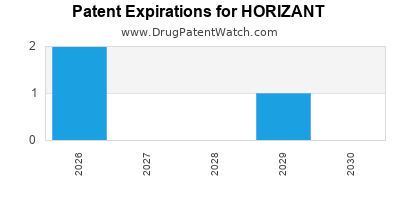
Drug patent expirations by year for HORIZANT
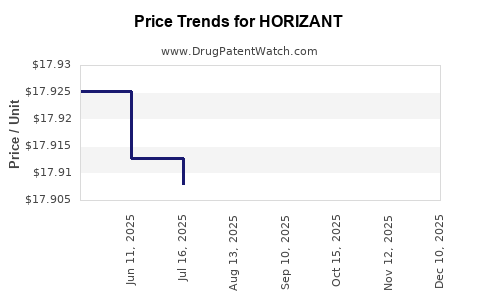
Drug Prices for HORIZANT

See drug prices for HORIZANT

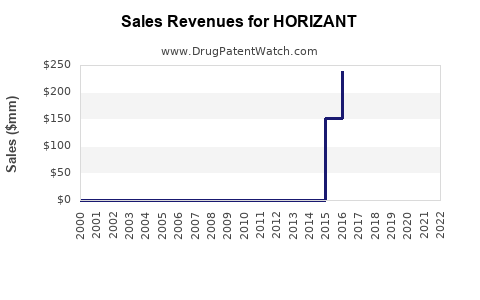
Drug Sales Revenue Trends for HORIZANT

See drug sales revenues for HORIZANT

DrugPatentWatch® Estimated Loss of Exclusivity (LOE) Date for HORIZANT
Generic Entry Date for HORIZANT*:
Constraining patent/regulatory exclusivity:
NDA:
Dosage:
TABLET, EXTENDED RELEASE;ORAL

*The generic entry opportunity date is the latter of the last compound-claiming patent and the last regulatory exclusivity protection. Many factors can influence early or later generic entry. This date is provided as a rough estimate of generic entry potential and should not be used as an independent source.

Recent Clinical Trials for HORIZANT

Identify potential brand extensions & 505(b)(2) entrants

SponsorPhase
Arbor Pharmaceuticals, Inc.PHASE4
Azurity PharmaceuticalsPhase 4
Massachusetts General HospitalPhase 4

See all HORIZANT clinical trials

Pharmacology for HORIZANT
Paragraph IV (Patent) Challenges for HORIZANT
Tradename Dosage Ingredient Strength NDA ANDAs Submitted Submissiondate
HORIZANT Extended-release Tablets gabapentin enacarbil 300 mg and 600 mg 022399 1 2019-04-29

US Patents and Regulatory Information for HORIZANT

HORIZANT is protected by seven US patents.

Based on analysis by DrugPatentWatch, the earliest date for a generic version of HORIZANT is ⤷  Get Started Free.

This potential generic entry date is based on patent 8,795,725.

Generics may enter earlier, or later, based on new patent filings, patent extensions, patent invalidation, early generic licensing, generic entry preferences, and other factors.

Applicant Tradename Generic Name Dosage NDA Approval Date TE Type RLD RS Patent No. Patent Expiration Product Substance Delist Req. Exclusivity Expiration
Azurity HORIZANT gabapentin enacarbil TABLET, EXTENDED RELEASE;ORAL 022399-002 Dec 13, 2011 RX Yes No 8,114,909 ⤷  Get Started Free ⤷  Get Started Free
Azurity HORIZANT gabapentin enacarbil TABLET, EXTENDED RELEASE;ORAL 022399-002 Dec 13, 2011 RX Yes No 8,026,279 ⤷  Get Started Free Y Y ⤷  Get Started Free
Azurity HORIZANT gabapentin enacarbil TABLET, EXTENDED RELEASE;ORAL 022399-002 Dec 13, 2011 RX Yes No 8,795,725 ⤷  Get Started Free Y ⤷  Get Started Free
Azurity HORIZANT gabapentin enacarbil TABLET, EXTENDED RELEASE;ORAL 022399-001 Apr 6, 2011 RX Yes Yes 8,795,725 ⤷  Get Started Free Y ⤷  Get Started Free
Azurity HORIZANT gabapentin enacarbil TABLET, EXTENDED RELEASE;ORAL 022399-001 Apr 6, 2011 RX Yes Yes 8,026,279 ⤷  Get Started Free Y Y ⤷  Get Started Free
Azurity HORIZANT gabapentin enacarbil TABLET, EXTENDED RELEASE;ORAL 022399-002 Dec 13, 2011 RX Yes No 8,686,034 ⤷  Get Started Free ⤷  Get Started Free
Azurity HORIZANT gabapentin enacarbil TABLET, EXTENDED RELEASE;ORAL 022399-002 Dec 13, 2011 RX Yes No 6,818,787 ⤷  Get Started Free Y Y ⤷  Get Started Free
>Applicant >Tradename >Generic Name >Dosage >NDA >Approval Date >TE >Type >RLD >RS >Patent No. >Patent Expiration >Product >Substance >Delist Req. >Exclusivity Expiration

Expired US Patents for HORIZANT

Applicant Tradename Generic Name Dosage NDA Approval Date Patent No. Patent Expiration
Azurity HORIZANT gabapentin enacarbil TABLET, EXTENDED RELEASE;ORAL 022399-002 Dec 13, 2011 6,818,787 ⤷  Get Started Free
Azurity HORIZANT gabapentin enacarbil TABLET, EXTENDED RELEASE;ORAL 022399-001 Apr 6, 2011 8,048,917 ⤷  Get Started Free
Azurity HORIZANT gabapentin enacarbil TABLET, EXTENDED RELEASE;ORAL 022399-001 Apr 6, 2011 8,686,034 ⤷  Get Started Free
Azurity HORIZANT gabapentin enacarbil TABLET, EXTENDED RELEASE;ORAL 022399-002 Dec 13, 2011 8,686,034 ⤷  Get Started Free
Azurity HORIZANT gabapentin enacarbil TABLET, EXTENDED RELEASE;ORAL 022399-001 Apr 6, 2011 6,818,787 ⤷  Get Started Free
Azurity HORIZANT gabapentin enacarbil TABLET, EXTENDED RELEASE;ORAL 022399-002 Dec 13, 2011 8,048,917 ⤷  Get Started Free
>Applicant >Tradename >Generic Name >Dosage >NDA >Approval Date >Patent No. >Patent Expiration

International Patents for HORIZANT

See the table below for patents covering HORIZANT around the world.

Country Patent Number Title Estimated Expiration
World Intellectual Property Organization (WIPO) 2005027850 ⤷  Get Started Free
South Korea 101157436 ⤷  Get Started Free
South Africa 200602722 CRYSTALLINE FORM OF GAMMA-AMINOBUTYRIC ACID ANALOG ⤷  Get Started Free
Norway 20083958 ⤷  Get Started Free
Norway 333756 ⤷  Get Started Free
Japan 2005529941 ⤷  Get Started Free
China 101381339 Prodrugs of gaba analogs, compositions and uses thereof ⤷  Get Started Free
>Country >Patent Number >Title >Estimated Expiration

Market Dynamics and Financial Trajectory for HORIZANT

Last updated: July 27, 2025


Introduction

HORIZANT, an orally administered medication primarily indicated for the management of nerve pain associated with postherpetic neuralgia and the treatment of restless legs syndrome (RLS), has carved a distinct niche within the pharmaceutical landscape. Cached within its clinical profile are unique formulation attributes and regulatory approvals that influence its market growth, commercialization pace, and competitive positioning. This article examines the intricate market dynamics shaping HORIZANT's trajectory and the financial factors influencing its future prospects.


Product Profile and Regulatory Status

HORIZANT, marketed by Teva Pharmaceuticals, combines gabapentin with the novel extended-release formulation, designed to optimize therapeutic outcomes for neurological conditions. U.S. Food and Drug Administration (FDA) approval was granted in 2011, cementing its status as a specialist medication aimed at treat-specific neuropathic pain and RLS. Unlike immediate-release gabapentin, HORIZANT's extended-release formulation prolongs drug action, which, in turn, impacts its market positioning (FDA, 2010). Its patent protection, which extends into the early 2030s, offers exclusivity and influences its revenue potential within the specialty drugs segment.


Market Dynamics

1. Competitive Landscape

HORIZANT operates within a competitive arena populated by multiple therapeutics for neuropathic pain and RLS. Its primary competitors include other branded and generic formulations of gabapentin, pregabalin, and pharmaceutical interventions such as dopamine agonists and opioids. Notably, the gradual availability of generics diminishes branded drug revenues, though HORIZANT’s extended-release profile and patent protection provide a temporary barrier against generic erosion.

2. Therapeutic Demand and Patient Adoption

The prevalence of postherpetic neuralgia and RLS drives consistent demand. RLS affects approximately 5-10% of the U.S. population, with increasing recognition among clinicians, bolstering prescribing rates for effective agents like HORIZANT (National Institutes of Health, 2017). However, physicians preferentially prescribe generic gabapentin due to cost considerations; thus, branded formulations like HORIZANT tend to be reserved for refractory cases or those requiring extended-release formulations, constraining overall market penetration.

3. Market Penetration Strategies

Teva's targeted marketing efforts focus on neurologists and pain specialists, emphasizing HORIZANT's advantages in symptomatic control and improved adherence owing to once-daily dosing. Education campaigns stress its unique pharmacokinetics, aiming to stabilize plasma concentrations and reduce side effects compared to immediate-release forms.

4. Regulatory and Reimbursement Trends

Insurance coverage heavily influences patient access. Clinicians are more inclined to prescribe HORIZANT when reimbursed favorably, especially given its premium pricing. Recent shifts in healthcare policies favoring value-based care and reimbursement models that prioritize clinical outcomes over drug costs impact the potential for sustained sales growth.

Financial Trajectory

1. Revenue Streams and Growth Projections

HORIZANT's revenue is driven by prescription volume and pricing strategies. As of 2022, Teva reported that HORIZANT contributed a modest but stable revenue stream within its neuroscience portfolio, with annual sales approximately $100 million globally (Teva Financial Report, 2022). Ongoing patent protections and expanding indications support forecasted growth at a compounded annual growth rate (CAGR) of 2–4% over the next 5 years.

2. Patent Expirations and Generic Competition

While patent exclusivity provides a revenue buffer, generic versions of gabapentin, including extended-release formulations, threaten to erode HORIZANT's market share starting around 2027. Teva's patent defenses and strategic patent extensions may offer temporary market advantages but are inherently limited against imminent generic competition (FDA, 2020).

3. Pricing Trends and Cost-Effectiveness

Pricing remains a critical factor. HORIZANT’s premium pricing—approximately $600–$800 per month—limits accessibility, especially within payers seeking cost-effective alternatives. Market adoption hinges on demonstrating superior outcomes and cost offsets, such as reduced healthcare utilization and improved quality of life.

4. Pipeline and Expansion Opportunities

Potential growth avenues include expanding indications to other neuropathic disorders and exploring combination therapies. Collaborative studies assessing combination with other neuromodulators could diversify revenue streams, contingent upon regulatory approvals and clinical efficacy data.


Market Challenges and Opportunities

Challenges

  • Patent Cliffs: The impending expiration of core patents threatens revenue erosion.
  • Generic Competition: Price suppression and market share loss as generics enter.
  • Pricing Pressures: Payer resistance to high-cost branded medications.
  • Market Saturation: Limited room for significant volume expansion in mature indications.

Opportunities

  • New Indications: Potential label expansions could extend product lifecycle.
  • Patient-Centric Approaches: Improvements in formulation and delivery may enhance adherence, driving prescriber preference.
  • Strategic Alliances: Collaborations with healthcare providers and payers to demonstrate value, potentially securing favorable reimbursement terms.
  • Emerging Markets: Entry into growing neurology markets in Asia, Latin America, with tailored strategies.

Conclusion

HORIZANT occupies a niche within the neurologic pharmaceutical market, bolstered by its unique formulation and patent protection. Its financial trajectory remains cautiously optimistic, driven by stable demand for neuropathic pain and RLS treatments, strategic patent defenses, and potential infusion of new indications. Nonetheless, impending generic competition and payer resistance pose considerable hurdles. Long-term success will depend on continuous innovation, strategic pricing, and expanding therapeutic scope.


Key Takeaways

  • HORIZANT’s market stability hinges on patent exclusivity, which expires circa 2027, making early strategic planning critical.
  • Competitive pressures from generics will intensify, requiring differentiation through clinical efficacy and patient outcomes.
  • Demand for effective RLS and neuropathic pain therapies sustains prescriber interest, with market growth expected at 2–4% annually over the next five years.
  • Cost considerations and reimbursement frameworks significantly influence market penetration and revenue realization.
  • Diversifying indications and exploring emerging markets remain vital strategies for extending HORIZANT’s financial trajectory.

FAQs

1. When will generic versions of HORIZANT likely enter the market?
Generic gabapentin extended-release formulations are expected to enter around 2027, aligning with patent expiry dates, which could significantly impact revenues.

2. How does HORIZANT compare to other treatments for RLS?
HORIZANT offers once-daily dosing with extended-release pharmacokinetics, providing a convenient option for patients refractory to other therapies. Its efficacy and tolerability profile make it a preferred choice for specific clinical scenarios but may be priced higher than generics.

3. What strategies can Teva deploy to maintain market share post-patent expiration?
Fostering new indications, optimizing cost-effectiveness, engaging in patient education, and potentially developing new formulations or combination therapies could defend against generic erosion.

4. Are there emerging indications for HORIZANT?
Current research explores HORIZANT for off-label uses including various neuropathic conditions, but regulatory approval is required to expand its label officially.

5. How is payor resistance affecting HORIZANT's sales?
Payors favor cost-effective generics, creating reimbursement hurdles for branded drugs like HORIZANT. Demonstrating superior clinical benefits and cost offsets remains essential for maintaining favorable formulary positions.


Sources:

[1] FDA. (2010). Approval letter for HORIZANT.
[2] Teva Pharmaceuticals. (2022). Annual Financial Report.
[3] NIH. (2017). Restless Legs Syndrome Fact Sheet.
[4] FDA. (2020). Patent and exclusivity data.

More… ↓

⤷  Get Started Free

Make Better Decisions: Try a trial or see plans & pricing

Drugs may be covered by multiple patents or regulatory protections. All trademarks and applicant names are the property of their respective owners or licensors. Although great care is taken in the proper and correct provision of this service, thinkBiotech LLC does not accept any responsibility for possible consequences of errors or omissions in the provided data. The data presented herein is for information purposes only. There is no warranty that the data contained herein is error free. We do not provide individual investment advice. This service is not registered with any financial regulatory agency. The information we publish is educational only and based on our opinions plus our models. By using DrugPatentWatch you acknowledge that we do not provide personalized recommendations or advice. thinkBiotech performs no independent verification of facts as provided by public sources nor are attempts made to provide legal or investing advice. Any reliance on data provided herein is done solely at the discretion of the user. Users of this service are advised to seek professional advice and independent confirmation before considering acting on any of the provided information. thinkBiotech LLC reserves the right to amend, extend or withdraw any part or all of the offered service without notice.